Every instrument in the lab, explained.
Pick an instrument to learn how it works, how to run it, how to calibrate and maintain it, and how to fix common problems.
Chromatography
Separate and quantify components: HPLC, GC, TLC and more.
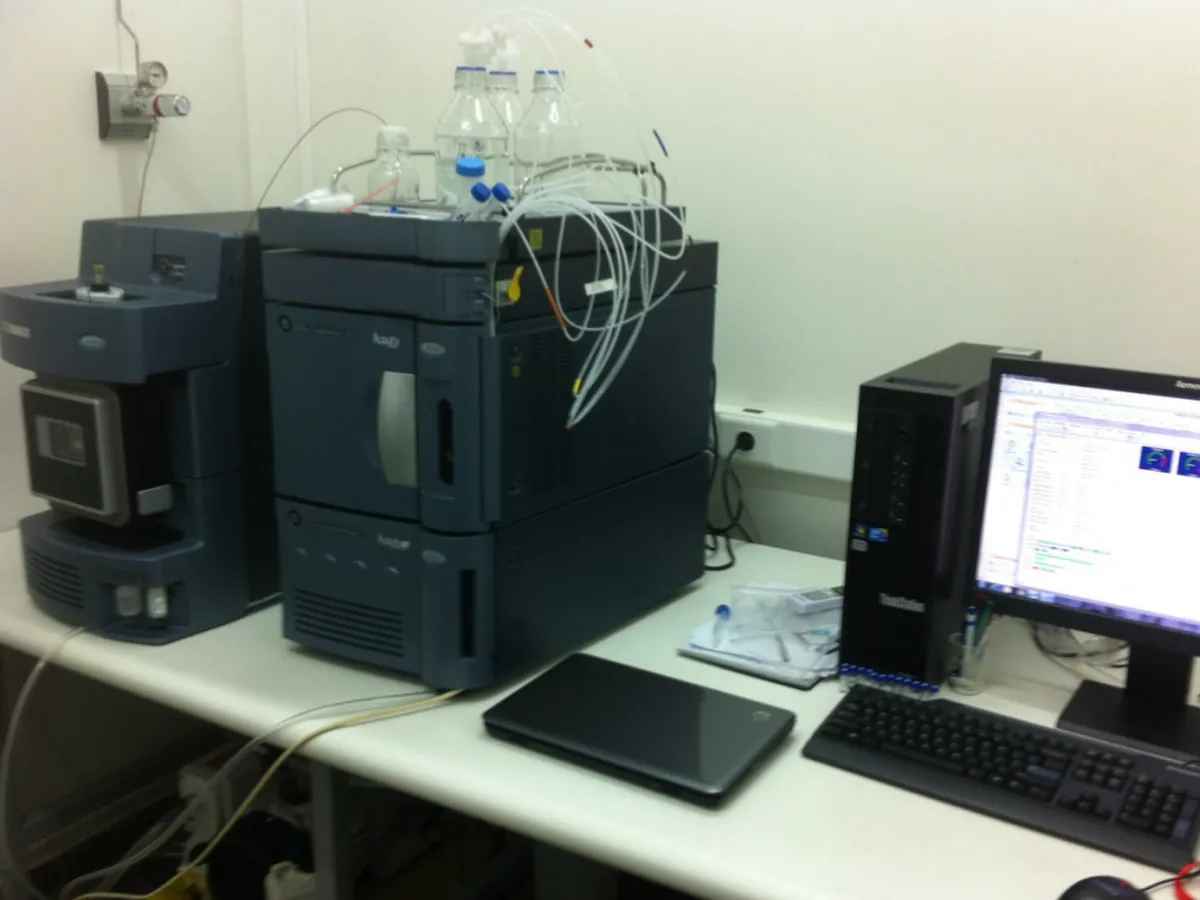
HPLC
Separates the components of a liquid sample on a packed column and measures each one as it leaves. The workhorse of pharmaceutical QC for assay, impurities and dissolution.
Explore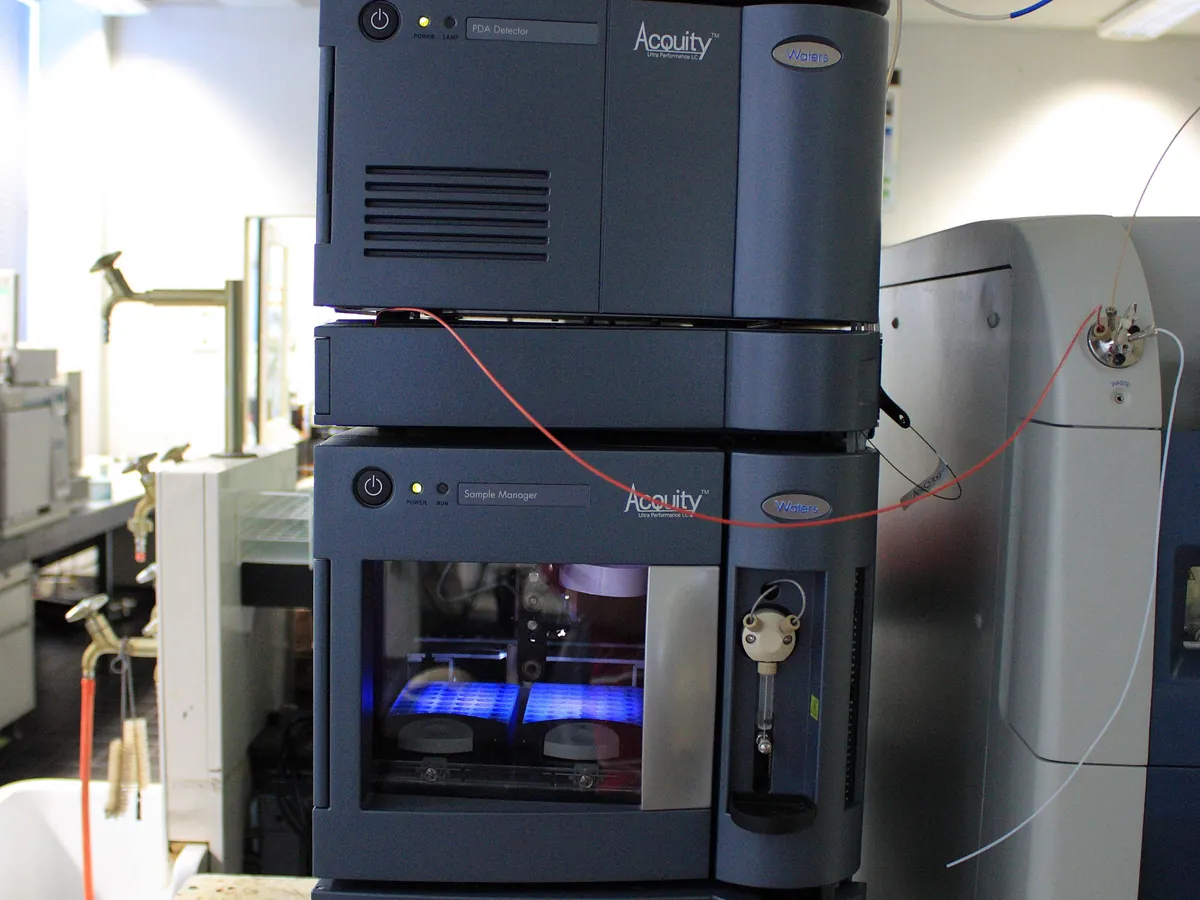
UHPLC
A high-pressure form of HPLC that uses columns packed with very small particles to give faster runs, sharper peaks and less solvent use. Used in pharma QC for fast assays, impurity profiling and high-throughput testing.
Explore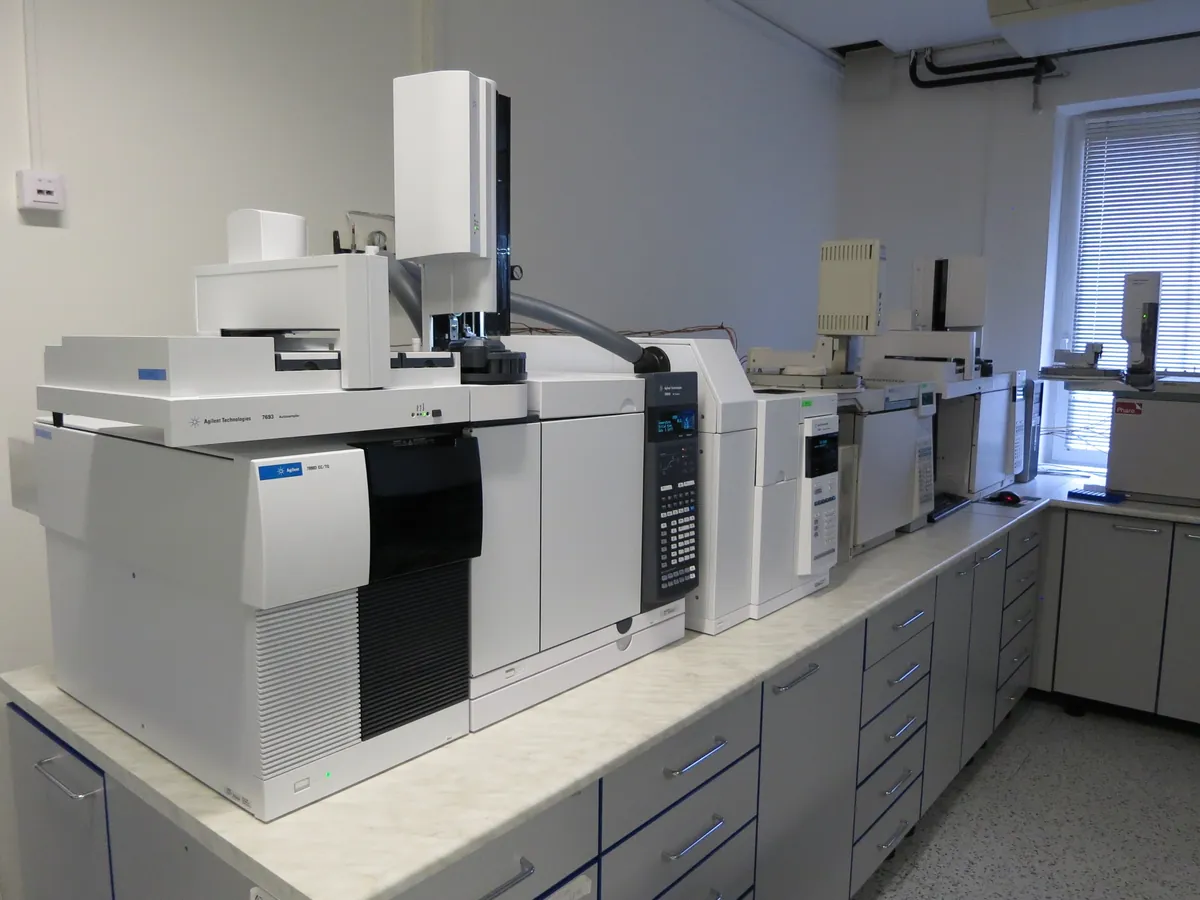
GC
Separates volatile compounds in a heated capillary column using a flowing inert gas and measures each one as it leaves, usually with a flame ionisation detector. Used in pharma QC for residual solvents, volatile impurities and some assays.
Explore
Headspace
Heats a sealed vial containing the sample so volatile compounds move into the gas above it, then injects a portion of that gas into the GC. The standard way to test residual solvents without putting the sample matrix into the GC.
Explore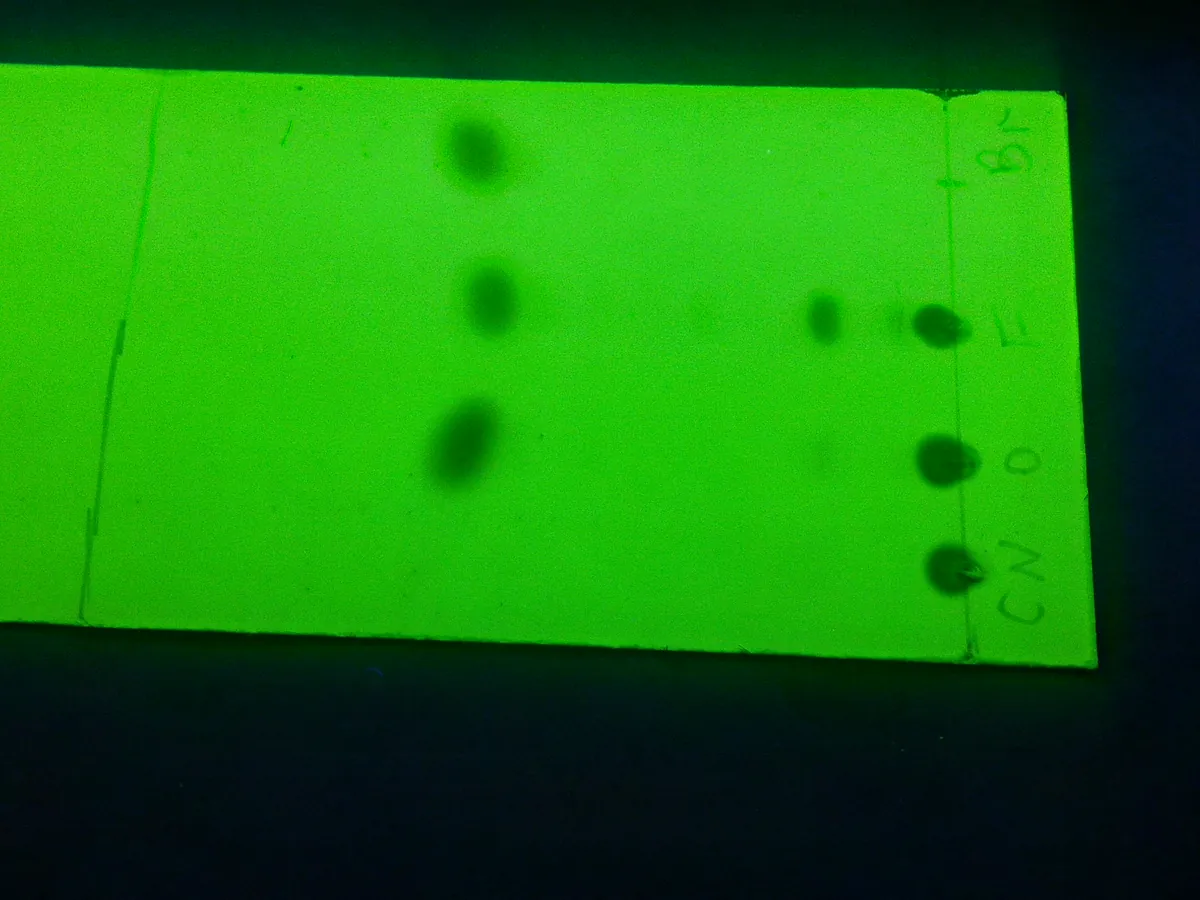
TLC
Separates compounds as a solvent climbs up a thin layer of adsorbent on a glass, aluminium or plastic plate. Simple and cheap; used in pharma QC mainly for identification and limit tests for related substances.
Explore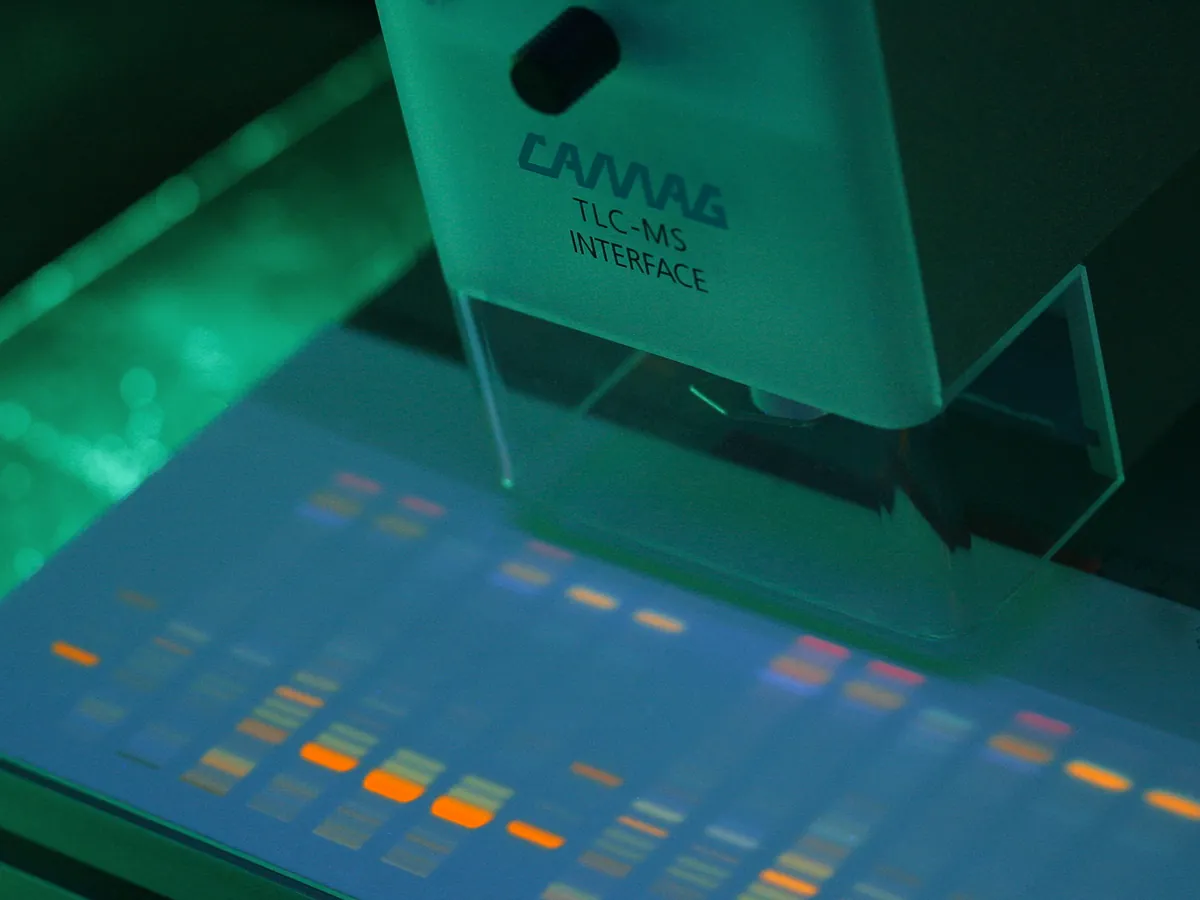
HPTLC
An instrumental, standardised form of TLC that uses fine-particle plates, automated band application, controlled development and densitometric scanning. Widely used for herbal identification fingerprints and semi-quantitative or quantitative assays.
Explore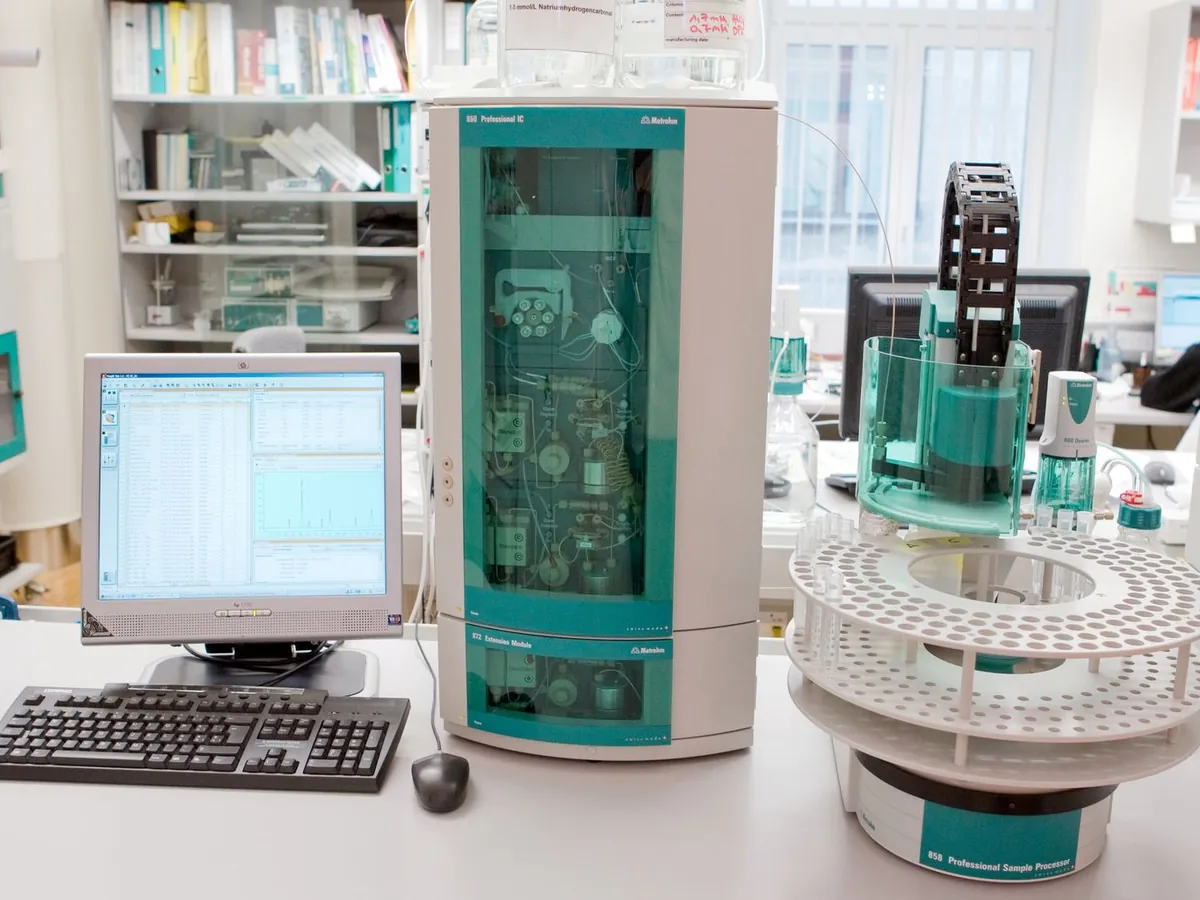
IC
Separates charged species (anions, cations, small organic acids and amines) on an ion-exchange column and usually detects them by conductivity. Used in pharma QC for counter-ions, inorganic impurities and ions in water.
Explore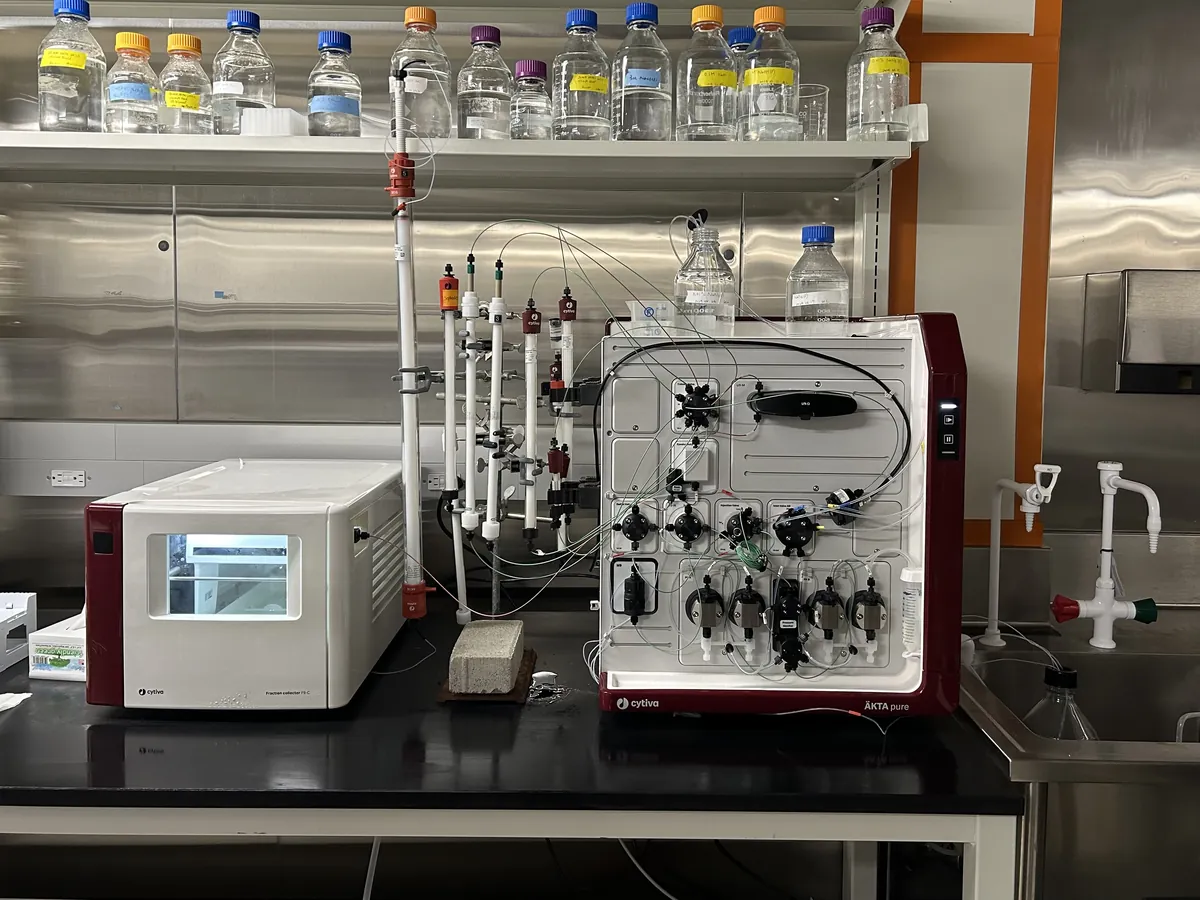
GPC / SEC
Separates molecules by their size in solution rather than by chemistry, so large molecules elute first. Used for polymer molecular-weight distribution and for protein aggregates in biologics.
Explore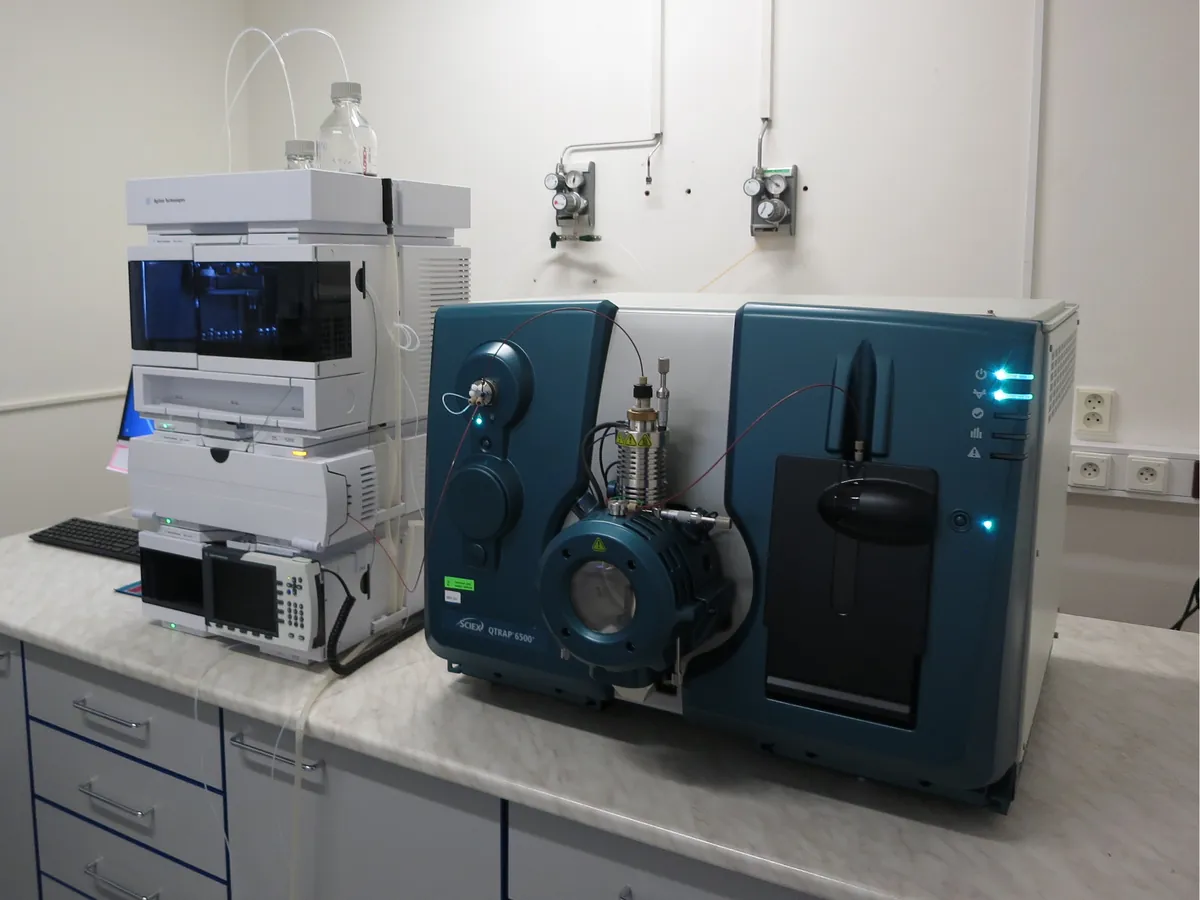
LC-MS
Couples an HPLC or UHPLC to a mass spectrometer, so each separated component is identified by its mass and measured with very high sensitivity. Used for impurity identification, nitrosamines and other trace impurities, and bioanalysis.
Explore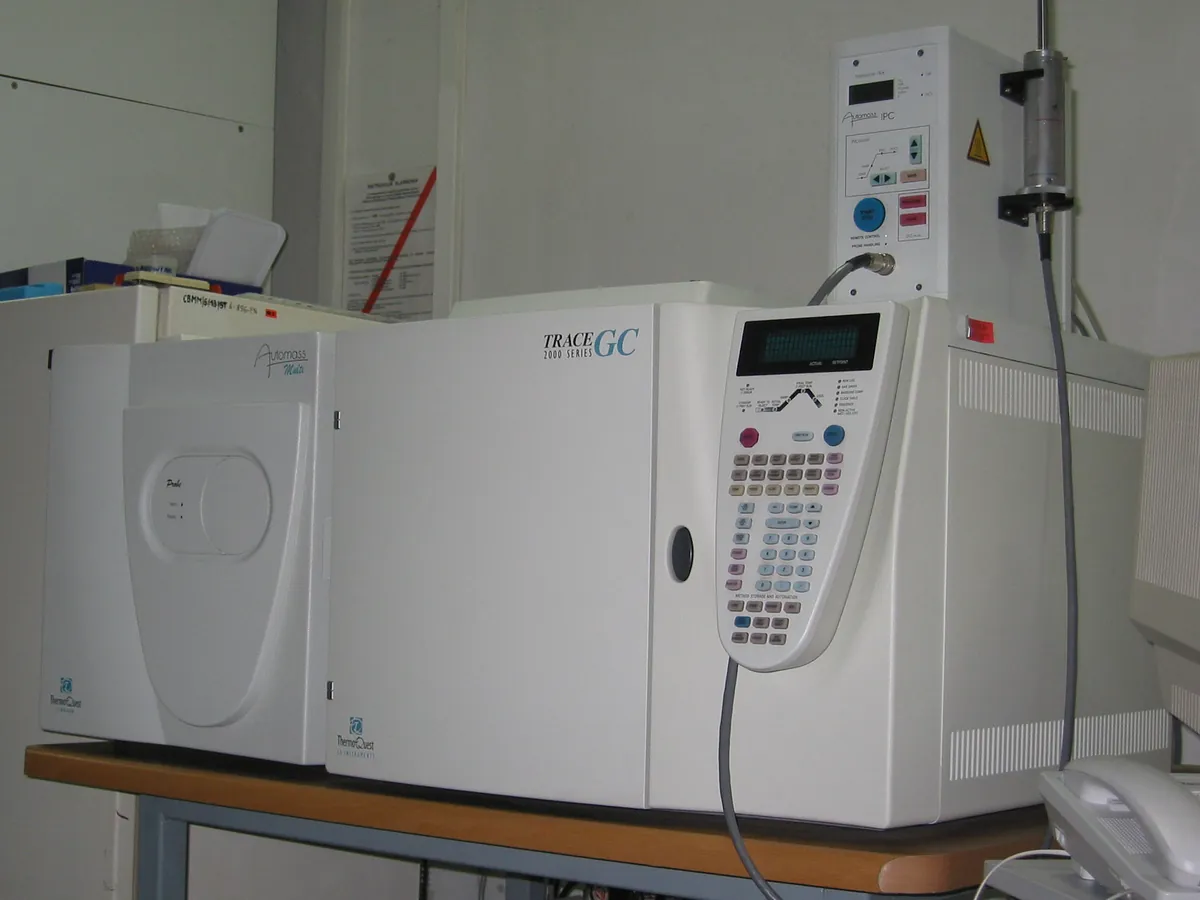
GC-MS
Couples a gas chromatograph to a mass spectrometer so each volatile compound is separated and then identified from its fragmentation pattern. Used for unknown volatile impurities, nitrosamines, residual solvent confirmation and extractables.
Explore
Spectroscopy
Identify and measure by light: UV-Vis, FTIR, AAS, ICP.
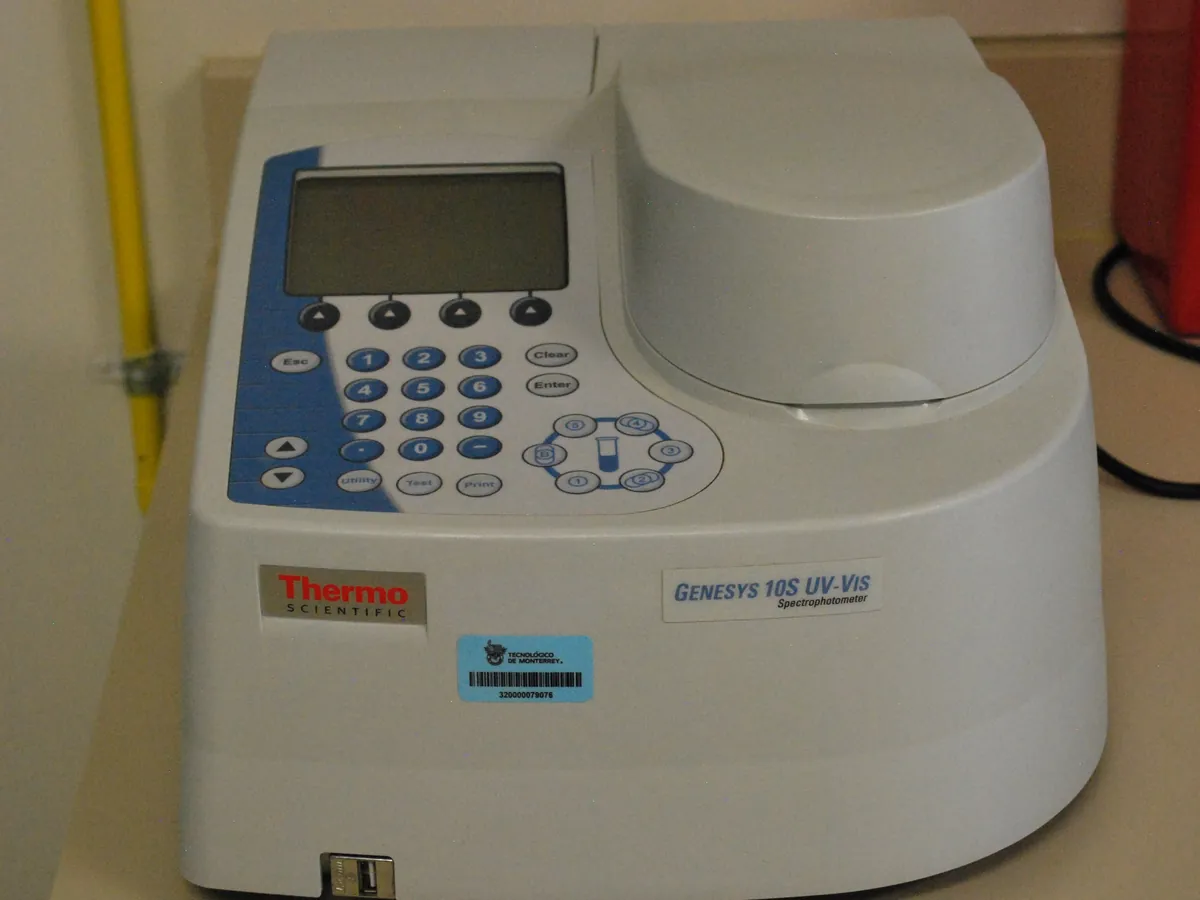
UV-Vis
Measures how much ultraviolet or visible light a solution absorbs at each wavelength. Used in pharma QC for identification, assay, dissolution and many quick quantitative tests.
Explore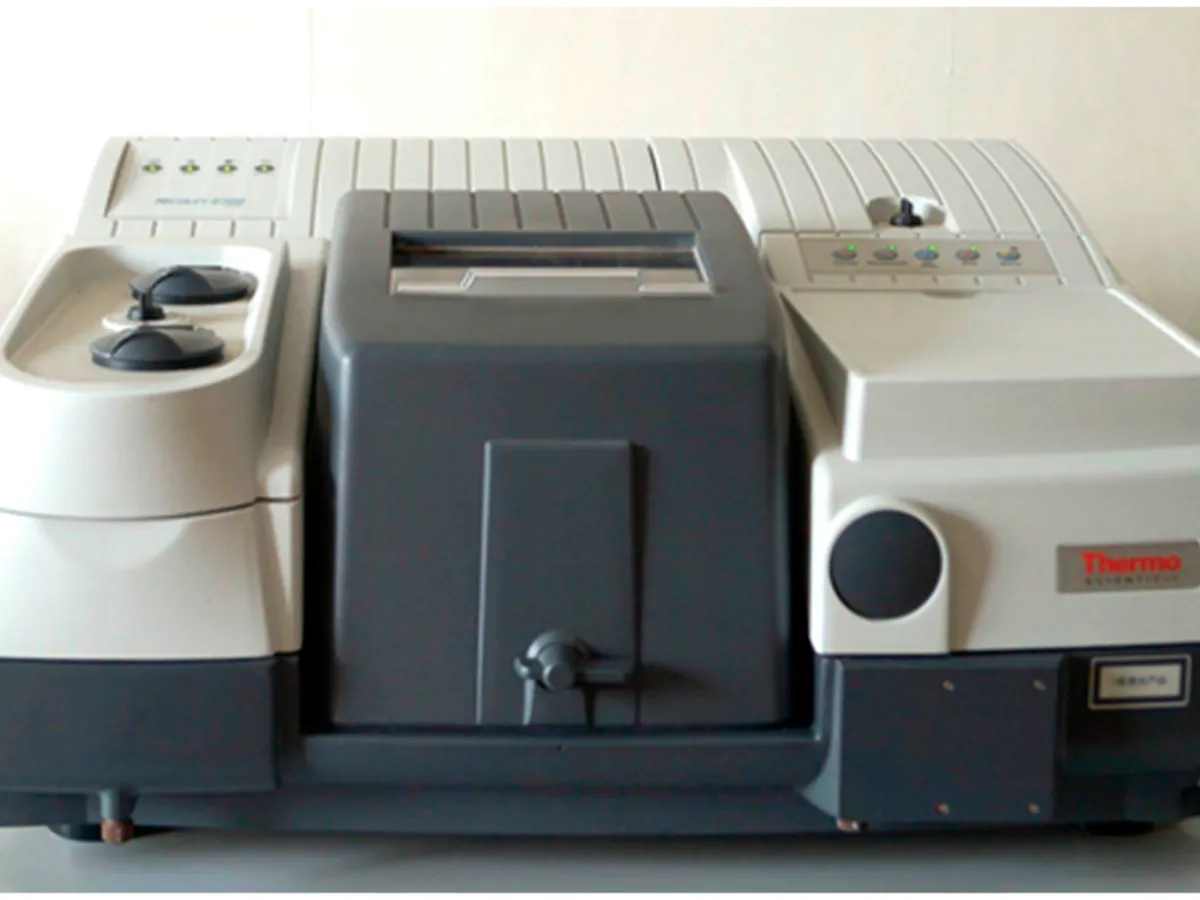
FTIR
Records the infrared absorption spectrum of a sample, which acts as a molecular fingerprint. The standard technique for identification of APIs and excipients in pharma QC.
Explore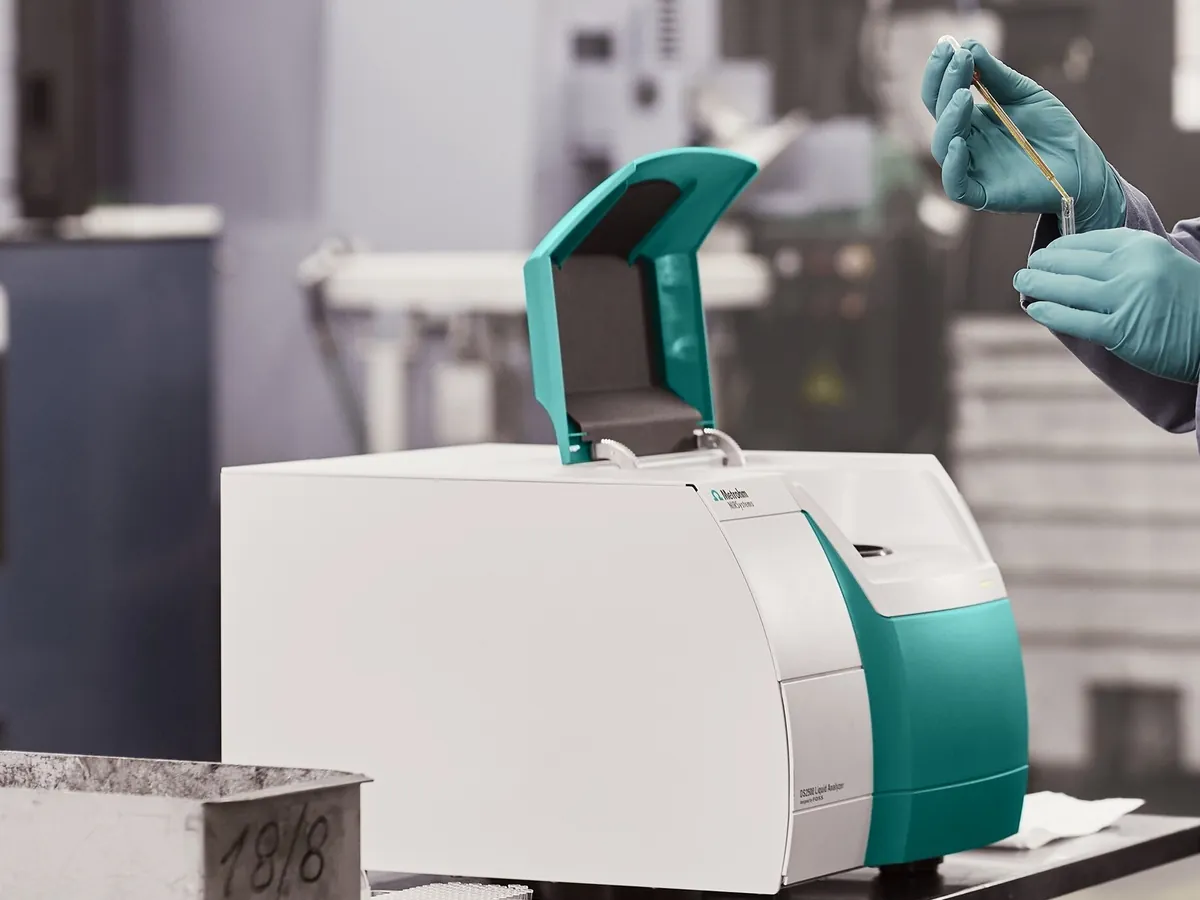
NIR
Measures how a sample absorbs near-infrared light (about 780–2500 nm) through glass or plastic, in seconds and without sample preparation. Used with chemometric libraries for raw-material identity testing, blend monitoring and moisture.
Explore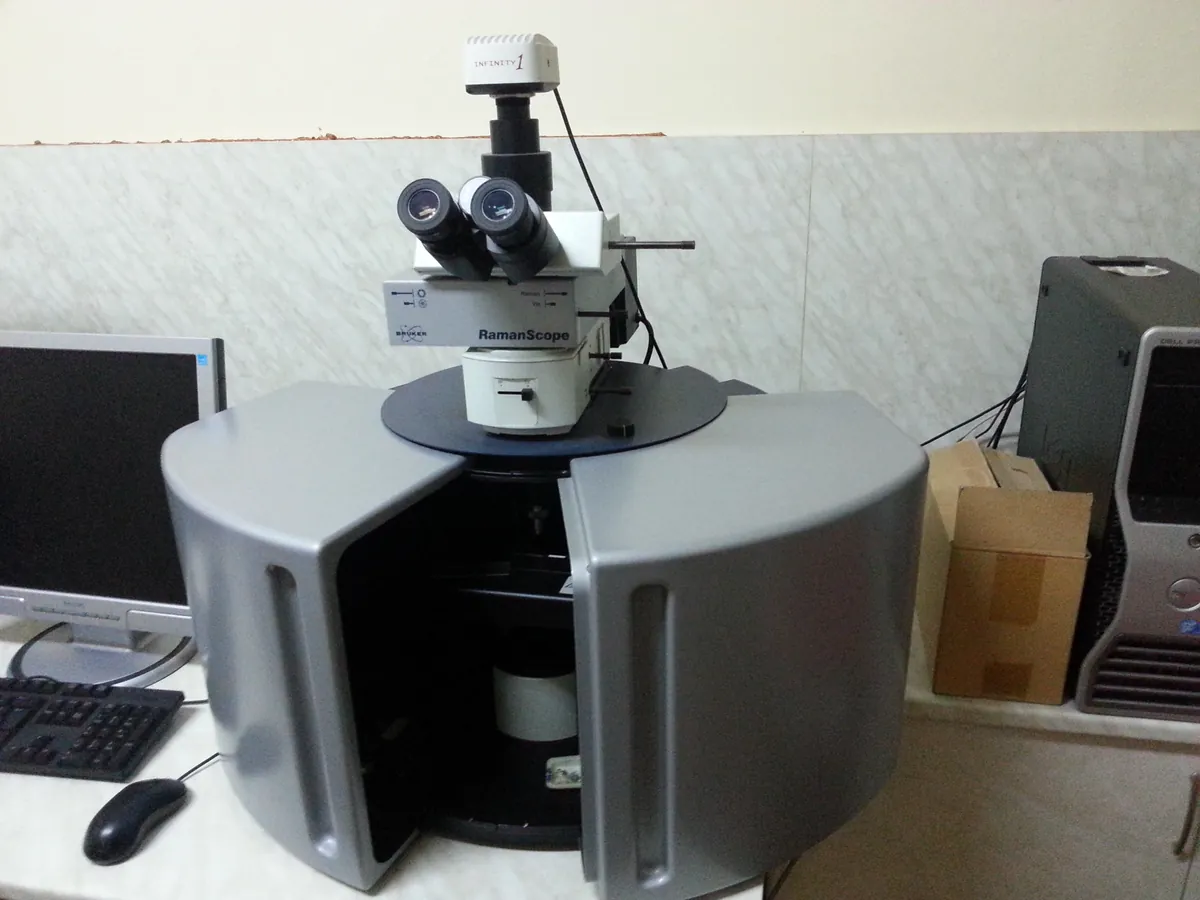
Raman
Shines a laser on a sample and measures the tiny fraction of light scattered with a shifted wavelength. Gives a sharp molecular fingerprint through glass and plastic, ideal for raw-material identity and polymorph checks.
Explore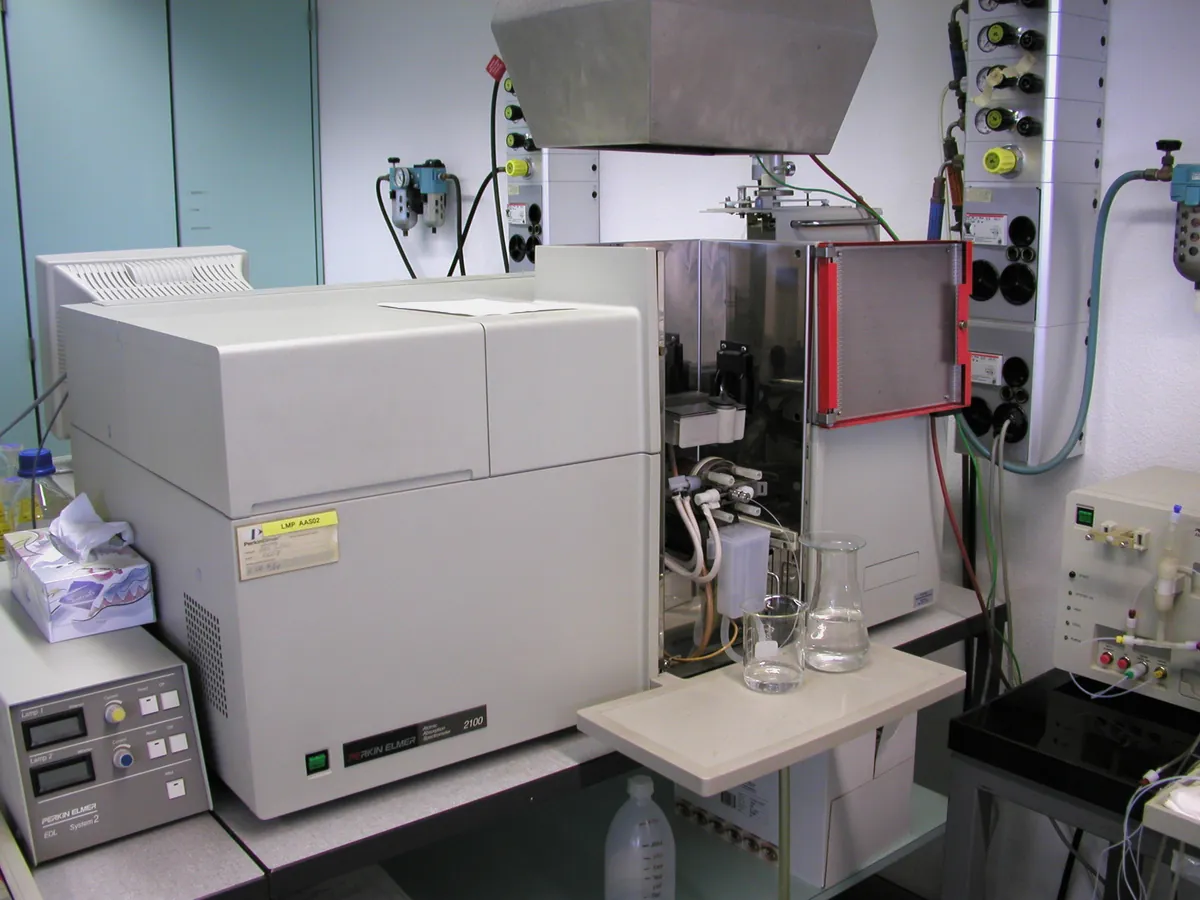
AAS
Measures one metal at a time by how much light of that element's own wavelength is absorbed by free atoms in a flame or graphite furnace. Simple, robust and still widely used for metals in pharma QC.
Explore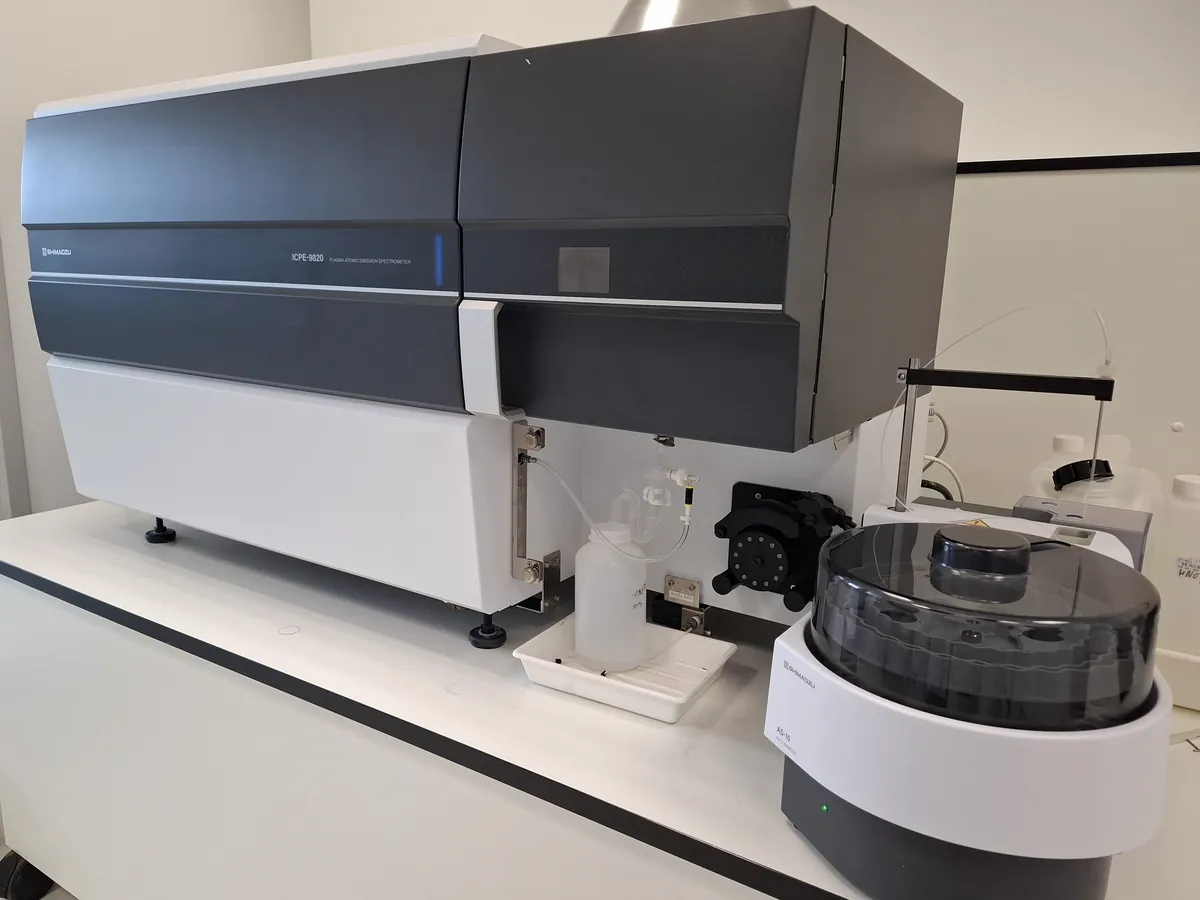
ICP-OES
Excites atoms in an argon plasma at about 6000–10,000 K and measures the light each element emits. Measures many elements at once from trace to percent levels.
Explore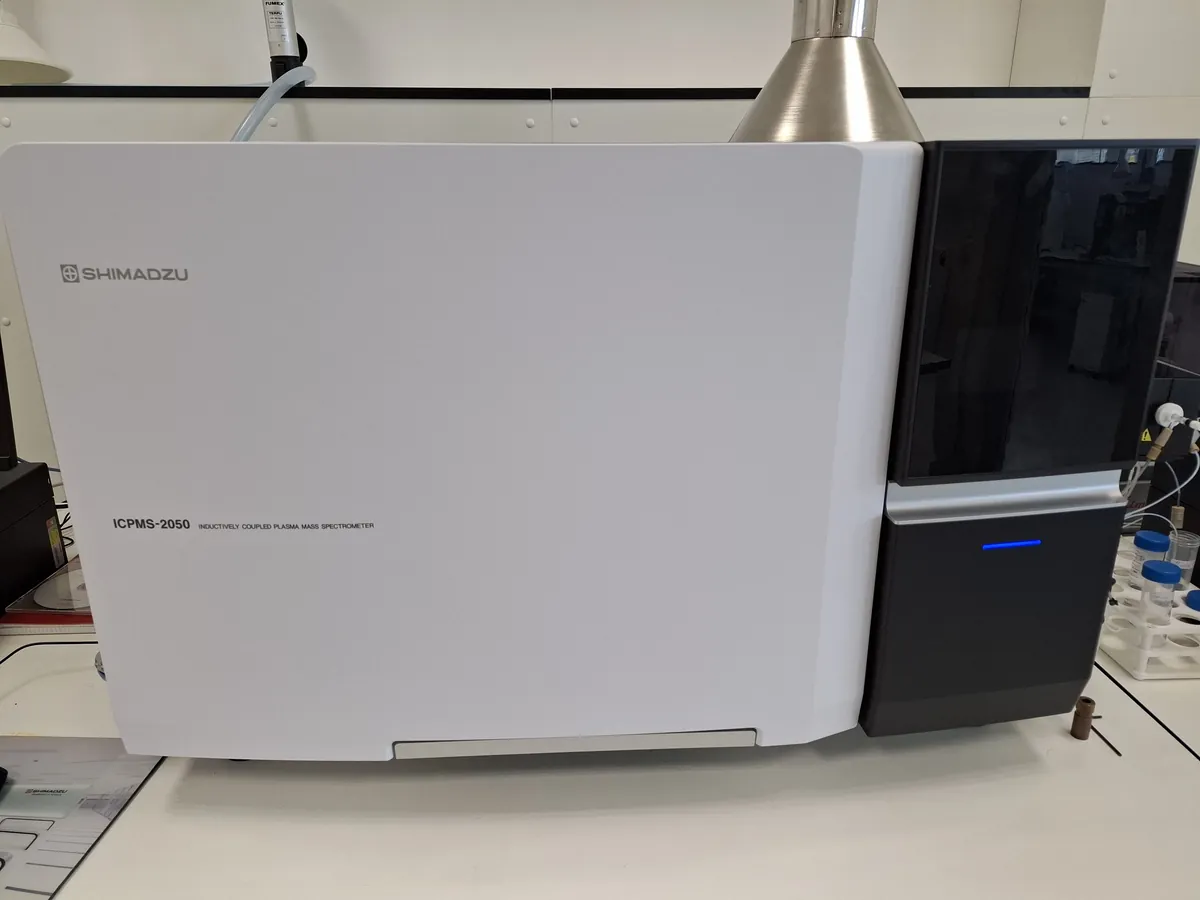
ICP-MS
Ionises the sample in an argon plasma and counts the ions of each element by their mass. The most sensitive routine technique for elemental impurities, reaching ng/L levels.
Explore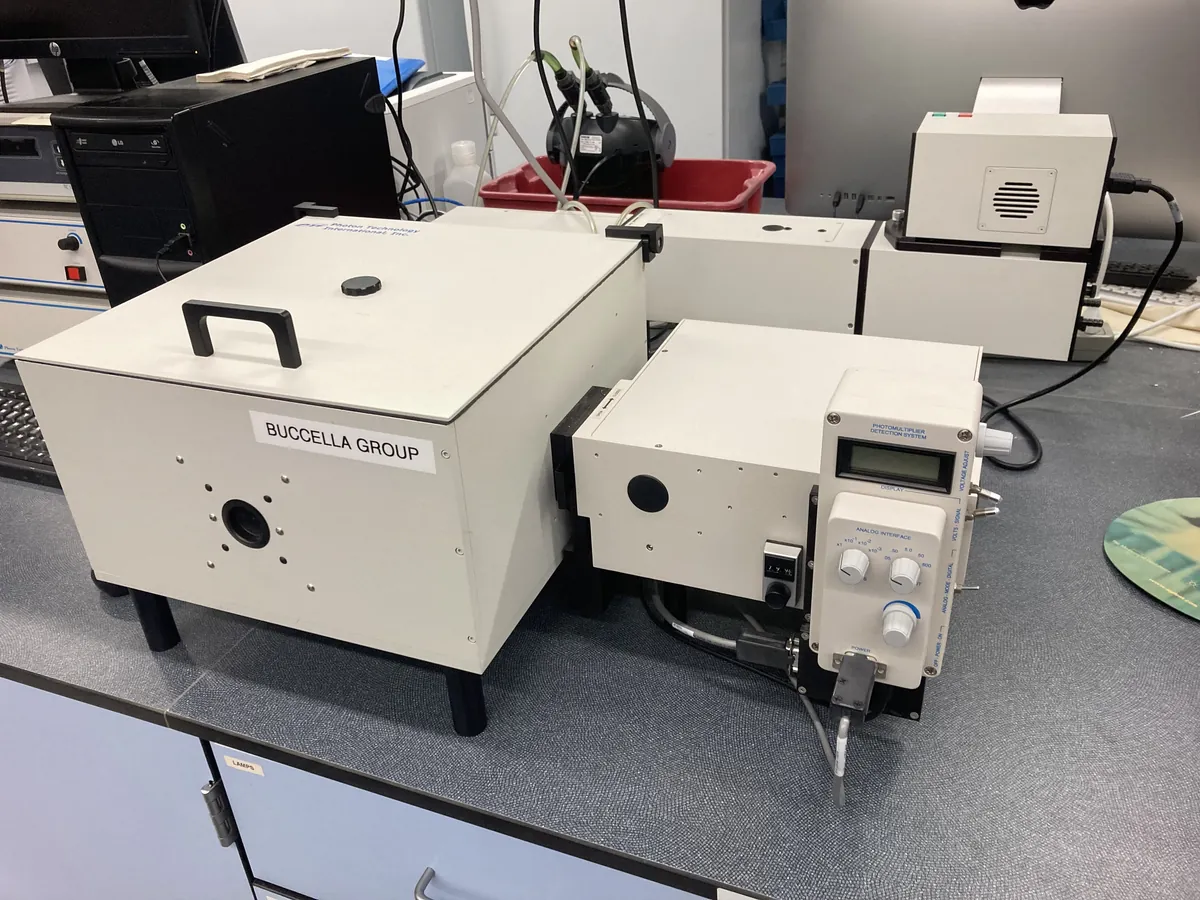
Fluorimeter
Shines light of one wavelength on a sample and measures the longer-wavelength light the molecules give back (fluorescence). Very sensitive and selective for fluorescent compounds.
Explore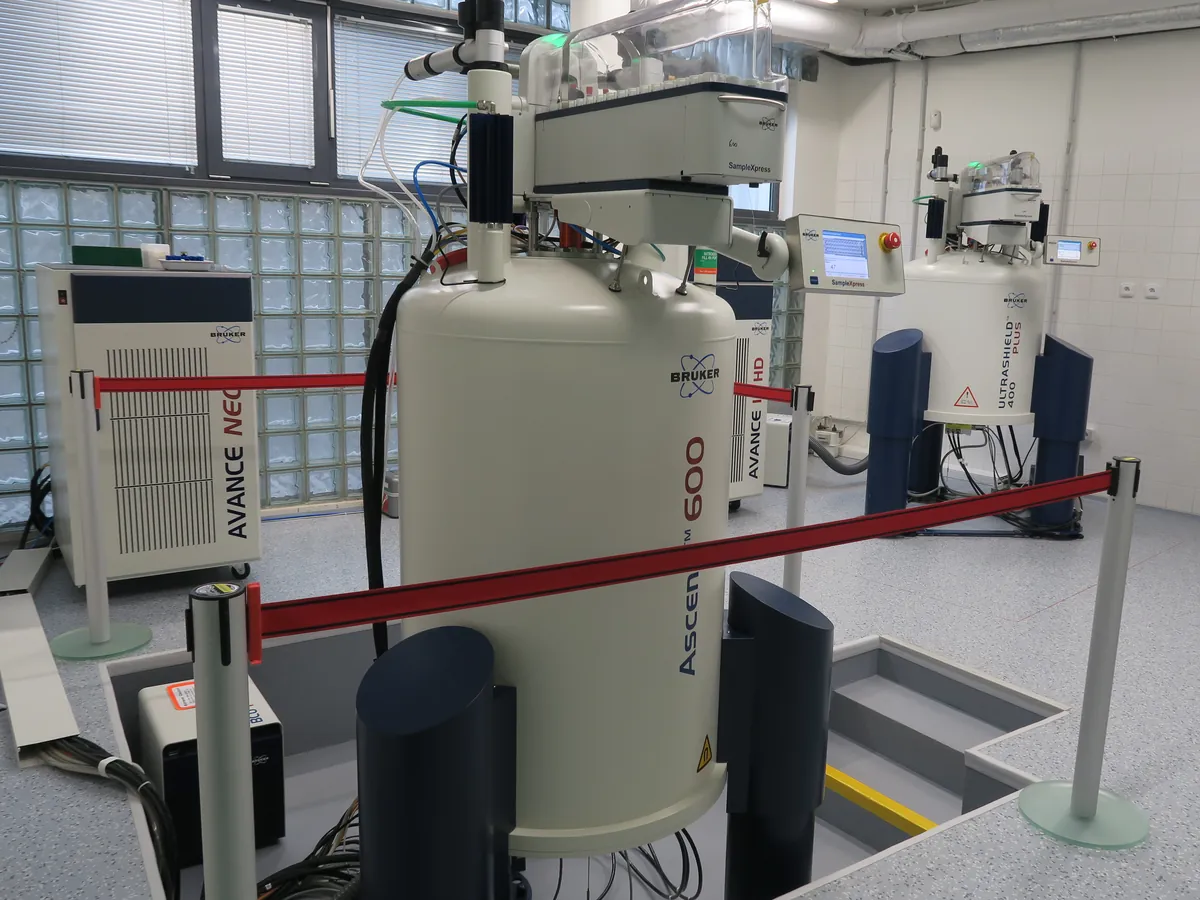
NMR
Places a sample in a strong magnetic field and measures how atomic nuclei such as ¹H and ¹³C absorb radio waves. Gives detailed structural information and, with qNMR, absolute purity without a reference standard of the analyte.
Explore
Titration & electrochemistry
Titrators, Karl Fischer, pH, conductivity and TOC.
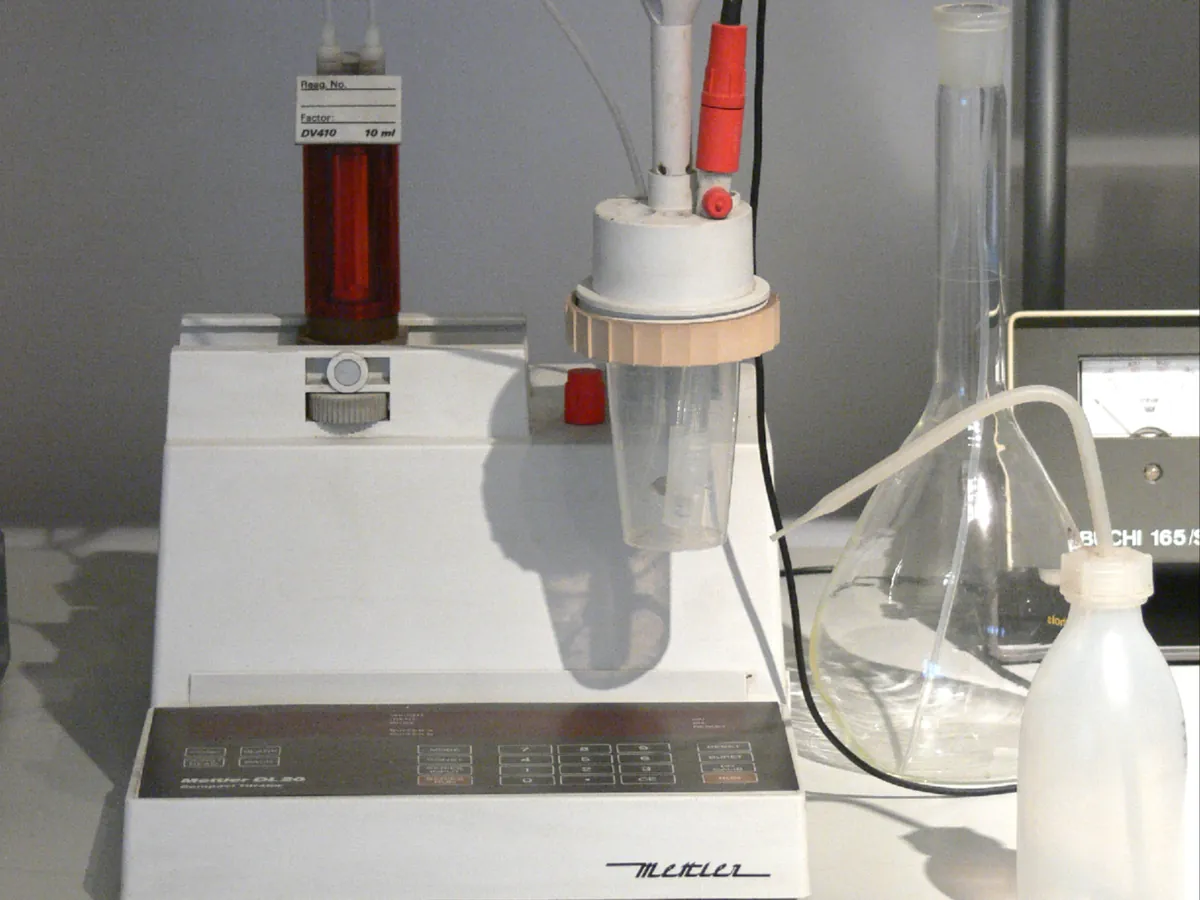
Potentiometric titrator
Adds a titrant from a motorised burette while an electrode measures the potential of the solution, and finds the equivalence point from the change in potential. Used for assays, standardisation and many limit tests.
Explore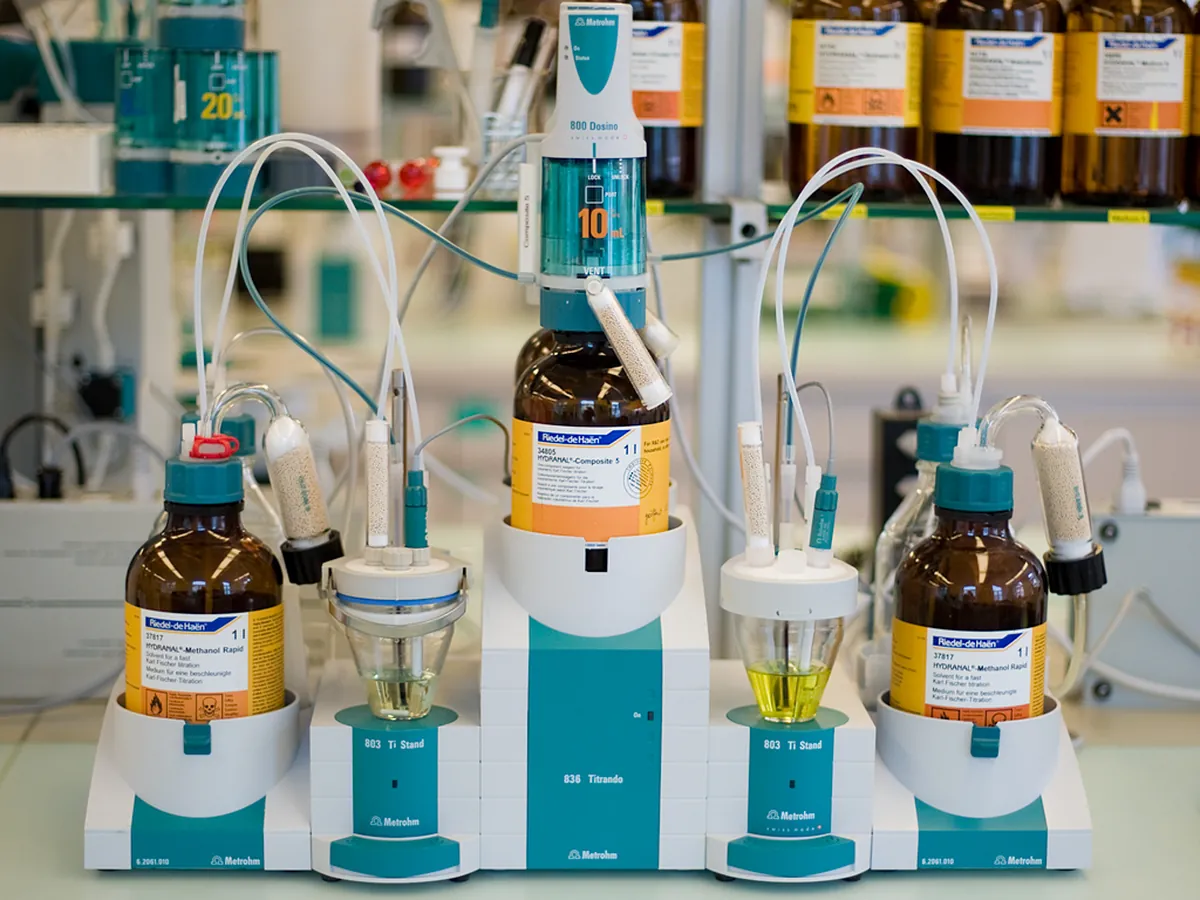
KF titrator (volumetric)
Measures the water content of a sample by titrating it with an iodine-containing Karl Fischer reagent from a motorised burette. The standard method for water in APIs, excipients and many finished products.
Explore
KF titrator (coulometric)
Measures very small amounts of water by generating iodine electrically inside the cell and counting the charge needed to react with all the water. Suited to trace water, from ppm levels up to about 1–5%.
Explore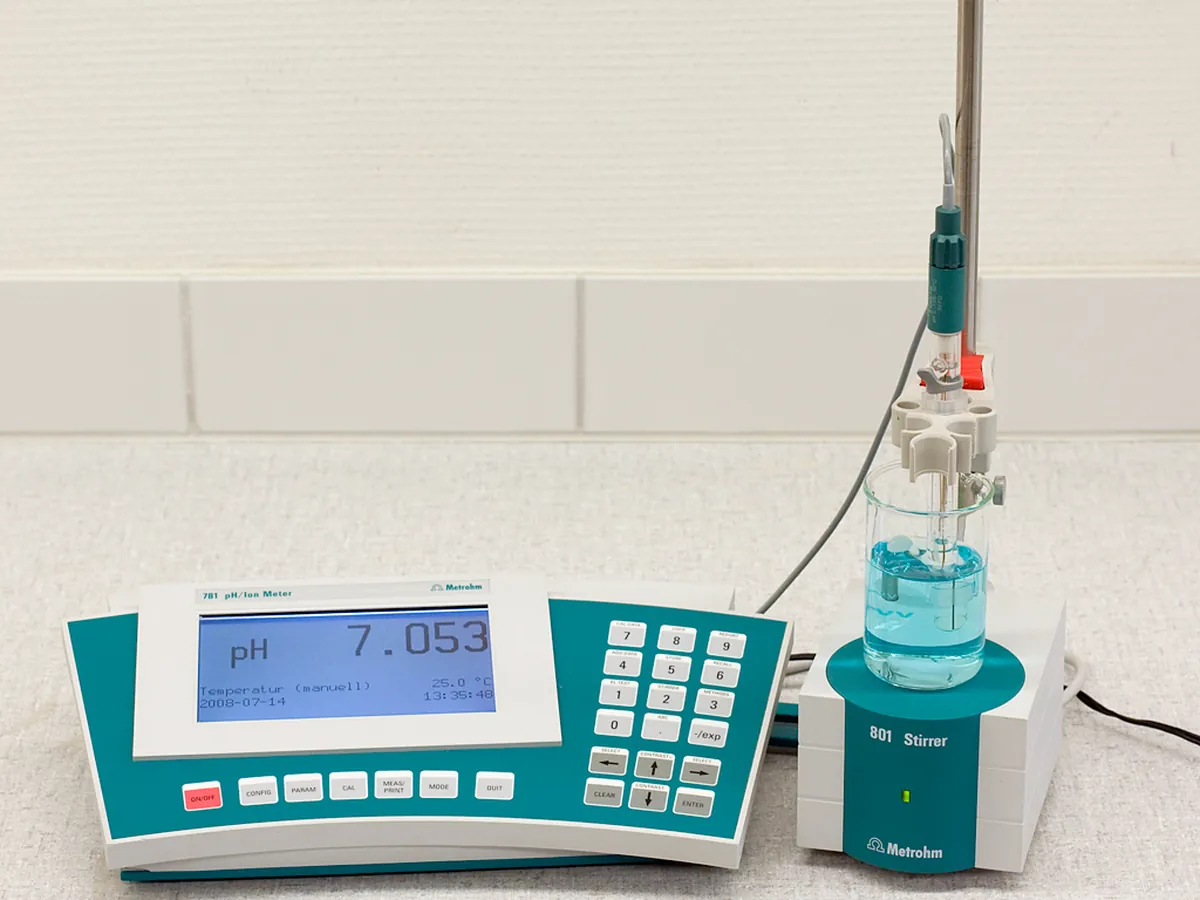
pH meter
Measures how acidic or alkaline a solution is by measuring the small voltage produced by a glass electrode. Used for pH of products, buffers, mobile phases and water.
Explore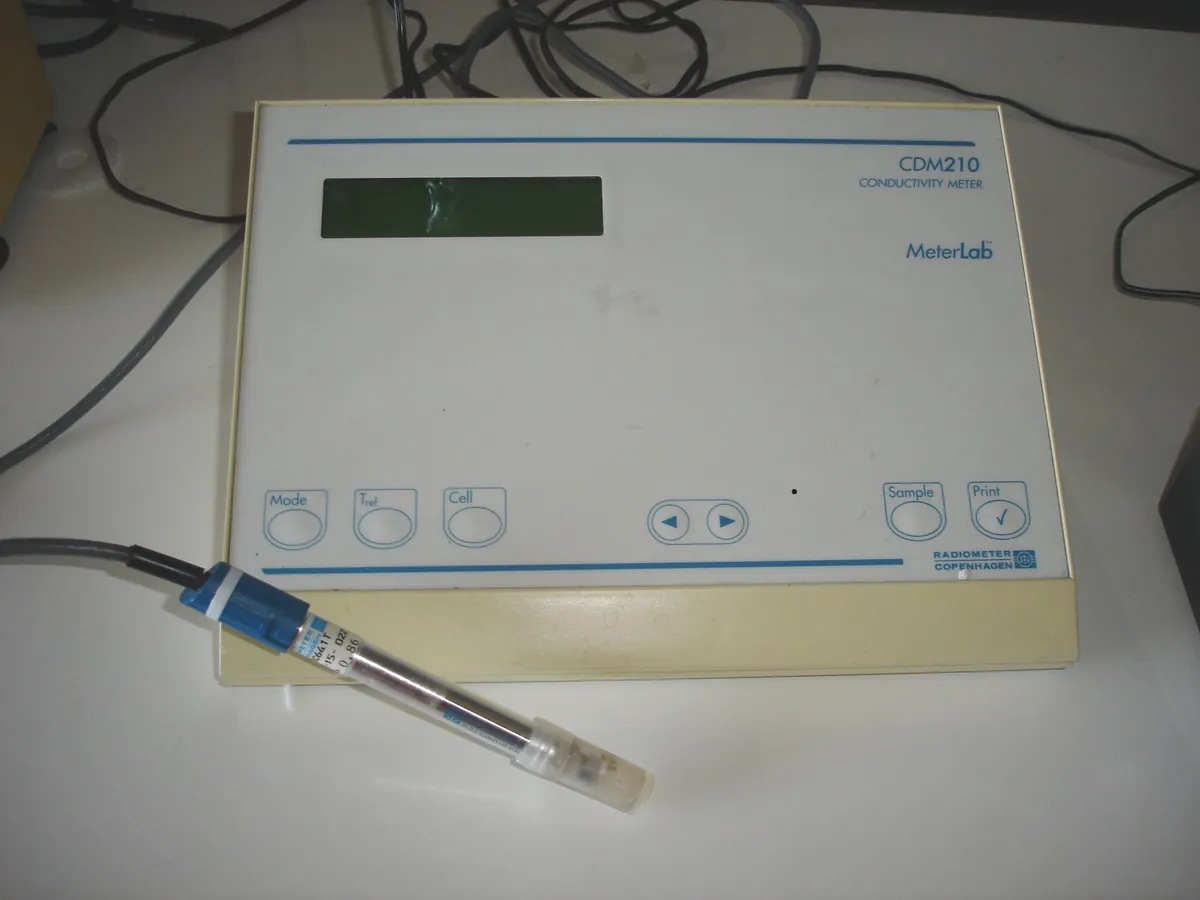
Conductivity meter
Measures how well a solution conducts electricity, which tells you how many ions it contains. In pharma QC it is the main test for the ionic purity of purified water and water for injection.
ExploreTOC analyser
Oxidises organic compounds in water to carbon dioxide and measures the CO₂ formed to give the total organic carbon content. The standard test for organic contamination in purified water and water for injections.
Explore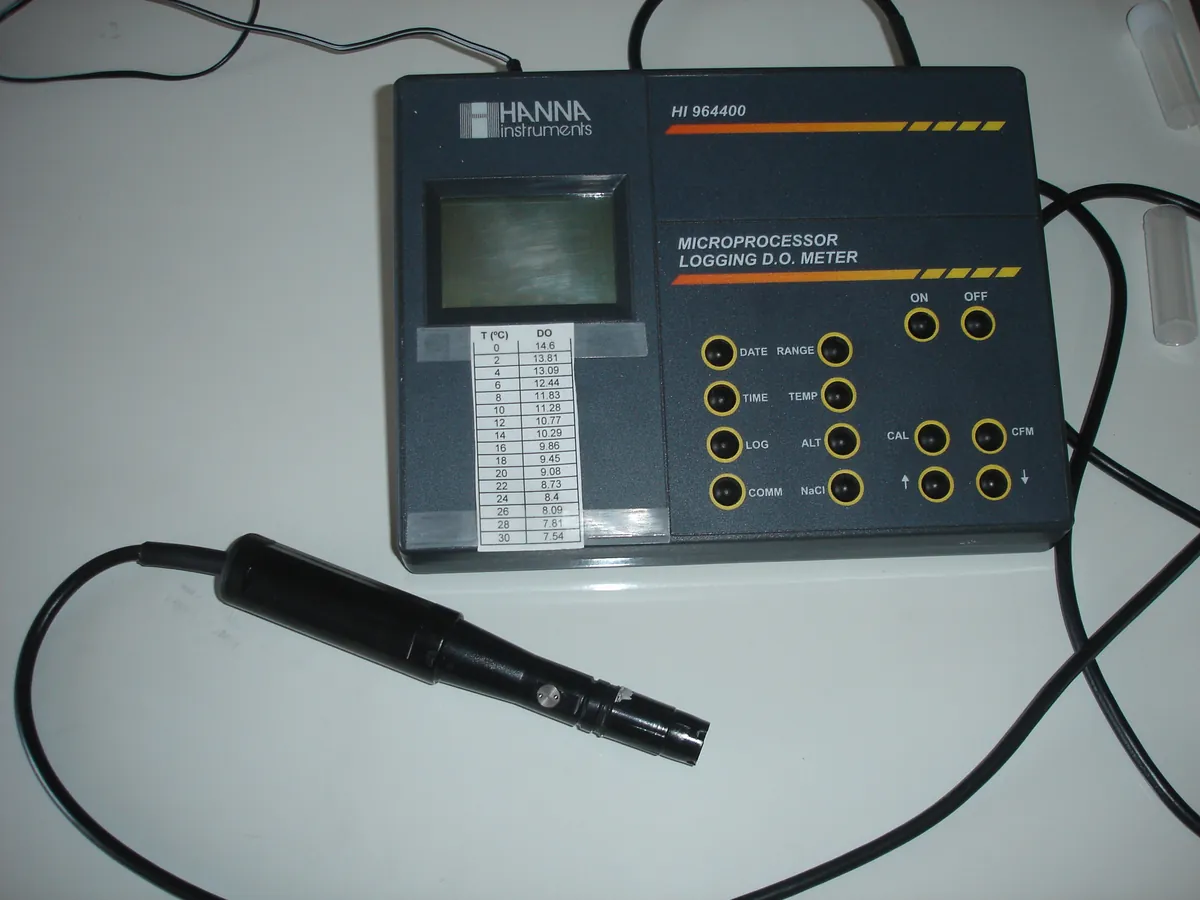
DO meter
Measures the amount of oxygen dissolved in a liquid using an electrochemical or optical (luminescence) sensor. Used for water systems, fermentation, nitrogen-purged formulations and environmental testing.
Explore
Physical testing
Balances, polarimeters, viscometers, density and moisture.

Analytical balance
Measures the mass of a sample very precisely, usually to 0.1 mg or 0.01 mg. Almost every quantitative test in a QC lab starts with a weighing, so the balance is the most used instrument in the lab.
ExploreMicrobalance
A very sensitive balance that reads to 0.001 mg (1 µg) or better. It is used when the sample is only a few milligrams, for example a potent reference standard or a DSC sample.
Explore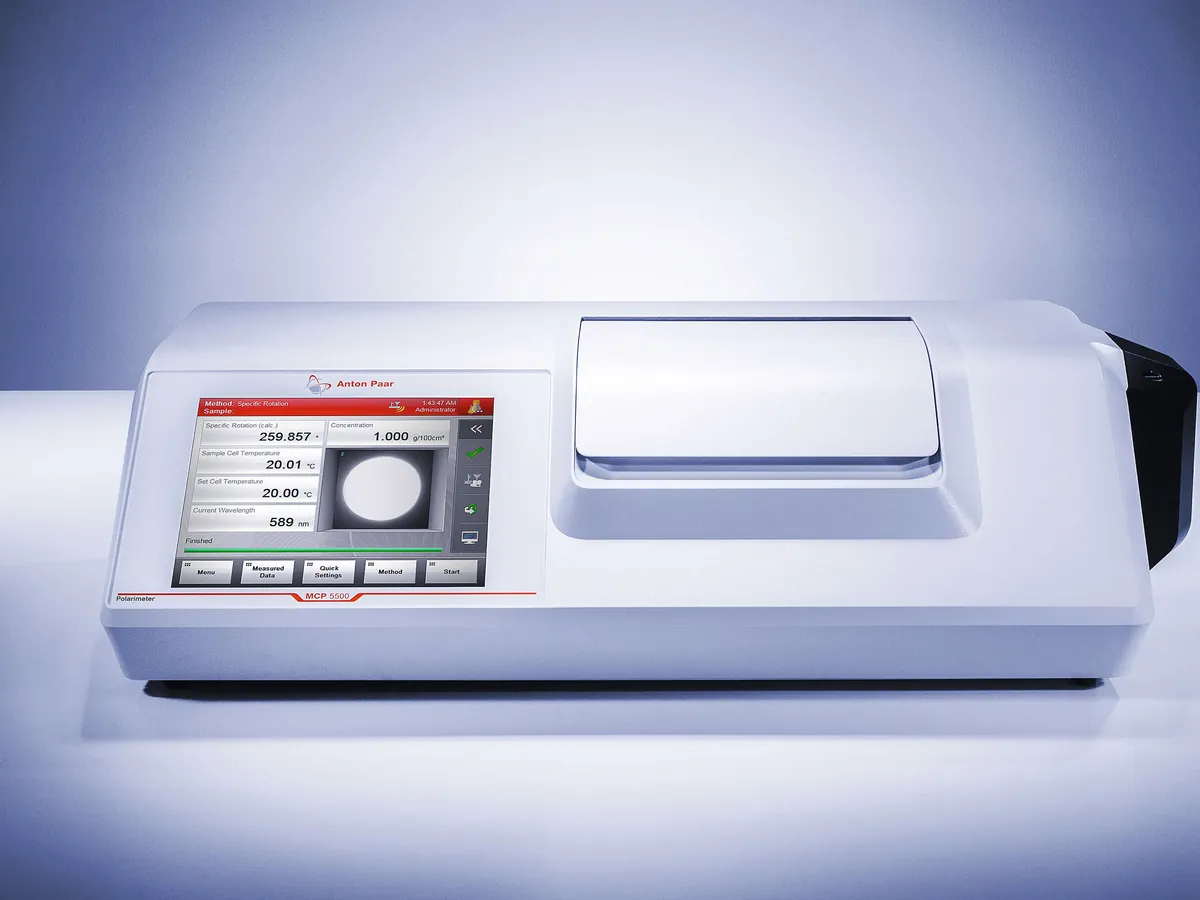
Polarimeter
Measures how much a solution of a chiral substance rotates the plane of polarised light. The result is used to calculate specific optical rotation, an identity and purity test for many APIs.
Explore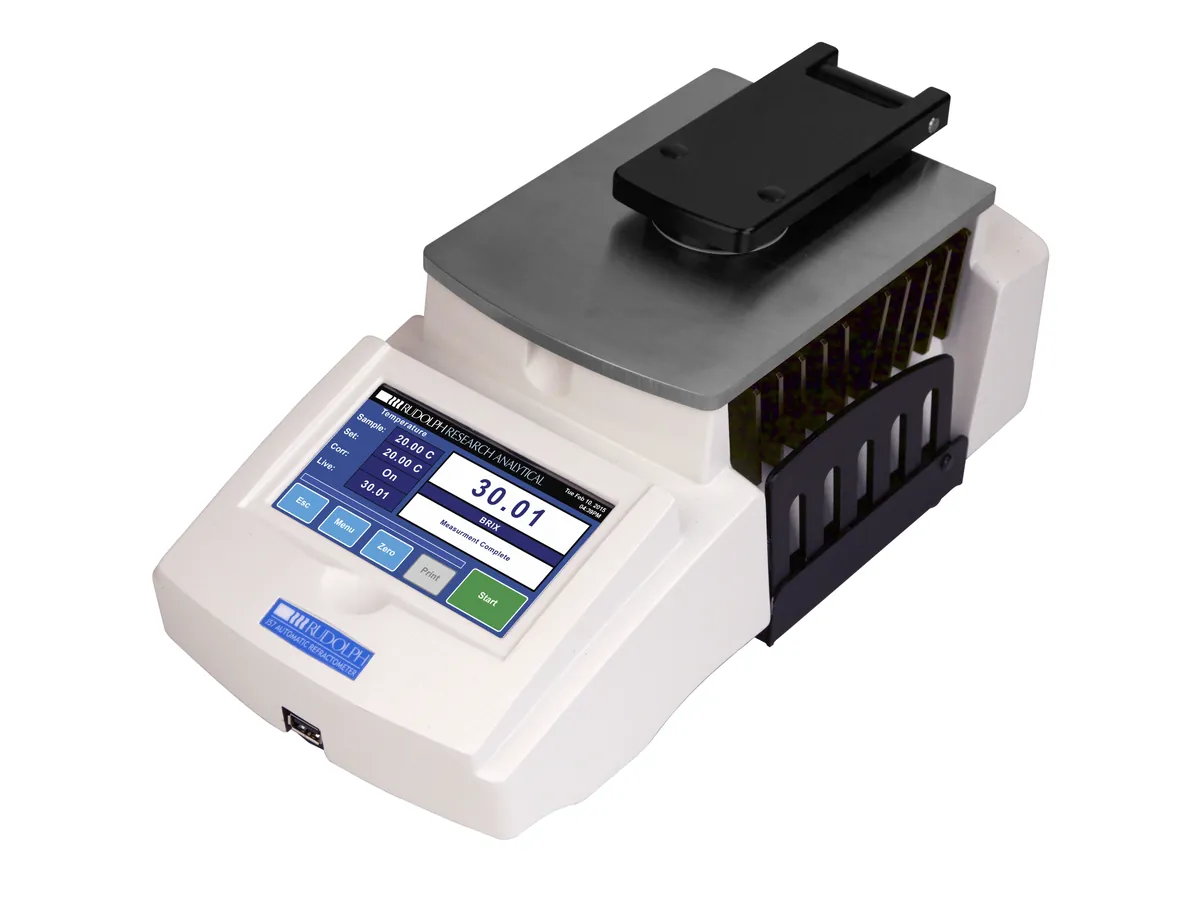
Refractometer
Measures the refractive index of a liquid or melted solid, usually at 20 °C and 589 nm. It is a quick identity and purity test for oils, solvents and syrups.
Explore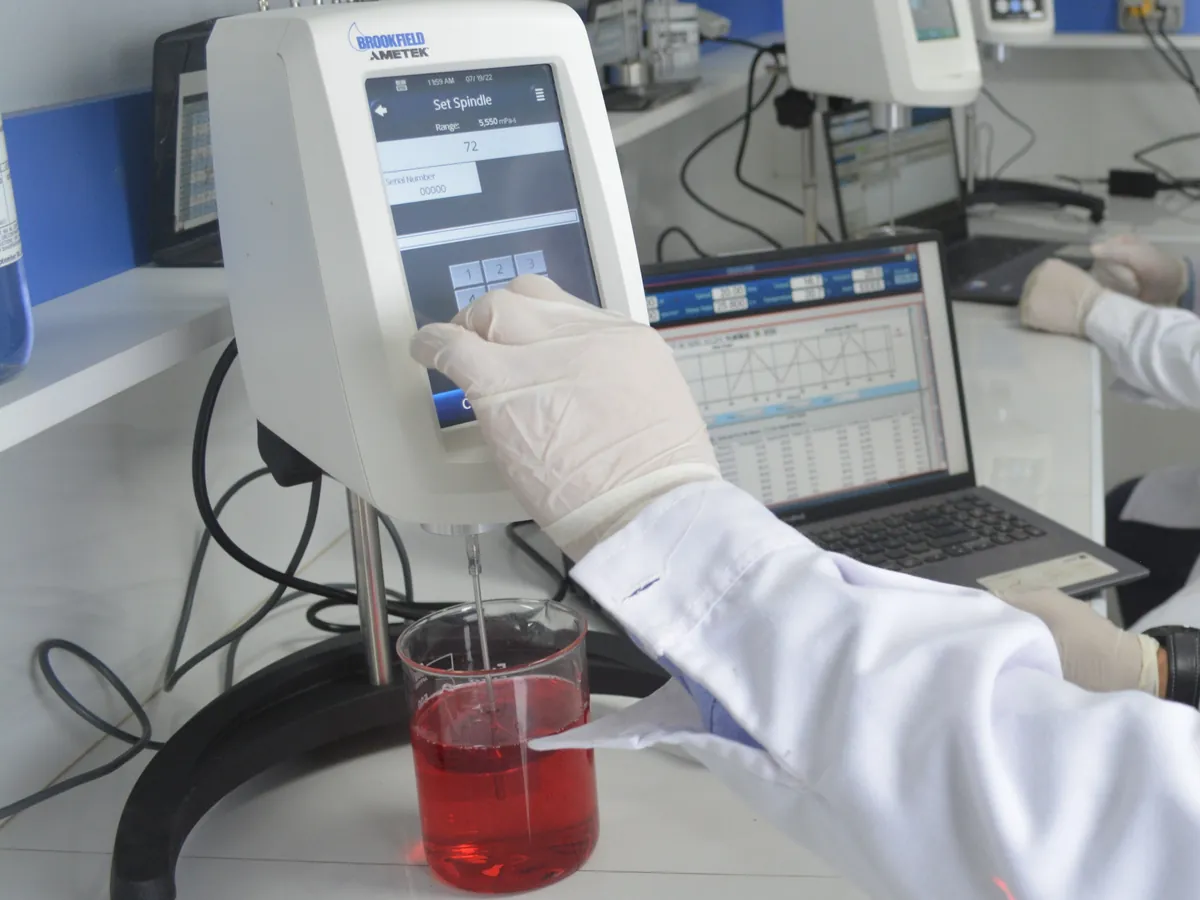
Viscometer
Measures how thick a liquid is, that is its resistance to flow (viscosity). Used for syrups, suspensions, gels, creams and polymer solutions.
Explore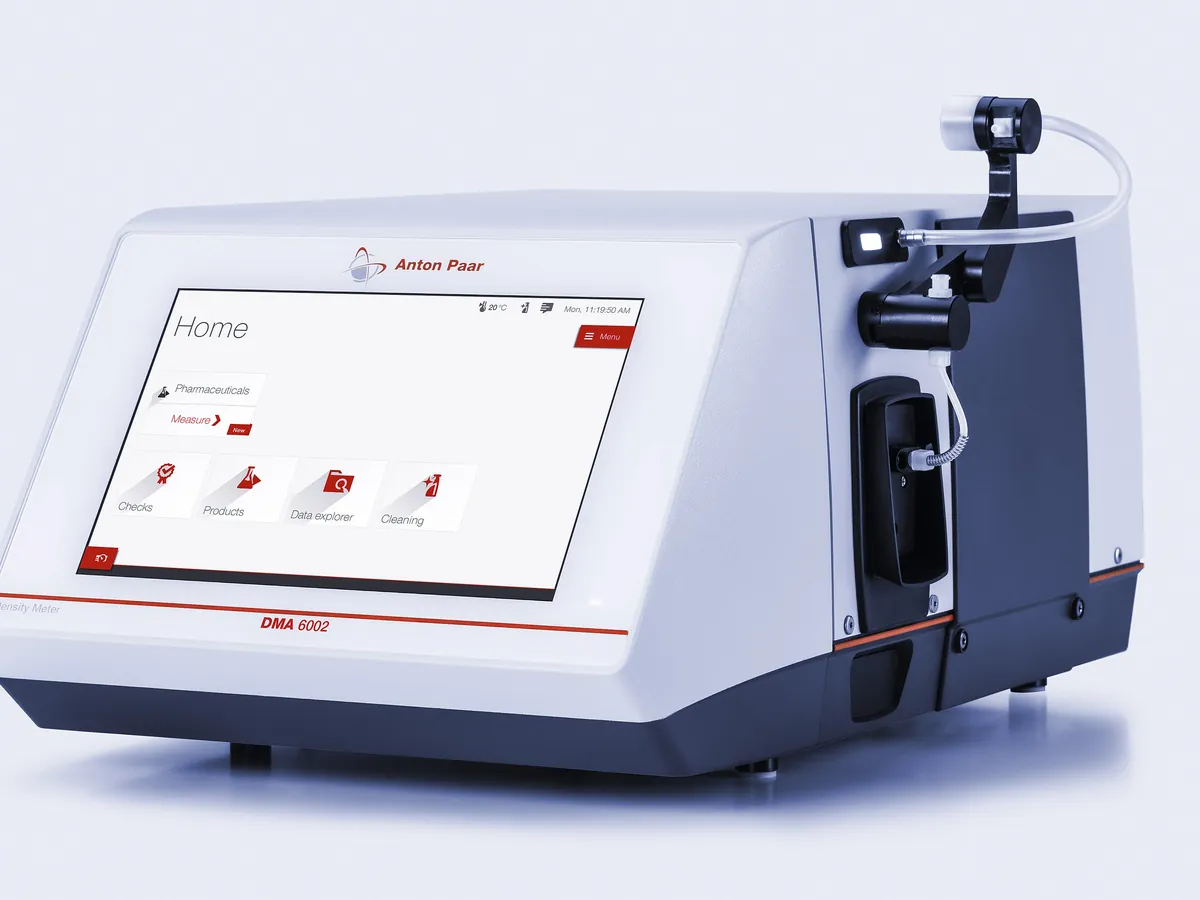
Density meter
Measures the density or specific gravity of a liquid in about a minute, using a vibrating glass U-tube. It replaces the pycnometer for most routine work.
Explore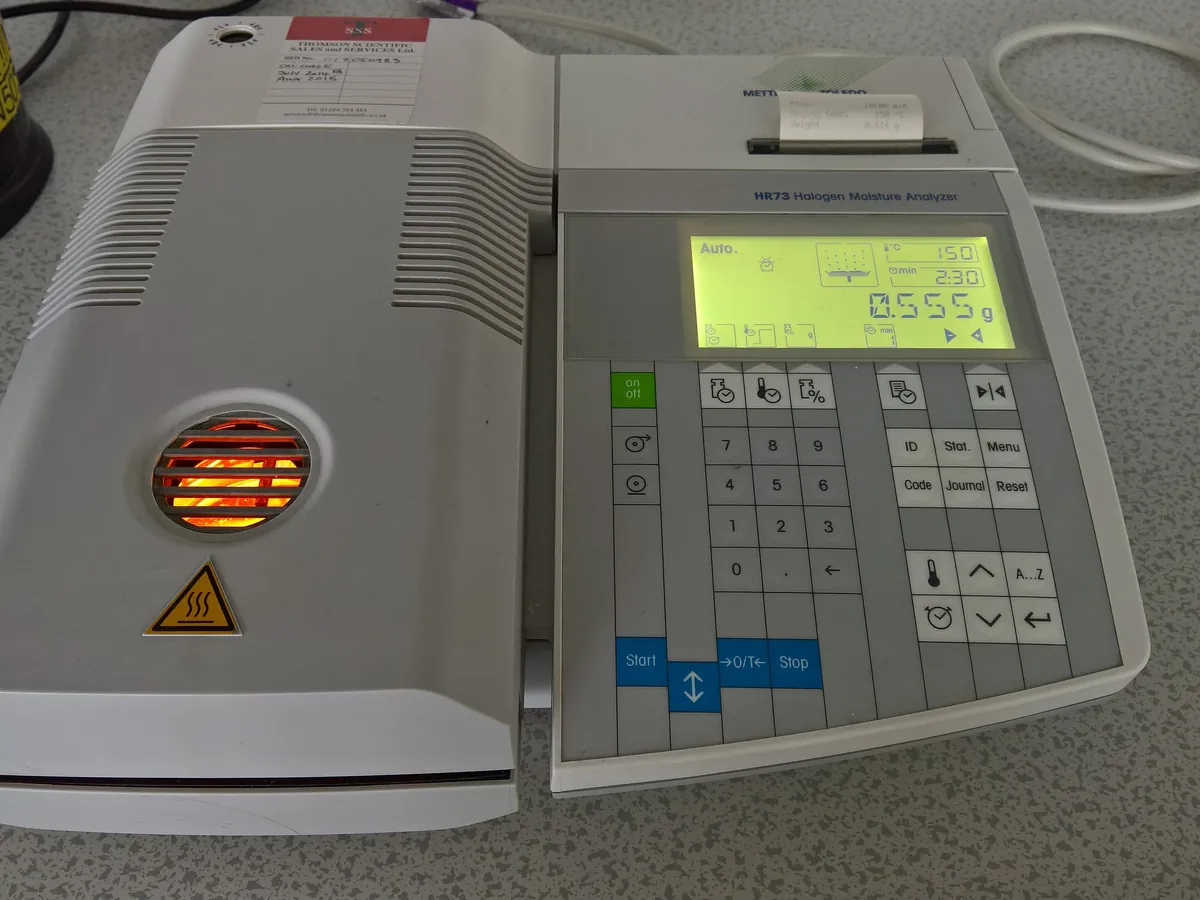
Moisture analyser
A balance with a built-in halogen or infrared heater. It dries a sample on the pan and calculates the loss on drying automatically, usually in a few minutes.
Explore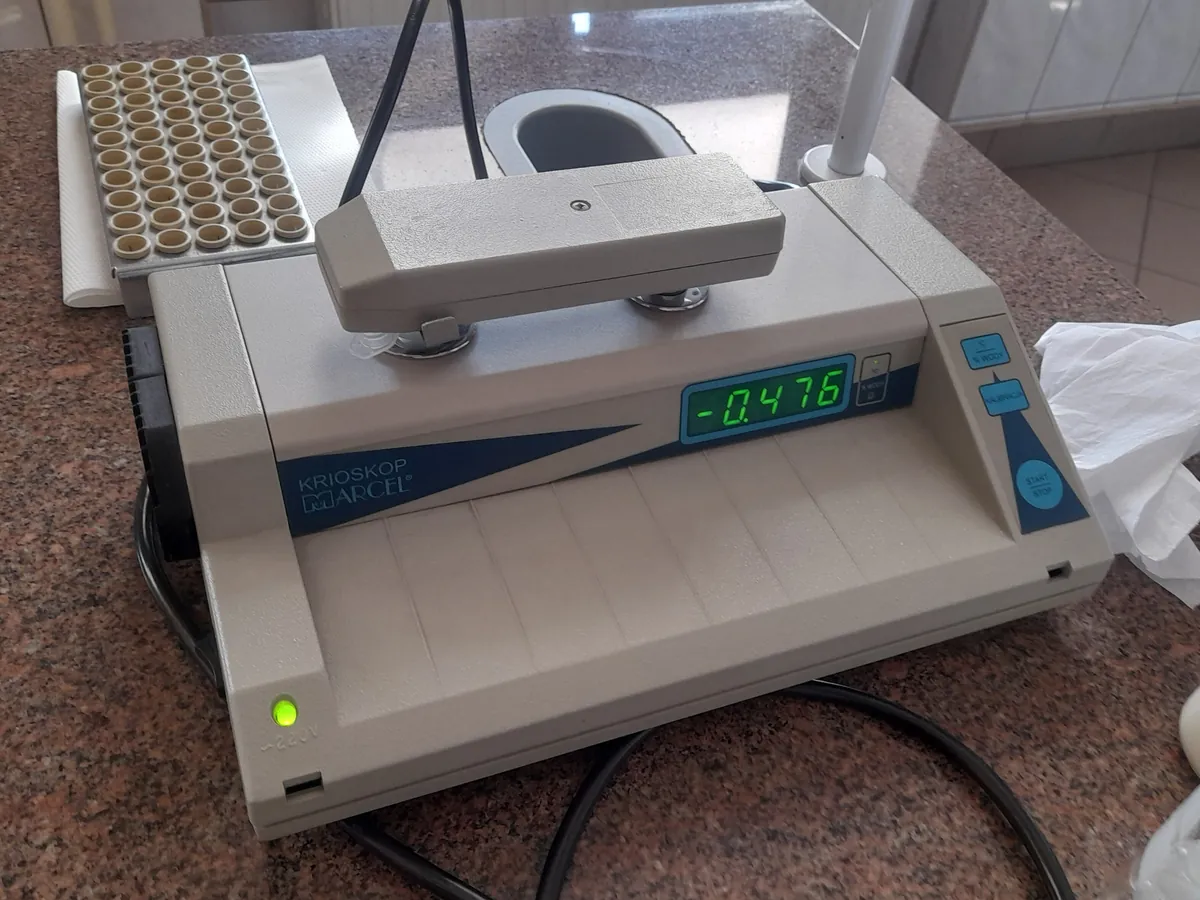
Osmometer
Measures the osmolality of a solution, the total concentration of dissolved particles, usually by how much the solution's freezing point is lowered. Used for injections, eye drops and infusion fluids.
Explore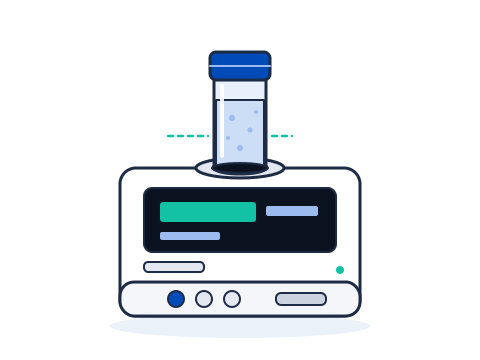
Turbidity meter
Measures how cloudy a liquid is by shining light through it and measuring the light scattered by tiny particles. Results are given in NTU or FNU and are used for clarity and opalescence tests.
Explore
Dosage-form testing
Dissolution, disintegration, hardness and friability.
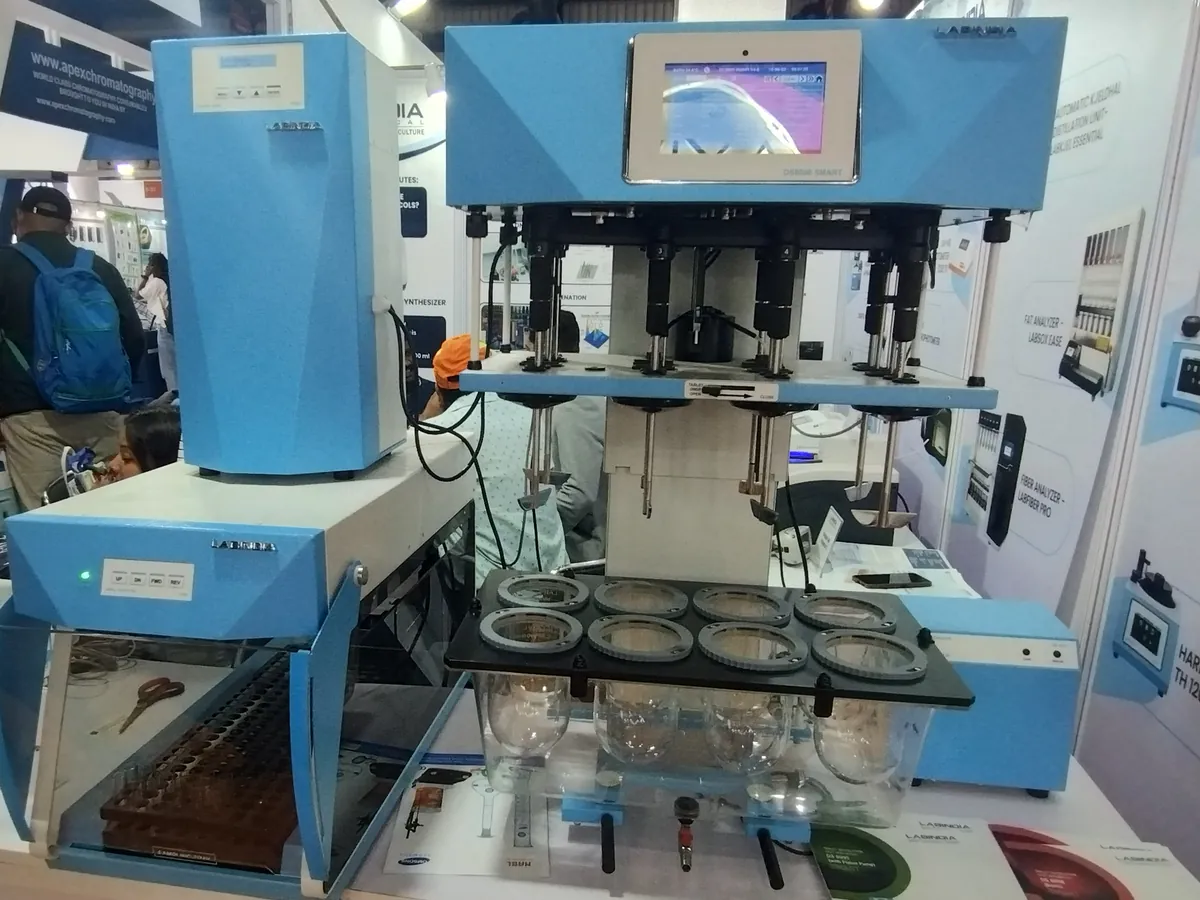
Dissolution tester
Measures how fast and how completely the drug is released from a tablet or capsule into a liquid medium held at body temperature. A key quality and release test for oral solid dosage forms.
Explore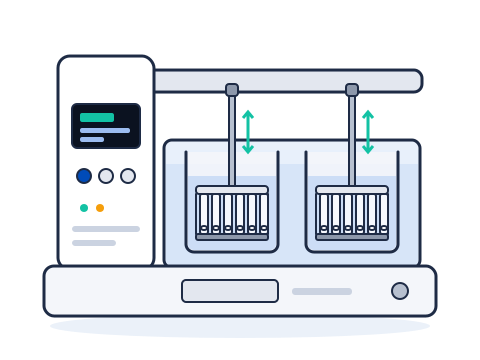
Disintegration tester
Checks whether tablets or capsules break up within a stated time when moved up and down in a liquid at 37 °C. A quick, routine test for release and in-process control.
Explore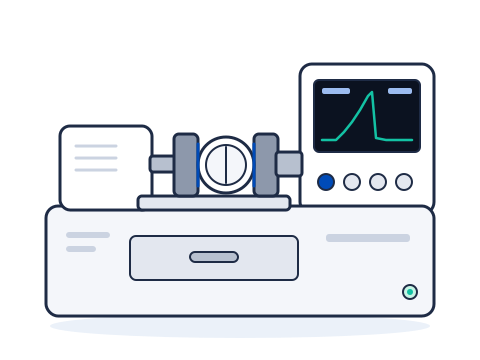
Hardness tester
Measures the force needed to break a tablet by squeezing it between two jaws. Used to control compression and to make sure tablets are strong enough to survive coating, packing and handling.
Explore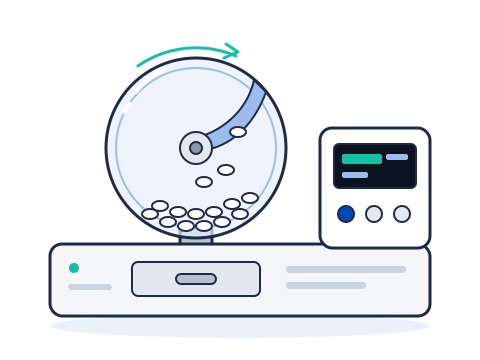
Friability tester
Tumbles a sample of uncoated tablets in a rotating drum to see how much weight they lose by chipping and abrasion. Shows whether tablets can survive coating, packing and transport.
ExploreLeak tester
Checks that packs and containers are sealed, by pulling a vacuum around them and looking for dye ingress, bubbles or a rise in chamber pressure. Covers simple blister leak tests and deterministic vacuum-decay CCI testing.
Explore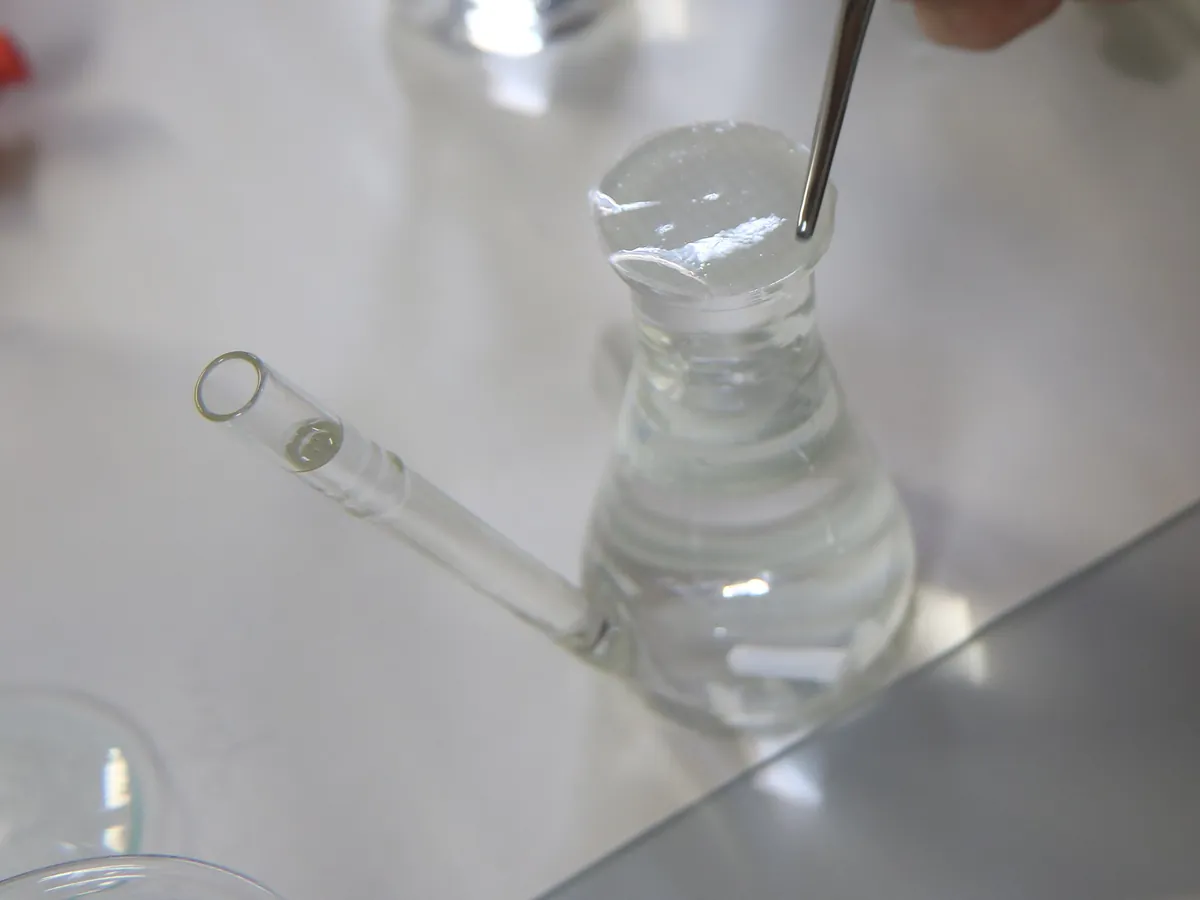
Franz cell
A two-chamber glass cell used to measure how fast drug is released from creams, gels and ointments, or permeates through skin. Drug passes through a membrane into a stirred receptor medium that is sampled over time.
ExploreLiquid particle counter
Counts and sizes sub-visible particles in injections by passing the liquid through a narrow light beam. Each particle casts a shadow whose size gives the particle size. Used for the USP <788> particulate matter test.
Explore
Thermal analysis & ovens
DSC, TGA, melting point, ovens and furnaces.
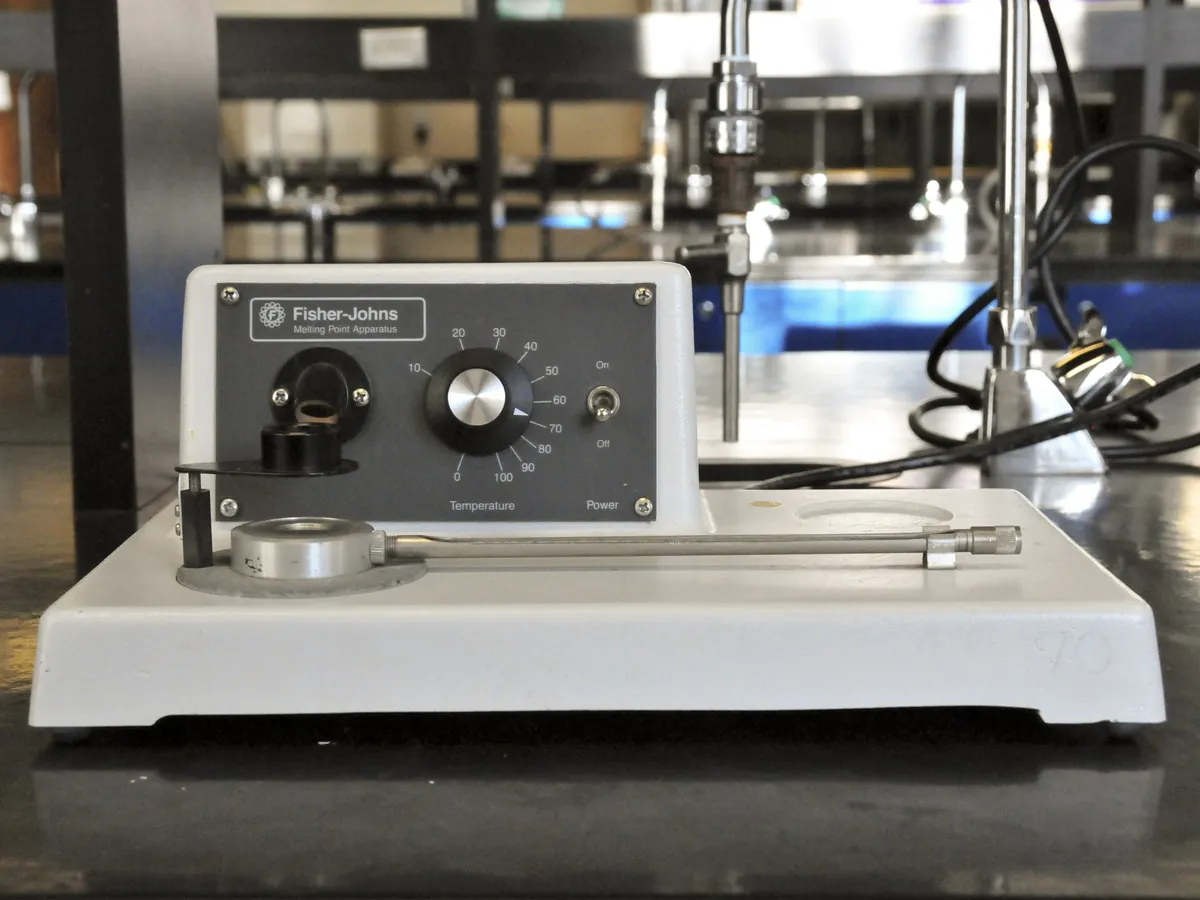
Melting point apparatus
Heats a sample packed in a thin glass capillary at a slow, controlled rate and records the temperatures at which it starts and finishes melting. Used for identity and purity checks of APIs and excipients.
Explore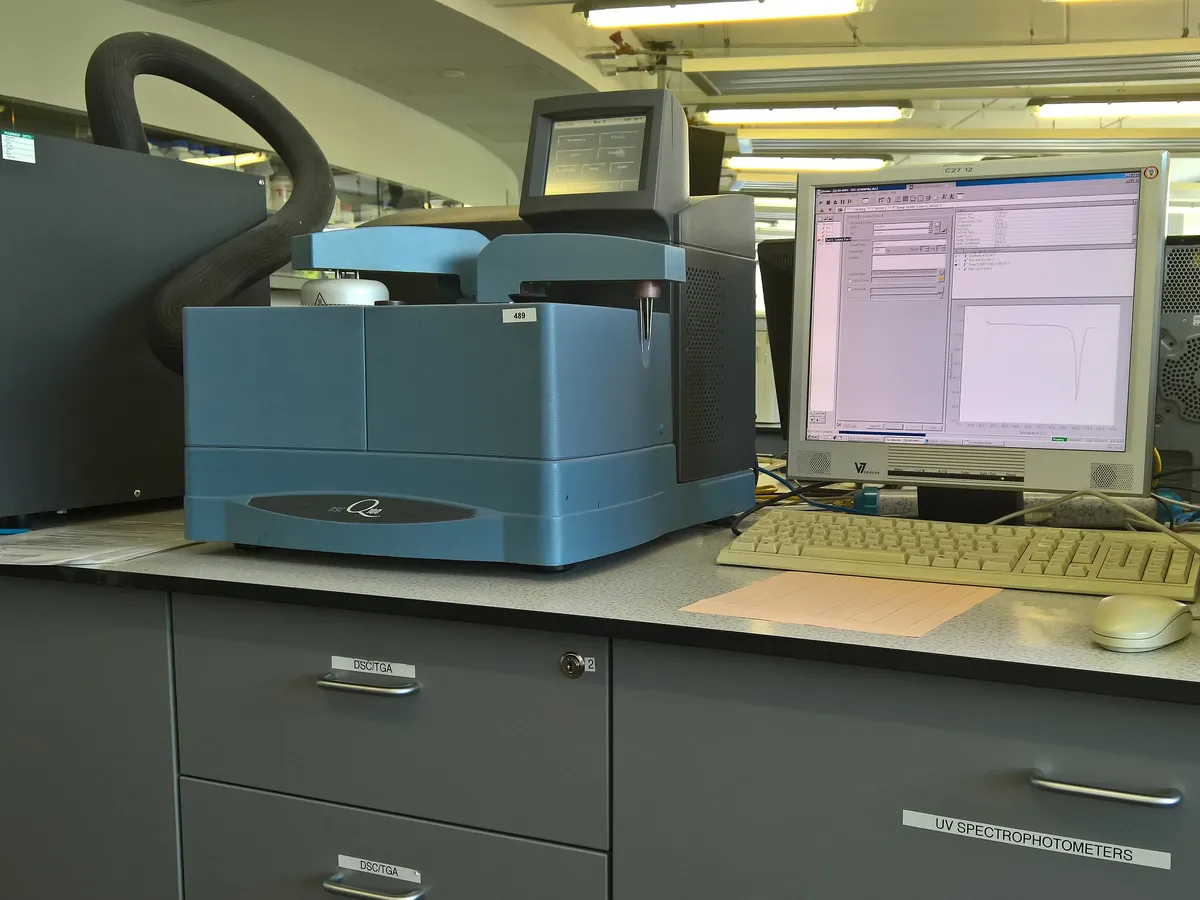
DSC
Measures the heat flowing into or out of a small sample compared with an empty reference pan while both are heated or cooled. It shows melting, crystallisation, glass transitions and polymorphic changes.
Explore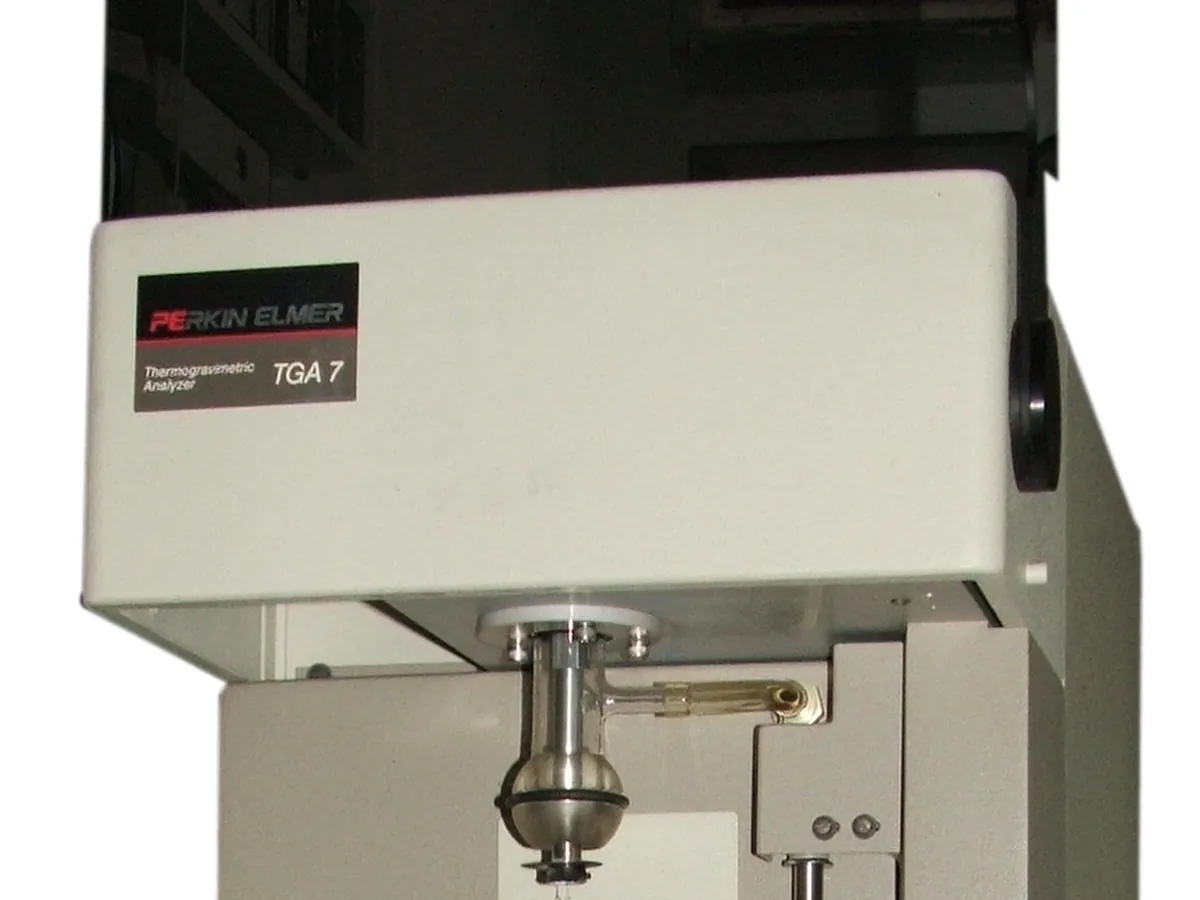
TGA
Weighs a sample continuously while it is heated, and records mass loss against temperature. Used to measure water and solvent content, decomposition and residue.
Explore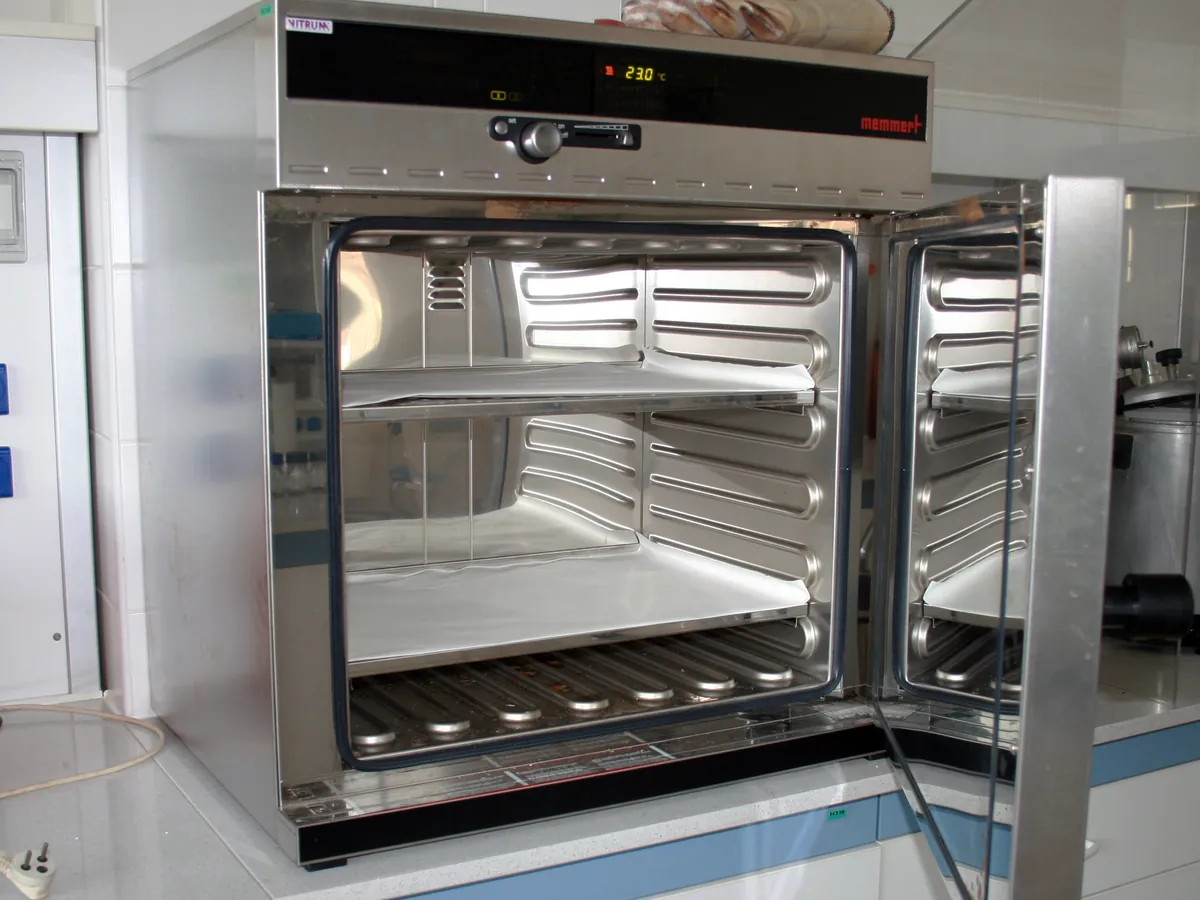
Hot air oven
An electrically heated, insulated cabinet that holds samples or glassware at a set temperature. In QC it is used mainly for loss on drying, drying of reference materials and drying of glassware.
Explore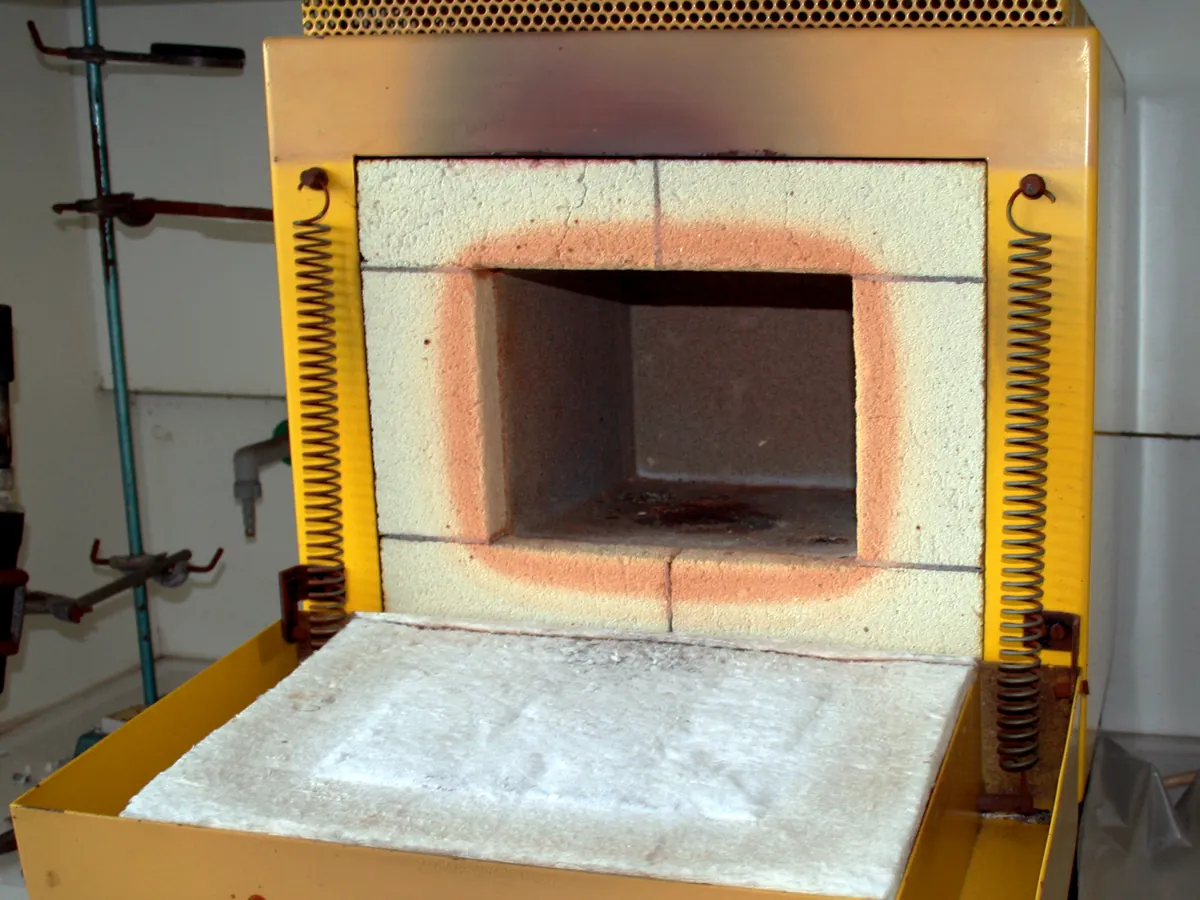
Muffle furnace
An electrically heated, insulated chamber that reaches several hundred to over 1000 °C. In QC it is used to ignite samples for sulphated ash (residue on ignition) and to bring crucibles to constant mass.
Explore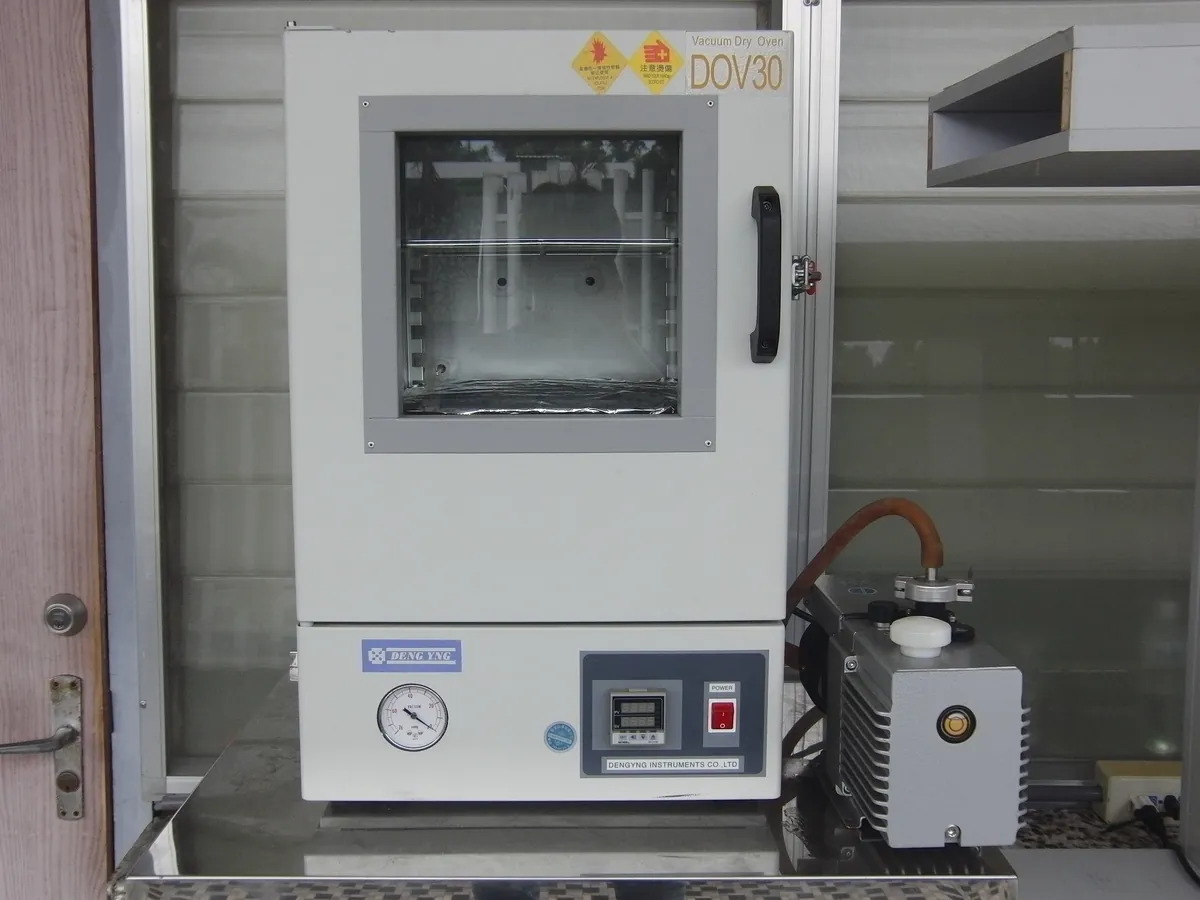
Vacuum oven
A sealed, heated chamber connected to a vacuum pump. Lowering the pressure lets samples dry at a lower temperature, which suits heat-sensitive materials and LOD tests done 'in vacuum'.
Explore
Particle & solid-state
Particle size, XRPD, tapped density, microscopy.
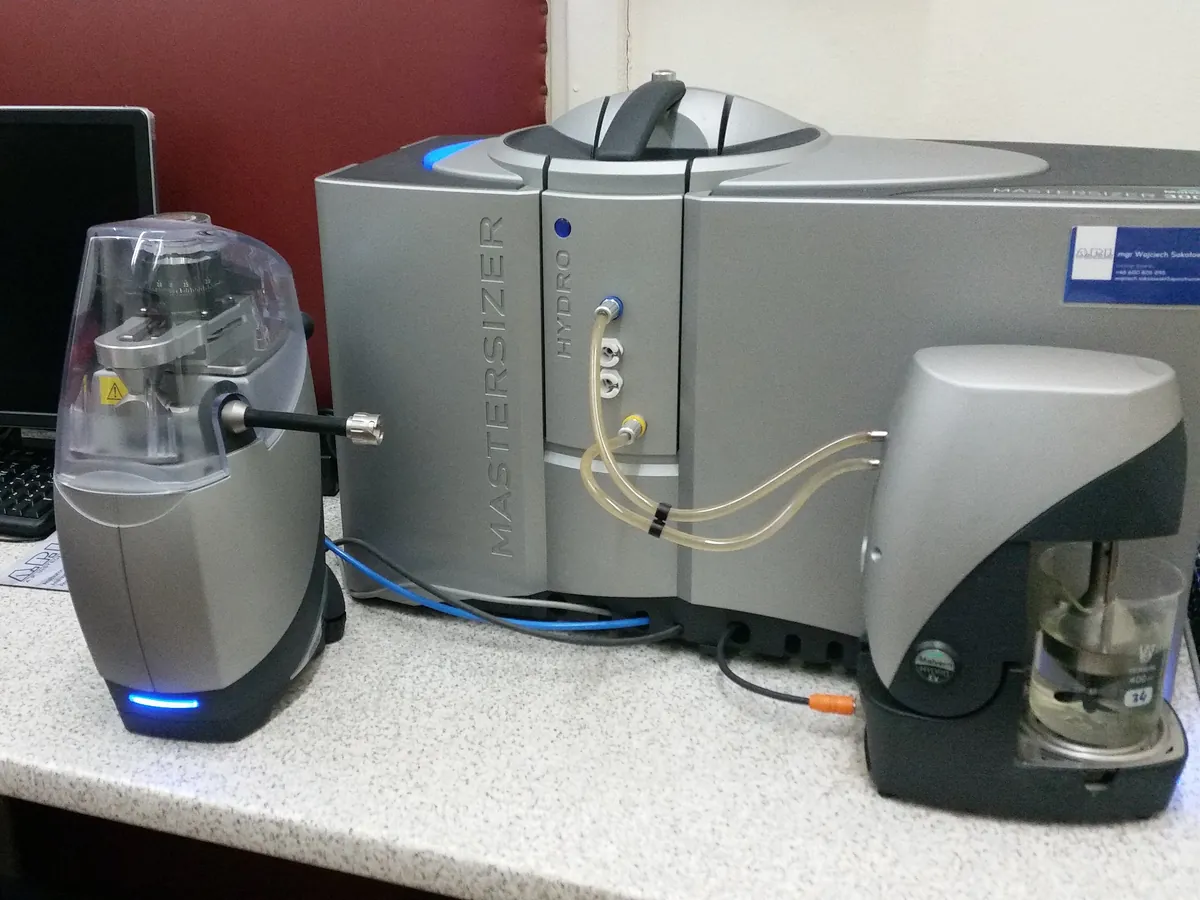
Laser diffraction PSA
Measures the particle size distribution of powders, suspensions and emulsions from the pattern of laser light scattered by the particles. Reports D10, D50 and D90 within a minute or two.
Explore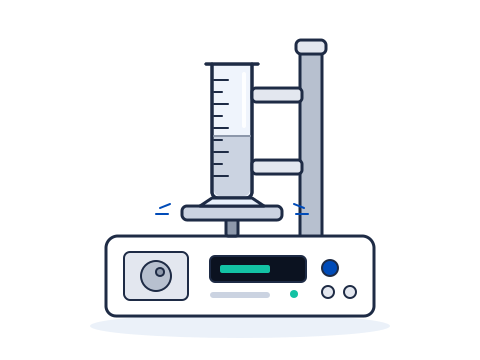
Tap density tester
Taps a graduated cylinder of powder a set number of times from a fixed height so the bed packs down. The starting and final volumes give bulk density, tapped density, Carr's index and Hausner ratio.
Explore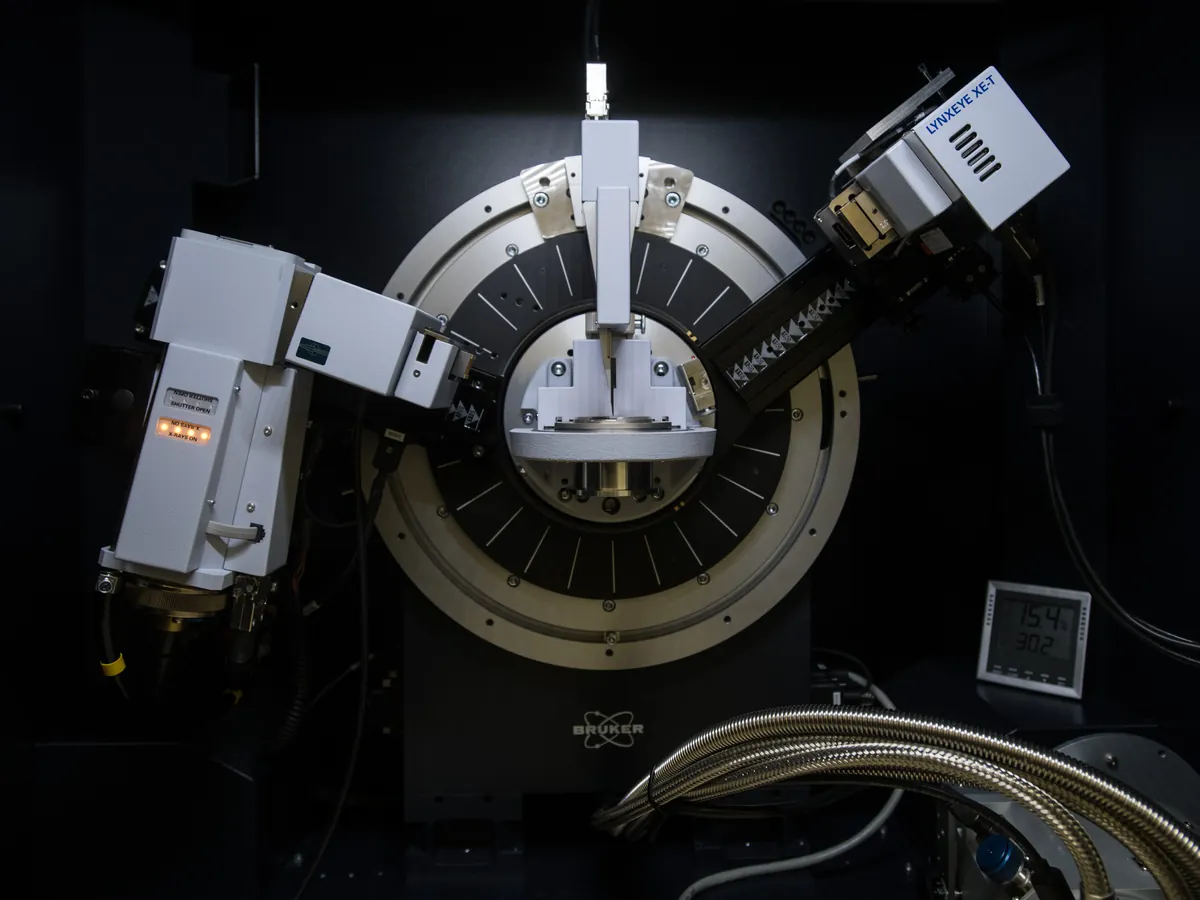
XRPD
Directs X-rays at a powder and records the angles at which they are diffracted by the crystal lattice. The pattern is a fingerprint of the crystal form, used to identify polymorphs, salts and hydrates and to detect amorphous content.
Explore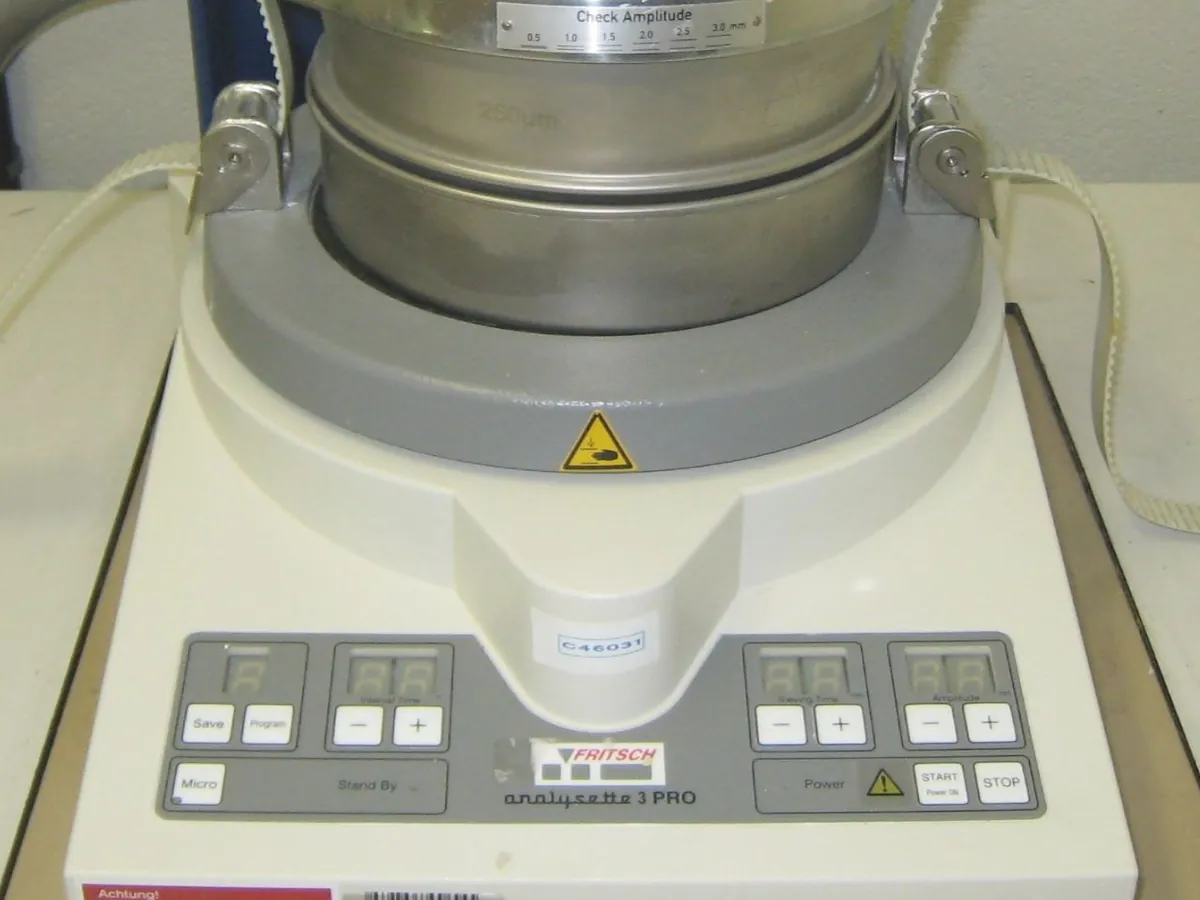
Sieve shaker
Shakes a stack of test sieves so a powder or granule separates into size fractions. Weighing each sieve gives the particle size distribution by mass.
Explore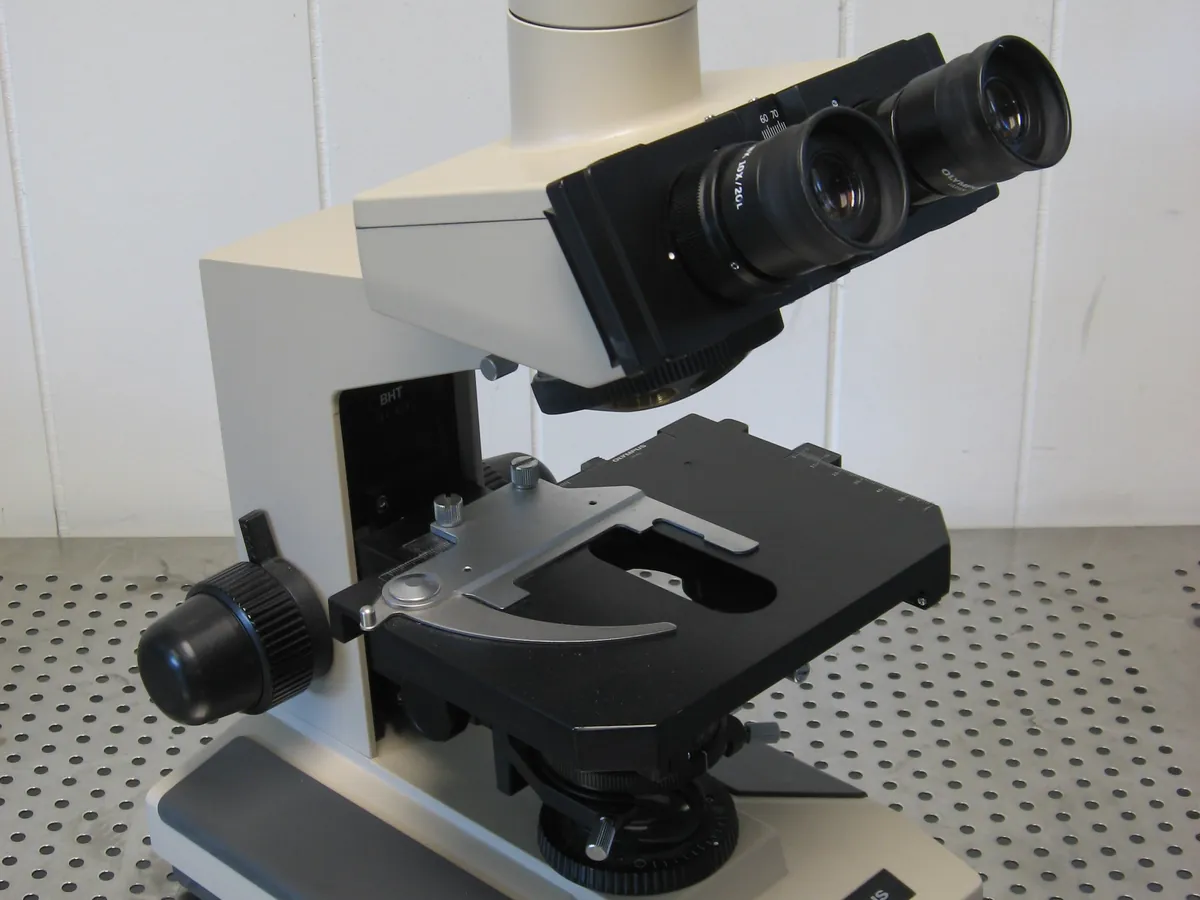
Optical microscope
Magnifies particles so their size, shape and crystal habit can be seen and measured with a calibrated eyepiece graticule or camera. Used for particle size, morphology and identification checks.
Explore
Microbiology & sterility
Autoclaves, LAF, incubators, air samplers and endotoxin.
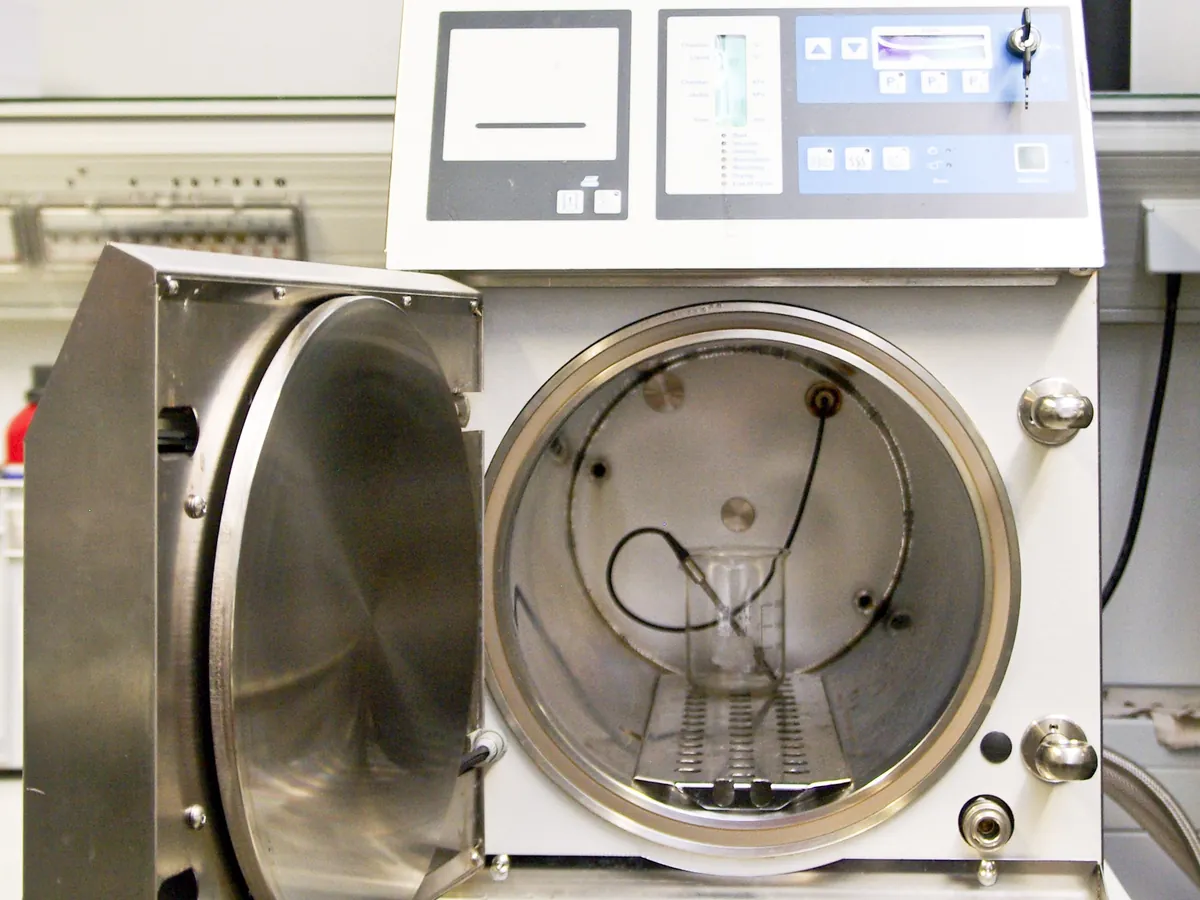
Autoclave
Kills microorganisms, including bacterial spores, with saturated steam under pressure. Used in the QC microbiology lab to sterilise culture media, glassware and equipment, and to decontaminate used media before disposal.
Explore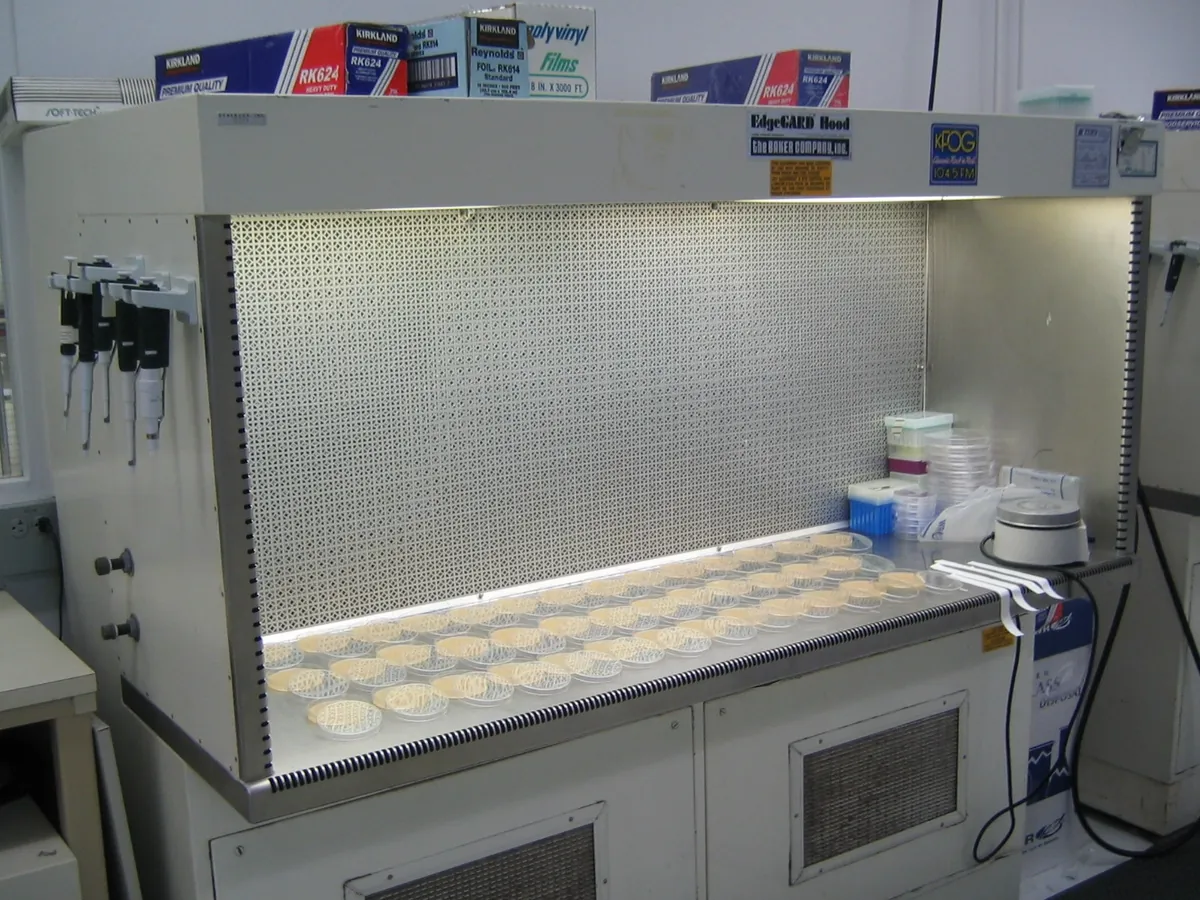
LAF
A work station that blows HEPA-filtered air in a uniform, one-directional stream over the work surface to give an ISO 5 / Grade A zone for aseptic handling of media, samples and sterile materials.
Explore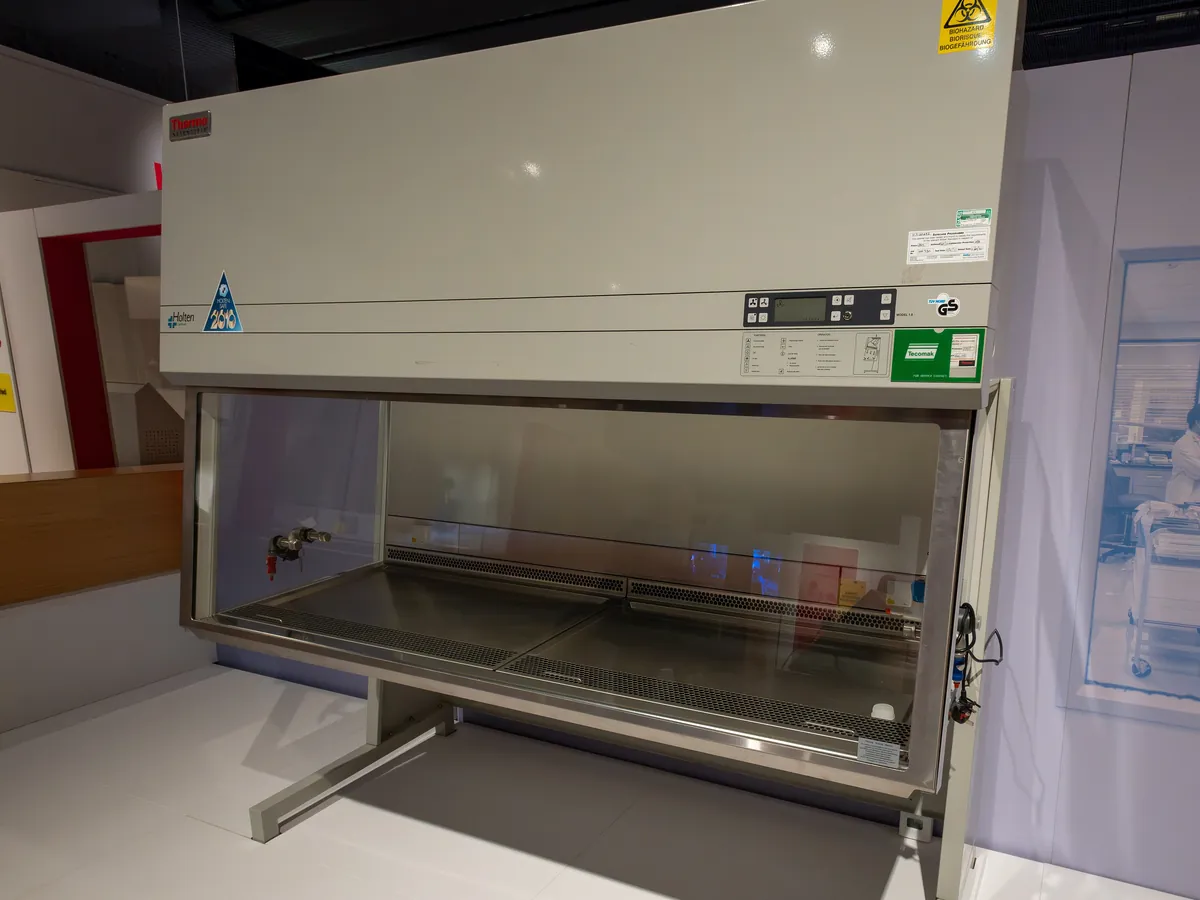
BSC
A ventilated enclosure that protects the operator, the product and the room when handling microorganisms. HEPA-filtered downflow keeps the work clean, an inflow of room air at the front stops aerosols escaping, and the exhaust is HEPA-filtered before it leaves the cabinet.
Explore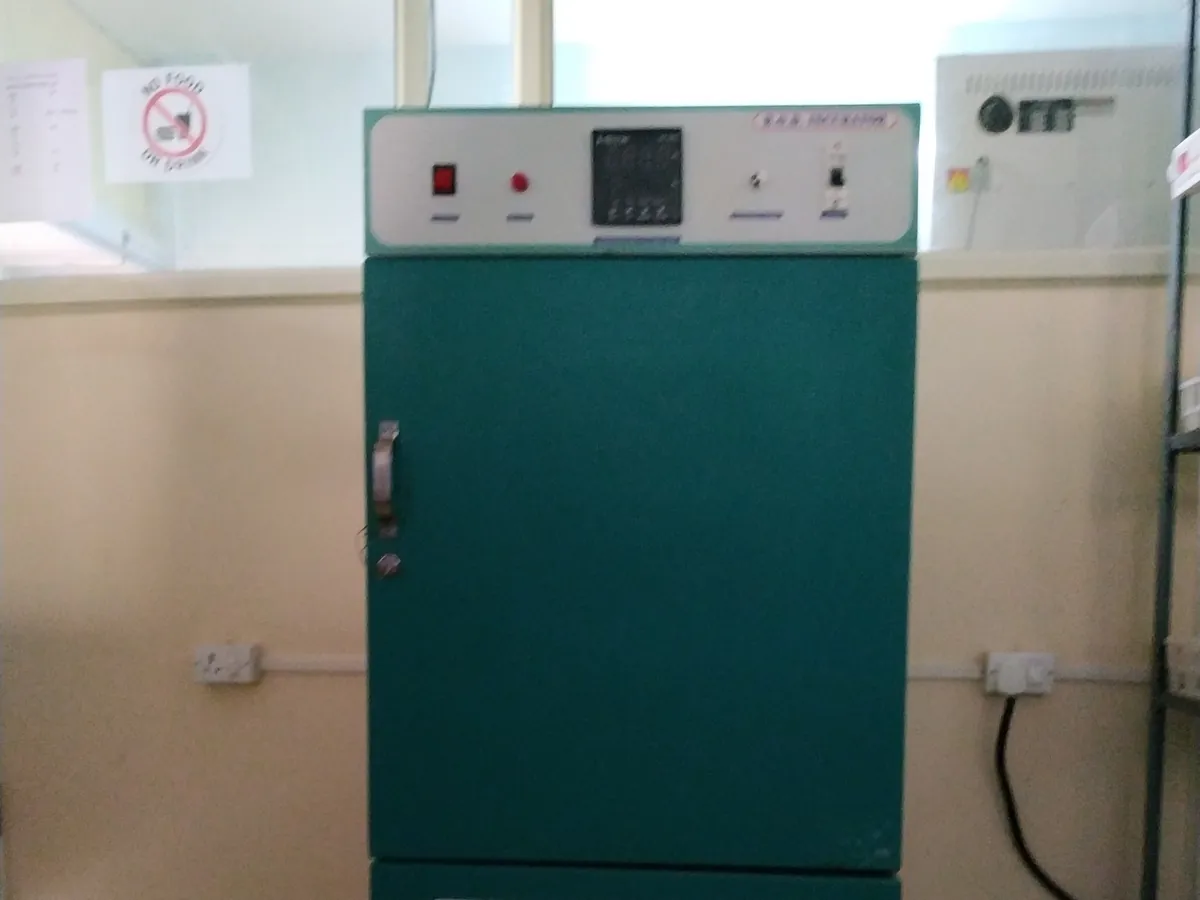
Incubator
A temperature-controlled chamber that holds culture plates and tubes at a fixed temperature so microorganisms can grow. BOD incubators can heat and cool, so they also hold temperatures below room temperature, such as 20–25 °C for fungi.
Explore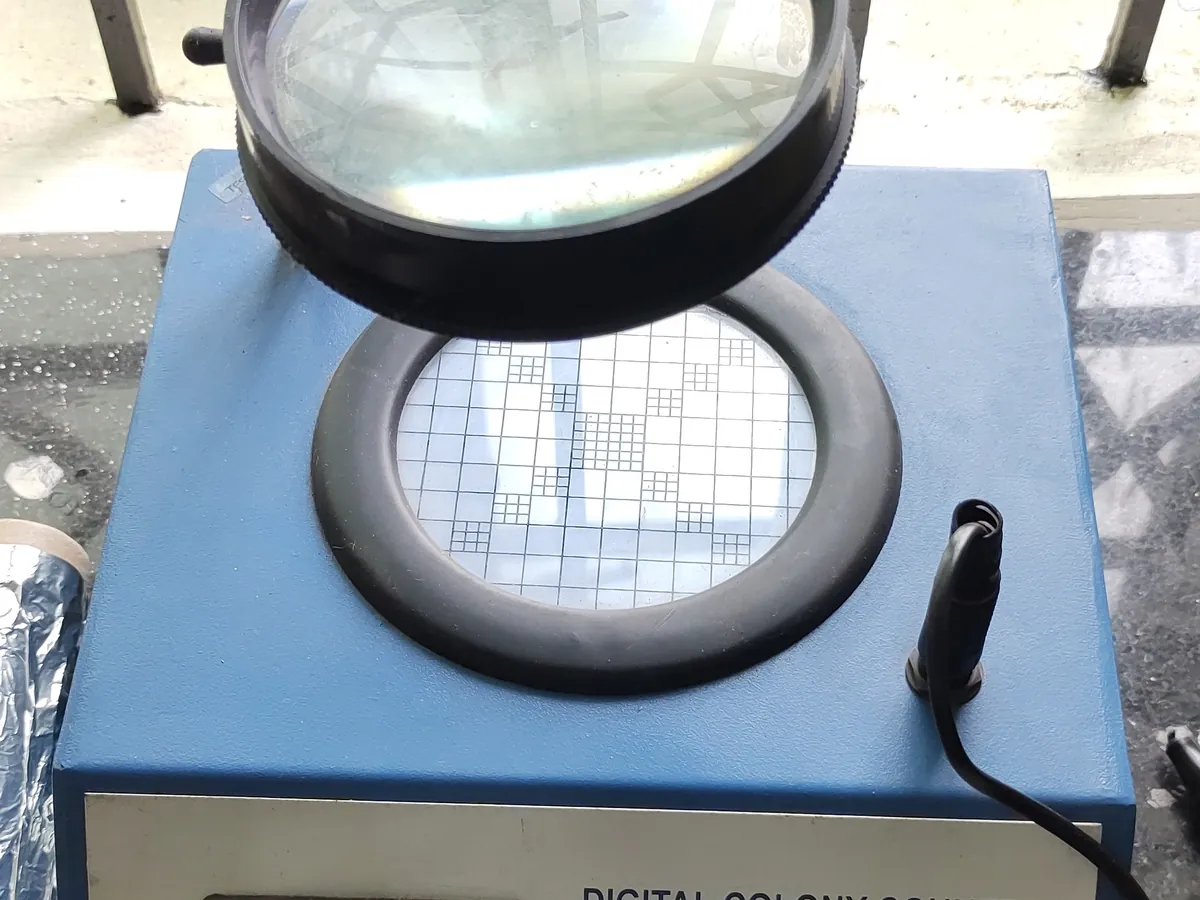
Colony counter
Helps the analyst count colonies on agar plates and membranes accurately, either by a lit magnifier with a counting pen (manual) or by a camera and image analysis software (automated).
Explore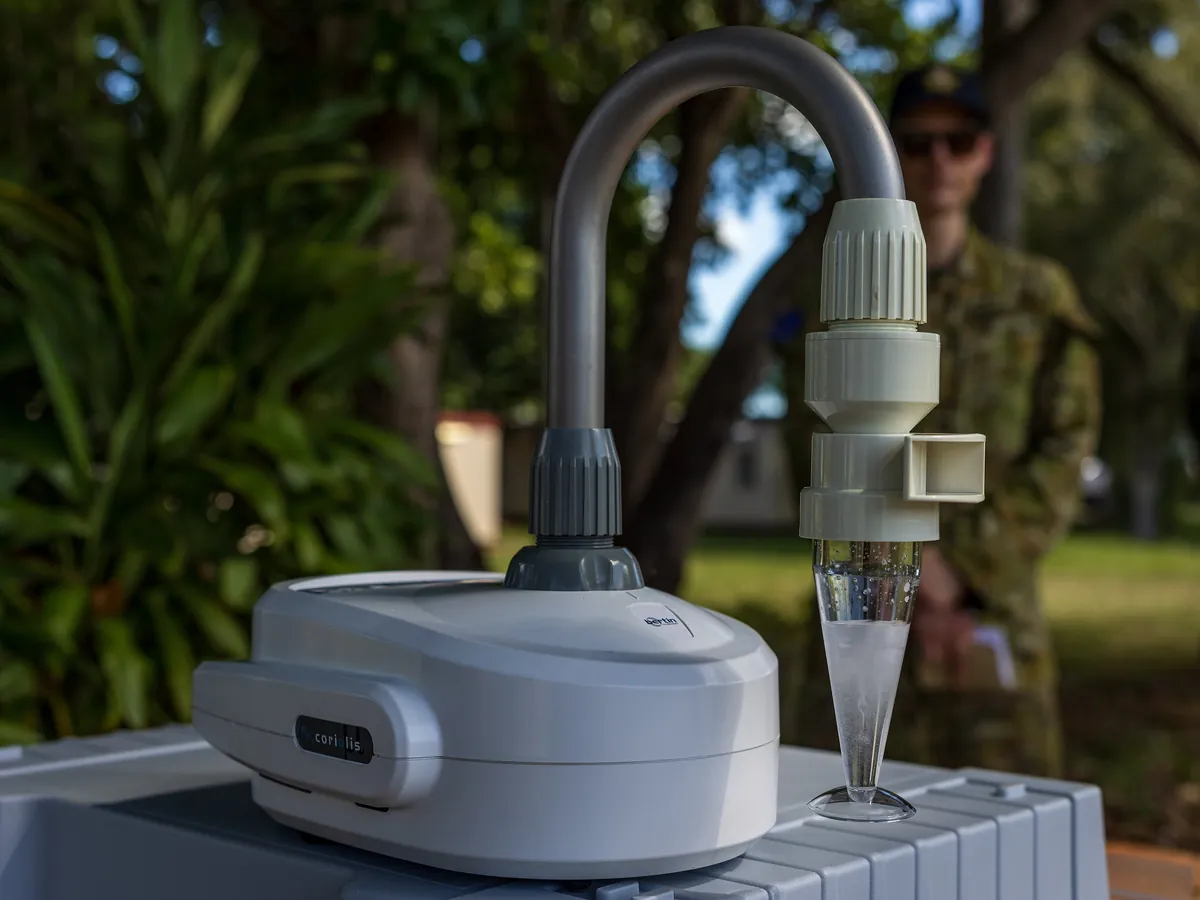
Air sampler
Draws a known volume of air across an agar plate so that airborne microorganisms are collected and can be counted as cfu per m³. Used for active viable air monitoring of clean rooms, isolators and LAF units.
Explore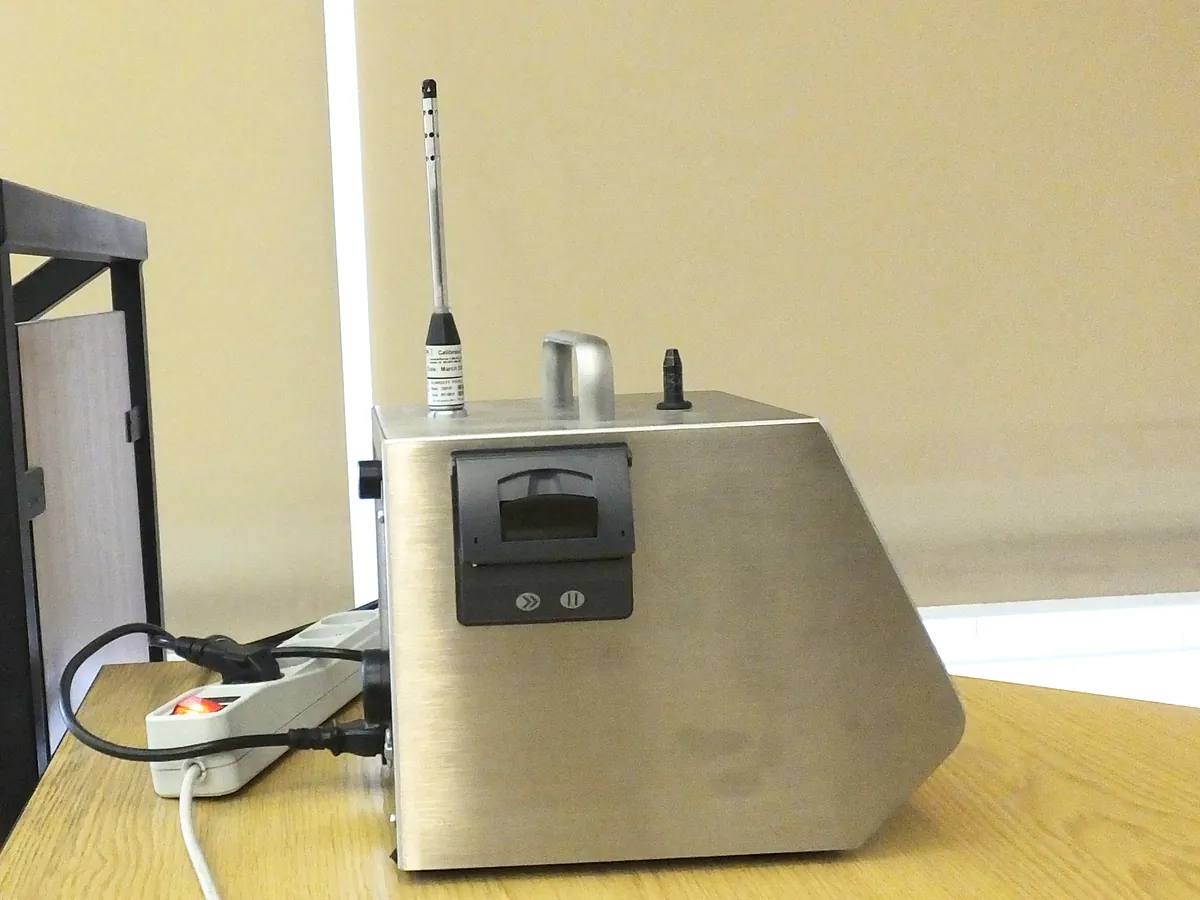
Particle counter
Counts and sizes airborne particles, typically at ≥0.5 µm and ≥5.0 µm, by measuring light scattered as each particle passes through a laser beam. Used to classify clean rooms and to monitor non-viable particles in Grades A–D.
ExploreEndotoxin reader
An incubating photometer that holds LAL reactions at 37 °C and measures the change in absorbance or turbidity over time. Software turns the reaction onset time into an endotoxin concentration in EU/mL using a standard curve.
Explore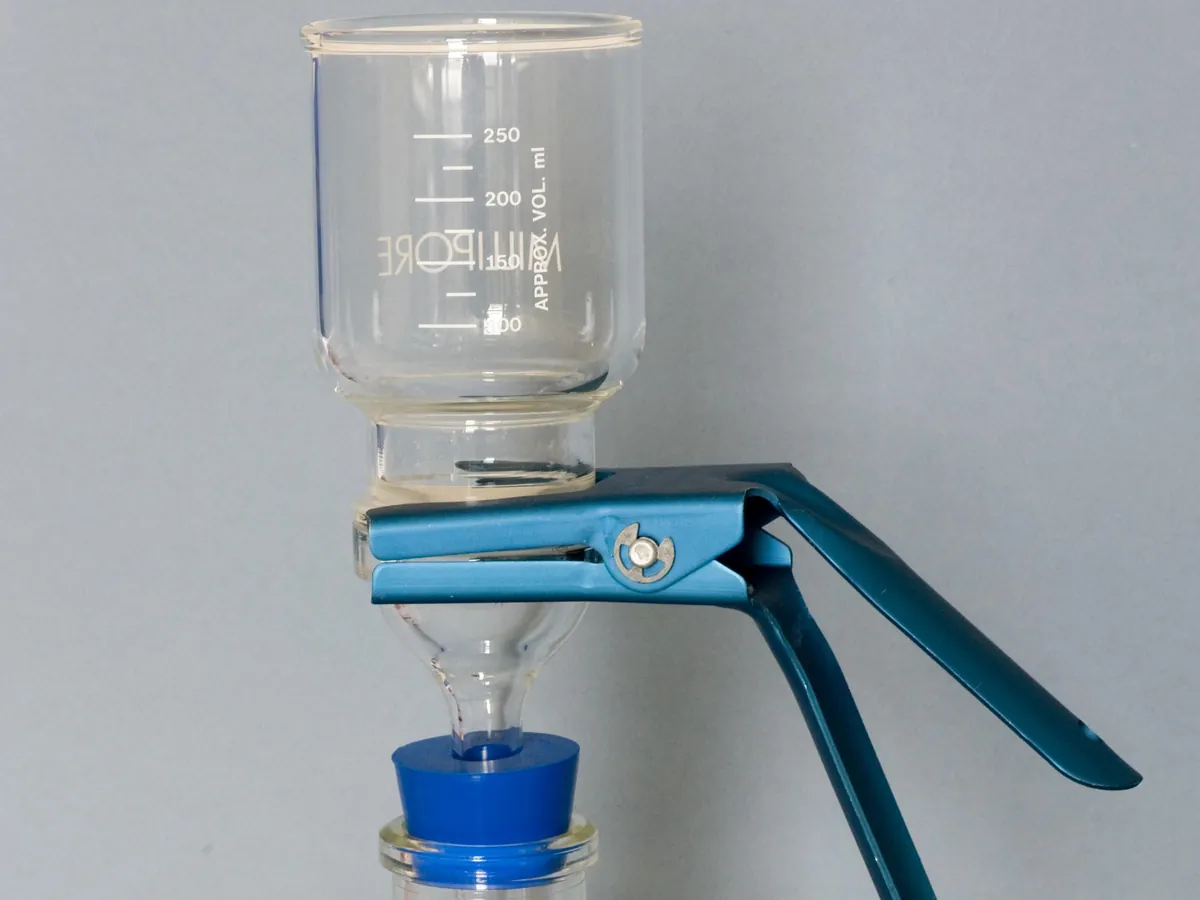
Filtration unit
A manifold with filter funnels connected to a vacuum source (or a peristaltic pump for closed canisters) that passes liquid samples through a 0.45 µm membrane so that microorganisms are retained and can be grown and counted.
Explore
General lab & storage
Sonicators, centrifuges, water baths and stability chambers.
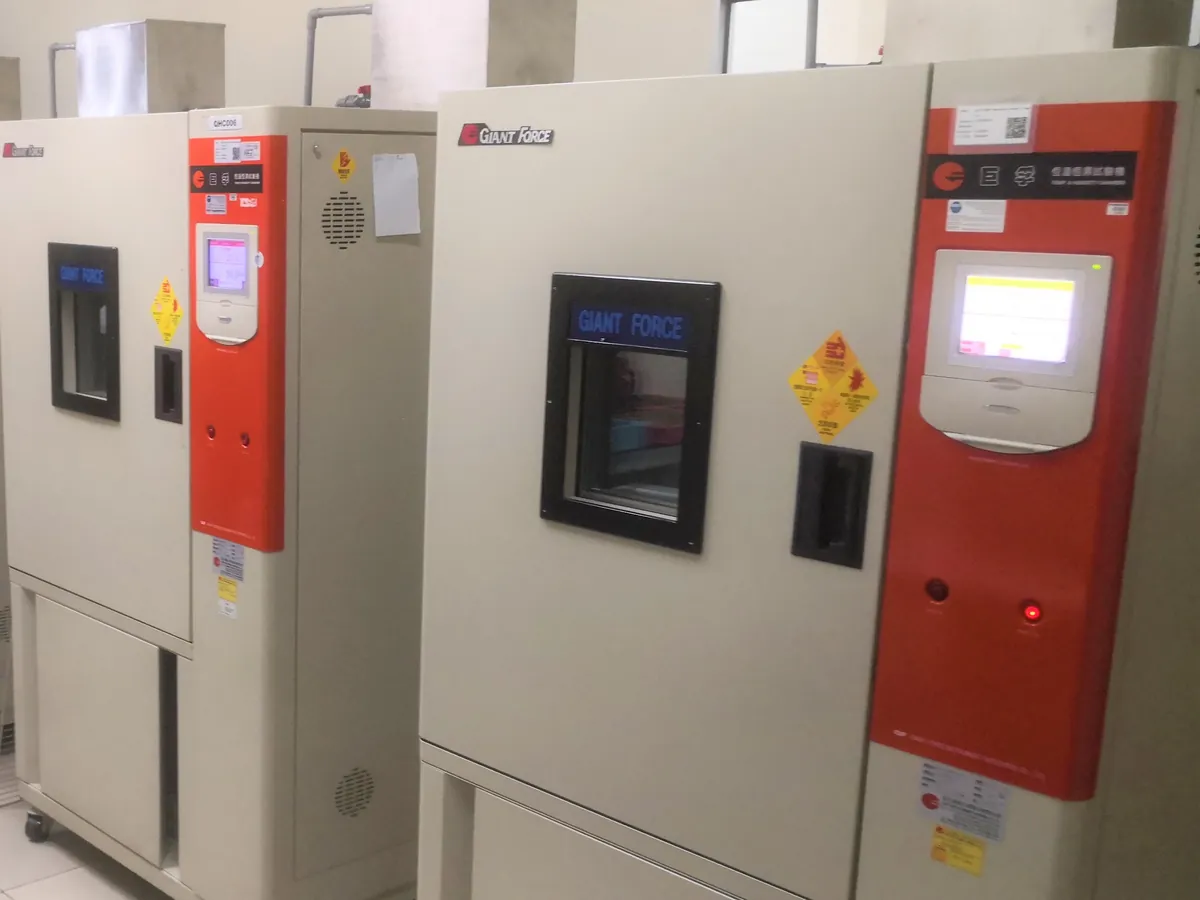
Stability chamber
A cabinet or walk-in room that holds samples at a controlled temperature and relative humidity for months or years, so that the shelf life of a drug product can be established under ICH storage conditions.
Explore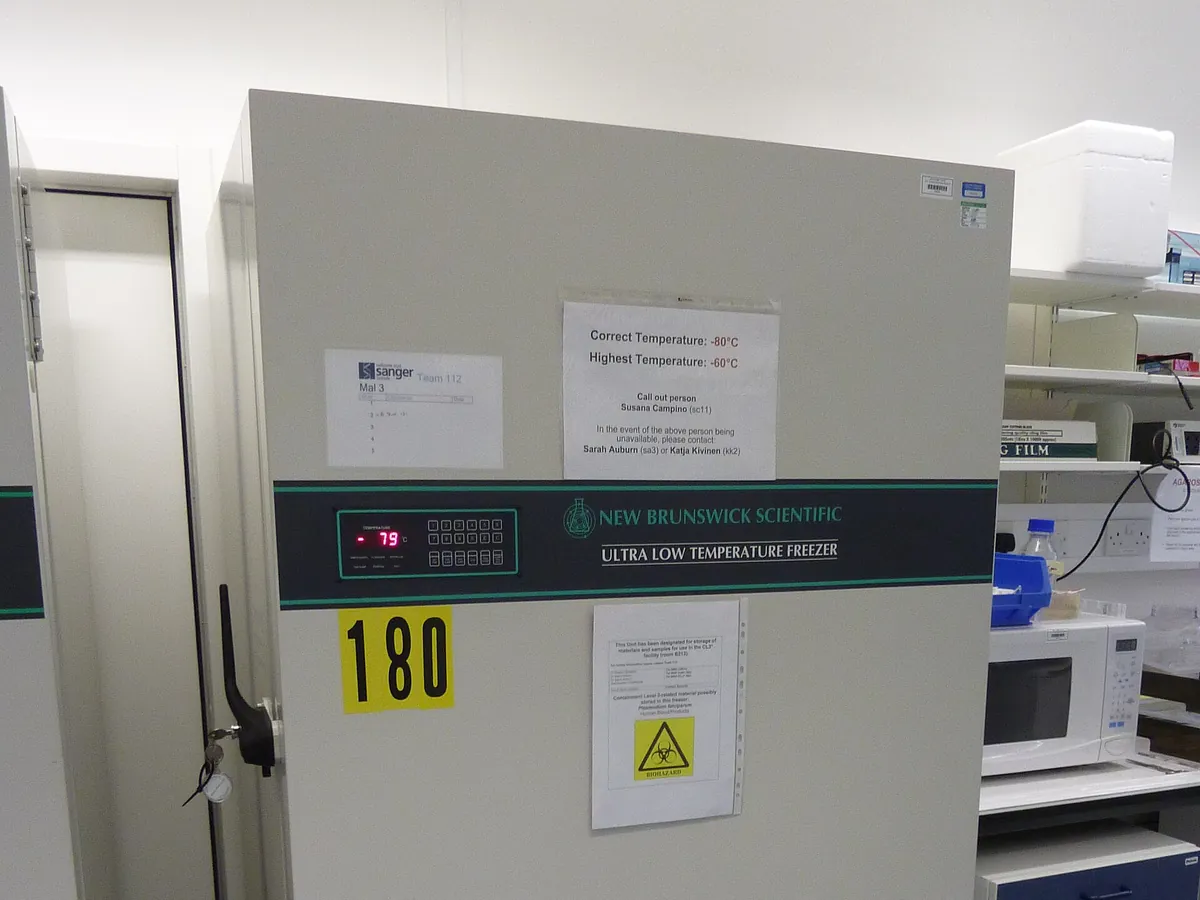
Fridge / freezer
Pharmaceutical-grade cold storage for reference standards, reagents, culture media, samples and temperature-sensitive products, typically at 2–8 °C (refrigerator), −20 °C (freezer) or −80 °C (ultra-low).
Explore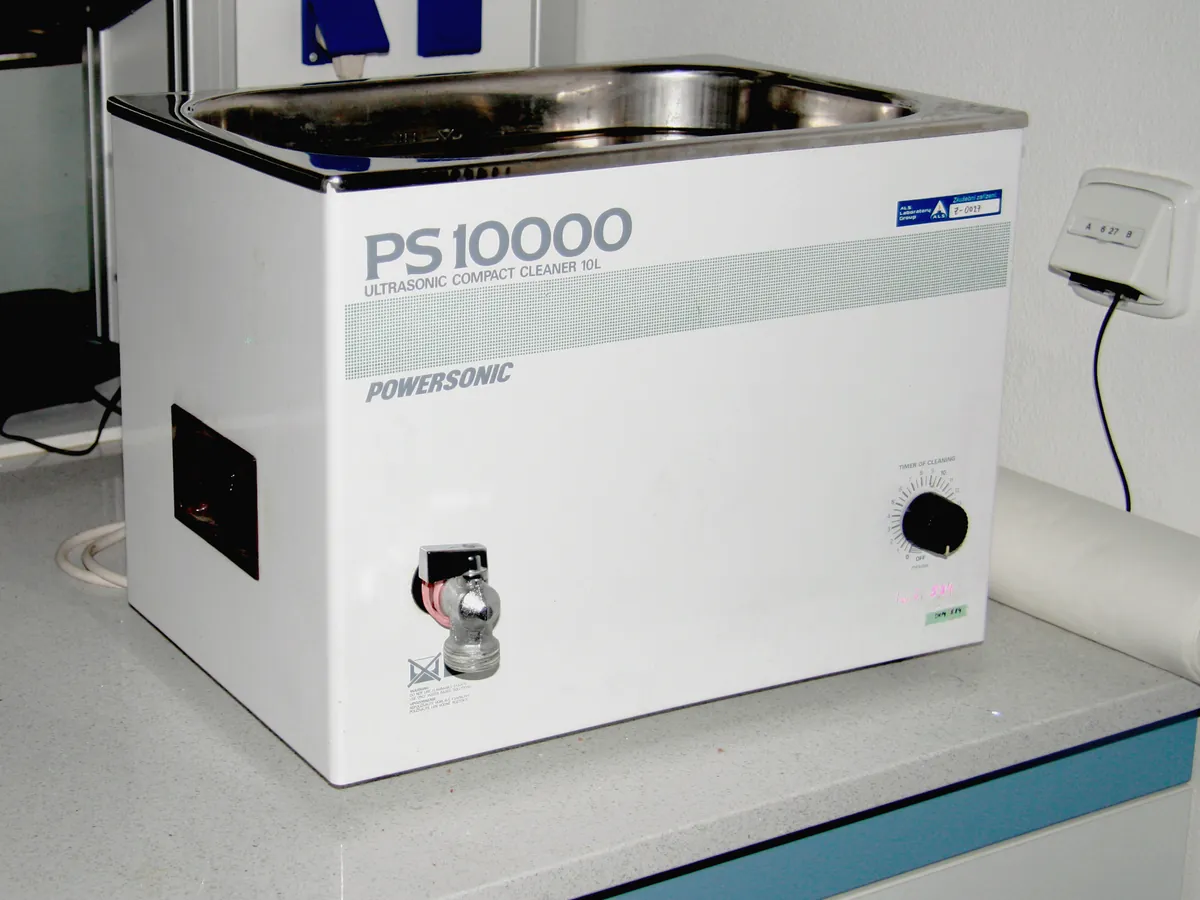
Sonicator
A stainless-steel tank of water vibrated by ultrasound. It is used to dissolve and extract samples, degas mobile phases and clean small glassware.
Explore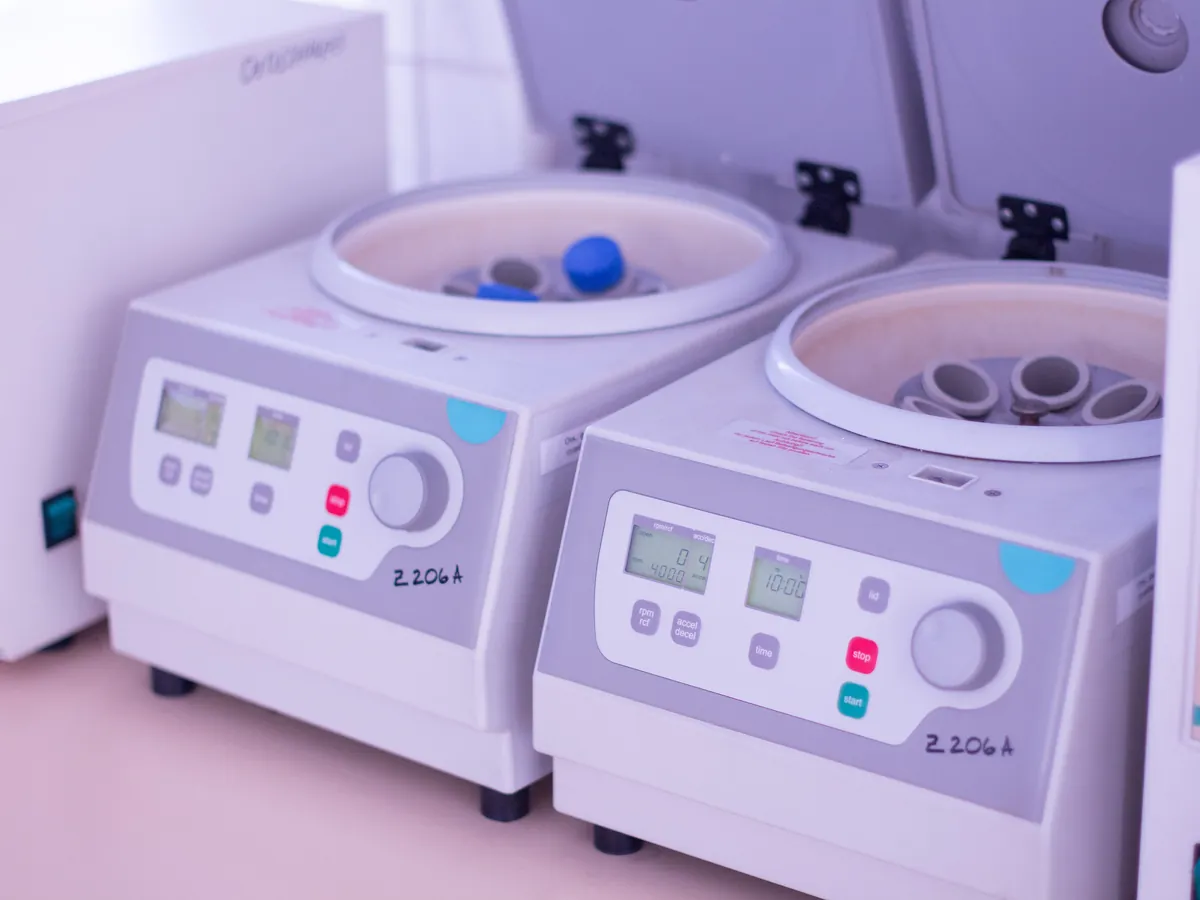
Centrifuge
Spins tubes at high speed so that the centrifugal force separates solids from liquids or liquids of different density. In QC it is used to clarify sample extracts and separate phases.
Explore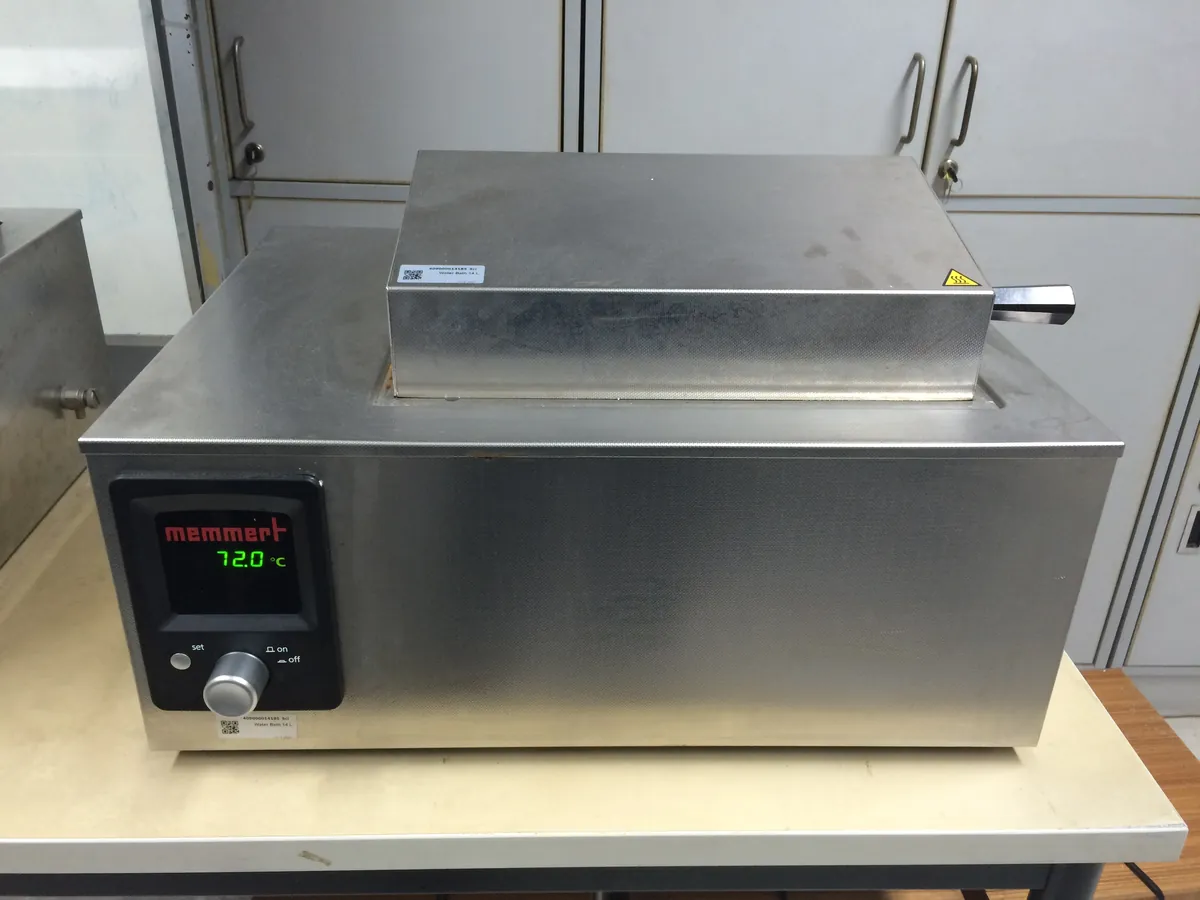
Water bath
A tank of water held at a constant set temperature, used to warm, incubate or melt samples gently and evenly.
Explore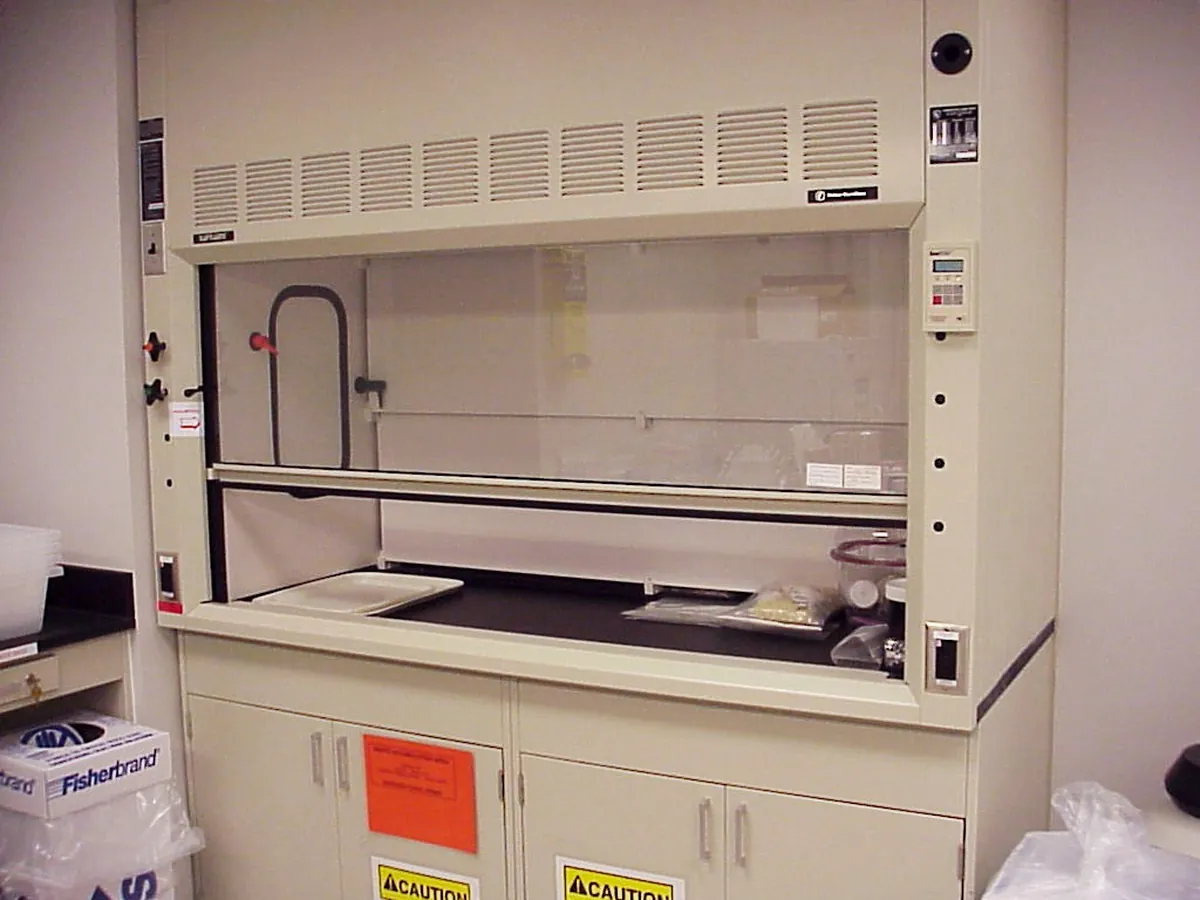
Fume hood
A ventilated enclosure that draws air away from the user to capture and remove harmful vapours, gases and dusts while working with chemicals.
Explore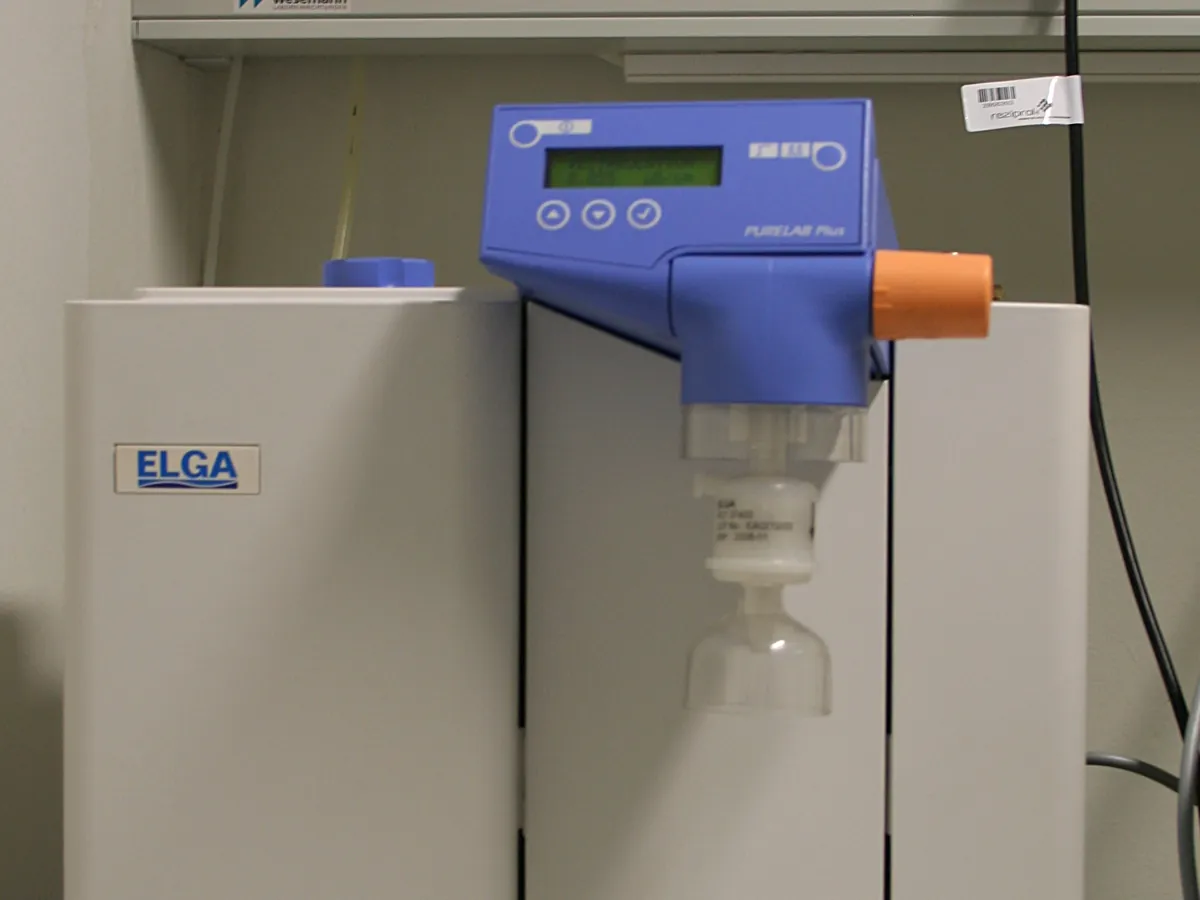
Lab water system
Produces purified and ultrapure water for the laboratory by combining pretreatment, reverse osmosis, ion exchange, UV and final filtration. Supplies water for HPLC mobile phases, standards, reagents and microbiology.
Explore
Volumetric & glassware
Pipettes, burettes, volumetric flasks and thermometers.
Micropipette
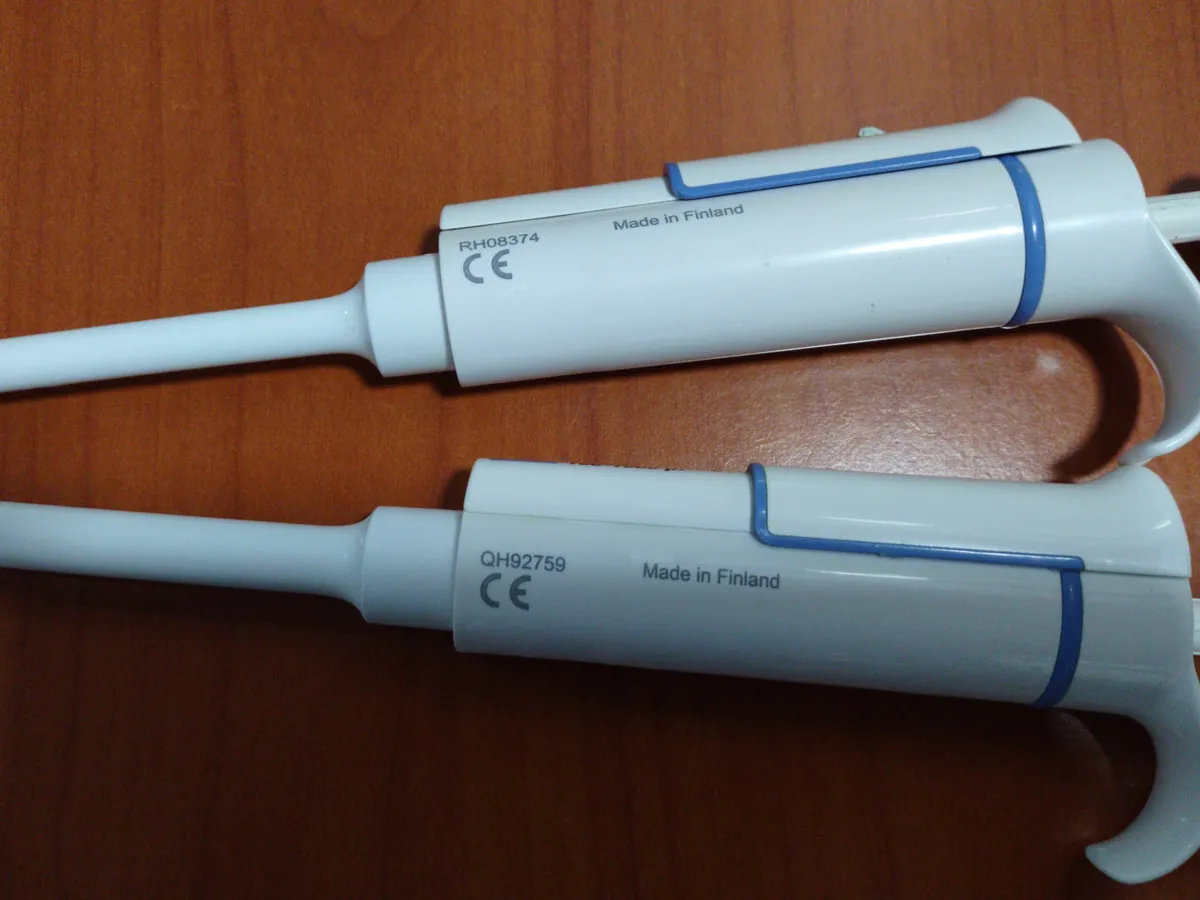
A hand-held, piston-operated device that measures and dispenses small liquid volumes, typically 0.1 µL to 10 mL, using disposable tips. Used for standards, dilutions, microbiology and bioassays.
Explore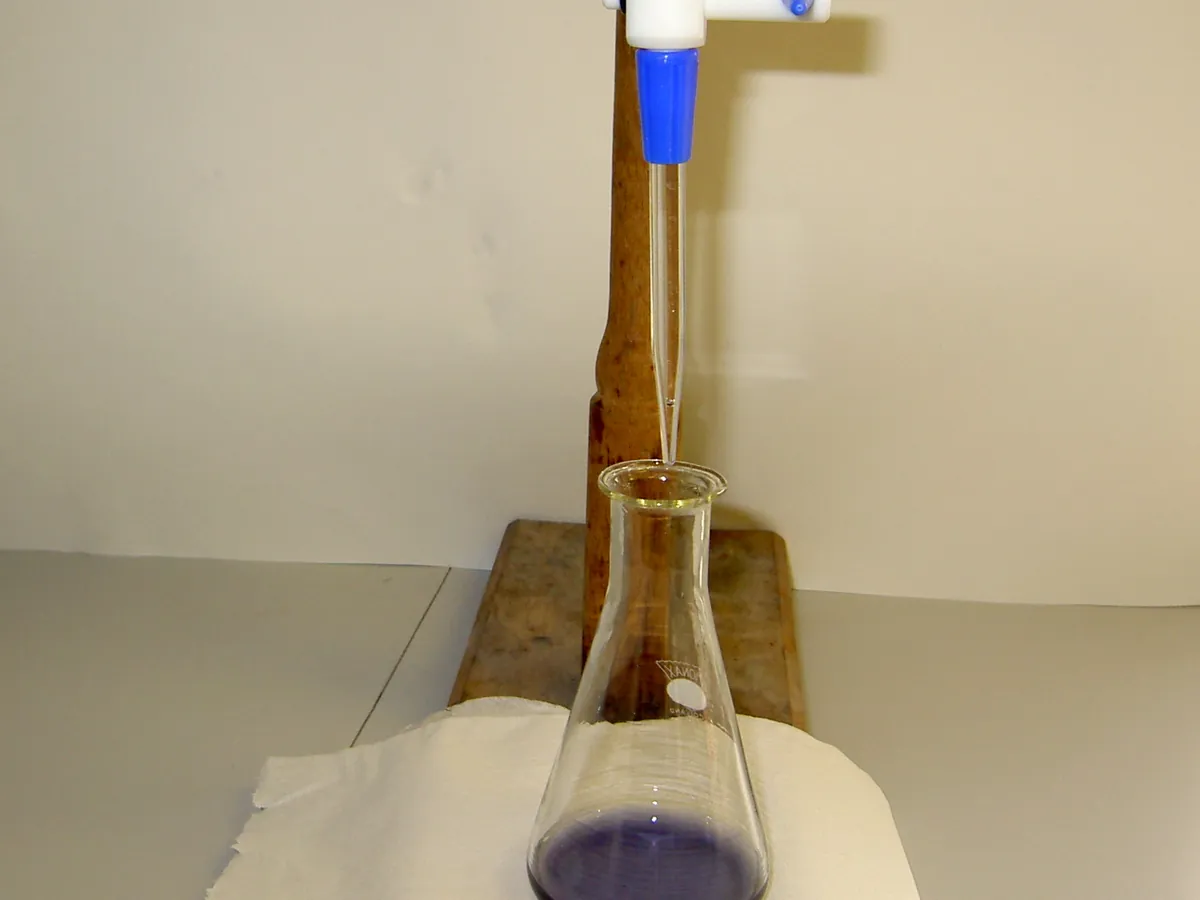
Burette & glassware
Glass apparatus made to contain or deliver accurately known volumes: burettes, volumetric flasks, bulb pipettes and graduated pipettes. The backbone of titrations, standard preparation and dilutions.
Explore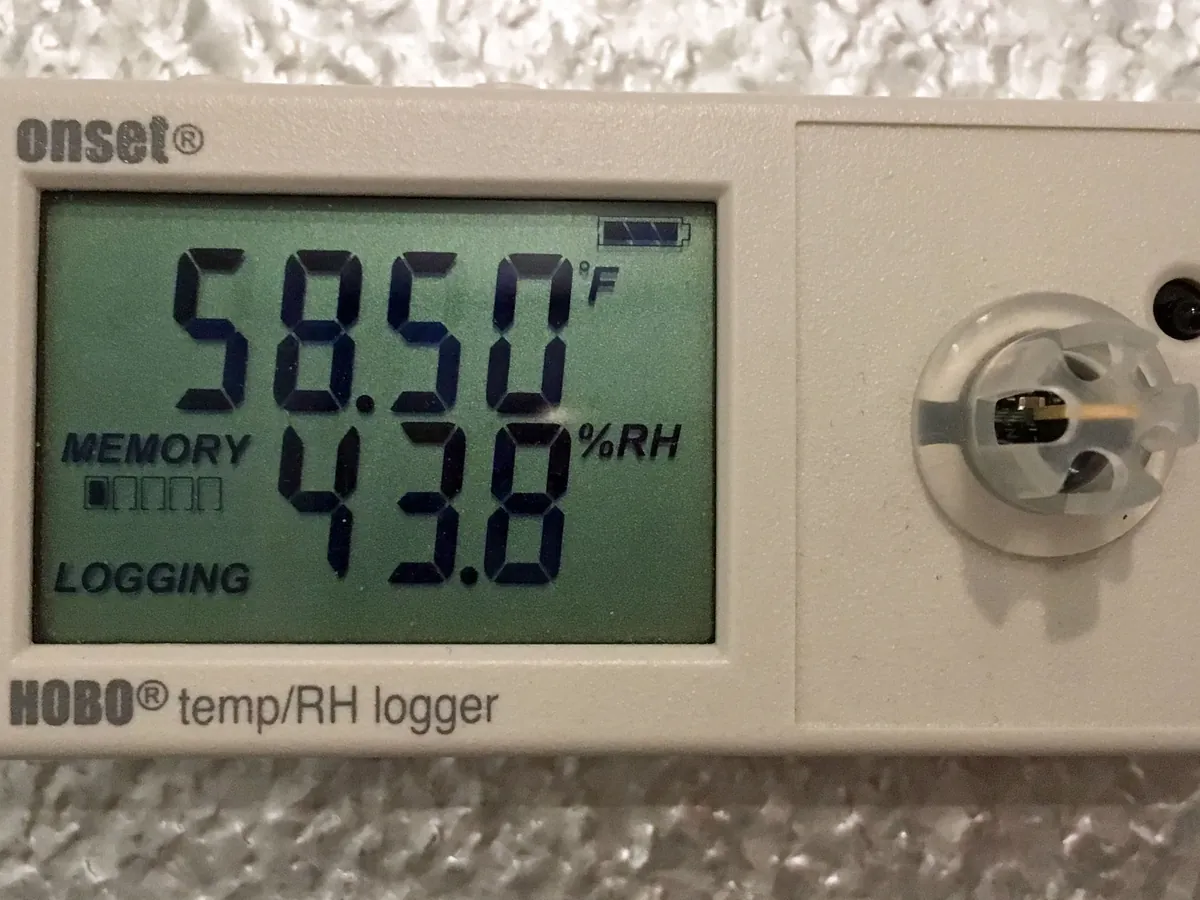
Thermometer / logger
Measures temperature (thermometer) or records it over time (data logger). Used to check water baths, ovens, incubators, fridges, stability chambers and sample temperatures, and to map storage areas.
Explore