Fume hood
A ventilated enclosure that draws air away from the user to capture and remove harmful vapours, gases and dusts while working with chemicals.
- Pharmaceutical
- Chemicals
- Universities and research
- Environmental testing
- Food testing
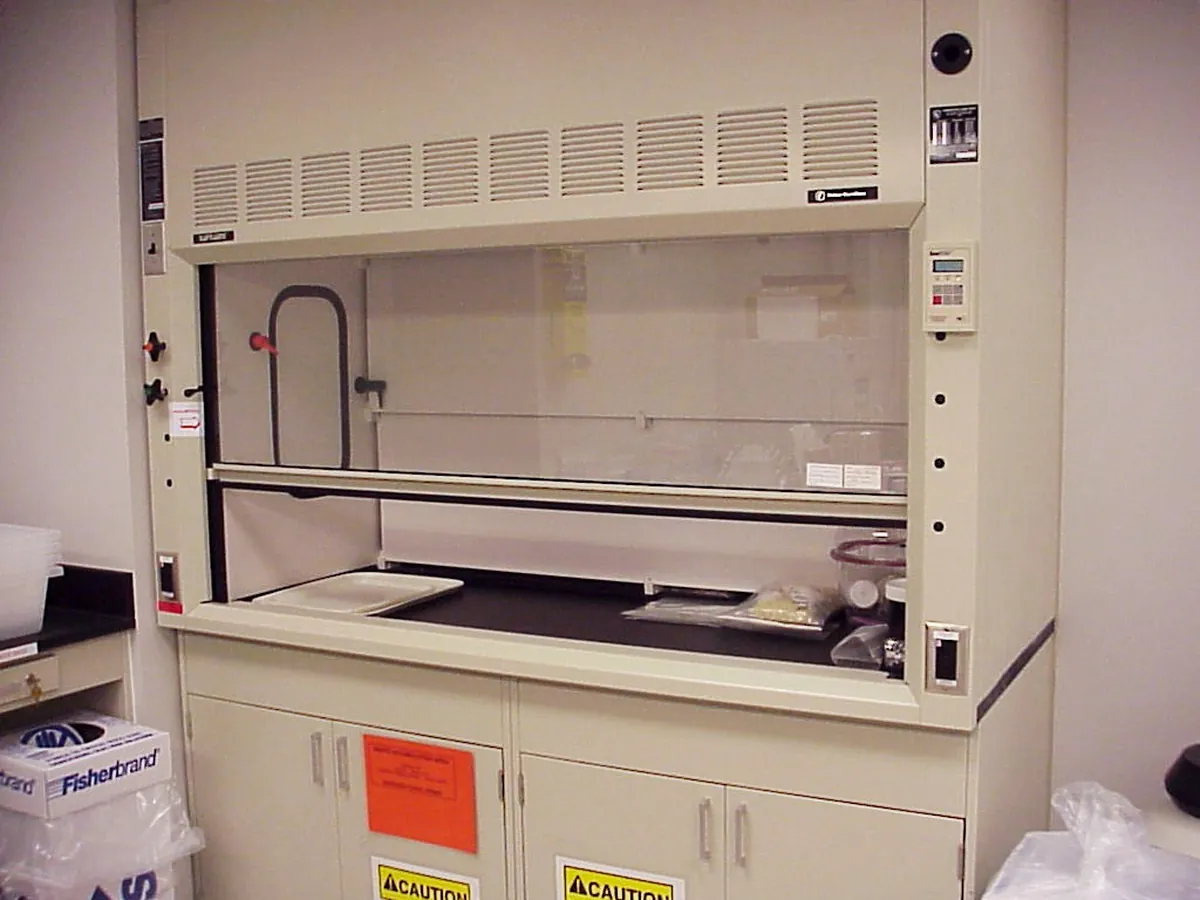
What is Fume hood?
A fume hood (called a fume cupboard in the UK and Europe) is the main safety device for handling volatile or toxic chemicals. A fan draws room air in through the front opening, across the work surface and out through a duct to the outside, carrying vapours away from the user's breathing zone.
The speed of air entering the front opening is the face velocity. Typical design values are around 0.4–0.6 m/s (roughly 80–120 ft/min), but the right value and the test method are set by your site standard, for example EN 14175 or ANSI/ASHRAE 110. Too low a velocity lets vapours escape; too high creates turbulence that can also pull vapours out.
In QC labs, fume hoods are used for preparing mobile phases and reagents, handling acids and solvents, digestions and any work that releases fumes. A fume hood protects the user, not the sample; it is not a clean bench or biosafety cabinet.
Used for
- Preparing mobile phases and handling organic solvents
- Handling concentrated acids, ammonia and other corrosive reagents
- Sample digestion and evaporation
- Weighing or transferring volatile or odorous substances
- Reactions that release toxic gases
How it works
- 01
Air enters
Room air enters through the sash opening and the aerofoil sill.
- 02
Sweeps work area
Air flows across the work surface, capturing vapours released there.
- 03
Baffles
Rear slots draw air evenly from the top, middle and bottom of the hood.
- 04
Exhaust
The fan pulls air through the duct and discharges it above the roof.
- 05
Monitor
An airflow monitor shows face velocity and alarms if it falls too low.
Advantages
- Primary engineering control for chemical exposure
- Sash acts as a physical shield against splashes
- Airflow monitor gives a continuous warning of low flow
Limitations
- Does not protect the sample from contamination
- Containment is easily upset by draughts, people walking past and clutter
- Uses a lot of conditioned air (energy cost)
- Ductless (filtered) hoods only suit chemicals the filter is rated for
Methods that use Fume hood
Keep every Fume hood in control: usage logs, calibration and maintenance schedules, and automatic blocking of overdue instruments.