Refrigerator / deep freezer
Pharmaceutical-grade cold storage for reference standards, reagents, culture media, samples and temperature-sensitive products, typically at 2–8 °C (refrigerator), −20 °C (freezer) or −80 °C (ultra-low).
- Pharmaceutical
- Biotech
- Hospitals & blood banks
- Clinical research
- Food testing
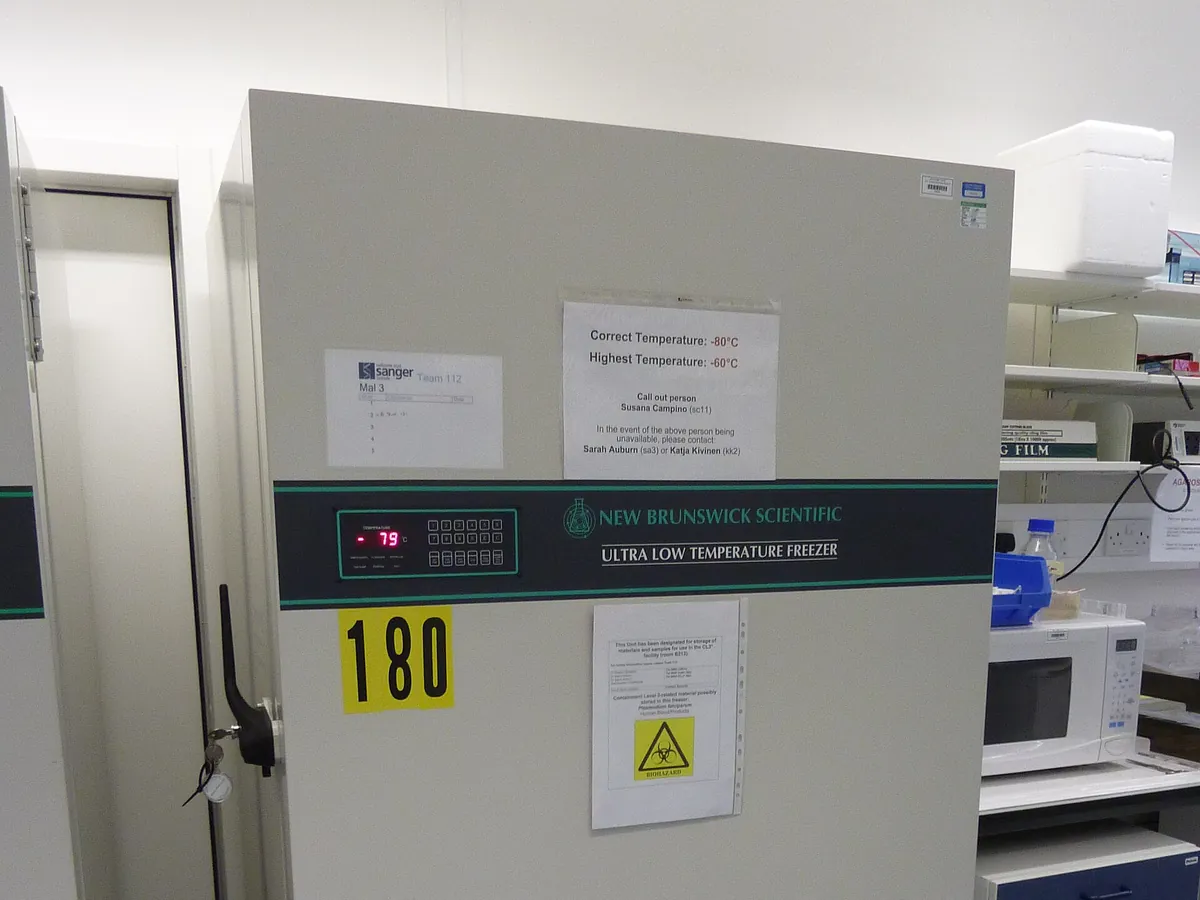
What is Fridge / freezer?
Many items in a QC lab must be kept cold: reference standards, enzymes, culture media, vaccines and biological products, retained samples and some reagents. A pharmaceutical refrigerator holds 2–8 °C. A freezer typically holds about −20 °C (USP describes a freezer as −25 °C to −10 °C), and an ultra-low freezer holds around −80 °C.
Lab-grade units differ from domestic fridges. They have forced-air circulation for even temperature, a microprocessor controller, a calibrated display, alarms and a port for an independent data logger. Domestic units have warm and cold zones and swing widely during defrost.
Cold storage is GMP-critical. Each unit is temperature-mapped, its temperature is recorded continuously or at least daily, and any excursion is investigated for its impact on the stored material.
Used for
- Storage of reference standards and working standards
- Storage of culture media, reagents, enzymes and kits
- Cold-chain storage of vaccines and biological products
- Refrigerated stability studies (e.g. 5 °C ± 3 °C)
- Storage of retained samples and test solutions
How it works
- 01
Compression
The compressor raises the pressure and temperature of the refrigerant vapour.
- 02
Condensation
The hot vapour gives up heat to the room in the condenser and becomes liquid.
- 03
Expansion
The liquid passes through an expansion valve or capillary, and its pressure and temperature drop.
- 04
Evaporation
Inside the cabinet the cold refrigerant evaporates and absorbs heat from the air.
- 05
Circulation and control
A fan spreads the cold air evenly; the controller cycles the compressor to keep the set temperature.
Advantages
- Slows chemical degradation and microbial growth
- Forced-air units give good uniformity
- Alarms and data loggers give early warning of failure
- Wide range from 2–8 °C down to −80 °C
Limitations
- Door openings cause temperature spikes, especially near the door
- Defrost cycles can raise freezer temperature briefly
- Overloading blocks airflow and creates warm spots
- Power failure can quickly put stored material at risk
1 calibration procedure
Keep every Fridge / freezer in control: usage logs, calibration and maintenance schedules, and automatic blocking of overdue instruments.