pH meter
Measures how acidic or alkaline a solution is by measuring the small voltage produced by a glass electrode. Used for pH of products, buffers, mobile phases and water.
- Pharmaceutical
- Biotech
- Food & beverage
- Water treatment
- Chemicals
- Environmental
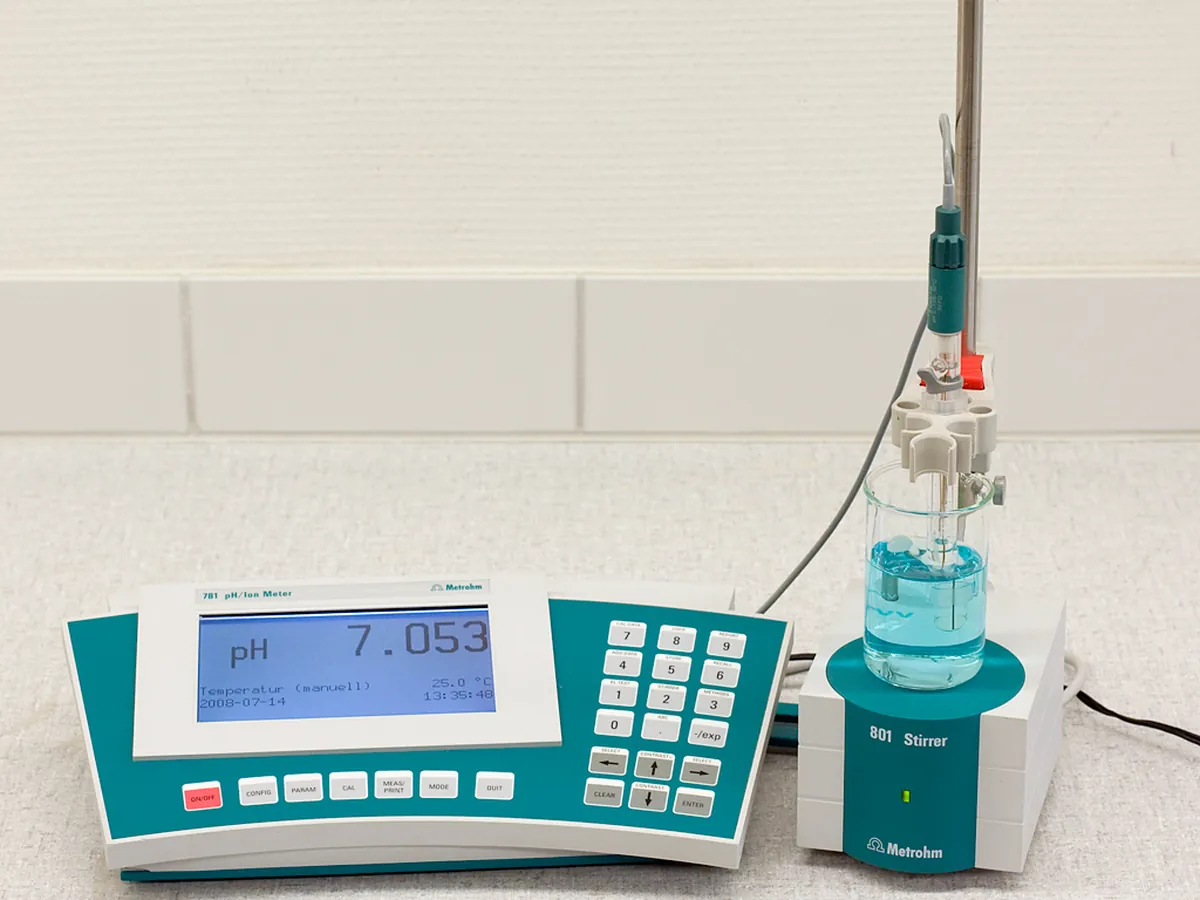
What is pH meter?
A pH meter is a very sensitive voltmeter connected to a pH electrode. The electrode produces a voltage that changes with the hydrogen-ion activity of the solution. The meter converts this voltage into a pH value using a calibration made with standard buffer solutions.
Most labs use a combination electrode, which holds the glass measuring electrode and the reference electrode in one body, often with a built-in temperature sensor. At 25 °C an ideal electrode changes by about 59.16 mV for every one pH unit.
In QC, pH is a specification test for injections, oral liquids, eye drops and many APIs, and a control step when preparing buffers and mobile phases. Because the electrode ages and changes, the meter is calibrated with buffers every day before use.
Used for
- pH of finished products (injections, oral solutions, suspensions, eye drops)
- pH of API and excipient solutions as per monograph
- Preparation of buffers and HPLC mobile phases
- pH of purified water (for example in conductivity Stage 3)
- Endpoint detection in potentiometric titrations
- In-process and stability testing
How it works
- 01
Sample contact
The glass bulb and the reference junction are immersed in the stirred solution.
- 02
Glass membrane
Hydrogen ions exchange at the hydrated glass surface, creating a potential that depends on pH.
- 03
Reference electrode
An Ag/AgCl reference in KCl electrolyte gives a stable potential through the liquid junction.
- 04
Voltage measurement
The meter measures the very small voltage difference with a high-impedance input.
- 05
Conversion
Using the calibration slope and offset and the measured temperature, the meter converts mV into pH.
Advantages
- Fast, simple and inexpensive
- Precise to 0.01 pH unit with a good electrode
- Works in coloured or turbid solutions where indicators fail
- Automatic temperature compensation on most meters
- Results can be printed or sent to a LIMS
Limitations
- Electrode needs daily calibration and ages over months
- Slow or wrong readings in very low ionic strength samples such as purified water
- Glass bulb is fragile and can be damaged by drying, proteins or fluoride
- Alkaline (sodium) error above about pH 12 and acid error below about pH 1
- pH values depend on temperature; samples and buffers must be measured at a known temperature
2 calibration procedures
Methods that use pH meter
Keep every pH meter in control: usage logs, calibration and maintenance schedules, and automatic blocking of overdue instruments.