Dissolved Oxygen Meter
Measures the amount of oxygen dissolved in a liquid using an electrochemical or optical (luminescence) sensor. Used for water systems, fermentation, nitrogen-purged formulations and environmental testing.
- Pharmaceutical
- Biotech
- Environmental
- Food & beverage
- Aquaculture
- Power generation
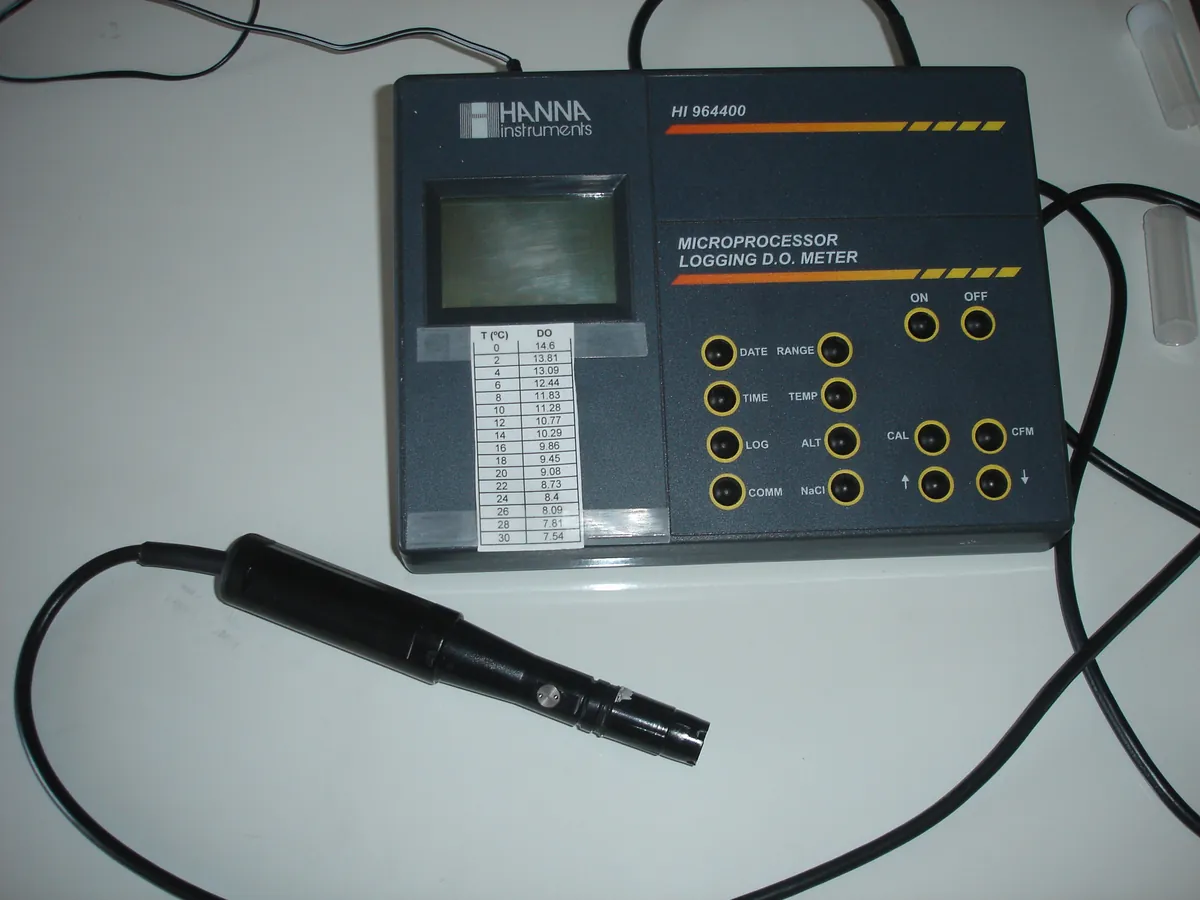
What is DO meter?
A dissolved oxygen (DO) meter tells you how much oxygen gas is dissolved in a liquid, reported as mg/L or as a percentage of air saturation. Oxygen solubility depends strongly on temperature, pressure and salinity, so the meter also measures temperature and uses the barometric pressure.
Two sensor types are common. Electrochemical (Clark-type) sensors let oxygen diffuse through a membrane to a cathode, where it is reduced and produces a current. Optical sensors use a dye whose luminescence is quenched by oxygen; the change in the light's lifetime gives the oxygen level.
In pharmaceutical work DO meters are used to monitor fermentation and cell culture, to check nitrogen purging of oxygen-sensitive solutions and injectables, and to check boiler feed water and effluent. They are also widely used in environmental and drinking-water labs.
Used for
- Monitoring oxygen in fermentation and cell culture
- Checking residual oxygen after nitrogen purging of oxygen-sensitive formulations
- Testing oxygen in water for injection systems where specified
- Boiler feed water and effluent monitoring
- Biochemical oxygen demand (BOD) testing in environmental labs
How it works
- 01
Diffusion
Oxygen moves from the sample to the sensor element through a membrane or sensing layer.
- 02
Signal
A reduction current (electrochemical) or a change in luminescence lifetime (optical) is produced.
- 03
Temperature
A built-in sensor measures sample temperature.
- 04
Compensation
The meter corrects for temperature, barometric pressure and salinity.
- 05
Result
DO is displayed in mg/L and % saturation.
Advantages
- Direct, fast measurement without chemical titration
- Portable and online versions available
- Optical sensors need little maintenance and do not consume oxygen
- Simple two-point calibration (air and zero)
Limitations
- Results depend strongly on temperature, pressure and salinity, which must be measured or entered
- Electrochemical sensors need membrane and electrolyte maintenance and a minimum sample flow or stirring
- Sensor fouling or air bubbles on the membrane give wrong readings
- Low-level measurements are easily affected by air getting into the sample
1 calibration procedure
Keep every DO meter in control: usage logs, calibration and maintenance schedules, and automatic blocking of overdue instruments.