Melting Point Apparatus
Heats a sample packed in a thin glass capillary at a slow, controlled rate and records the temperatures at which it starts and finishes melting. Used for identity and purity checks of APIs and excipients.
- Pharmaceutical
- Fine chemicals
- Agrochemicals
- Dyes and pigments
- Academic labs
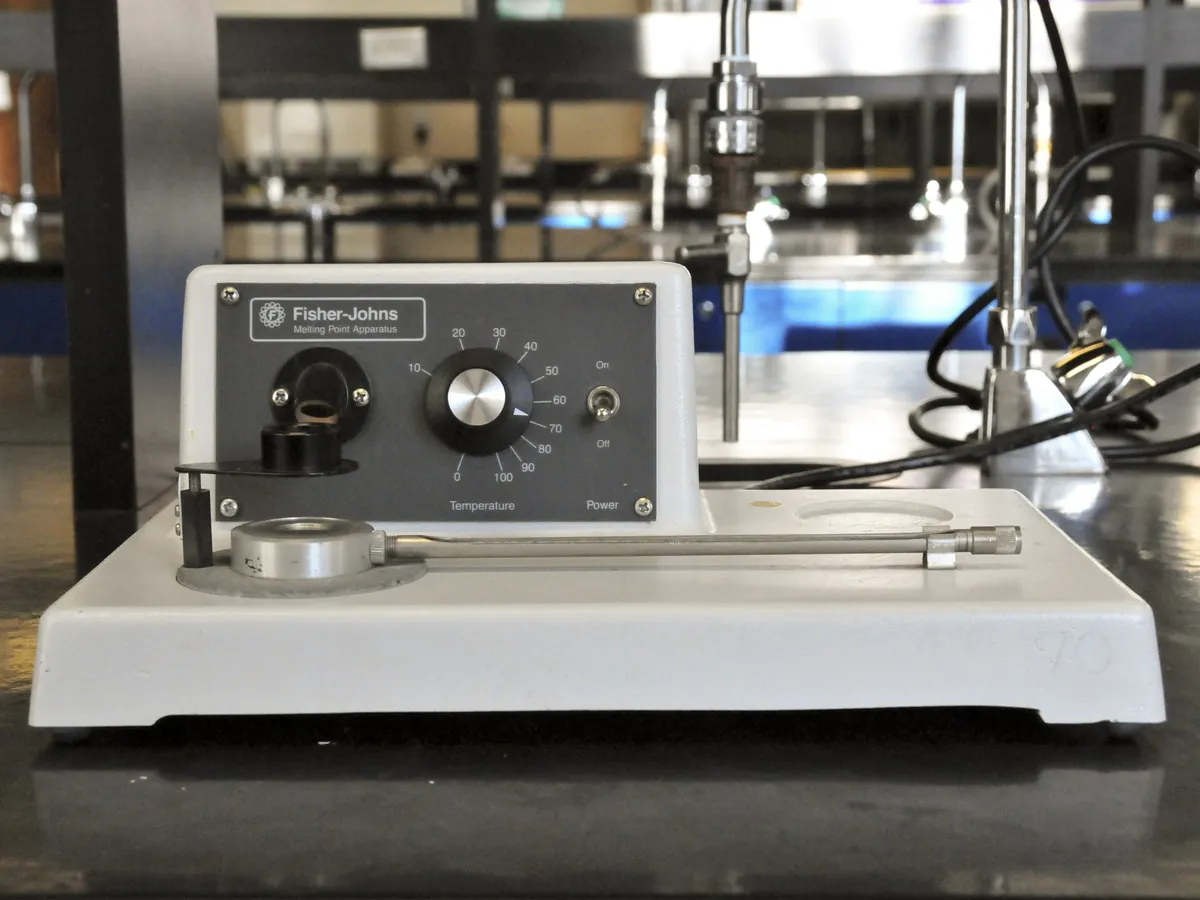
What is Melting point apparatus?
A melting point apparatus holds one or more glass capillary tubes in a heated metal block (or an oil bath in older designs). The block is heated quickly to a few degrees below the expected melting point and then slowly, usually at about 1 °C per minute, while the sample is watched through a magnifier or by a camera.
The temperature at which the solid column first collapses or shows liquid is the start of melting; the temperature at which it becomes completely clear is the end. Together they form the melting range. A pure crystalline substance melts sharply over a narrow range; impurities lower the melting point and widen the range.
In pharmaceutical QC the test is a quick identity and purity check for raw materials. Modern automatic instruments detect melting by the change in light transmitted through the capillary and store a video of each run, which helps with data integrity.
Used for
- Melting range of APIs and excipients on receipt (identity and purity)
- Mixed melting point to confirm identity against a reference standard
- Checking intermediates and recrystallised material in development
- Screening for gross contamination or wrong material
- Teaching basic thermal behaviour of solids
How it works
- 01
Prepare sample
Dry and finely powder the sample, then pack it to a fixed height in a capillary.
- 02
Pre-heat
Heat the block rapidly to a few degrees below the expected melting point.
- 03
Insert capillary
Place the capillary in the block once the start temperature is stable.
- 04
Slow ramp
Heat at a slow, constant rate, commonly about 1 °C/min.
- 05
Observe
Record the temperature of collapse or first liquid and of the clear point.
- 06
Report
Report the melting range and compare it with the specification.
Advantages
- Simple, fast and inexpensive
- Needs only a few milligrams of sample
- Automatic models detect melting objectively and record video
- Several capillaries can be run at once
Limitations
- Result depends strongly on heating rate, packing and capillary size
- Does not measure the heat of melting (use DSC for that)
- Substances that decompose, sublime or melt over a wide range are hard to judge
- Visual judgement of the start and end points can differ between analysts
1 calibration procedure
Methods that use Melting point apparatus
Keep every Melting point apparatus in control: usage logs, calibration and maintenance schedules, and automatic blocking of overdue instruments.