High Performance Liquid Chromatography (HPLC)
Separates the components of a liquid sample on a packed column and measures each one as it leaves. The workhorse of pharmaceutical QC for assay, impurities and dissolution.
- Pharmaceutical
- Biotech
- Food & beverage
- Environmental
- Cosmetics
- Chemicals
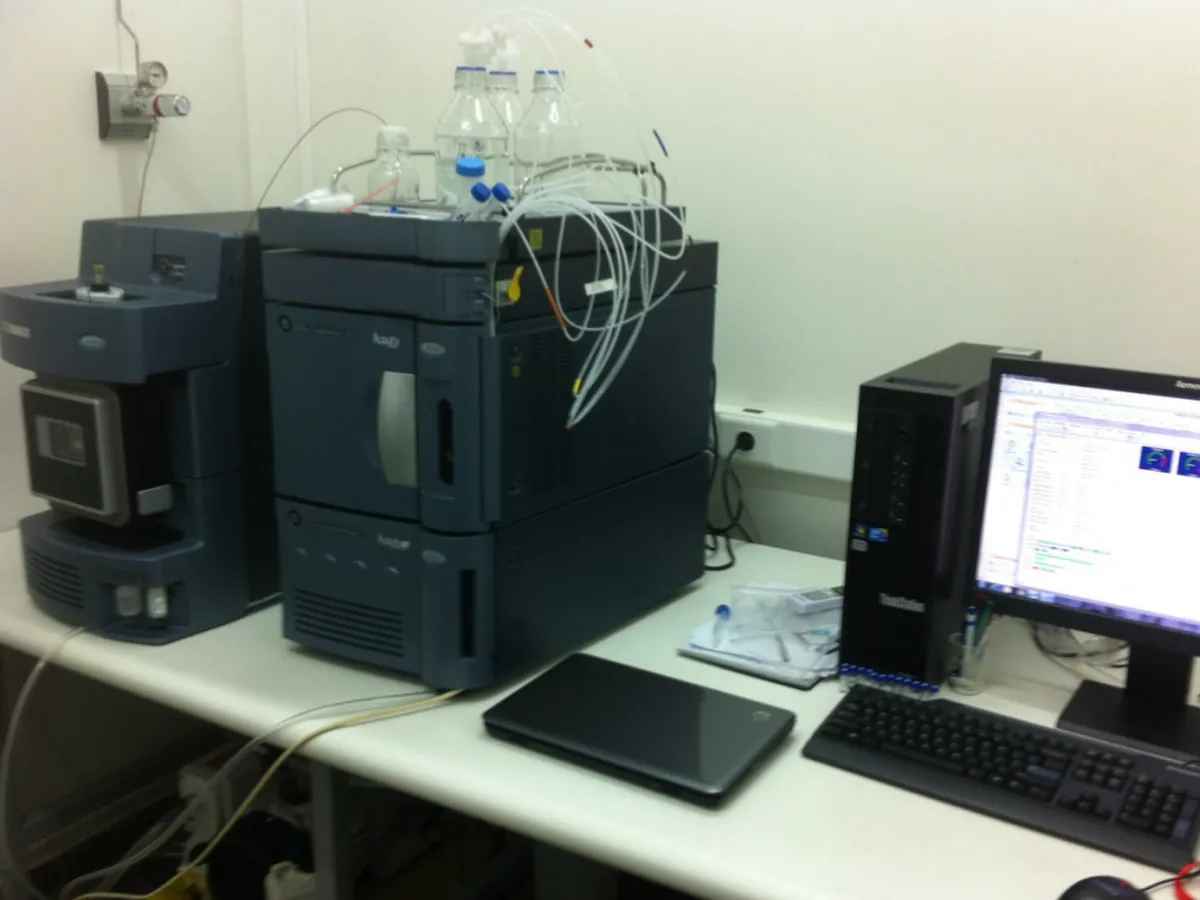
What is HPLC?
An HPLC pumps a liquid (the mobile phase) at high pressure through a steel column packed with very fine particles (the stationary phase). A small volume of sample is injected into the flowing mobile phase. Each component in the sample interacts with the stationary phase to a different degree, so they travel through the column at different speeds and come out one after another.
A detector at the column outlet records each component as a peak on a chromatogram. The time a peak appears (retention time) identifies the component; the peak area tells you how much of it there is, by comparison with a reference standard.
In a pharmaceutical QC lab, HPLC is used for assay of the active ingredient, related substances (impurities), content uniformity, dissolution sample analysis, cleaning validation and stability studies.
Used for
- Assay of APIs and finished products
- Related substances and degradation products
- Content uniformity and blend uniformity
- Dissolution sample analysis
- Stability-indicating methods
- Cleaning validation (swab and rinse samples)
- Preservative and antioxidant content
How it works
- 01
Mobile phase
Filtered, degassed solvent or buffer is drawn from the reservoirs.
- 02
Pump
Delivers a constant, pulse-free flow at high pressure (typically up to 400 bar for HPLC).
- 03
Injector
The autosampler injects a precise sample volume into the flowing stream.
- 04
Column
Components separate as they partition between the stationary and mobile phases.
- 05
Detector
Measures each component as it elutes (UV absorbance in most QC methods).
- 06
Data system
Records the chromatogram, integrates peaks and calculates results.
Advantages
- Separates and quantifies many components in one run
- High precision (injection %RSD typically below 1%)
- Works for non-volatile and heat-sensitive compounds
- Fully automated with an autosampler
- Wide choice of columns and detectors
Limitations
- High instrument and running cost (columns, HPLC-grade solvents)
- Needs method development and skilled operators
- Generates organic solvent waste
- UV detection needs the analyte to absorb UV light
6 calibration procedures
Methods that use HPLC
Keep every HPLC in control: usage logs, calibration and maintenance schedules, and automatic blocking of overdue instruments.