Autoclave (steam steriliser)
Kills microorganisms, including bacterial spores, with saturated steam under pressure. Used in the QC microbiology lab to sterilise culture media, glassware and equipment, and to decontaminate used media before disposal.
- Pharmaceutical
- Biotech
- Hospitals
- Food & beverage
- Research laboratories
- Medical devices
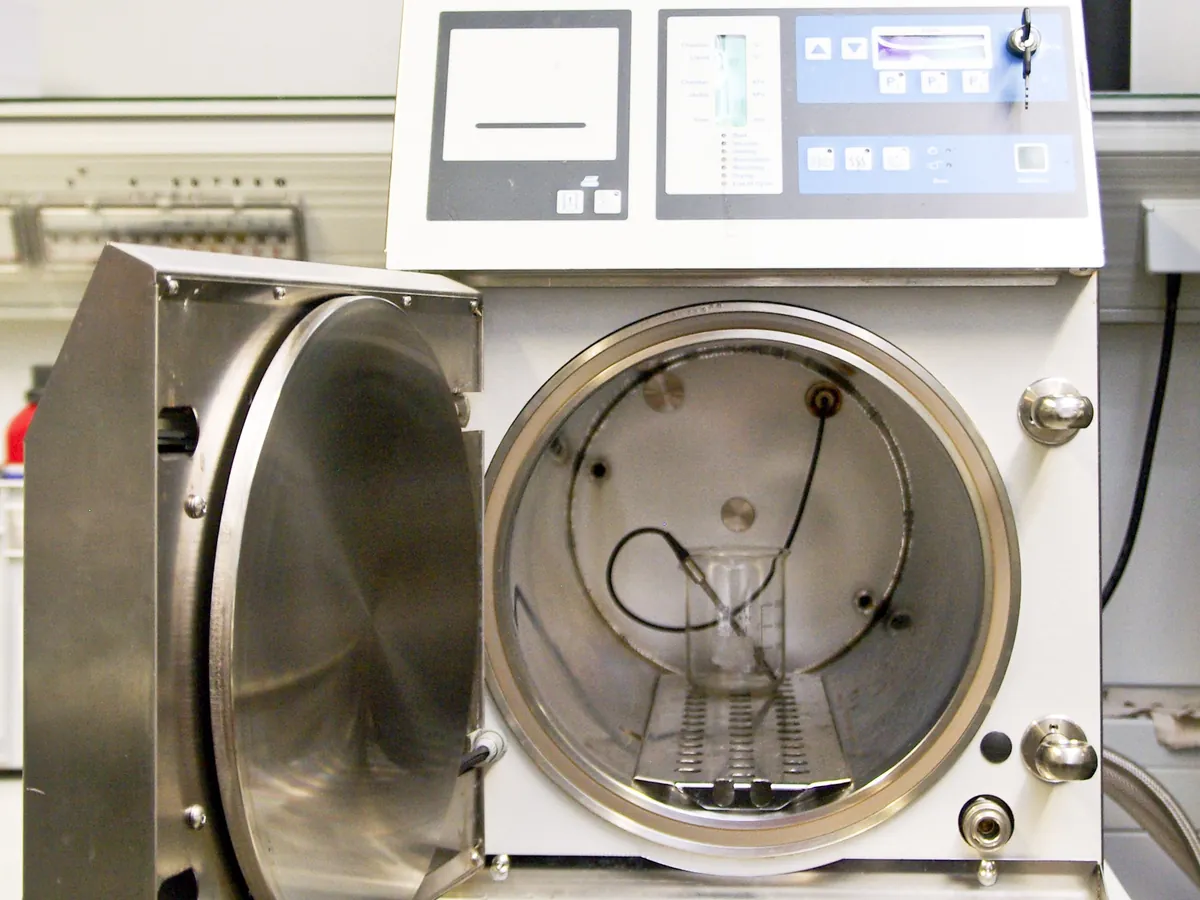
What is Autoclave?
An autoclave is a sealed pressure chamber that is filled with saturated steam. Raising the pressure above atmospheric lets the steam reach temperatures well above 100 °C, typically 121 °C (at about 1.05 bar gauge) or 134 °C (at about 2.04 bar gauge). When steam touches a cooler surface it condenses and releases a large amount of latent heat, which heats the load quickly and coagulates the proteins of microorganisms.
A typical laboratory cycle for culture media is 121 °C for 15 minutes, measured once the coldest part of the load has reached temperature. Larger liquid volumes and dense loads need longer exposure, which is why each load pattern is validated by temperature mapping and biological indicators.
Air is the enemy of steam sterilisation. Air trapped in the chamber or inside the load lowers the temperature reached at a given pressure and blocks steam from contacting surfaces. Autoclaves therefore remove air either by gravity displacement (steam pushes air out through a drain at the bottom) or by mechanical pre-vacuum pulses before steam is admitted.
In a pharmaceutical QC lab, two separate autoclaves (or two validated cycles) are commonly kept: one for sterilising clean media and materials, and one for decontaminating used cultures and waste, so that clean and contaminated items never share a load.
Used for
- Sterilisation of culture media (SCDA, SDA, broths, diluents) before use
- Sterilisation of glassware, pipette tips, filtration assemblies and stainless-steel tools
- Sterilisation of garments and wrapped items for aseptic areas (pre-vacuum cycles)
- Decontamination of used plates, cultures and microbial waste before disposal
- Preparation of sterile water and buffers for microbiological testing
How it works
- 01
Load
Items are loaded in a validated pattern with space for steam to circulate; liquid containers are loosely closed.
- 02
Air removal
Air is removed by gravity displacement or by several vacuum and steam pulses (pre-vacuum).
- 03
Heat-up
Steam fills the chamber and the load heats until the drain or load probe reaches the set temperature.
- 04
Exposure (hold)
The set temperature is held for the validated time, e.g. 121 °C for 15 minutes.
- 05
Exhaust & cooling
Steam is vented; liquid loads cool slowly so they do not boil over, while porous loads are dried under vacuum.
- 06
Record & release
The printout or electronic record is reviewed against the cycle parameters before the load is released.
Advantages
- Kills all forms of microbial life, including resistant bacterial spores
- Fast, reliable and non-toxic: no chemical residues on the load
- Lethality can be measured and expressed as an F0 value
- Low running cost compared with dry heat or gas sterilisation
- Cycles can be validated and recorded electronically for each load
Limitations
- Not suitable for heat- or moisture-sensitive items (some plastics, powders, oils)
- Air pockets and poor load arrangement can leave cold spots that are not sterilised
- Liquids need long cooling times and can boil over if pressure is released too early
- Repeated cycles can degrade heat-sensitive media components (e.g. caramelisation of sugars)
- Pressure vessel: needs statutory inspection, trained operators and regular maintenance
4 calibration procedures
Methods that use Autoclave
- Microbial Enumeration Test (TAMC / TYMC) by Plate Count
- Environmental Monitoring of Clean Areas (Viable)
- Growth Promotion Test of Culture Media
- Microbial Count of Pharmaceutical Water by Membrane Filtration
- Tests for Specified Microorganisms in Non-Sterile Products
- Sterility Test by Membrane Filtration or Direct Inoculation
- Hydrolytic Resistance of Glass Containers (Surface Glass Test)
Keep every Autoclave in control: usage logs, calibration and maintenance schedules, and automatic blocking of overdue instruments.