Vacuum Oven
A sealed, heated chamber connected to a vacuum pump. Lowering the pressure lets samples dry at a lower temperature, which suits heat-sensitive materials and LOD tests done 'in vacuum'.
- Pharmaceutical
- Electronics
- Chemicals
- Food
- Research labs
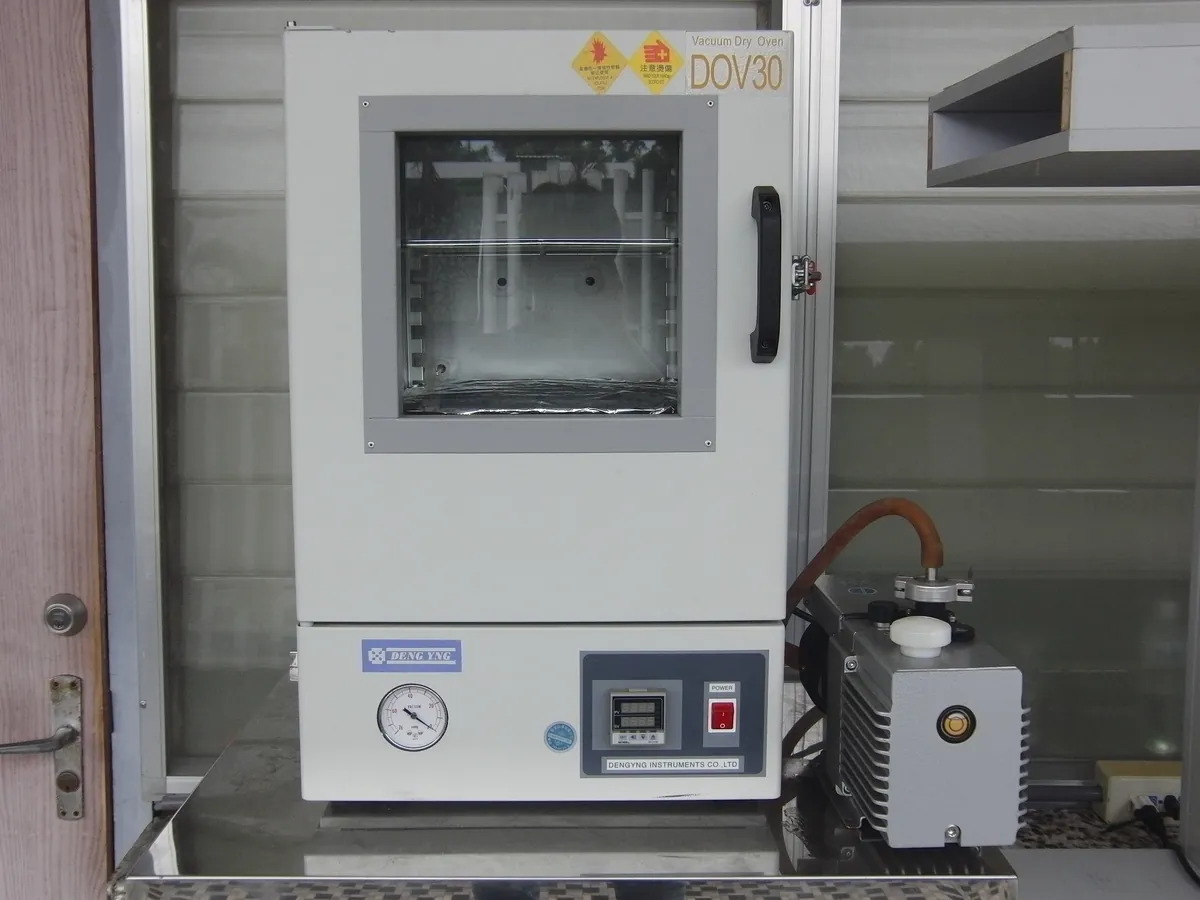
What is Vacuum oven?
A vacuum oven is a heated steel chamber with a tight door seal, a vacuum gauge and a connection to a vacuum pump. When the pressure inside is lowered, water and solvents boil at a lower temperature, so samples dry faster and at gentler temperatures than in a normal hot air oven.
Heat is transferred mainly by conduction through the shelves, because there is little air to carry it. Many monographs specify loss on drying 'in vacuum' at a stated temperature and pressure, or drying over a desiccant under reduced pressure.
In QC labs vacuum ovens are used for loss on drying of heat-sensitive APIs, drying reference standards before use, and drying samples before other tests.
Used for
- Loss on drying under reduced pressure
- Drying reference standards as stated on their labels
- Drying heat-sensitive or oxidisable samples
- Removing residual solvents from small batches
How it works
- 01
Heat
The shelves are brought to the set temperature.
- 02
Load
Samples in tared weighing bottles are placed on the shelves.
- 03
Evacuate
The pump lowers the pressure to the value in the method.
- 04
Dry
Samples are held for the stated time.
- 05
Release
The vacuum is released slowly with dry air or nitrogen.
- 06
Weigh
Bottles are closed, cooled in a desiccator and weighed.
Advantages
- Dries at lower temperature, protecting heat-sensitive samples
- Less oxidation because little air is present
- Faster drying of solvents
- Inert gas can be used to break the vacuum
Limitations
- Heat transfer is slower and less uniform than in a fan oven
- Needs a vacuum pump that requires maintenance
- Fine powders can be disturbed when vacuum is applied or released
- Pressure readings depend on a gauge that must be checked
2 calibration procedures
Keep every Vacuum oven in control: usage logs, calibration and maintenance schedules, and automatic blocking of overdue instruments.