Burette & Volumetric Glassware
Glass apparatus made to contain or deliver accurately known volumes: burettes, volumetric flasks, bulb pipettes and graduated pipettes. The backbone of titrations, standard preparation and dilutions.
- Pharmaceutical
- Chemicals
- Universities
- Food & beverage
- Environmental
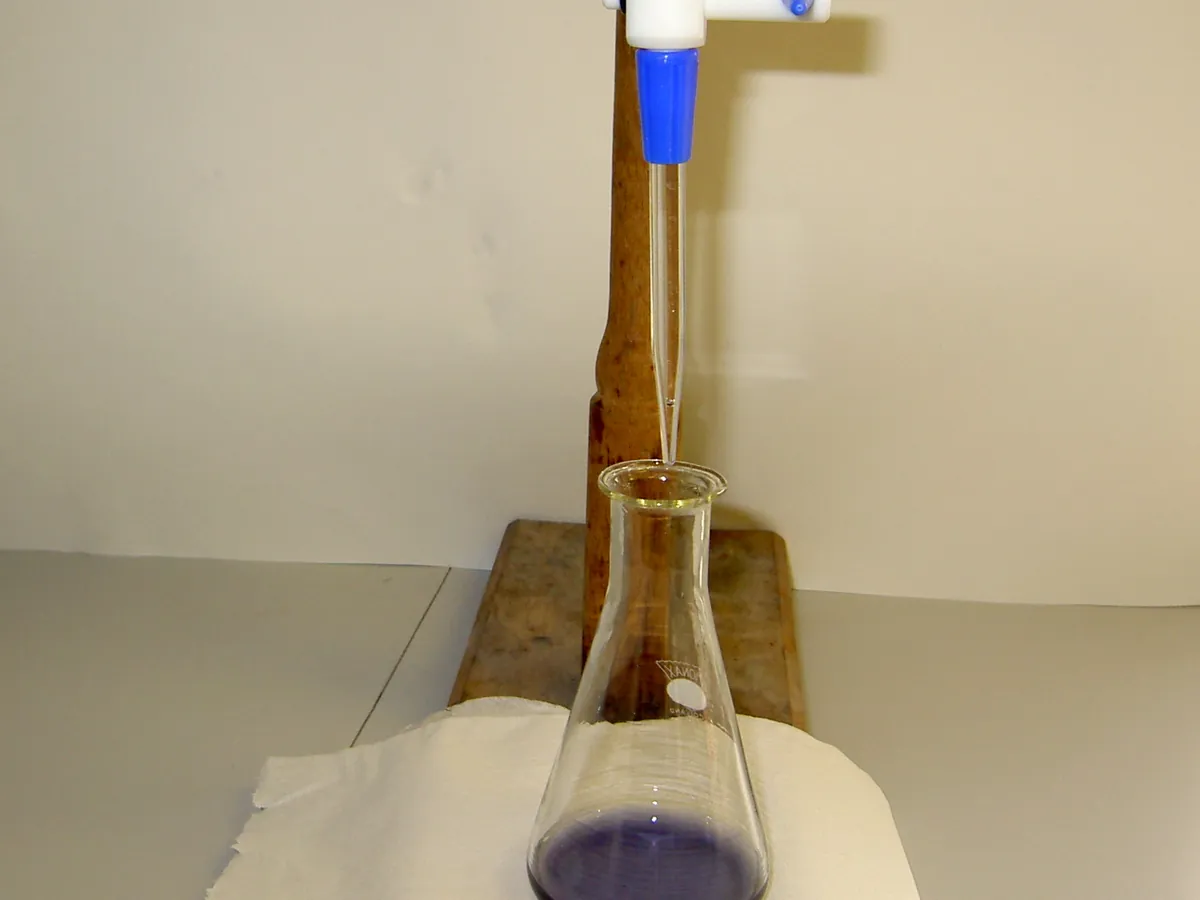
What is Burette & glassware?
Volumetric glassware is made and marked to hold or deliver a stated volume at a reference temperature, usually 20 °C. Volumetric flasks are calibrated 'to contain' (TC or In). Burettes and pipettes are calibrated 'to deliver' (TD or Ex), which allows for the thin film of liquid that stays on the glass.
Glassware comes in accuracy classes. Class A has the tightest tolerances and is used for quantitative analysis. Class B has roughly twice the tolerance and suits less critical work. Tolerances are given in ISO standards (for example ISO 385 for burettes, ISO 648 for pipettes and ISO 1042 for flasks) and in ASTM standards.
A burette is a long graduated tube with a stopcock, used to add titrant and read the volume used. Reading correctly at the bottom of the meniscus, at eye level, and allowing the correct delivery and waiting times are as important as the class of the glass.
Used for
- Manual titrations (assay, standardisation, limit tests)
- Preparation of standard and sample solutions in volumetric flasks
- Accurate transfers with bulb (volumetric) pipettes
- Dilutions for UV, HPLC and wet chemistry
- Measuring reagents with graduated cylinders (less accurate work)
How it works
- 01
Clean
Glass must drain evenly with no droplets on the walls.
- 02
Rinse
Rinse with the solution to be measured (burettes, pipettes).
- 03
Fill
Fill above the zero mark and remove air bubbles from the tip.
- 04
Set zero
Bring the bottom of the meniscus to the mark at eye level.
- 05
Deliver and read
Deliver at the correct rate, wait the stated time and read the meniscus.
Advantages
- Simple, robust and inexpensive
- Class A glassware gives high accuracy without electronics
- Resistant to most chemicals (borosilicate glass)
- Easy to check gravimetrically
Limitations
- Results depend on operator reading and technique (meniscus, parallax, drainage)
- Volumes change with temperature; glassware is calibrated at 20 °C
- Glass breaks and must not be heated in ovens if it is volumetric (heating can change the volume)
- Must be scrupulously clean; grease causes drops to cling and volumes to be wrong
1 calibration procedure
Methods that use Burette & glassware
Keep every Burette & glassware in control: usage logs, calibration and maintenance schedules, and automatic blocking of overdue instruments.