Biosafety cabinet (microbiological safety cabinet)
A ventilated enclosure that protects the operator, the product and the room when handling microorganisms. HEPA-filtered downflow keeps the work clean, an inflow of room air at the front stops aerosols escaping, and the exhaust is HEPA-filtered before it leaves the cabinet.
- Pharmaceutical
- Biotech
- Hospitals and clinical labs
- Vaccine manufacture
- Food & beverage
- Research laboratories
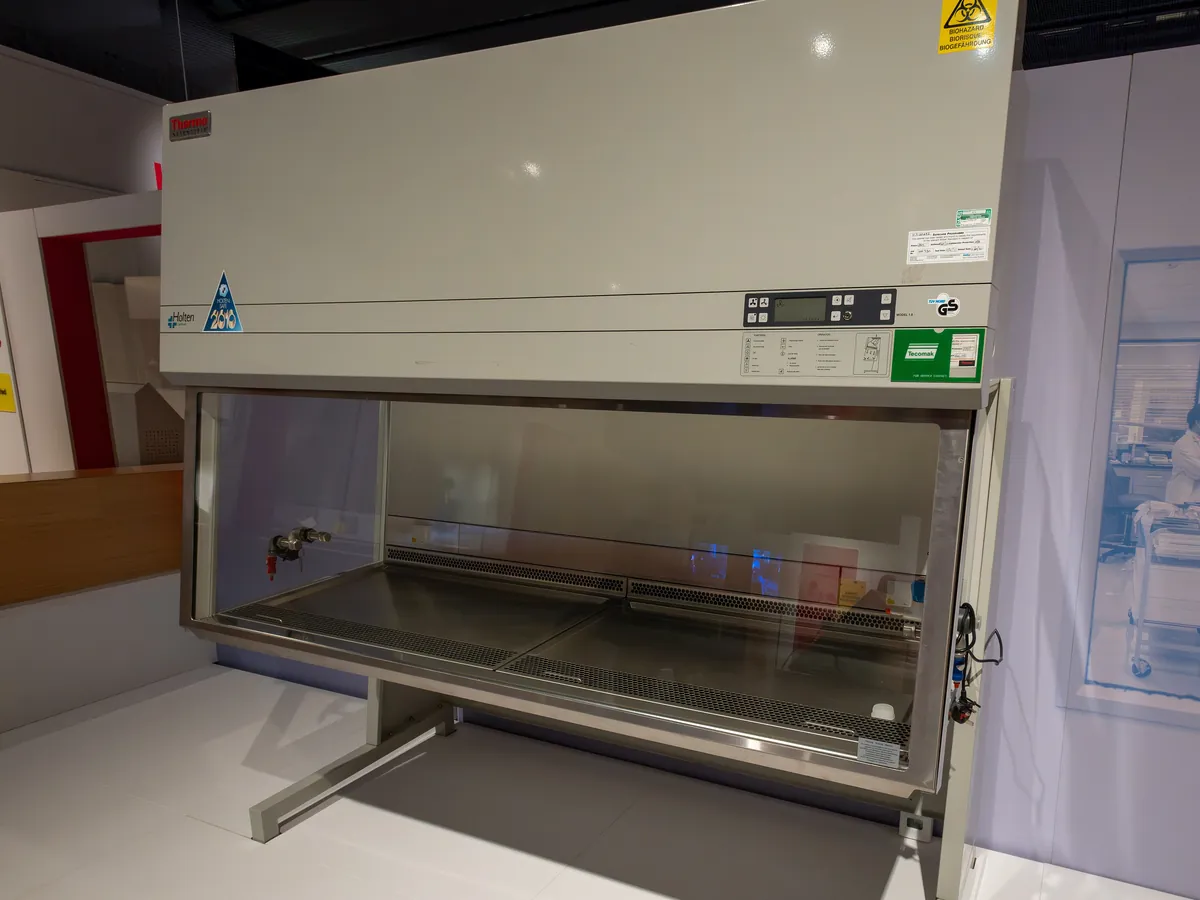
What is BSC?
A biosafety cabinet (BSC), called a microbiological safety cabinet (MSC) in Europe, looks like a laminar air flow unit but works differently. It pulls room air in through the front opening, so aerosols made inside cannot escape towards the operator. At the same time HEPA-filtered air flows down over the work surface to protect the product, and all air leaving the cabinet passes through a second HEPA filter.
Cabinets are grouped into classes. Class I protects only the operator and the room. Class II, the type used in most QC microbiology labs, protects the operator, the product and the room; common types are A2 (part of the air recirculates, part is exhausted) and B2 (all air exhausted through a duct). Class III is a gas-tight glove box for the highest-risk agents.
In pharmaceutical QC, a Class II cabinet is used whenever cultures are handled: identification of isolates, preparation of challenge organisms for growth promotion and method suitability, positive controls, and tests for specified microorganisms. Performance depends on correct air velocities, intact HEPA filters and good technique, so cabinets are certified on installation and at regular intervals.
Used for
- Handling of reference cultures and preparation of inocula for growth promotion and method suitability
- Positive controls and enrichment steps in tests for specified microorganisms
- Identification and sub-culture of environmental and product isolates
- Opening plates that show growth after incubation, to avoid releasing spores
- Work with potentially pathogenic organisms (risk group 2) in research and hospital labs
How it works
- 01
Inflow
Room air enters through the front opening and grille at a set speed, protecting the operator.
- 02
Downflow
HEPA-filtered air moves down over the work surface, protecting the product.
- 03
Split at the work surface
Downflow divides near the front and rear grilles; contaminated air is drawn away from the work.
- 04
Plenum and fan
Air is drawn into a plenum behind the work zone and pressurised by the fan.
- 05
Recirculation
Part of the air passes back through the supply HEPA filter (Class II A2).
- 06
Exhaust
The rest leaves through the exhaust HEPA filter, into the room or a duct.
Advantages
- Protects the operator, the product and the environment at the same time (Class II)
- HEPA-filtered downflow gives a Grade A / ISO 5 quality work zone
- Exhaust HEPA filter stops microorganisms escaping into the room
- Performance can be measured and certified on site (velocities, filter integrity, smoke pattern)
- Alarms warn the user when airflow falls outside safe limits
Limitations
- Protection is lost if the front grille is blocked, the sash is raised too high or the user moves fast
- Not suitable for volatile toxic chemicals unless it is a ducted type designed for them
- Open flames (Bunsen burners) disturb the airflow and can damage the HEPA filter
- Needs regular certification by trained engineers and periodic filter replacement
- Smaller work area and more noise than an open bench
2 calibration procedures
Methods that use BSC
Keep every BSC in control: usage logs, calibration and maintenance schedules, and automatic blocking of overdue instruments.