Incubator / BOD incubator
A temperature-controlled chamber that holds culture plates and tubes at a fixed temperature so microorganisms can grow. BOD incubators can heat and cool, so they also hold temperatures below room temperature, such as 20–25 °C for fungi.
- Pharmaceutical
- Biotech
- Food & beverage
- Water testing
- Environmental
- Research laboratories
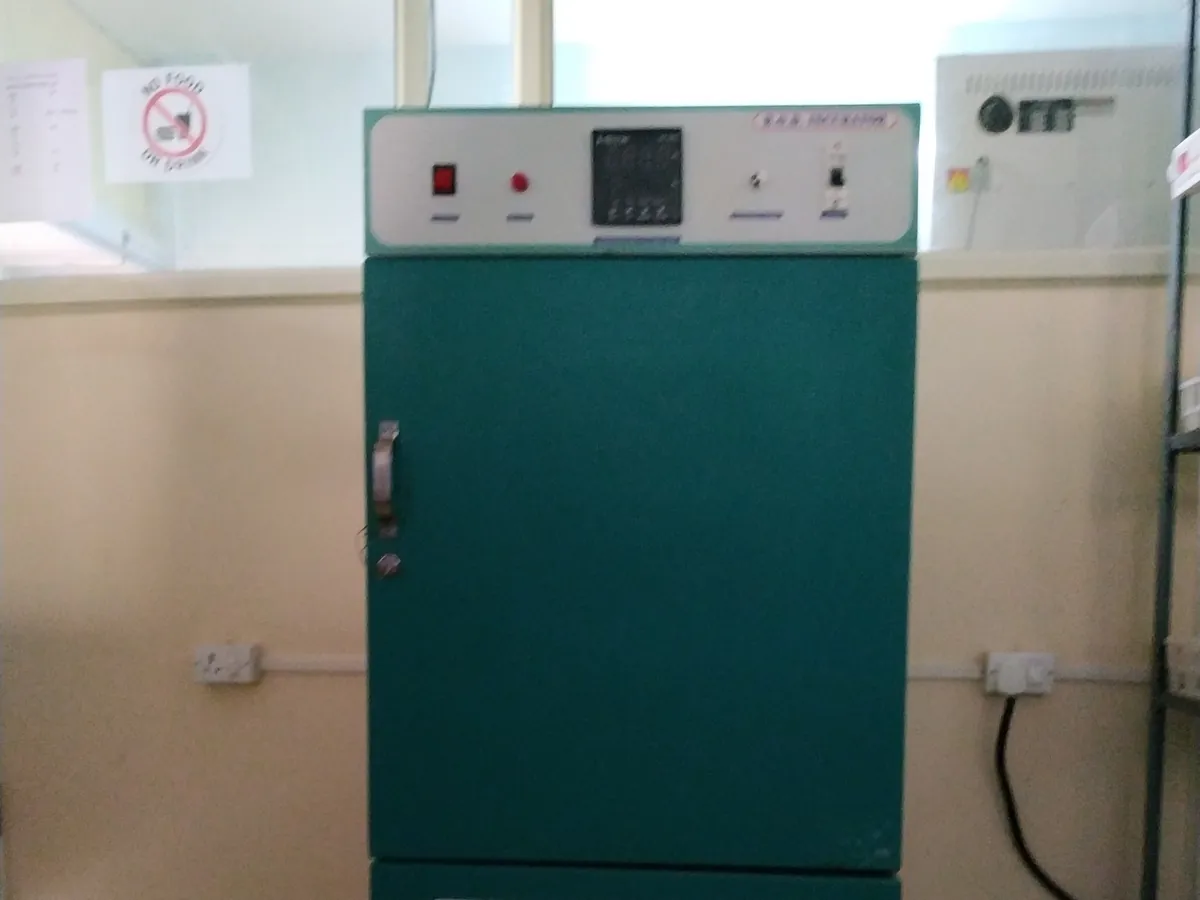
What is Incubator?
An incubator provides a stable, uniform temperature for the growth of microorganisms. A standard bacteriological incubator only heats, so it works at temperatures above the room, typically 30–35 °C for total aerobic microbial counts. A BOD (biological oxygen demand) incubator has both a heater and a refrigeration unit, so it can hold temperatures close to or below room temperature, such as 20–25 °C for yeasts and moulds, and remains stable when the room warms up.
Pharmacopoeial microbiology tests specify incubation temperature ranges, for example 30–35 °C for SCDA and 20–25 °C for SDA. Incubators are usually set near the middle of the range (e.g. 32.5 °C or 22.5 °C) so that normal variation across the chamber stays inside the limits. Temperature mapping shows that every shelf position used for plates is within the range.
Incubators in a QC lab are connected to continuous temperature monitoring with alarms. Results from plates incubated outside the required range may not be valid, so excursions must be recorded and assessed.
Used for
- Incubation of plates for TAMC (30–35 °C) and TYMC (20–25 °C)
- Incubation of environmental monitoring plates
- Growth promotion testing of culture media
- Tests for specified microorganisms and enrichment broths
- Sterility test incubation (fluid thioglycollate medium at 30–35 °C, SCDM at 20–25 °C)
- Water microbial counts and pre-incubation of media for sterility checks
How it works
- 01
Set point
The operator sets the temperature, e.g. 32.5 °C for a 30–35 °C requirement.
- 02
Sensing
A Pt100 or thermocouple sensor measures chamber air temperature.
- 03
Control
A PID controller switches the heater, and the compressor in BOD models, to correct deviations.
- 04
Circulation
A fan moves air around the chamber to keep shelves uniform.
- 05
Monitoring
An independent sensor or data logger records temperature and raises alarms on excursions.
Advantages
- Stable temperature control with digital display and alarms
- BOD models can hold temperatures below ambient
- Forced-air circulation gives good uniformity across shelves
- Simple to operate and maintain
Limitations
- Uniformity worsens when overloaded or when plates block airflow
- Frequent door opening causes temperature dips and recovery time
- Cooling units add maintenance (compressor, condenser, defrost)
- Display temperature is only one point; it does not prove the whole chamber is in range without mapping
2 calibration procedures
Methods that use Incubator
- Microbial Enumeration Test (TAMC / TYMC) by Plate Count
- Environmental Monitoring of Clean Areas (Viable)
- Growth Promotion Test of Culture Media
- Microbial Count of Pharmaceutical Water by Membrane Filtration
- Tests for Specified Microorganisms in Non-Sterile Products
- Sterility Test by Membrane Filtration or Direct Inoculation
Keep every Incubator in control: usage logs, calibration and maintenance schedules, and automatic blocking of overdue instruments.