Petroleum, oil & gas lab testing
Quality testing of fuels and lubricants: volatility, flash point, sulphur, viscosity, cold flow and corrosion. 9 test methods and 11 instruments, explained step by step.
- ASTM
- IP (Energy Institute)
- ISO
- BIS IS 1448

Fuels
Flash point, distillation, density, sulphur and cold-flow properties.
- Flash point tester
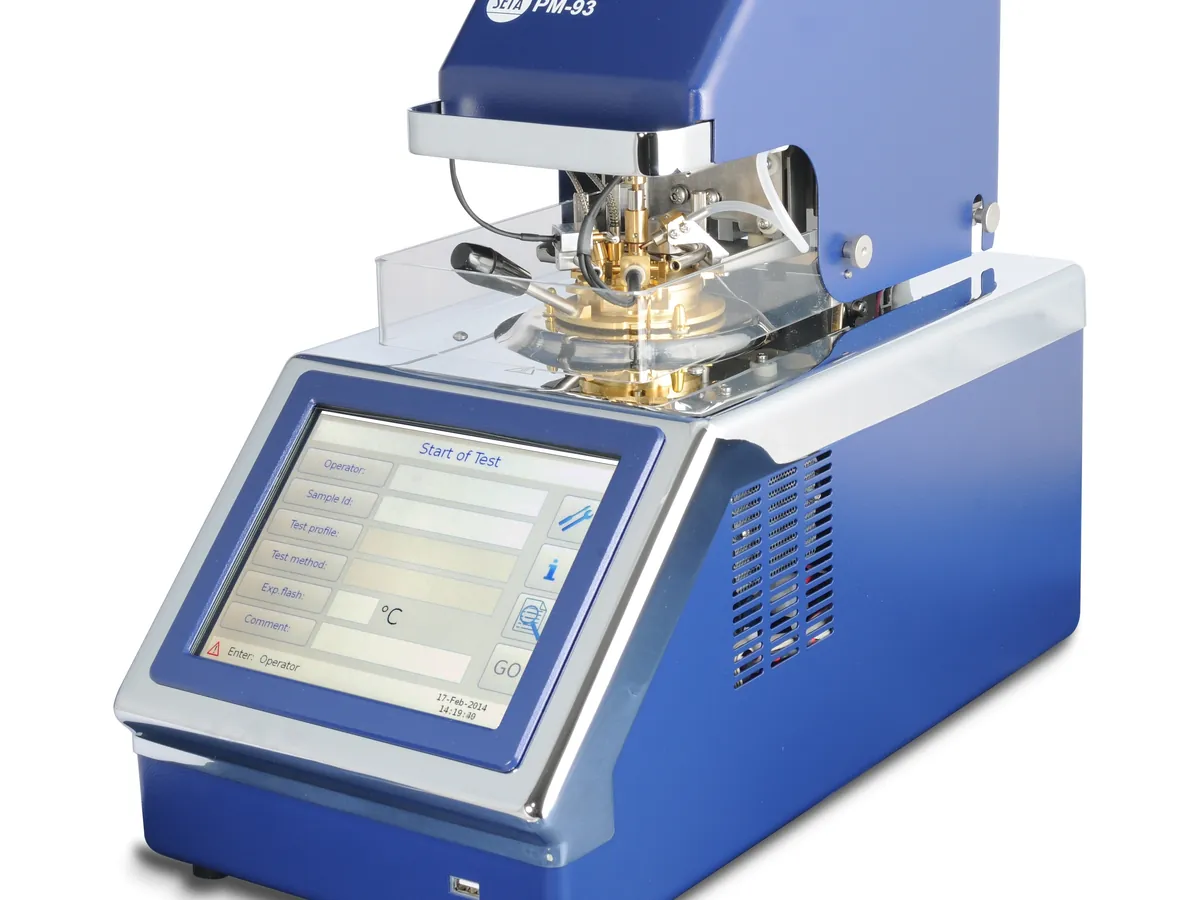
Flash Point by Pensky-Martens Closed Cup
A 75 mL portion of fuel is heated in a closed brass cup at a set rate while stirred. An ignition source is dipped into the vapour space at set intervals; the lowest temperature that gives a flash is corrected to standard pressure and reported as the flash point.
Open method - Atmospheric distillation
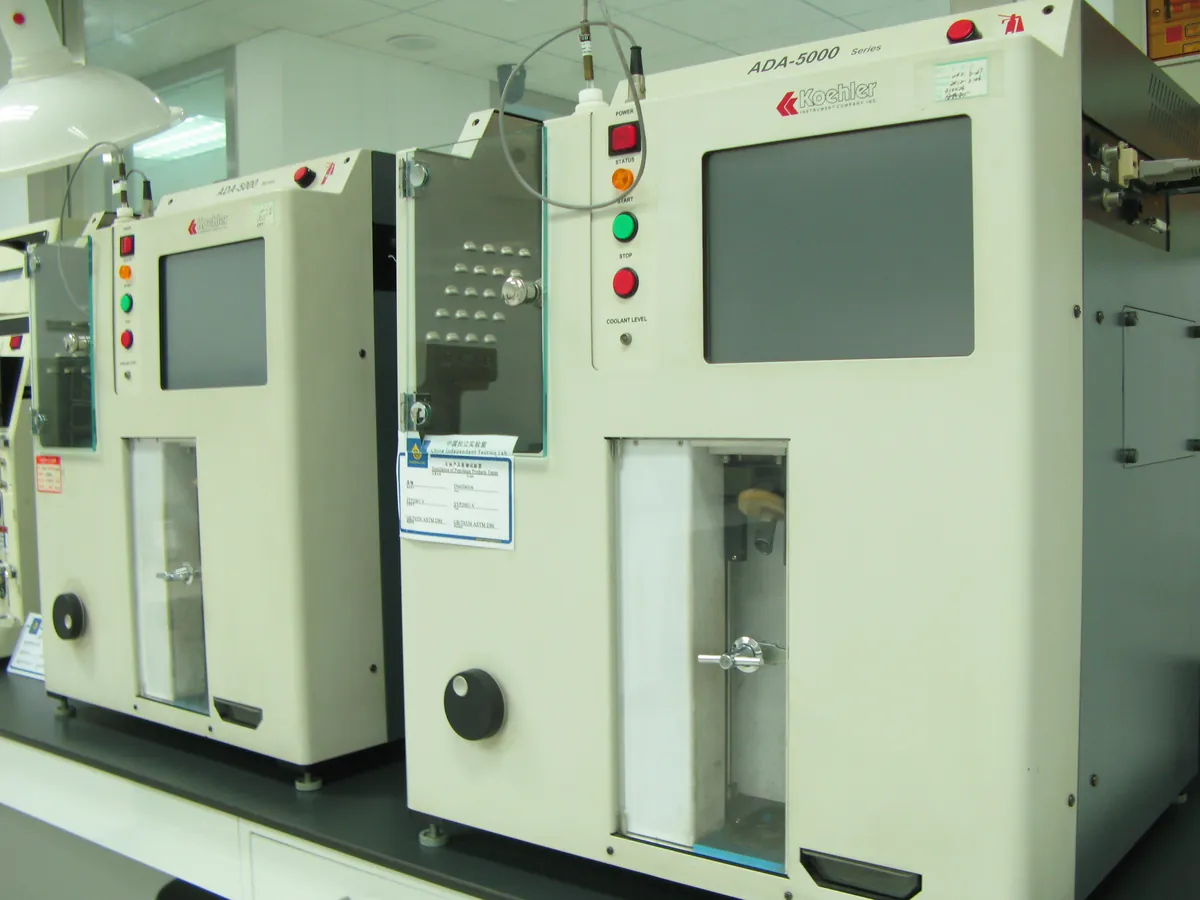
Distillation Characteristics at Atmospheric Pressure
100 mL of fuel is distilled from a 125 mL flask at a controlled rate. Vapour temperature is recorded against volume recovered to give IBP, T10, T50, T90 and FBP; recovery, residue and loss are measured and the temperatures corrected to 101.3 kPa.
Open method - Oscillating U-tube digital density meter (ASTM D4052); glass hydrometer as an alternative (ASTM D1298)
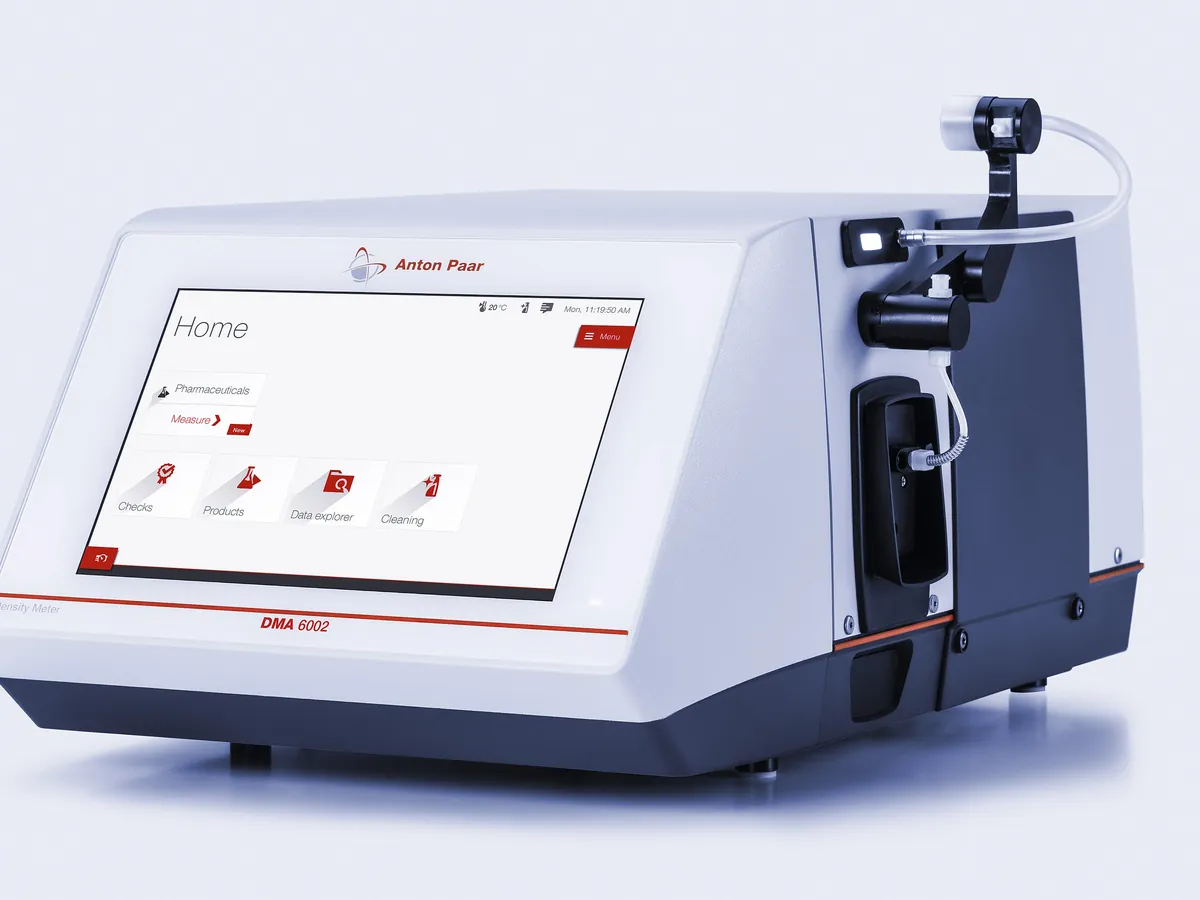
Density, Relative Density and API Gravity of Fuels
Density is the most basic property of a fuel. It is used to convert volume to mass for custody transfer and billing, to check that a product is what it claims to be, and as a specification limit (for example diesel density at 15 °C). API gravity is the oil industry's inverse scale of the same property: the lighter the oil, the higher the API number.
Open method - Energy-dispersive X-ray fluorescence (ASTM D4294) for higher levels; combustion with ultraviolet fluorescence detection (ASTM D5453) for ultra-low levels
Sulphur Content of Fuels by XRF and UV Fluorescence
Sulphur in fuel burns to sulphur dioxide, which causes acid rain and poisons vehicle exhaust catalysts. Modern road fuels are therefore 'ultra-low sulphur' — typically 10 mg/kg maximum under BS VI in India and the EU (EN 590 / EN 228) fuel specifications that go with Euro 6 vehicles. Two instrumental methods dominate: XRF for higher levels and fuel oils, and UV fluorescence for the very low levels in modern road fuels.
Open method - Manual cooling in a jacketed test jar in staged cold baths (ASTM D2500 / ASTM D97) or an automatic cold-flow analyser
Cloud Point and Pour Point of Petroleum Products
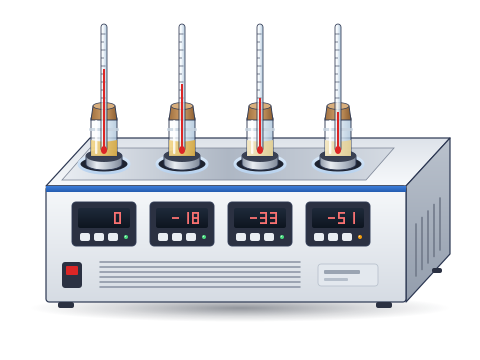
When a fuel or oil is cooled, waxes start to crystallise. The cloud point is the temperature at which a haze of wax crystals first appears; it predicts when filters may start to block. The pour point is the lowest temperature at which the oil still flows; below it the oil gels. Together they tell you whether a product will work in cold weather.
Open method
Lubricants & oils
Viscosity, water, acid number and corrosion.
- Glass capillary viscometer
Kinematic Viscosity by Glass Capillary Viscometer
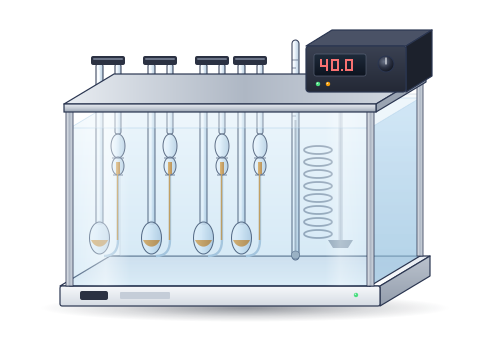
The time taken for a fixed volume of oil to flow under gravity through a calibrated glass capillary at a closely controlled temperature is measured. Kinematic viscosity = viscometer constant × flow time.
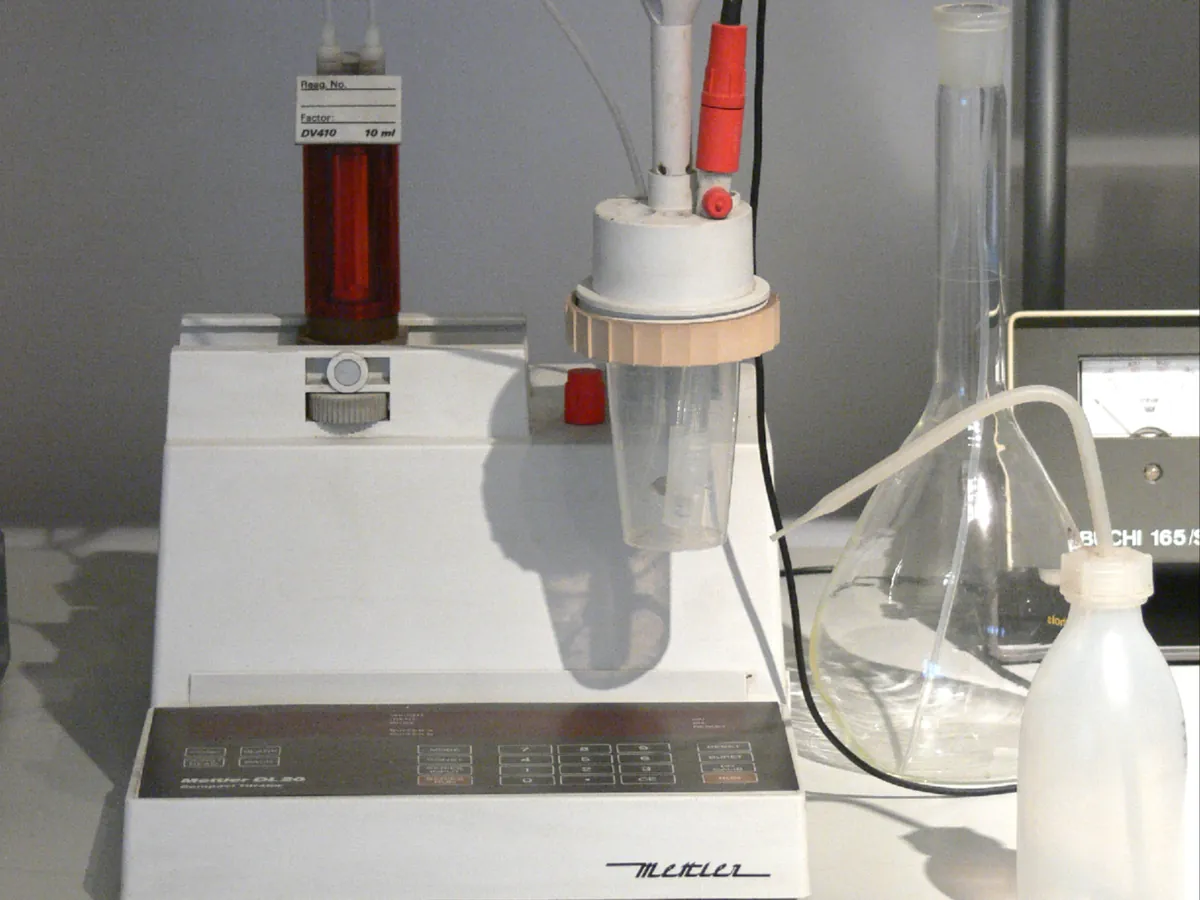
Open method - Coulometric Karl Fischer titration — direct injection, or KF oven with gas transfer for difficult oils
Water Content of Lubricating Oils by Coulometric Karl Fischer
Water is one of the most damaging contaminants in a lubricant. It causes rust, speeds up oxidation, depletes additives and weakens the oil film. Coulometric KF measures water accurately from a few mg/kg to a few per cent, so it is the standard test for new oil acceptance and for in-service oil condition monitoring.
Open method - Non-aqueous potentiometric titration with alcoholic potassium hydroxide
Total Acid Number (TAN) by Potentiometric Titration
The acid number measures the amount of acidic material in an oil. In new oils it reflects acidic additives. In service, a rising TAN shows that the oil is oxidising and forming organic acids, which corrode metal and thicken the oil — so TAN is a key 'change the oil' indicator.
Open method - Immersion of a polished copper strip at a set temperature and time, then visual comparison with standard strips
Copper Strip Corrosion Test
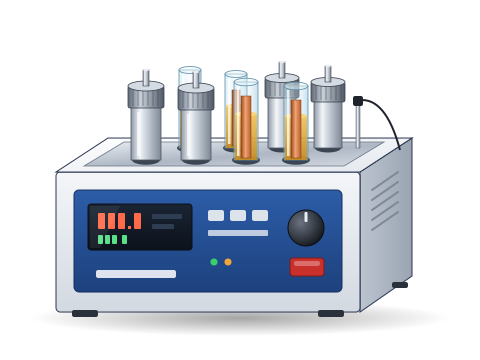
Some sulphur compounds (elemental sulphur, mercaptans and certain additives) attack copper and its alloys in bearings, bushings and fuel systems. The copper strip test is a simple pass/fail-style screen: a polished copper strip is soaked in the sample under set conditions and its tarnish is compared with standard colour plaques.
Open method