Density, Relative Density and API Gravity of Fuels
Density is the most basic property of a fuel. It is used to convert volume to mass for custody transfer and billing, to check that a product is what it claims to be, and as a specification limit (for example diesel density at 15 °C). API gravity is the oil industry's inverse scale of the same property: the lighter the oil, the higher the API number.
- Petroleum, oil & gas
- Oscillating U-tube digital density meter (ASTM D4052); glass hydrometer as an alternative (ASTM D1298)
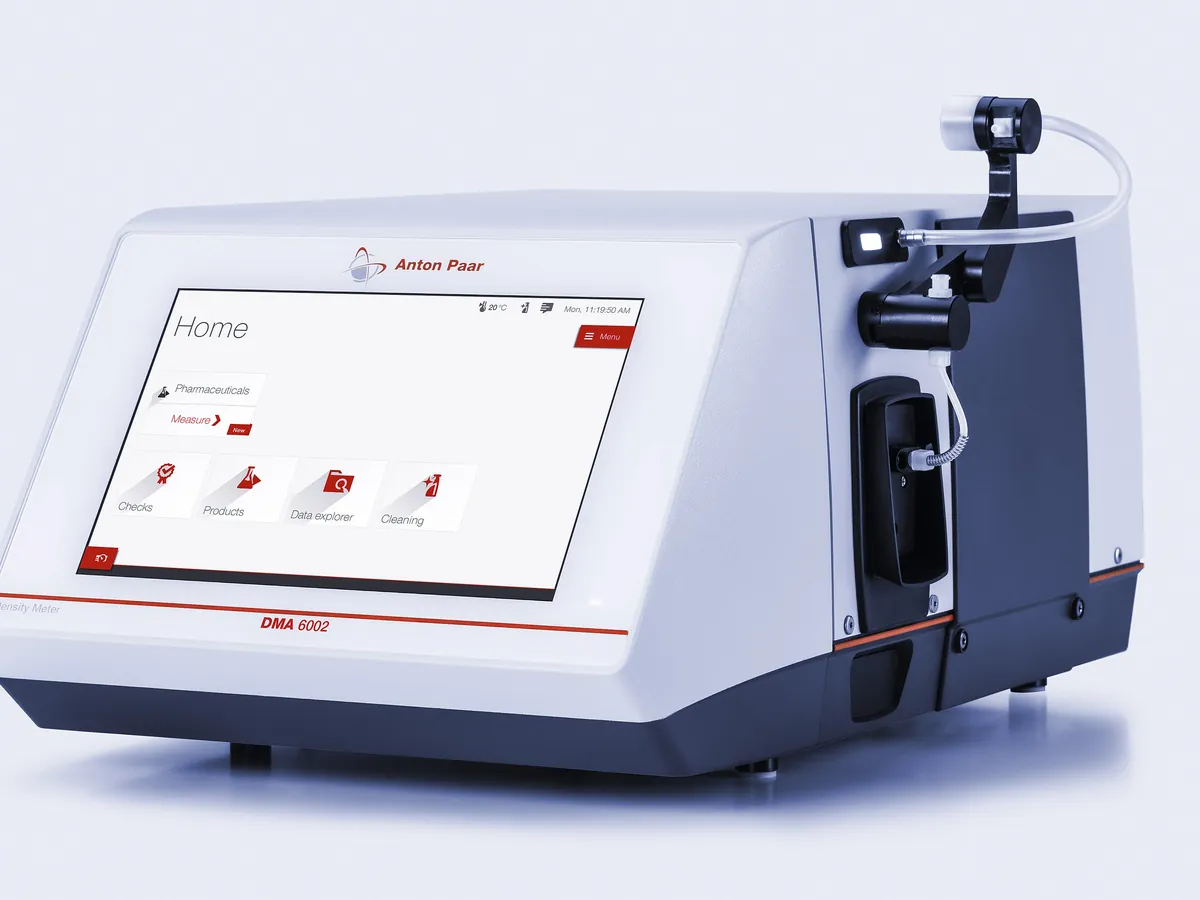
- Density meter
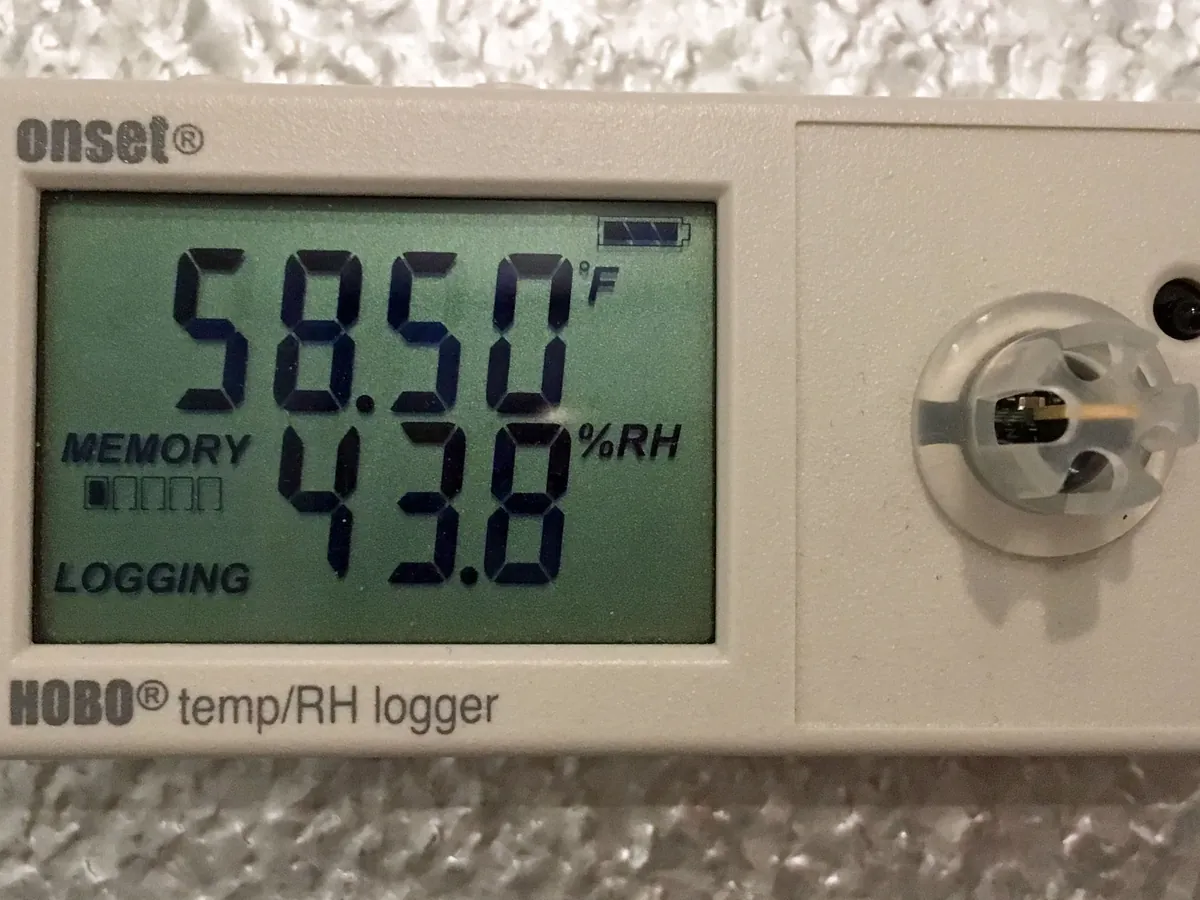
- Thermometer / logger
Reference: Typical method based on ASTM D4052 (digital density meter) and ASTM D1298 (hydrometer), with the equivalent IS 1448 parts and IP methods. Temperature corrections use the Petroleum Measurement Tables (ASTM D1250 / API MPMS Chapter 11.1). Follow your lab SOP and the current editions.
Why this method works
In a digital density meter a small volume of sample (about 1–2 mL) fills a hollow glass U-tube that is made to vibrate. The natural frequency of the tube falls as the mass inside it rises, so the oscillation period gives the density once the cell is adjusted with air and water. The cell is held at a set temperature (usually 15 °C, or another temperature with conversion). In the hydrometer method a glass float sinks until it displaces its own mass of liquid; the scale reading at the liquid surface, corrected for meniscus and temperature, gives density. API gravity is calculated from relative density at 60/60 °F: °API = 141.5 ÷ SG − 131.5. Water is 10 °API; most crude oils fall between about 20 and 45 °API.
Instruments used
Reagents & standards
| Reagent | Grade / specification |
|---|---|
| Adjustment media | Dry air and freshly boiled, degassed purified water (or a certified density standard) |
| Check standard | Certified density reference liquid near the sample density (for example a hydrocarbon standard of about 0.8 g/cm³) |
| Cleaning solvents | Petroleum spirit / toluene to remove oil, then acetone or ethanol, then dry air |
Preparing the sample
- 01
Sample
Representative, closed container; keep volatile fuels cool.
- 02
Condition
Mix gently; avoid loss of light ends and air bubbles.
- 03
Check cell
Air/water or reference standard check at test temperature.
- 04
Inject
Fill the U-tube slowly with no bubbles.
- 05
Read
Record density at 15 °C when stable; repeat.
- 06
Convert
Calculate relative density and API gravity if required.
Procedure
- 1Take the sample as described in ASTM D4057 or ISO 3170 into a clean, closed container. Keep petrol and other volatile products cool (for example in a refrigerator) so light ends are not lost before testing.
- 2Before the run, check the meter at the test temperature with dry air and water, or with a certified reference liquid. The reading must agree with the certified value within the SOP limit (typically ±0.0001 g/cm³ for a high-resolution meter).
- 3Mix the sample by gentle inversion. Do not shake hard: entrained air lowers the density reading. Waxy or viscous samples may need gentle warming to make them fluid; record the temperature.
- 4Fill the cell slowly with a syringe or the autosampler. Use the built-in camera or a torch to check that there are no bubbles. Wait until the temperature and the reading are stable.
- 5Record density at 15 °C in kg/m³ (or g/cm³). Empty, refill with a fresh portion and repeat; the two readings must agree within the repeatability of the method.
- 6Clean the cell with a suitable solvent, then a volatile rinse, and dry it with air. A dirty or wet cell is the most common cause of a bad result.
- 7Hydrometer alternative (ASTM D1298): bring the sample to a known temperature in a clear cylinder, lower the hydrometer gently, let it float freely away from the wall and read the scale where the main liquid surface cuts it. Apply the meniscus correction and convert to 15 °C using the Petroleum Measurement Tables.
Standard preparation
- 1Adjust the meter with air and water as the manufacturer specifies (often weekly or after maintenance) and verify daily with a certified reference liquid.
- 2Use purified water that has been freshly boiled and cooled to remove dissolved air.
Notes for analysts
- Never adjust the meter with a sample that is out of specification; use only certified standards.
- For crude oils and samples with water or sediment, mix carefully and consider the homogeneity requirements in the method.
- API gravity is defined at 60 °F; 15 °C (59 °F) is close but not identical, so SG 60/60 °F is taken from the measurement tables rather than simply dividing density by 1000.
- Very volatile samples (vapour pressure above the method's limit) may need a pressurised or cooled sampling approach.
Method parameters (typical)
| Test temperature | 15.00 °C (or as the specification requires; 20 °C is common in some regions) |
|---|---|
| Sample volume | About 1–2 mL for the U-tube |
| Resolution | 0.0001 g/cm³ (0.1 kg/m³) on most laboratory meters |
| Reporting | Density at 15 °C in kg/m³ to 0.1 kg/m³; API gravity to 0.1 °API |
| Temperature conversion | ASTM D1250 / API MPMS 11.1 tables (built into many meters) |
System suitability & sequence
| Parameter | Limit |
|---|---|
| Reference liquid check | Within the certified value ± SOP tolerance before samples |
| Duplicate readings | Agree within the repeatability (r) stated in the current method |
| Bubble check | No visible bubbles in the cell on each fill |
Typical sequence
- 1Air/water or reference check
- 2Sample fill 1
- 3Sample fill 2 (fresh portion)
- 4Clean and dry cell
- 5Reference check at end of batch
Calculation with a worked example
Where
- °API
- API gravity (degrees API)
- SG
- Relative density (specific gravity) of the oil at 60 °F compared with water at 60 °F
Given
- Density at 15 °C (meter)
- 845.2 kg/m³
- SG 60/60 °F (from the measurement tables)
- 0.8460
Working
- 1141.5 ÷ 0.8460 = 167.258
- 2
°API = 167.258 − 131.5 = 35.758
- 3Check the inverse: 141.5 ÷ (35.76 + 131.5) = 141.5 ÷ 167.26 = 0.8460 ✓
API gravity = 35.8 °API (a typical light distillate / light crude value)
What result passes
- Compare density at 15 °C with the product specification. For example, road diesel is typically specified within roughly 810–845 kg/m³ at 15 °C (EN 590 commonly 820–845 kg/m³) — check IS 1460 / EN 590 current edition and grade.
- Duplicate results must agree within the method repeatability; compare results from different labs using the reproducibility (R) and ASTM D3244 / ISO 4259 principles.
Validation parameters (ICH Q2(R2))
| Parameter | Typical requirement |
|---|---|
| Accuracy | Certified reference liquids at two or more densities across the working range |
| Precision | Repeatability and intermediate precision on a control sample charted over time |
| Comparison | Agreement with hydrometer results on the same sample within method precision |
Run this method in LimsPulse: specifications and STPs under version control, results calculated and checked against limits, and a signed Certificate of Analysis.