Sulphur Content of Fuels by XRF and UV Fluorescence
Sulphur in fuel burns to sulphur dioxide, which causes acid rain and poisons vehicle exhaust catalysts. Modern road fuels are therefore 'ultra-low sulphur' — typically 10 mg/kg maximum under BS VI in India and the EU (EN 590 / EN 228) fuel specifications that go with Euro 6 vehicles. Two instrumental methods dominate: XRF for higher levels and fuel oils, and UV fluorescence for the very low levels in modern road fuels.
- Petroleum, oil & gas
- Energy-dispersive X-ray fluorescence (ASTM D4294) for higher levels; combustion with ultraviolet fluorescence detection (ASTM D5453) for ultra-low levels
- Sulphur analyser
- Analytical balance
Reference: Typical method based on ASTM D4294 (energy-dispersive XRF) and ASTM D5453 (UV fluorescence), with the corresponding IS 1448 parts and ISO methods (for example ISO 20846 for UV fluorescence). Follow your lab SOP and the current editions.
Why this method works
XRF (D4294): the sample in a cup with a thin film window is irradiated with X-rays. Sulphur atoms emit their characteristic Kα X-rays (about 2.3 keV); the intensity is proportional to sulphur concentration and is converted to mg/kg or % m/m with a calibration curve. It is fast and non-destructive, but its low-level sensitivity is limited, so it suits fuel oils, crude and higher-sulphur products better than 10 mg/kg diesel. UV fluorescence (D5453): a small injection is burnt at about 1000–1100 °C in an oxygen-rich stream, converting sulphur to SO₂. After water is removed, the SO₂ is excited by ultraviolet light and its fluorescence is measured by a photomultiplier. The response is proportional to the mass of sulphur injected, so it can measure down to around 1 mg/kg.
Instruments used
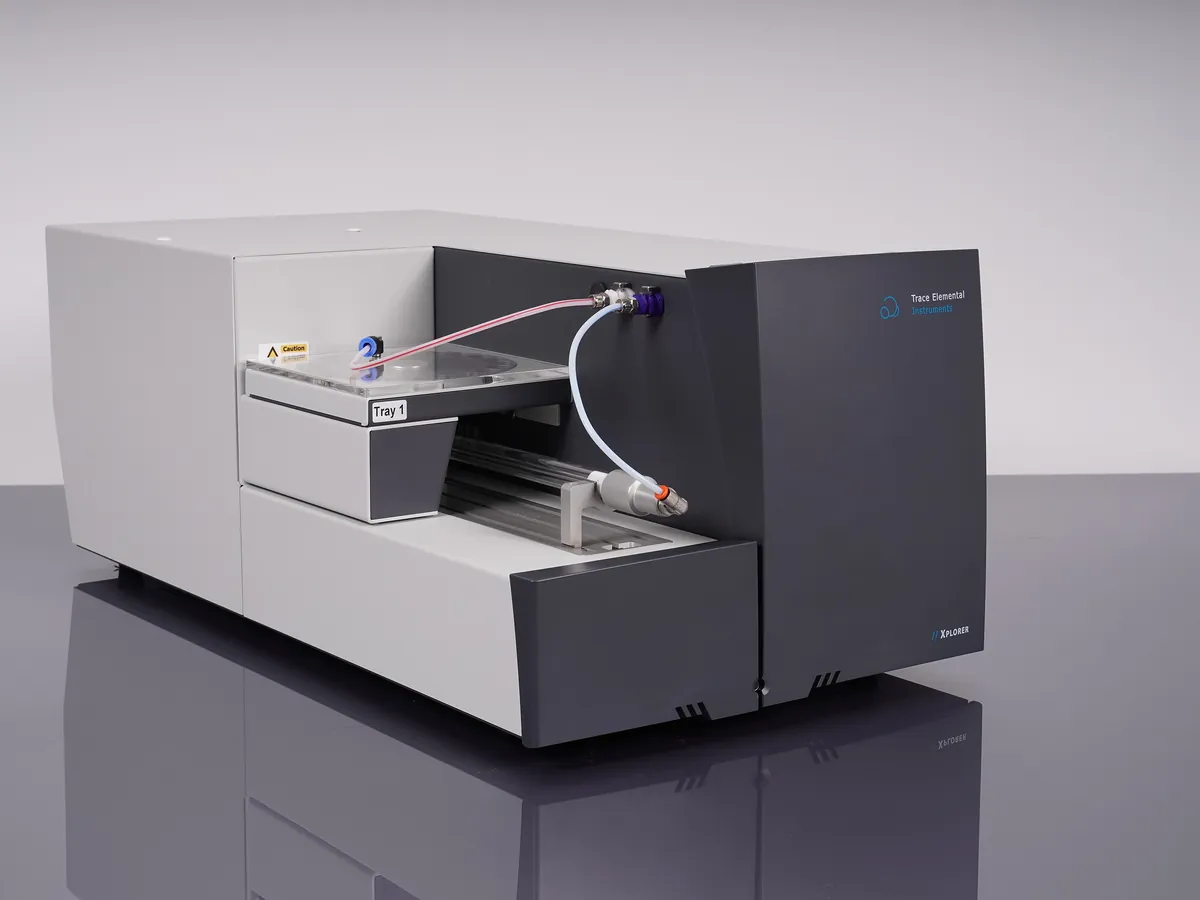
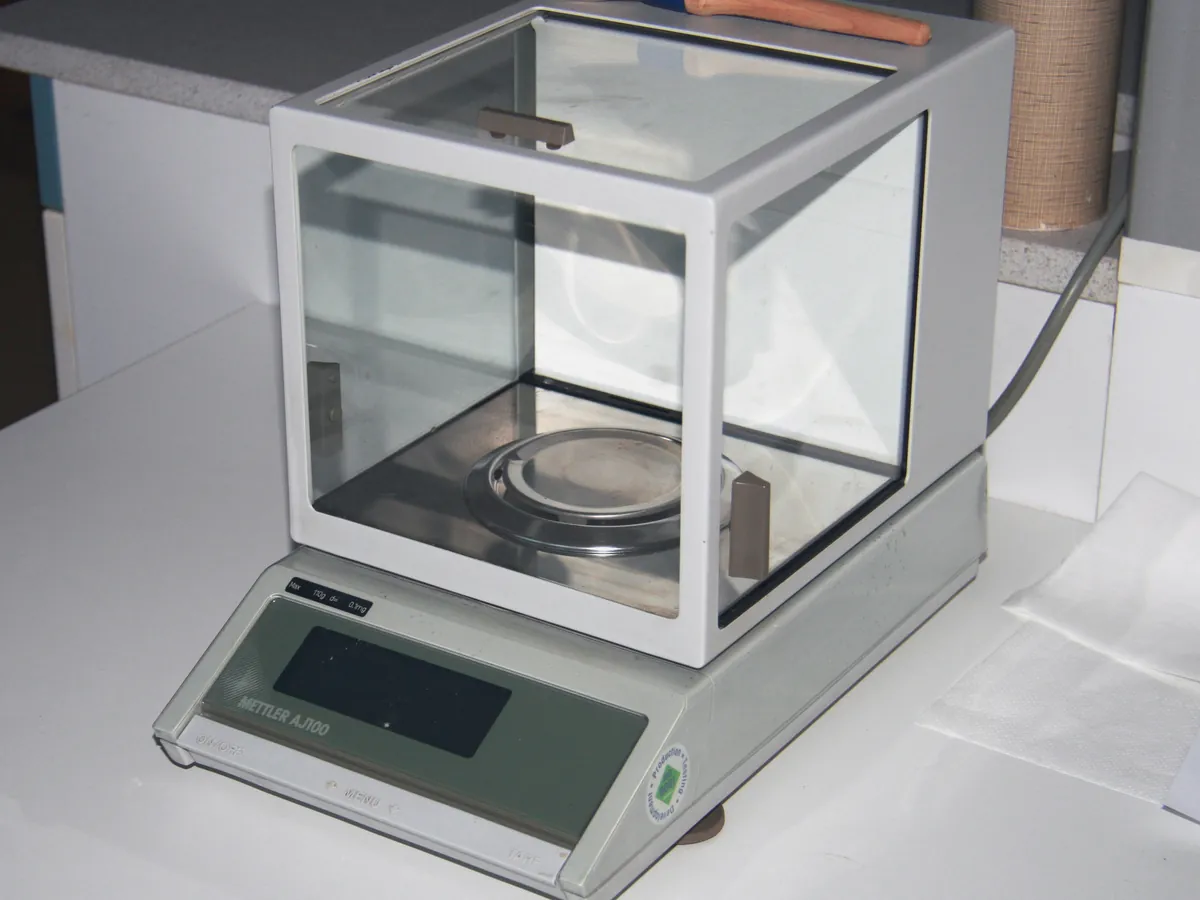
Reagents & standards
| Reagent | Grade / specification |
|---|---|
| Calibration standards | Certified sulphur standards (for example dibenzothiophene or di-n-butyl sulphide in a sulphur-free mineral oil or iso-octane) covering the working range |
| Blank / diluent | Sulphur-free solvent or white oil matching the sample matrix |
| Gases (UVF) | High-purity oxygen and argon or helium, as the instrument specifies |
| XRF consumables | Disposable sample cups and polyester or polypropylene window film |
Preparing the sample
- 01
Choose method
UVF for ≤ about 50 mg/kg; XRF for higher levels.
- 02
Calibrate
Blank and certified standards bracketing the sample.
- 03
Check
Quality-control sample within limits.
- 04
Load
Fill XRF cup or inject a known mass/volume (UVF).
- 05
Measure
Replicate measurements; average.
- 06
Report
mg/kg (or % m/m) with method code.
Procedure
- 1Mix the sample well. Use clean glass or sulphur-free containers; rubber and some plastics can add or absorb sulphur.
- 2Calibrate with a blank and certified standards that bracket the expected result and match the sample type (light distillate versus residual oil). Verify the curve with an independent quality-control (QC) standard.
- 3UV fluorescence: inject a fixed volume (typically 5–20 µL) with a syringe or autosampler at a controlled rate, or weigh the syringe before and after injection to get the mass. If volume is used, convert to mass using the sample density.
- 4Make at least three injections and use the mean integrated response. Run a blank and a QC sample at the start and end of each batch.
- 5XRF: fill a sample cup with the volume the instrument needs (often to a fixed depth), fit the film without wrinkles, and measure for the set counting time. Check the film for leaks before placing the cup in the analyser.
- 6Calculate the result from the calibration curve and report in mg/kg (ppm by mass) with the method used. Results below the method's lower limit must be reported as 'less than' that limit.
Standard preparation
- 1Use certified sulphur reference materials; prepare working standards by mass, not volume, in a sulphur-free diluent.
- 2Store standards tightly closed and away from light; check expiry. Low-level standards are easily contaminated.
Notes for analysts
- Energy-dispersive XRF is usually not sensitive enough for routine 10 mg/kg compliance testing; labs use UV fluorescence or wavelength-dispersive XRF for that.
- Contamination is the biggest risk at low levels: dedicated glassware, clean syringes and sulphur-free solvents matter.
- XRF results are affected by matrix (carbon/hydrogen ratio, oxygenates, heavy elements such as lead or chlorine); use matrix-matched standards or corrections.
Method parameters (typical)
| UVF furnace temperature | About 1000–1100 °C (as per instrument and method) |
|---|---|
| UVF injection volume | Typically 5–20 µL, constant for standards and samples |
| UVF typical range | About 1 to several thousand mg/kg (check current D5453 scope) |
| XRF line | S Kα (about 2.31 keV) |
| XRF typical range | Roughly tens of mg/kg up to about 5% m/m (check current D4294 scope) |
| Units | mg/kg (ppm m/m) for fuels; % m/m for fuel oils and crude |
System suitability & sequence
| Parameter | Limit |
|---|---|
| Calibration linearity | Correlation coefficient typically ≥ 0.999 (or as per SOP) |
| QC standard | Within its certified value ± SOP tolerance (for example ±10% at 10 mg/kg) |
| Replicate injections (UVF) | Agreement within the SOP limit (commonly ≤ 5% RSD) |
| Blank | Response well below the lowest standard |
Typical sequence
- 1Blank
- 2Calibration standards (low to high)
- 3QC standard
- 4Samples in triplicate injections
- 5QC standard every 10 samples and at the end
Calculation with a worked example
Where
- S
- Sulphur content of the sample (mg/kg)
- R
- Mean integrated detector response of the sample (counts)
- c
- Calibration intercept (counts)
- m
- Calibration slope (counts per mg/kg)
Given
- Calibration (UVF)
- R = 1518 × S + 230
- Sample response (mean of 3 injections)
- 13 050 counts
Working
- 1
R − c = 13 050 − 230 = 12 820 counts
- 2S = 12 820 ÷ 1518 = 8.445 mg/kg
Sulphur = 8.4 mg/kg — within a typical 10 mg/kg maximum for BS VI / EN 590 diesel
What result passes
- Compare with the product specification. Typically 10 mg/kg maximum for BS VI (India) and EN 590 / EN 228 (EU) road fuels; higher limits apply to other products and grades — check the current specification.
- When the result is close to the limit, apply the method reproducibility and ASTM D3244 / ISO 4259 rules before declaring a failure.
Validation parameters (ICH Q2(R2))
| Parameter | Typical requirement |
|---|---|
| Accuracy | Certified reference materials and proficiency-testing schemes |
| Precision | Repeatability within the method statement; control chart of a QC sample |
| Limit of quantitation | Demonstrated well below the specification limit (for 10 mg/kg fuels, a few mg/kg) |
| Matrix | Check biodiesel blends, oxygenates or high-aromatic samples against matrix-matched standards |
Run this method in LimsPulse: specifications and STPs under version control, results calculated and checked against limits, and a signed Certificate of Analysis.