Copper Strip Corrosion Test
Some sulphur compounds (elemental sulphur, mercaptans and certain additives) attack copper and its alloys in bearings, bushings and fuel systems. The copper strip test is a simple pass/fail-style screen: a polished copper strip is soaked in the sample under set conditions and its tarnish is compared with standard colour plaques.
- Petroleum, oil & gas
- Immersion of a polished copper strip at a set temperature and time, then visual comparison with standard strips
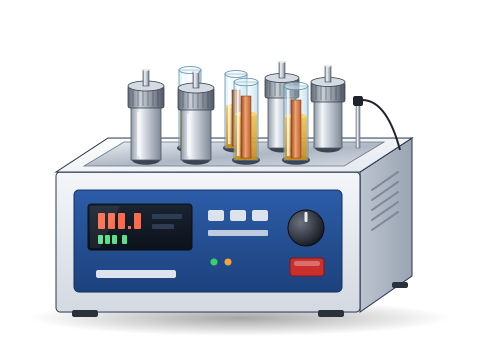
- Copper corrosion bath
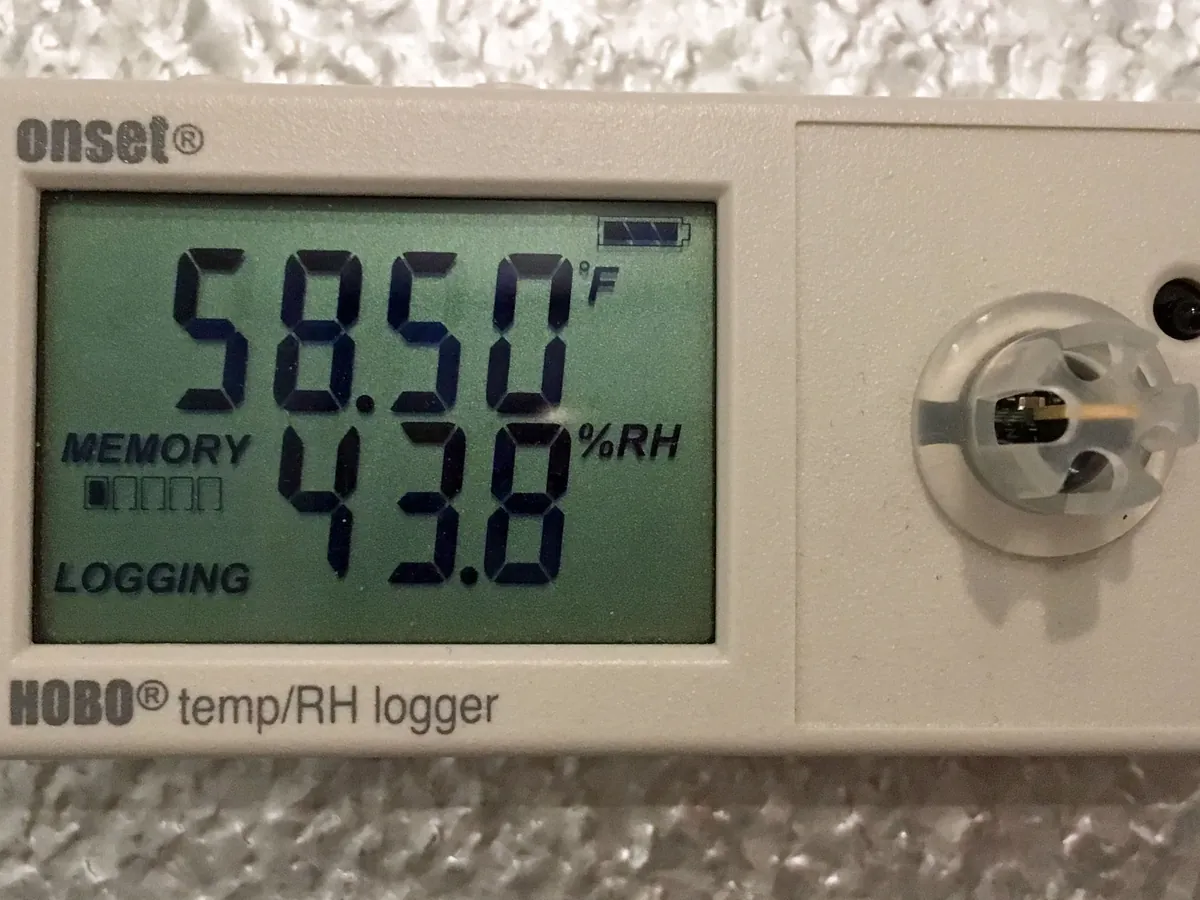
- Thermometer / logger
Reference: Typical method based on ASTM D130 (corrosiveness to copper from petroleum products by copper strip test), with the corresponding IS 1448 part, IP method and ISO 2160. Follow your lab SOP and the current editions.
Why this method works
Active sulphur species react with clean copper to form copper sulphides and oxides. The thickness of the film changes the colour of the strip, from light orange (almost unchanged) through reds, lavenders and multicolours to black. The strip is compared with the ASTM Copper Strip Corrosion Standards and given a class number (1 to 4) and a letter that describes the shade.
Instruments used
Reagents & standards
| Reagent | Grade / specification |
|---|---|
| Copper strips | High-purity copper, about 75 × 12.5 × 1.5–3 mm, as the method specifies |
| Polishing materials | Silicon carbide paper or grit of the grades given in the method, and absorbent cotton |
| Wash solvent | Sulphur-free volatile hydrocarbon (for example iso-octane or 2,2,4-trimethylpentane) |
| Comparison standard | ASTM Copper Strip Corrosion Standards (colour plaques), kept out of light |
Preparing the sample
- 01
Polish
Surface-prepare and final-polish the strip.
- 02
Immerse
Strip into 30 mL of sample in a test tube.
- 03
Heat
Bath at the set temperature and time.
- 04
Wash
Remove strip; wash with solvent; dry.
- 05
Compare
Match with standard plaques; classify.
Procedure
- 1Prepare the strip: remove all surface blemishes with silicon carbide paper, then final-polish with grit on cotton so the strip is bright and uniform. Do not touch it with bare fingers; use forceps or ashless filter paper.
- 2Place about 30 mL of the sample in a clean, dry test tube and slide the polished strip in within one minute of polishing.
- 3For volatile products (for example petrol), close the tube inside a pressure vessel; for others, close the tube with a vented cork. Place the tube or vessel in the bath at the specified temperature.
- 4Use the time and temperature given by the product specification. Common conditions are 50 °C for 3 hours for diesel and kerosene and 100 °C for 3 hours for many lubricating oils — check your specification.
- 5At the end of the period, pour the contents into a beaker, remove the strip with forceps, wash it with the solvent and dry it quickly with filter paper (blot, do not rub).
- 6Examine the strip at once, holding it so light reflects at about 45°, and compare it with the standard plaques. If it lies between two classes, report the more tarnished one.
- 7Report the class and letter (for example '1b'), with the test temperature and time.
Standard preparation
- 1Keep the ASTM colour standard in its case, away from light, and check its condition annually as recommended; replace when faded.
- 2Store polished strips only briefly; polish immediately before use.
Notes for analysts
- Classification guide: 1a light orange, nearly the same as a freshly polished strip; 1b dark orange; 2a claret red; 2b lavender; 2c multicoloured with lavender blue and/or silver over claret red; 2d silvery; 2e brassy or gold; 3a magenta overcast on a brassy strip; 3b multicoloured with red and green (peacock) but no grey; 4a transparent black, dark grey or brown with peacock green barely showing; 4b graphite or lustreless black; 4c glossy or jet black.
- Fingerprints, slow handling and exposure to air before comparison all darken the strip and bias the result.
- The test is qualitative. It does not measure total sulphur; an oil with high sulphur may still pass if the sulphur is not 'active'.
Method parameters (typical)
| Sample volume | About 30 mL |
|---|---|
| Bath temperature tolerance | Typically ±1 °C of the set point |
| Common conditions | Fuels 50 °C × 3 h; lubricating oils 100 °C × 3 h (as the specification requires) |
| Classification | 1a–1b slight tarnish; 2a–2e moderate tarnish; 3a–3b dark tarnish; 4a–4c corrosion |
System suitability & sequence
| Parameter | Limit |
|---|---|
| Bath temperature | Verified with a calibrated thermometer before and during the test |
| Blank strip | A freshly polished strip matches class 1a (or the freshly polished plaque) — confirms clean polishing and solvents |
| Duplicate | Duplicate strips must give the same class; if not, repeat the test |
Typical sequence
- 1Bath at temperature
- 2Strip polishing
- 3Immersion and timing
- 4Wash and dry
- 5Immediate comparison with standards
What result passes
- Most fuel and lubricant specifications set a maximum class, often Class 1 for diesel and many fuels (check the current specification).
- Report the full class (number and letter) and the test conditions.
Validation parameters (ICH Q2(R2))
| Parameter | Typical requirement |
|---|---|
| Comparability | Duplicate strips and, periodically, a second analyst's reading |
| Conditions | Bath temperature and time records traceable to calibrated instruments |
Run this method in LimsPulse: specifications and STPs under version control, results calculated and checked against limits, and a signed Certificate of Analysis.