Uniformity of dosage units
Checks that each individual tablet or capsule contains close to the labelled amount of drug. Ten units are tested and the result is expressed as an acceptance value (AV) that combines how far the mean is from target and how spread out the units are.
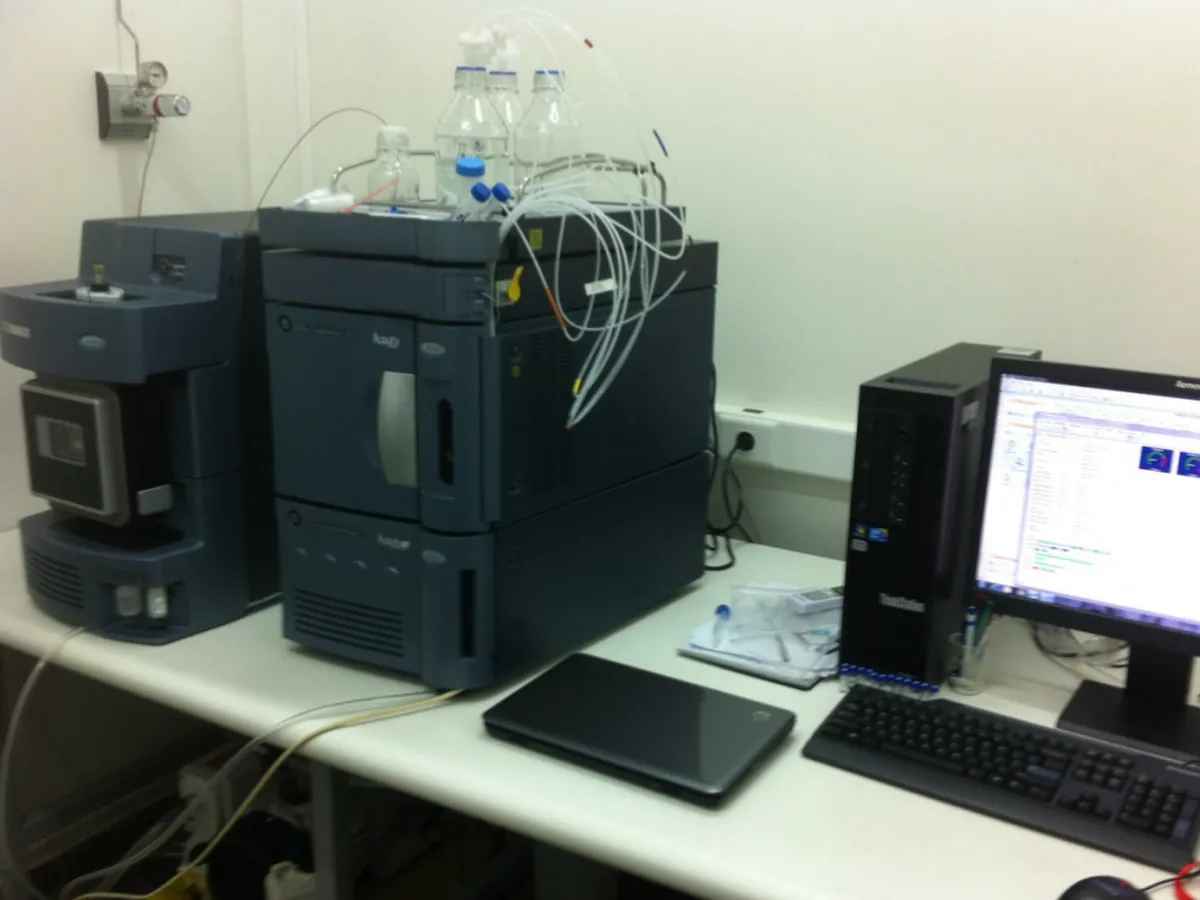
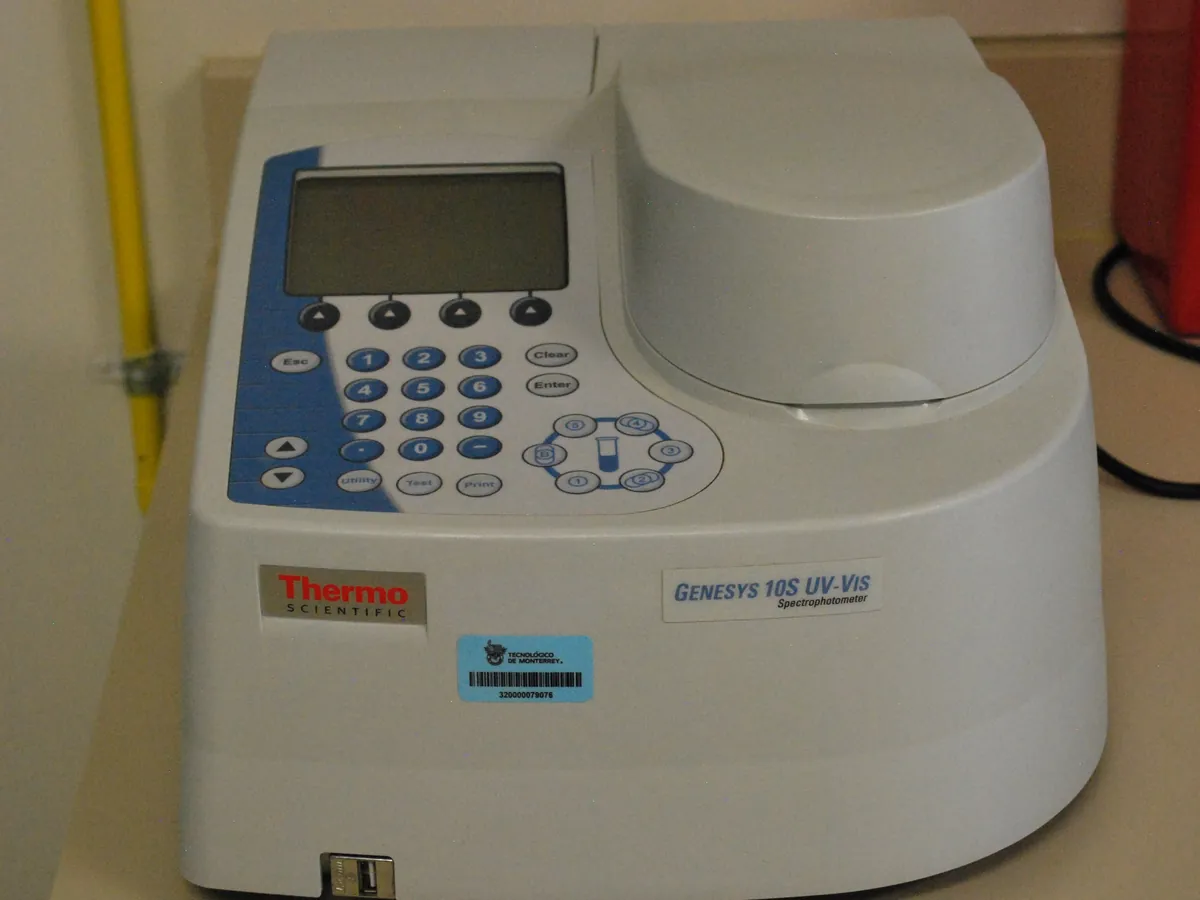
- HPLC / UV (content uniformity) or balance (mass variation)
- HPLC
- UV-Vis
- Analytical balance
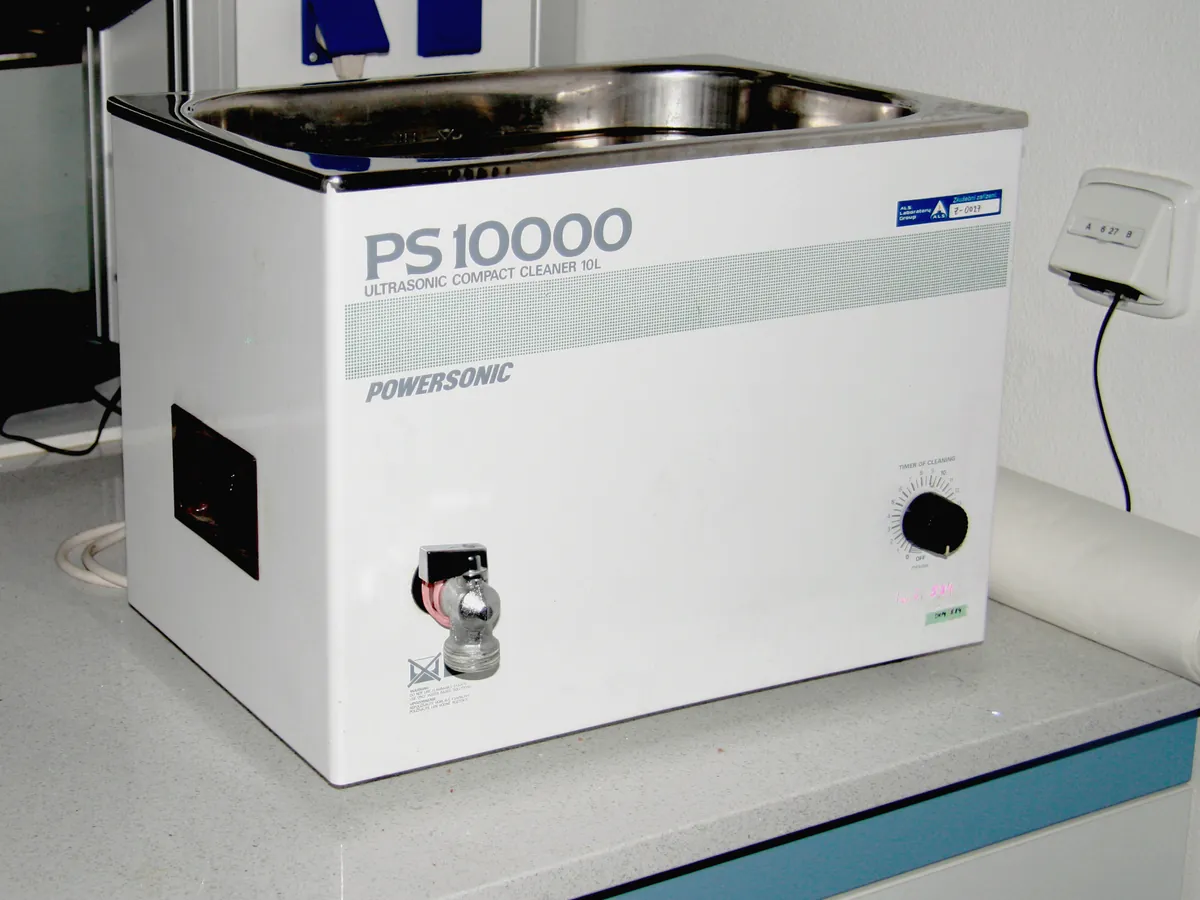
- Sonicator
Reference: Harmonised pharmacopoeial test (USP <905>, Ph. Eur. 2.9.40, JP 6.02). Always follow your approved specification and STP.
Why this method works
There are two ways to show uniformity. Content uniformity (CU) assays each of 10 units individually, usually by HPLC or UV. Mass variation (MV) weighs each unit and estimates its content from the assay of a pooled sample; it may be used only where the pharmacopoeia allows it, broadly when the unit contains at least 25 mg of drug that is at least 25% of the unit by weight (for example uncoated or film-coated tablets). From the 10 results the acceptance value AV = |M − X̄| + k·s is calculated, where X̄ is the mean, s the standard deviation, k = 2.4 for 10 units and M a reference value that depends on X̄. The batch passes stage 1 if AV ≤ L1 (15.0).
Instruments used

Reagents & standards
| Reagent | Grade / specification |
|---|---|
| Reference standard | Of the active ingredient, certified purity |
| Diluent and mobile phase | As in the product's assay method |
| Solvents | HPLC grade |
Preparing the sample
- 01
Select units
Take at least 30 units from a representative sample; set 20 aside.
- 02
One unit per flask
Place each of 10 units in its own volumetric flask.
- 03
Disperse & sonicate
Add diluent, shake or sonicate until the unit fully disintegrates and the drug dissolves.
- 04
Make up & filter
Cool, make up to volume, mix and filter or centrifuge.
- 05
Dilute & analyse
Dilute to the working concentration and analyse against the standard.
Procedure
- 1Content uniformity: place one tablet in a suitable volumetric flask (e.g. 100 mL) and add about 60% of the volume of diluent.
- 2Shake mechanically or sonicate for the time stated in the method until the tablet has completely disintegrated and the drug has dissolved.
- 3Cool to room temperature, make up to volume and mix. Filter through a 0.45 µm membrane, discarding the first few mL, or centrifuge.
- 4Dilute to the working concentration of the assay method. Repeat for each of the 10 units.
- 5Mass variation (where permitted): weigh 10 units individually and use the assay result of a pooled, powdered sample to estimate the content of each unit.
Standard preparation
- 1Prepare the reference standard at the same working concentration as one unit's final dilution, using the same diluent.
- 2Prepare in duplicate if the method requires a standard check (standard agreement).
Notes for analysts
- The chromatogram shown is illustrative only.
- Make sure each unit has fully disintegrated before making up to volume; incomplete extraction looks like poor uniformity.
- When the target T is above 101.5%, a different rule for M applies; see the current chapter.
- Mass variation can only replace content uniformity where the pharmacopoeia permits it (dose and ratio conditions); check the current chapter table.
- Standard deviation must be the sample standard deviation (n − 1), as used by the percent-RSD calculator.
Method parameters (typical)
| Number of units | 10 at stage 1; a further 20 at stage 2 (30 in total) |
|---|---|
| Analytical technique | HPLC or UV as in the product's validated method |
| Result per unit | Content as % of label claim |
| Acceptability constant k | 2.4 for n = 10; 2.0 for n = 30 |
| L1 | 15.0 (maximum allowed AV) |
| L2 | 25.0 (maximum allowed deviation of any unit from M at stage 2) |
| Reference value M (when target T ≤ 101.5%) | M = X̄ if 98.5% ≤ X̄ ≤ 101.5%; M = 98.5% if X̄ < 98.5%; M = 101.5% if X̄ > 101.5% |
System suitability & sequence
| Parameter | Limit |
|---|---|
| %RSD of replicate standard injections | Typically not more than 2.0% (as in the assay method) |
| Tailing factor | Typically not more than 2.0 |
Typical sequence
- 1Blank × 1
- 2Standard × 5 (system suitability)
- 3Units 1 to 10, one injection each
- 4Bracketing standard × 1
Calculation with a worked example
Where
- X̄
- Mean of the individual contents, as % of label claim
- s
- Sample standard deviation of the individual contents (n − 1)
- k
- Acceptability constant: 2.4 for 10 units, 2.0 for 30 units
- M
- Reference value: X̄ if 98.5–101.5%, otherwise 98.5% or 101.5% (case T ≤ 101.5%)
- L1
- Maximum allowed acceptance value, 15.0
Given
- Unit contents (% LC)
- 96.8, 98.2, 97.5, 99.1, 95.9, 97.8, 98.6, 96.4, 97.2, 98.0
- n
- 10
- k
- 2.4
Working
- Sum = 975.5, so X̄ = 975.5 ÷ 10 = 97.55%
- Standard deviation s = 0.996% (sum of squared deviations 8.925, divided by 9, square root)
- X̄ is below 98.5%, so M = 98.5%
- |M − X̄| = |98.5 − 97.55| = 0.95
- k·s = 2.4 × 0.996 = 2.39
- AV = 0.95 + 2.39 = 3.34
AV = 3.3, which is not more than L1 = 15.0, so the batch passes stage 1.
Try it with your numbersWhat result passes
- Stage 1: AV of the first 10 units is not more than L1 (15.0).
- Stage 2 (if AV > 15.0): test 20 more units; the AV of all 30 units (k = 2.0) is not more than 15.0, and no unit is below (1 − L2 × 0.01)M or above (1 + L2 × 0.01)M, with L2 = 25.0.
- Use other criteria only where your specification or monograph states them.
Validation parameters (ICH Q2(R2))
| Parameter | Typical requirement |
|---|---|
| Method | The product's validated assay method, shown to be suitable for single-unit concentrations |
| Specificity | No interference from excipients at single-unit level |
| Extraction | Complete recovery from a single unit, shown by recovery studies |
| Linearity | Covers at least about 70–130% of the single-unit working concentration |
Run this method in LimsPulse: specifications and STPs under version control, results calculated and checked against limits, and a signed Certificate of Analysis.