Chromatography
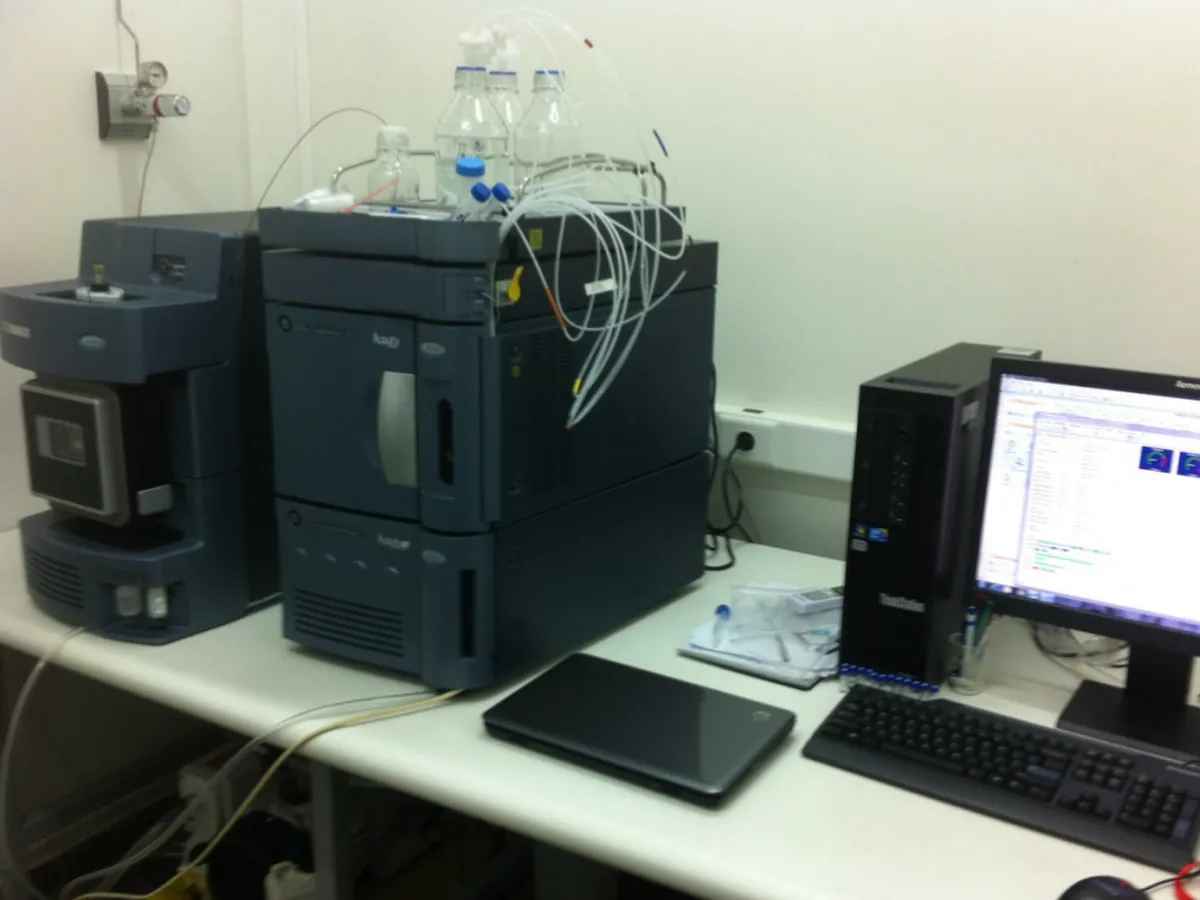
High Performance Liquid Chromatography (HPLC)
Separates the components of a liquid sample on a packed column and measures each one as it leaves. The workhorse of pharmaceutical QC for assay, impurities and dissolution.
- Pharmaceutical
- Biotech
- Food & beverage
- Environmental
- Cosmetics
- Chemicals
Follow your site SOP
This is a typical operating sequence for learning. Your instrument model and approved SOP take precedence.
STAGE 1
Before you start
- 1Check the instrument is within its calibration due date and has no 'out of order' label.
- 2Prepare the mobile phase as per the method, filter it through a 0.45 µm (or 0.22 µm) membrane and degas it.
- 3Fit the column specified in the method, in the direction of the flow arrow, and record its ID in the column usage log.
- Never let buffer dry in the lines; buffer salts crystallise and damage seals and check valves.
STAGE 2
Start-up
- 1Switch on the modules and the detector lamp; allow the lamp to warm up (commonly about 30 minutes).
- 2Purge each pump line to remove air bubbles.
- 3Start the flow at a low rate and increase it gradually to the method flow rate.
- 4Set the column oven temperature and detector wavelength from the method.
- 5Equilibrate until pressure and baseline are stable (often 10–20 column volumes).
- Watch the pressure while increasing flow. Stop if it exceeds the column's limit.
STAGE 3
Running samples
- 1Create the sequence: blank, system suitability injections (e.g. five replicate standards), then samples with bracketing standards.
- 2Run the blank and confirm there are no interfering peaks at the analyte retention time.
- 3Check system suitability results meet the method limits before processing any sample results.
- 4Process the chromatograms with the approved integration method; never re-integrate without a documented reason.
- If system suitability fails, stop and investigate. Results from a failed run cannot be reported.
STAGE 4
Shutdown
- 1Flush buffer out of the column and system with water or a low-organic mixture (e.g. 10% methanol in water).
- 2Then flush and store the column in a high-organic solvent (e.g. 70–80% methanol or acetonitrile) as the column supplier recommends.
- 3Remove the column if it will not be used soon, cap both ends and store it with its log.
- 4Switch off the lamp, then the pump and modules; complete the instrument usage log.
In LimsPulse · Calibration Management
Keep every HPLC in control: usage logs, calibration and maintenance schedules, and automatic blocking of overdue instruments.