HPLC · Calibration procedure
Detector linearity
Checks that detector response is proportional to concentration across the absorbance range your methods use.
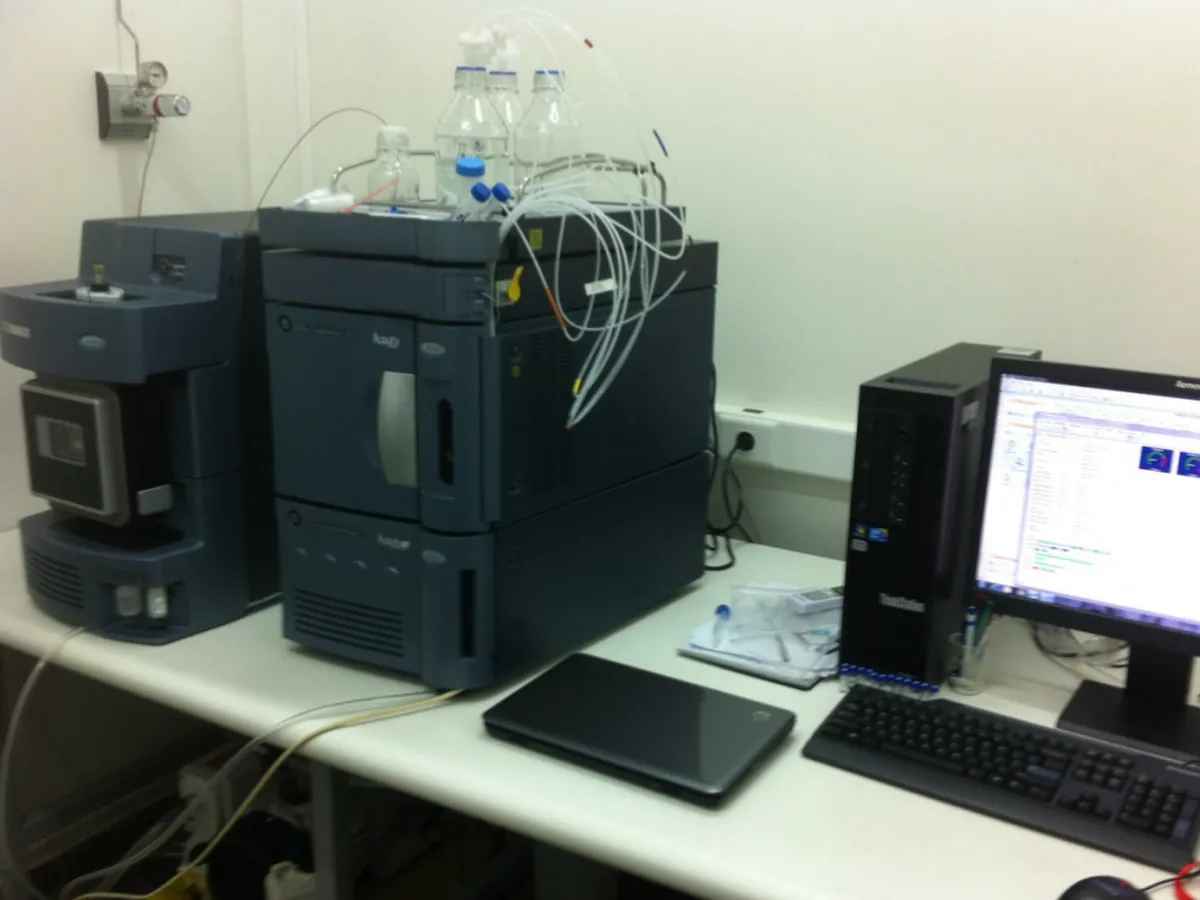
PURPOSE
Why this is checked
Quantitation against a single standard assumes a linear response. Linearity confirms results are reliable at both low and high concentrations.
Frequency
Typically every 6 months, and after major repair or relocation, as defined in your calibration SOP.
Learn how the HPLC worksYOU WILL NEED
Standards & tools
- A series of caffeine solutions covering the working range (at least five concentrations, e.g. from about 10 to 100 µg/mL)
BEFORE YOU START
Prerequisites
- System equilibrated with a suitable column and mobile phase
- Detector at 273 nm
PROCEDURE
Step by step
- 1Prepare at least five caffeine solutions across the range.
- 2Inject each solution (in duplicate if your SOP requires).
- 3Plot mean peak area (or absorbance) against concentration.
- 4Calculate the correlation coefficient and check the residuals.
RECORD
Example observation table
| Concentration (µg/mL) | Peak area |
|---|---|
| 10 | 301,250 |
| 25 | 752,180 |
| 50 | 1,503,900 |
| 75 | 2,254,600 |
| 100 | 3,009,800 |
CALCULATION
How to calculate the result
Linear regression y = mx + c; report the correlation coefficient r
- Using the five points above
- r = 0.99999 (passes r ≥ 0.999)
ACCEPTANCE CRITERIA
Pass if
- Correlation coefficient r not less than 0.999 over the tested range.
IF IT FAILS
What to do
- Check lamp energy and flow-cell cleanliness
- Repeat with freshly prepared solutions
- Service the detector if it still fails
MORE
Other HPLC calibrations
In LimsPulse · Calibration Management
LimsPulse schedules this calibration, records the result against limits, and blocks the instrument everywhere if it fails or goes overdue.