Assay of Paracetamol Tablets by HPLC
Determines how much paracetamol is present in a tablet compared with the label claim, using reversed-phase HPLC with UV detection at 243 nm and an external reference standard.
- HPLC (reversed phase, UV detection)
- HPLC
- Analytical balance
- Sonicator
Reference: Typical method based on pharmacopoeial approaches (IP / USP). Always follow your approved specification and STP.
Why this method works
Paracetamol is moderately polar and absorbs strongly in the UV. On a C18 column with an aqueous buffer–methanol mobile phase it elutes as a sharp, well-retained peak. The peak area of the sample is compared with that of a paracetamol reference standard of known purity prepared at the same concentration, so the amount per tablet can be calculated.
Instruments used
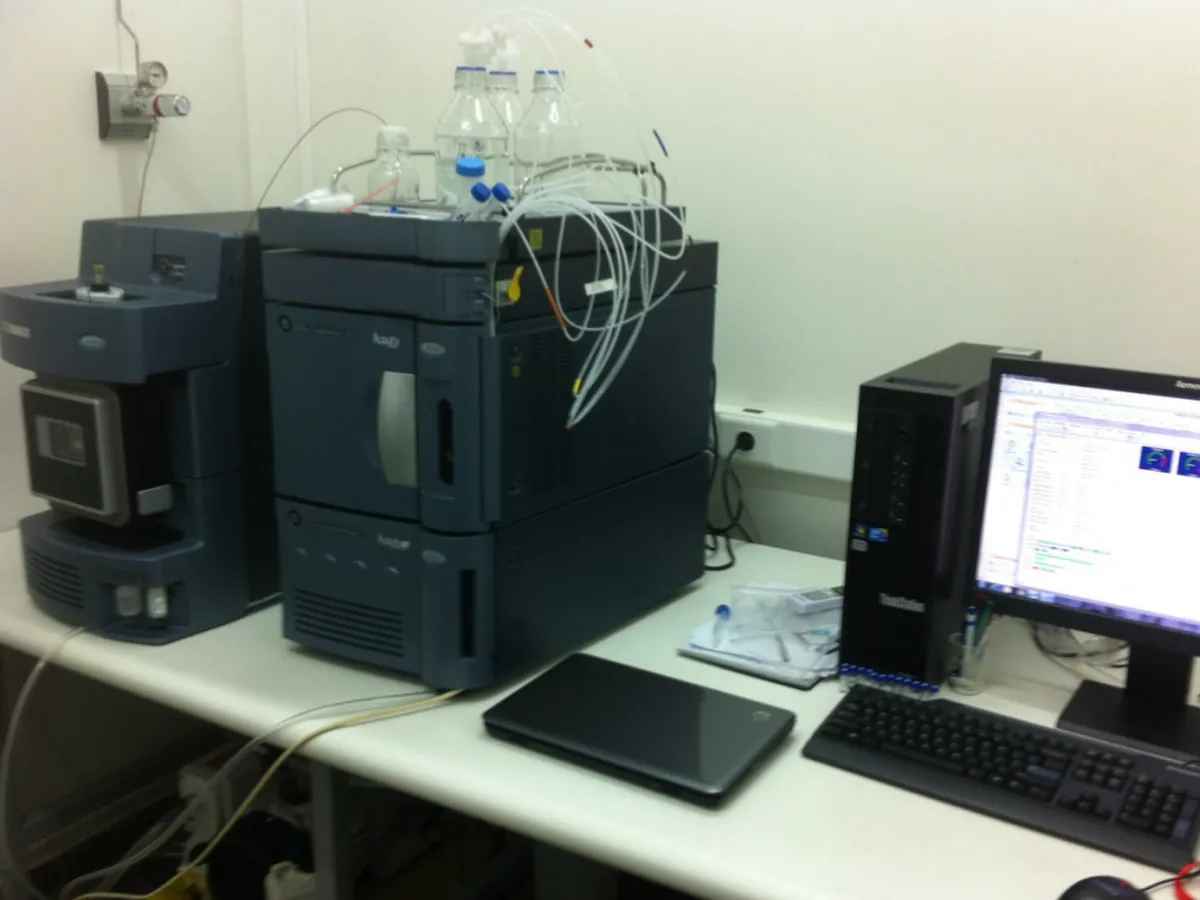

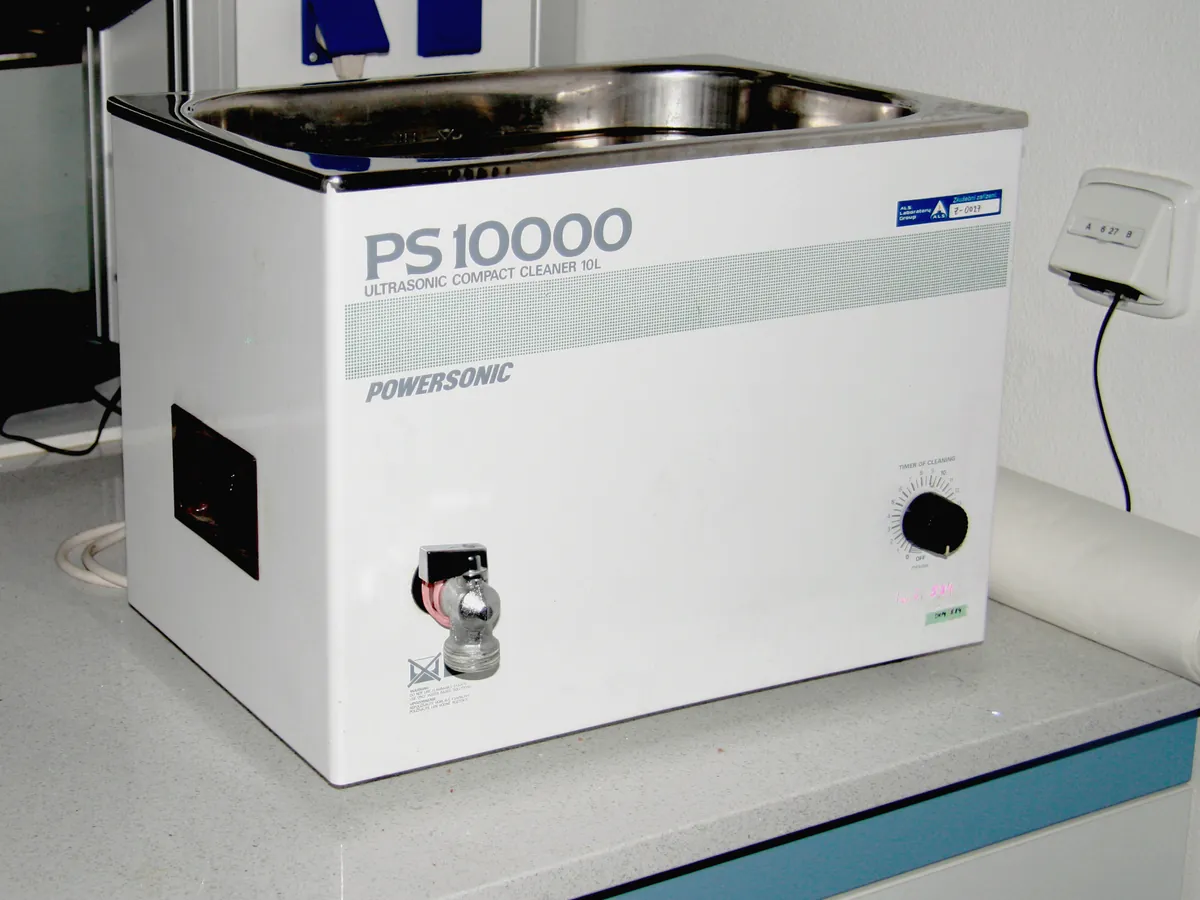
Reagents & standards
| Reagent | Grade / specification |
|---|---|
| Paracetamol reference standard | Certified purity (e.g. IP RS / USP RS / working standard qualified against it) |
| Methanol | HPLC grade |
| Potassium dihydrogen phosphate | AR grade, for buffer |
| Orthophosphoric acid | AR grade, for pH adjustment |
| Water | HPLC grade / purified water |
Preparing the sample
- 01
Weigh & powder
Weigh 20 tablets and powder them finely.
- 02
Weigh portion
Weigh powder equivalent to about 50 mg paracetamol.
- 03
Dissolve
Transfer to a 100 mL flask with ~60 mL diluent.
- 04
Sonicate
Sonicate about 15 minutes with occasional shaking.
- 05
Make up & filter
Cool, make up to volume, filter through 0.45 µm.
- 06
Dilute & inject
Dilute 5 mL to 50 mL with diluent and inject.
Procedure
- 1Weigh 20 tablets, calculate the average tablet weight, and powder them finely in a mortar.
- 2Accurately weigh a quantity of powder equivalent to about 50 mg of paracetamol into a 100 mL volumetric flask.
- 3Add about 60 mL of diluent (mobile phase) and sonicate for about 15 minutes with intermittent shaking to dissolve the drug completely.
- 4Allow to cool to room temperature and make up to volume with diluent. Mix well.
- 5Filter through a 0.45 µm membrane filter, discarding the first few mL of filtrate.
- 6Pipette 5.0 mL of the filtrate into a 50 mL volumetric flask and make up to volume with diluent (about 50 µg/mL).
Standard preparation
- 1Accurately weigh about 50 mg of paracetamol reference standard into a 100 mL volumetric flask.
- 2Dissolve in about 60 mL of diluent, sonicate briefly and make up to volume.
- 3Pipette 5.0 mL into a 50 mL volumetric flask and make up to volume with diluent (about 50 µg/mL).
Notes for analysts
- Use the same diluent for standard and sample so the peak shape matches.
- Weigh the standard and sample using a calibrated analytical balance within its minimum-weight range.
- Paracetamol in solution can degrade to 4-aminophenol; analyse solutions within their established stability period.
Method parameters (typical)
| Column | C18, 250 × 4.6 mm, 5 µm |
|---|---|
| Mobile phase | Phosphate buffer pH 3.0 : methanol (75 : 25 v/v), filtered and degassed |
| Flow rate | 1.0 mL/min |
| Detection | UV at 243 nm |
| Injection volume | 20 µL |
| Column temperature | 25–30 °C |
| Run time | About 10 minutes (paracetamol elutes at roughly 4–6 minutes) |
| Diluent | Mobile phase |
System suitability & sequence
| Parameter | Limit |
|---|---|
| %RSD of peak area (5 replicate standard injections) | Not more than 2.0% |
| Tailing factor | Not more than 2.0 |
| Theoretical plates | Not less than 2000 |
Typical sequence
- 1Blank (diluent) × 1
- 2Standard × 5 (system suitability)
- 3Sample preparation 1 × 2
- 4Sample preparation 2 × 2
- 5Bracketing standard × 1
Calculation with a worked example
Where
- AT
- Mean peak area of paracetamol in the sample preparation
- AS
- Mean peak area of paracetamol in the standard preparation
- WS
- Weight of reference standard taken (mg)
- WT
- Weight of tablet powder taken (mg)
- P
- Purity of the reference standard (%, as is)
- Avg. wt
- Average tablet weight (mg)
- LC
- Label claim of paracetamol per tablet (mg)
Given
- AT
- 1,245,600
- AS
- 1,238,900
- WS
- 50.2 mg
- WT
- 60.5 mg
- P
- 99.8%
- Avg. wt
- 605.0 mg
- LC
- 500 mg
Working
- AT / AS = 1,245,600 / 1,238,900 = 1.00541
- WS / WT = 50.2 / 60.5 = 0.82975
- P / 100 = 0.998
- Avg. wt / LC = 605.0 / 500 = 1.21
- 1.00541 × 0.82975 × 0.998 × 1.21 × 100 = 100.74
Paracetamol content = 100.7% of label claim (≈ 503.7 mg per tablet)
Try it with your numbersWhat result passes
- Typically 95.0% to 105.0% of the stated amount of paracetamol. Use the limit in your approved specification.
Validation parameters (ICH Q2(R2))
| Parameter | Typical requirement |
|---|---|
| Specificity | No interference from blank or placebo at the paracetamol retention time; peak purity passes (PDA) |
| Linearity | Typically 50–150% of the working concentration, correlation coefficient ≥ 0.999 |
| Accuracy | Recovery 98.0–102.0% at three levels (e.g. 80, 100, 120%) |
| Precision | Repeatability %RSD ≤ 2.0% for six sample preparations |
| Robustness | Small deliberate changes in flow (±0.1 mL/min), temperature (±5 °C), wavelength (±2 nm) and pH |
| Solution stability | Standard and sample solutions shown to be stable for the period of analysis |
Run this method in LimsPulse: specifications and STPs under version control, results calculated and checked against limits, and a signed Certificate of Analysis.