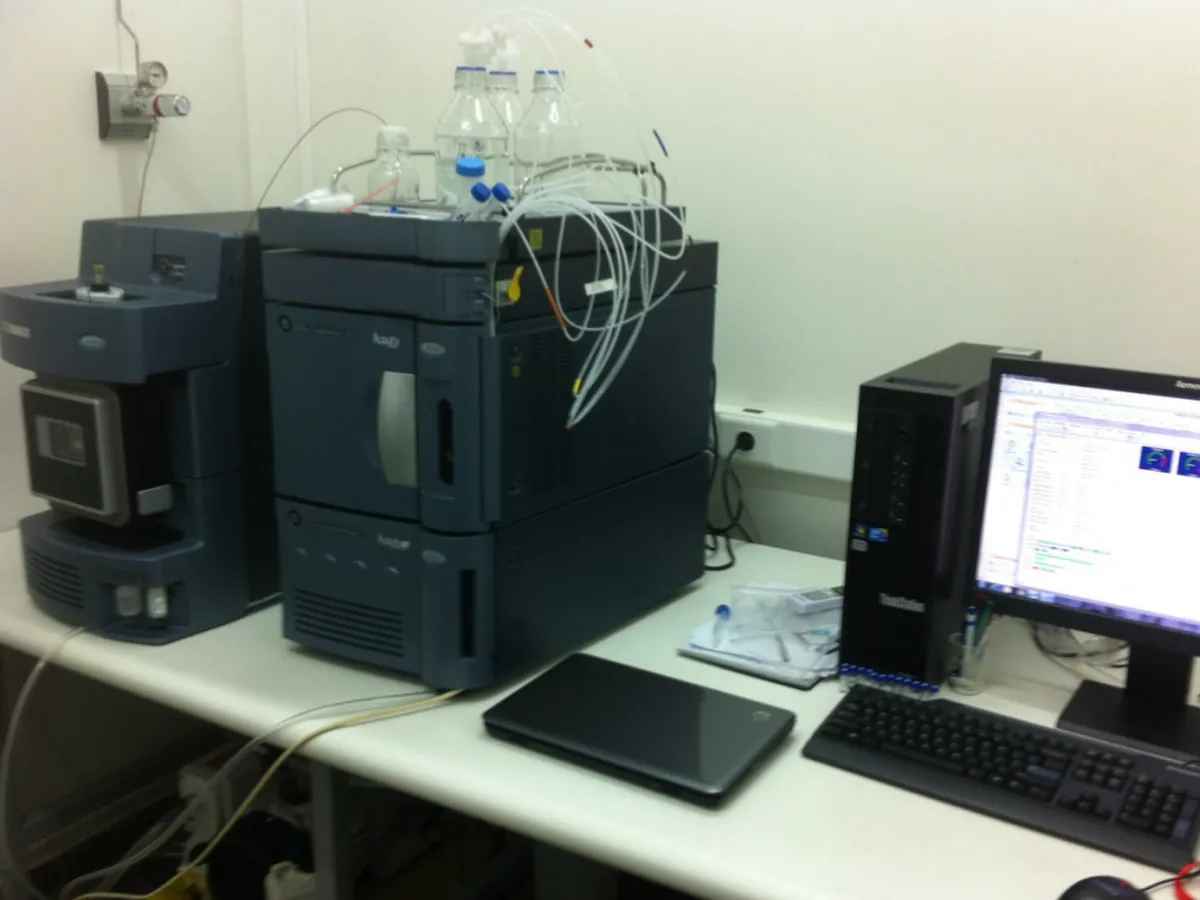
High Performance Liquid Chromatography (HPLC)
Separates the components of a liquid sample on a packed column and measures each one as it leaves. The workhorse of pharmaceutical QC for assay, impurities and dissolution.
- Pharmaceutical
- Biotech
- Food & beverage
- Environmental
- Cosmetics
- Chemicals
HPLC calibration procedures
Pump flow rate accuracy
Checks that the pump delivers the flow rate that is set, by timing the collection of a known volume of water.
Open procedureInjector precision & linearity
Checks that the autosampler injects the same volume every time, and that peak area rises in proportion to injection volume.
Open procedureDetector wavelength accuracy
Confirms the UV detector reads the correct wavelength, using a compound with known absorbance maxima or the built-in holmium oxide filter.
Open procedureDetector linearity
Checks that detector response is proportional to concentration across the absorbance range your methods use.
Open procedureColumn oven temperature accuracy
Verifies the column oven holds the set temperature, using a calibrated temperature probe.
Open procedureGradient composition accuracy
Checks that the pump mixes solvents in the set proportions, using a step gradient with a UV-absorbing tracer (acetone or caffeine) in one channel.
Open procedureInstrument qualification (DQ · IQ · OQ · PQ)
- 01
DQ — Design qualification
Documents what the lab needs (flow range, detector type, pressure limit, CDS with audit trail) and confirms the selected model meets it.
- 02
IQ — Installation qualification
Confirms the instrument is delivered and installed correctly: components, serial numbers, utilities, software version and documentation.
- 03
OQ — Operational qualification
Tests each module against specifications: flow accuracy, gradient accuracy, injector precision and linearity, wavelength accuracy, detector linearity and oven temperature.
- 04
PQ — Performance qualification
Shows the instrument performs consistently for its intended use, for example with a system suitability test run on a defined schedule.
Keep every HPLC in control: usage logs, calibration and maintenance schedules, and automatic blocking of overdue instruments.