HPLC · Calibration procedure
Injector precision & linearity
Checks that the autosampler injects the same volume every time, and that peak area rises in proportion to injection volume.
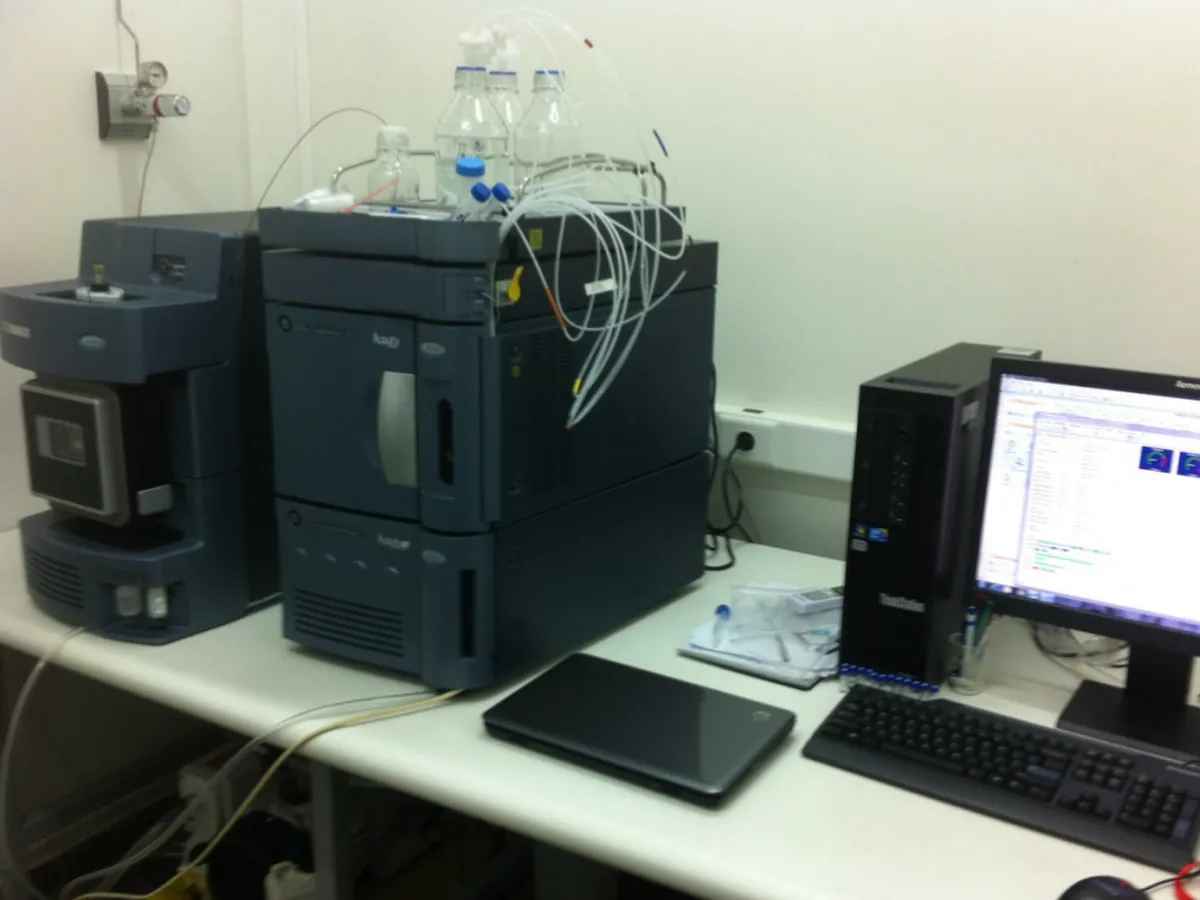
PURPOSE
Why this is checked
Every quantitative HPLC result assumes the injected volume is precise. Poor injector precision shows up as variable peak areas and failed system suitability.
Frequency
Typically every 6 months, and after major repair or relocation, as defined in your calibration SOP.
Learn how the HPLC worksYOU WILL NEED
Standards & tools
- Caffeine reference solution (e.g. about 20–50 µg/mL in water)
- Suitable C18 column
- HPLC-grade water and methanol
BEFORE YOU START
Prerequisites
- Equilibrate the system with a suitable mobile phase (e.g. water : methanol 70 : 30)
- Set the detector to 273 nm
PROCEDURE
Step by step
- 1Precision: inject the caffeine solution six times at the same volume (e.g. 20 µL).
- 2Record the peak area of each injection and calculate the %RSD.
- 3Linearity: inject the same solution at several volumes across the working range (e.g. 5, 10, 20, 50 and 100 µL).
- 4Plot peak area against injection volume and calculate the correlation coefficient (r).
RECORD
Example observation table
| Injection | Volume (µL) | Peak area |
|---|---|---|
| 1 | 20 | 1,502,340 |
| 2 | 20 | 1,498,870 |
| 3 | 20 | 1,505,120 |
| 4 | 20 | 1,500,410 |
| 5 | 20 | 1,497,960 |
| 6 | 20 | 1,503,580 |
CALCULATION
How to calculate the result
%RSD = (Standard deviation ÷ Mean) × 100
- Mean area = 1,501,380
- Standard deviation = 2,782
- %RSD = 2,782 ÷ 1,501,380 × 100 = 0.19%
ACCEPTANCE CRITERIA
Pass if
- Precision: %RSD of peak area not more than 1.0% (n = 6).
- Linearity: correlation coefficient r not less than 0.999.
IF IT FAILS
What to do
- Check the syringe, needle, needle seat and rotor seal for wear or blockage.
- Check for air in the sample loop and the wash solvent level.
- Service the autosampler and repeat the test.
MORE
Other HPLC calibrations
In LimsPulse · Calibration Management
LimsPulse schedules this calibration, records the result against limits, and blocks the instrument everywhere if it fails or goes overdue.