Microbial Enumeration Test (TAMC / TYMC) by Plate Count
Counts the number of aerobic bacteria and fungi (TAMC) and of yeasts and moulds (TYMC) in a non-sterile product, by plating a 1:10 dilution of the sample onto Soybean-Casein Digest Agar and Sabouraud Dextrose Agar and counting colonies after incubation.
- Plate count (pour plate or spread plate)
- LAF
- Autoclave
- Incubator
- Colony counter
- Analytical balance
- Water bath
Reference: Typical method based on USP <61> and Ph. Eur. 2.6.12 (harmonised). Always follow your approved specification and STP.
Why this method works
Each viable microorganism that is dispersed in the agar grows into a visible colony, so the number of colonies equals the number of colony-forming units (cfu) in the volume plated. Multiplying by the dilution factor gives the cfu per gram or millilitre of product. Soybean-Casein Digest Agar (SCDA) incubated at 30–35 °C recovers aerobic bacteria and many fungi (TAMC); Sabouraud Dextrose Agar (SDA) incubated at 20–25 °C favours yeasts and moulds (TYMC). The method must first be shown to be suitable for the product (method suitability), because preservatives or the drug itself can inhibit growth.
Instruments used
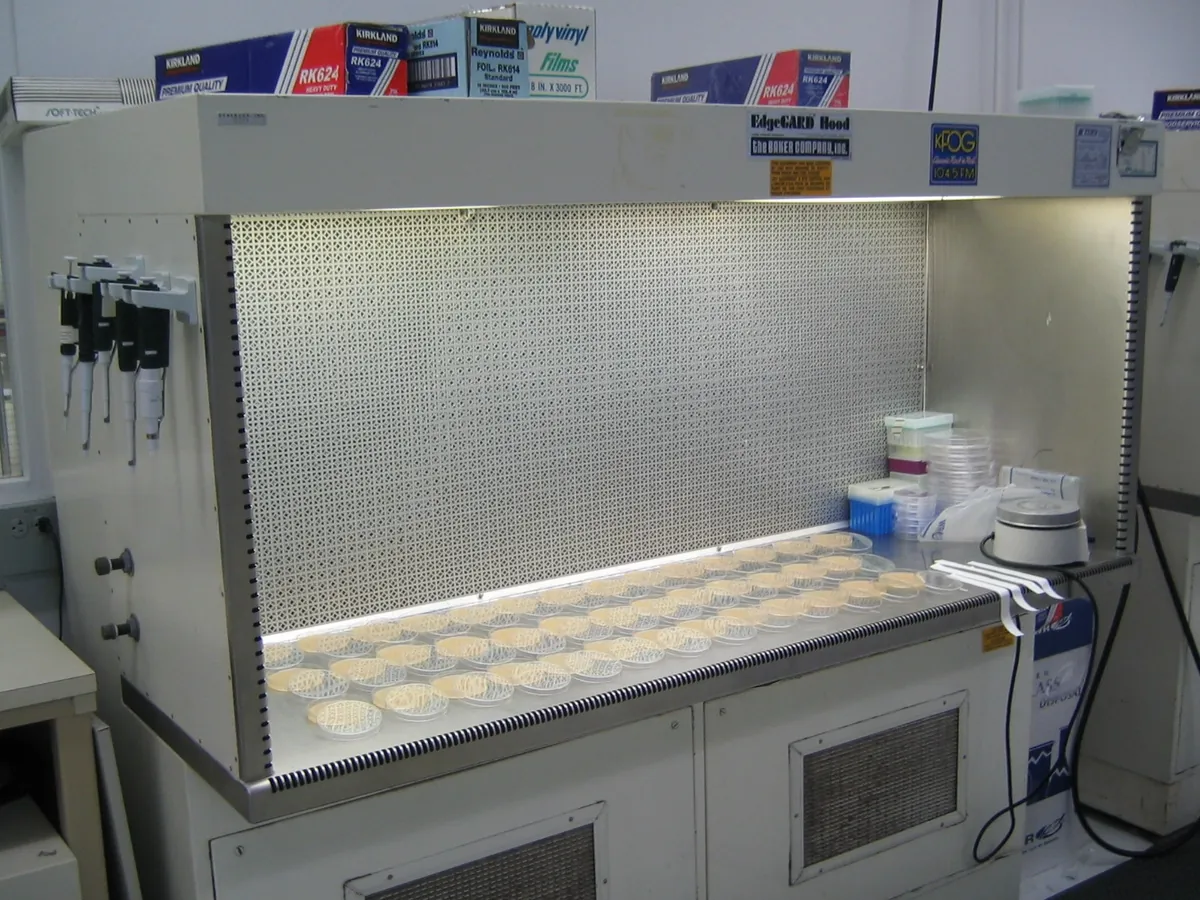
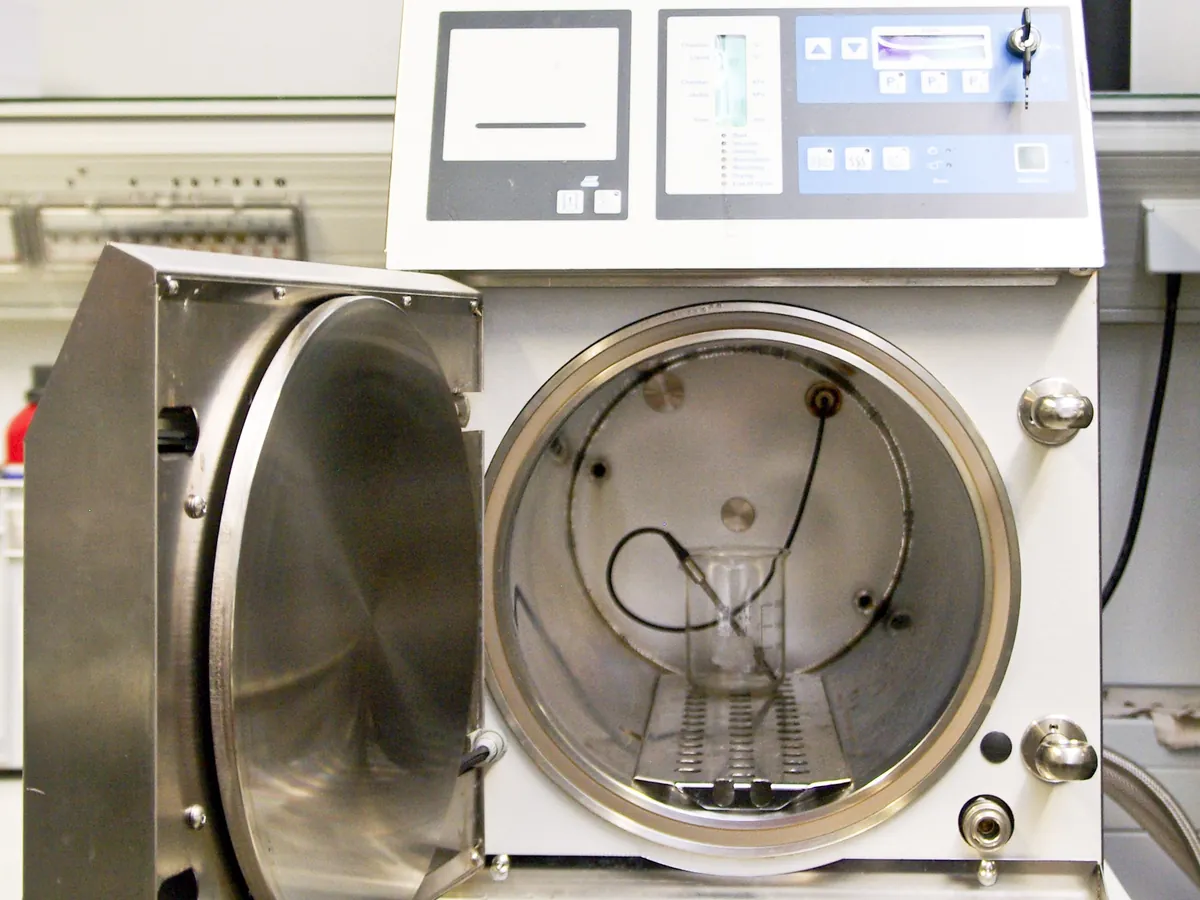
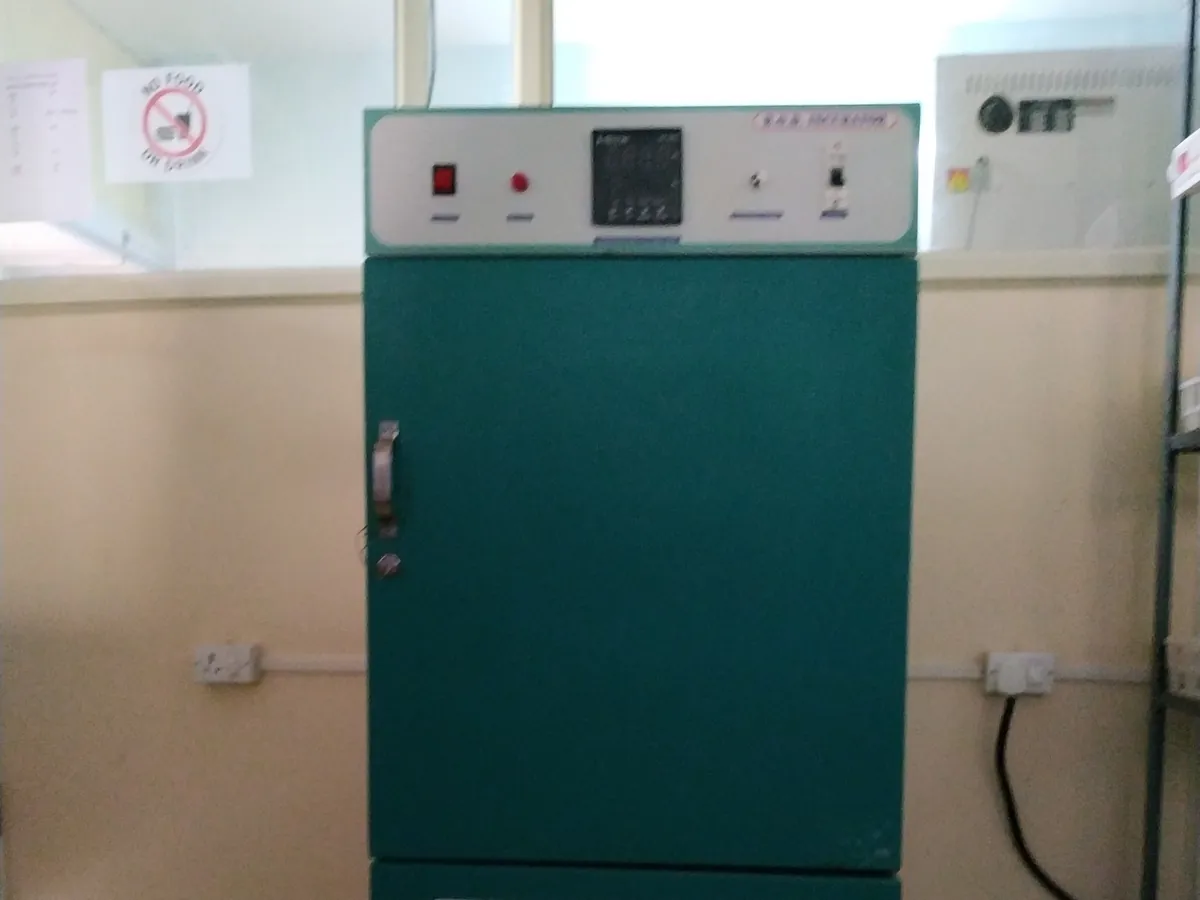
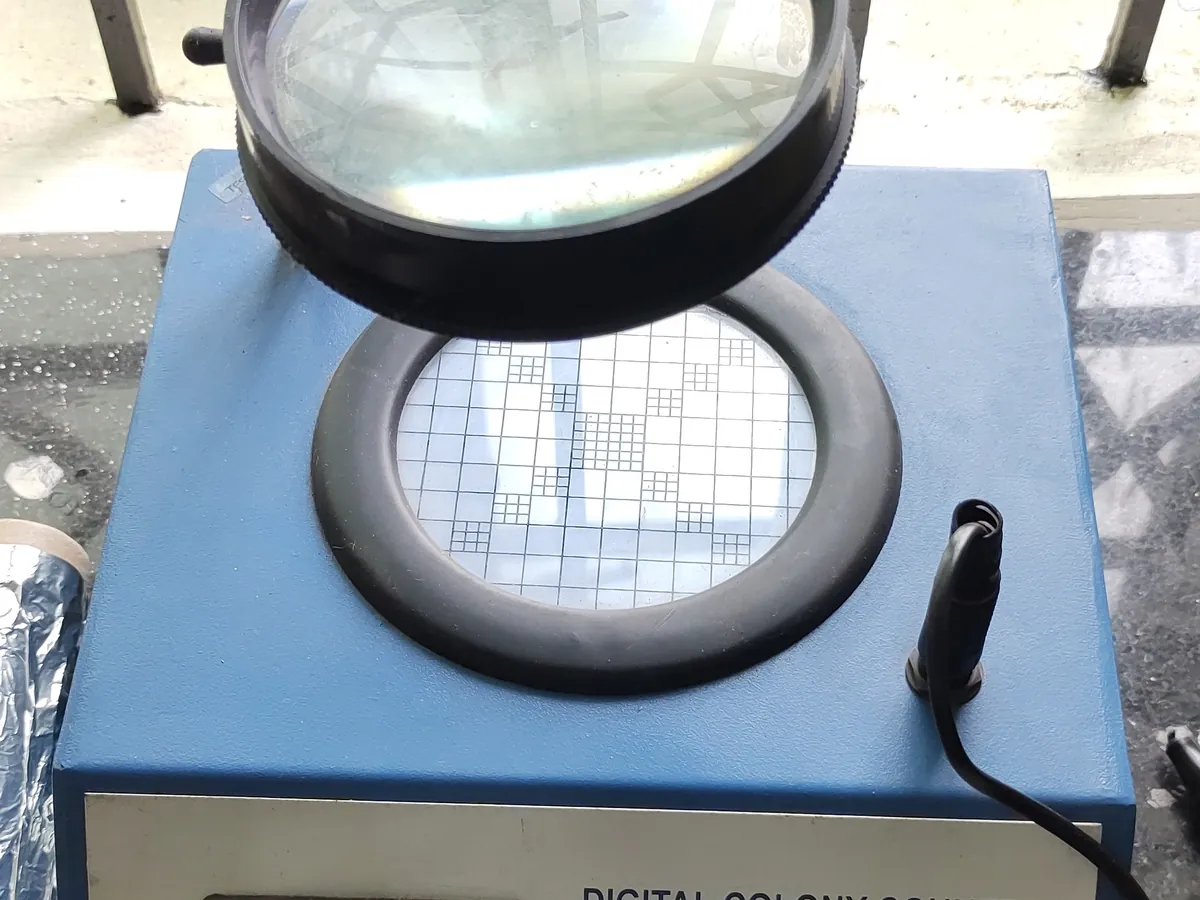

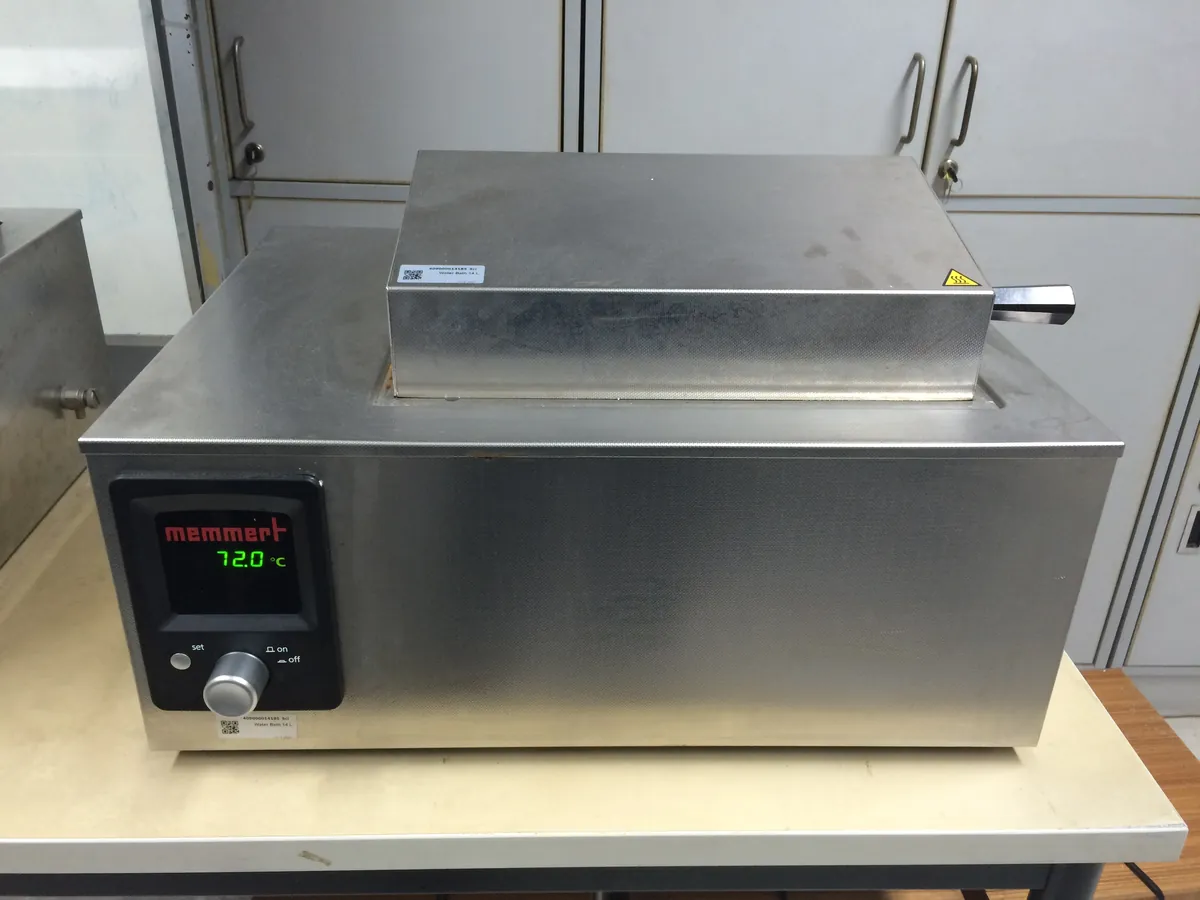
Reagents & standards
| Reagent | Grade / specification |
|---|---|
| Buffered sodium chloride-peptone solution pH 7.0 | Diluent; or phosphate buffer pH 7.2 or Soybean-Casein Digest Broth. Add a neutraliser (e.g. polysorbate 80, lecithin) if the product is antimicrobial |
| Soybean-Casein Digest Agar (SCDA / TSA) | For TAMC; growth promotion tested batch |
| Sabouraud Dextrose Agar (SDA) | For TYMC; antibiotics may be added if validated |
| Polysorbate 80 | Dispersing agent for poorly soluble or fatty products (e.g. 1 g/L), if validated |
| Reference strains for method suitability | S. aureus ATCC 6538, P. aeruginosa ATCC 9027, B. subtilis ATCC 6633, C. albicans ATCC 10231, A. brasiliensis ATCC 16404 |
Preparing the sample
- 01
Sanitise
Disinfect the LAF and wipe the sample container before opening.
- 02
Weigh
Aseptically weigh 10 g (or measure 10 mL) of sample.
- 03
1:10 dilution
Add to 90 mL of diluent and mix or homogenise.
- 04
Further dilute
Prepare 1:100 if high counts are expected or to overcome inhibition.
- 05
Plate
Pipette 1 mL into each of duplicate Petri dishes per medium.
- 06
Pour & incubate
Add molten agar at not more than 45 °C, mix, set and incubate.
Procedure
- 1Work in a qualified LAF or biosafety cabinet, using sterile pipettes, containers and diluent.
- 2Aseptically weigh 10 g of the product (or take 10 mL of a liquid) into 90 mL of buffered sodium chloride-peptone solution pH 7.0 to give a 1:10 dilution.
- 3Mix by shaking, stomaching or vortexing until the sample is evenly dispersed; for insoluble products allow coarse particles to settle briefly.
- 4If required, transfer 1 mL of the 1:10 dilution to 9 mL of diluent to make 1:100.
- 5Pour plate: pipette 1 mL of the dilution into each of at least two 9 cm Petri dishes for SCDA and two for SDA.
- 6Add 15–20 mL of molten agar cooled to not more than 45 °C to each dish, swirl gently to mix and allow to set.
- 7Invert the plates and incubate SCDA at 30–35 °C for 3–5 days and SDA at 20–25 °C for 5–7 days.
- 8Prepare a negative control (diluent only) with each medium.
Standard preparation
- 1Method suitability (done once per product, and after changes): inoculate the 1:10 sample dilution with not more than 100 cfu of each test organism and plate as for the test.
- 2In parallel, plate the same inoculum in diluent without product as the control count.
- 3The test count must be within a factor of 2 of the control count; if not, use neutralisers, further dilution or membrane filtration to remove the inhibition.
Notes for analysts
- TAMC counts colonies on SCDA, including any fungi that grow; TYMC counts colonies on SDA, including any bacteria that grow.
- If no colonies grow at the 1:10 dilution, report the result as less than 10 cfu/g (less than one colony at the lowest dilution).
- Do not keep the diluted sample for more than about one hour before plating, to avoid growth or die-off.
- Media used must have passed the growth promotion test; record the batch numbers in the test record.
Method parameters (typical)
| Sample quantity | 10 g or 10 mL in 90 mL diluent (1:10) |
|---|---|
| Plating method | Pour plate, spread plate or membrane filtration as validated |
| Plates per medium | At least 2 per dilution |
| TAMC medium and incubation | SCDA, 30–35 °C, 3–5 days |
| TYMC medium and incubation | SDA, 20–25 °C, 5–7 days |
| Countable range (9 cm plate) | Not more than 250 cfu per plate for TAMC and 50 cfu per plate for TYMC |
| Agar temperature at pouring | Not more than 45 °C |
System suitability & sequence
| Parameter | Limit |
|---|---|
| Negative control (diluent) | No growth |
| Growth promotion of media | Each media batch passes growth promotion before use |
| Method suitability | Recovery of each test organism within a factor of 2 of the control |
| Environment | LAF environmental monitoring during the test within limits |
Typical sequence
- 1Media negative control (SCDA and SDA)
- 2Diluent negative control
- 3Sample 1:10 on SCDA × 2 plates
- 4Sample 1:10 on SDA × 2 plates
- 5Further dilutions as required
- 6Environmental monitoring plates exposed during the session
Calculation with a worked example
Where
- Mean colonies
- Average count of the duplicate plates of one medium at one dilution
- Dilution factor
- 10 for a 1:10 dilution, 100 for 1:100
- Volume plated
- Volume of dilution added to each plate (usually 1 mL)
Given
- Dilution
- 1:10 (10 g in 90 mL)
- Volume plated
- 1 mL per plate
- SCDA plates (TAMC)
- 42 and 46 cfu
- SDA plates (TYMC)
- 7 and 5 cfu
- Specification (non-aqueous oral product)
- TAMC ≤ 10^3 cfu/g; TYMC ≤ 10^2 cfu/g
Working
- TAMC mean = (42 + 46) ÷ 2 = 44 cfu per plate
- TAMC = 44 × 10 ÷ 1 = 440 cfu/g
- TYMC mean = (7 + 5) ÷ 2 = 6 cfu per plate
- TYMC = 6 × 10 ÷ 1 = 60 cfu/g
TAMC = 440 cfu/g (limit 10^3); TYMC = 60 cfu/g (limit 10^2). Both comply.
Try it with your numbersWhat result passes
- TAMC and TYMC not more than the limits in the approved specification. Typical limits for non-aqueous oral products are TAMC 10^3 cfu/g and TYMC 10^2 cfu/g (USP <1111> / Ph. Eur. 5.1.4 approach).
- When a limit is given as 10^n, the pharmacopoeias interpret it as a maximum acceptable count of 2 × 10^n (e.g. 10^3 means up to 2,000 cfu/g).
- Absence of specified microorganisms (e.g. E. coli) where required is tested separately as per USP <62> / Ph. Eur. 2.6.13.
Validation parameters (ICH Q2(R2))
| Parameter | Typical requirement |
|---|---|
| Method suitability | Recovery of ≤100 cfu of each of the five test organisms within a factor of 2 of the control, in the presence of product |
| Neutralisation | Neutraliser shown to be effective and non-toxic to the test organisms |
| Dilution | Lowest dilution that allows full recovery is used for the routine test |
| Revalidation | Repeat suitability after a change in formulation, supplier or test procedure |
Run this method in LimsPulse: specifications and STPs under version control, results calculated and checked against limits, and a signed Certificate of Analysis.