Sterility Test by Membrane Filtration or Direct Inoculation
Tests a sample of containers from a batch for the presence of viable microorganisms by filtering the product and incubating the membrane, or by placing the product directly into culture media, in Fluid Thioglycollate Medium and Soybean-Casein Digest Medium for 14 days.
- Membrane filtration (preferred where possible) or direct inoculation
- Filtration unit
- LAF
- Incubator
- Autoclave
- Air sampler
- Particle counter
Reference: Typical method based on USP <71> and Ph. Eur. 2.6.1 (harmonised). Always follow your approved STP and the current chapter.
Why this method works
Two media are used to recover a wide range of organisms. Fluid Thioglycollate Medium (FTM), incubated at 30–35 °C, supports anaerobic and aerobic bacteria. Soybean-Casein Digest Medium (SCDM), incubated at 20–25 °C, supports aerobic bacteria and fungi. If any viable organism is present it grows and makes the medium turbid. Because only a sample of containers is tested, a pass shows only that no contamination was found in the units tested; sterility of the batch is assured by validated sterilisation and aseptic processing.
Instruments used
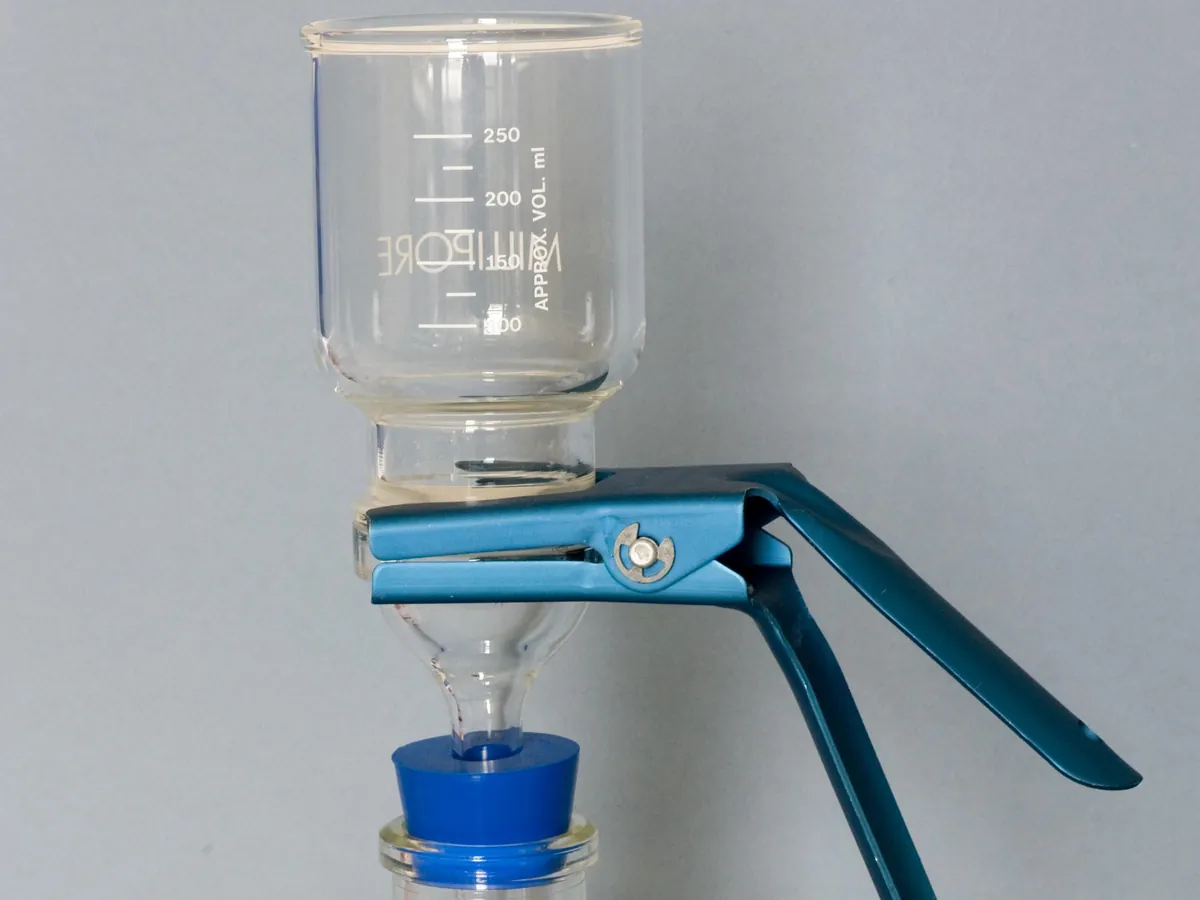
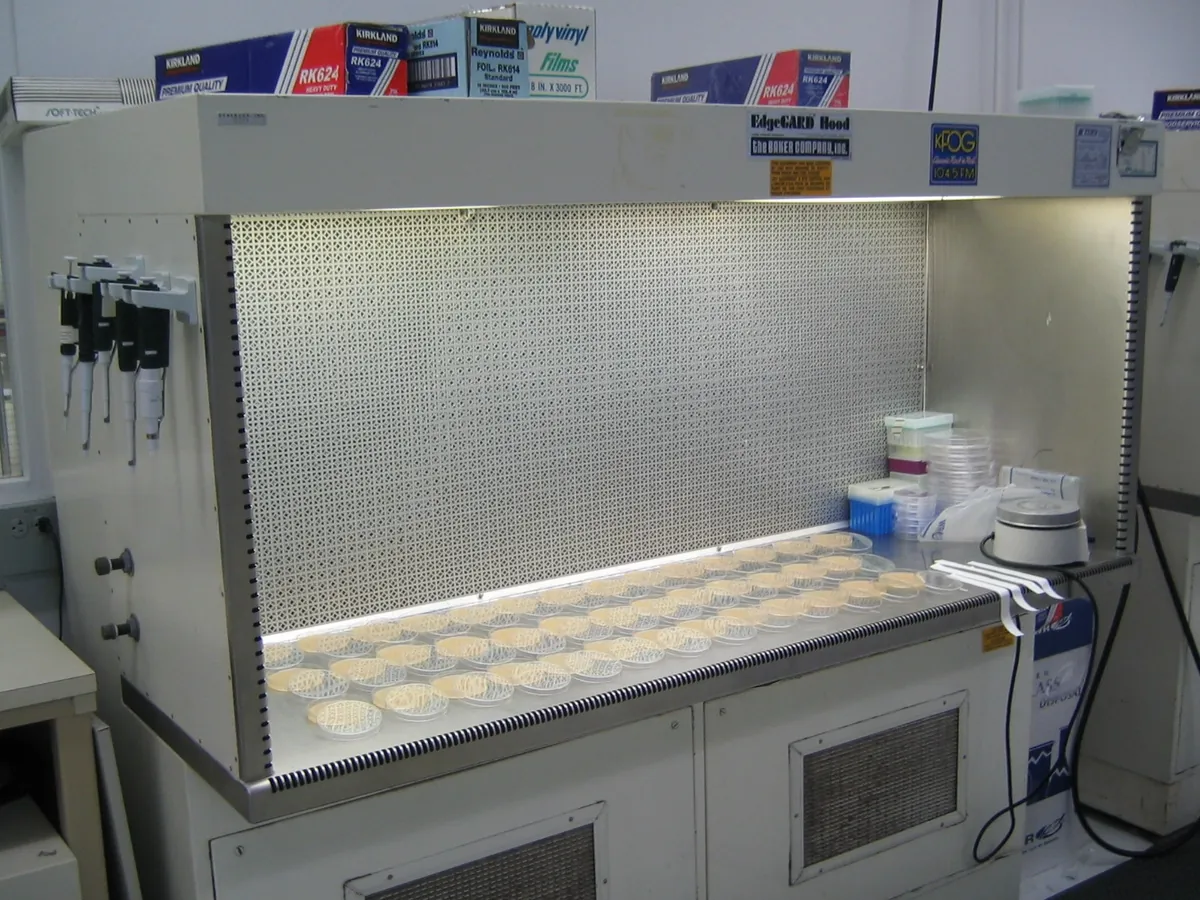
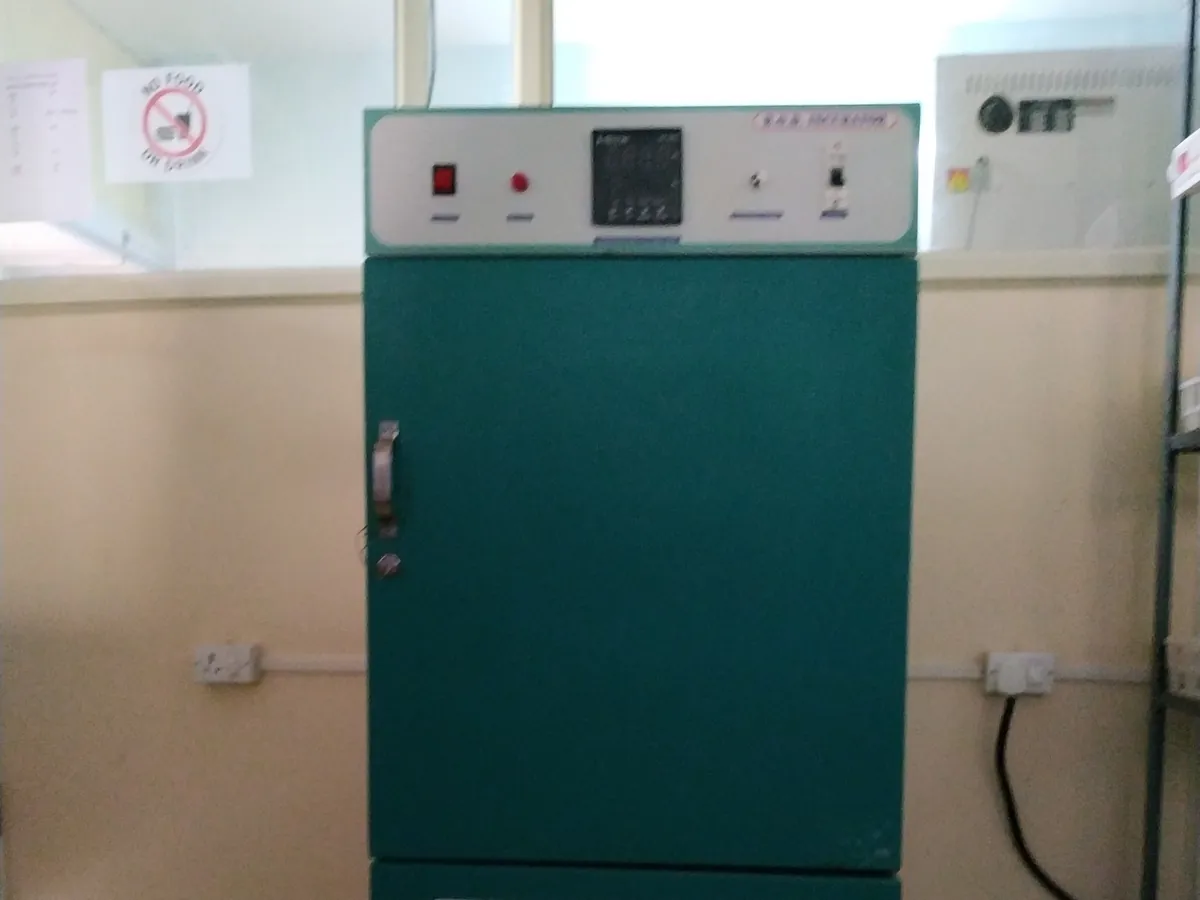
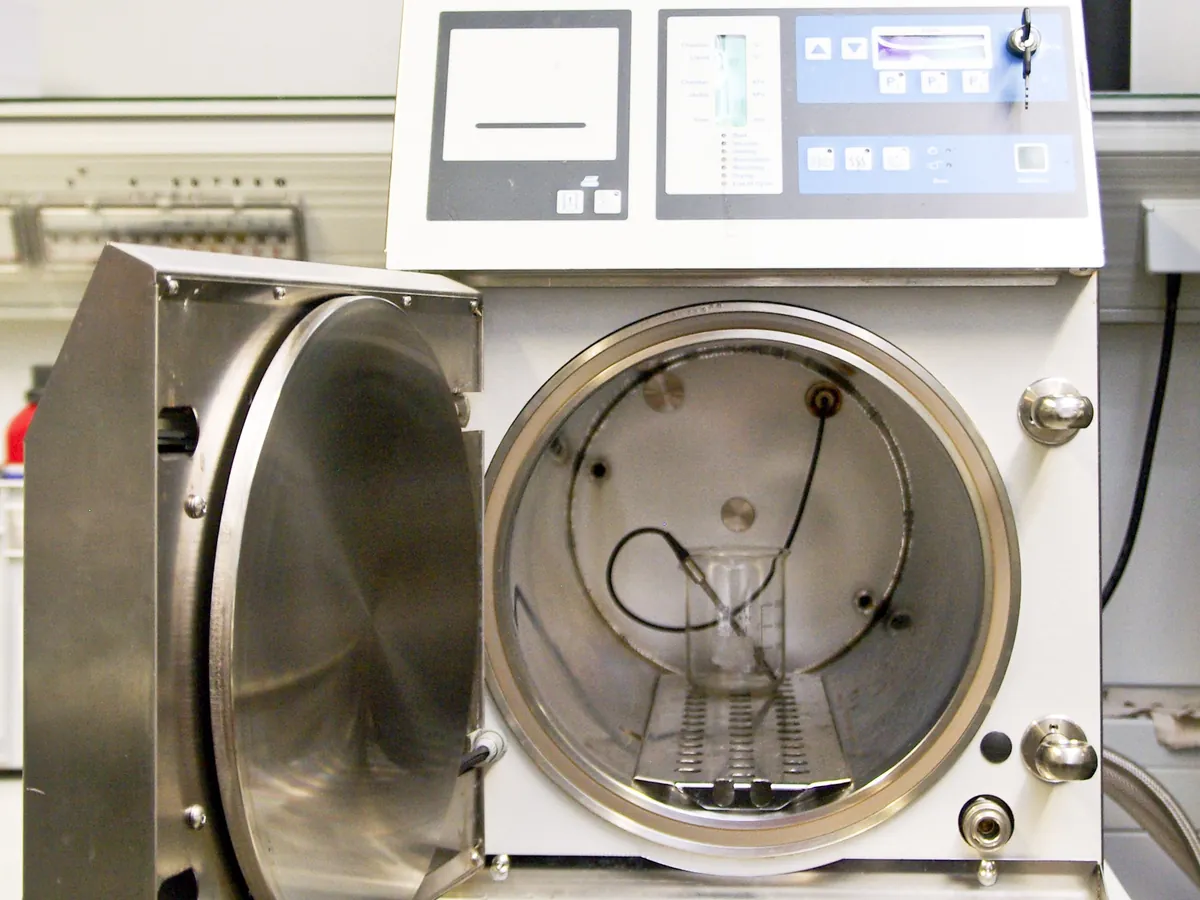
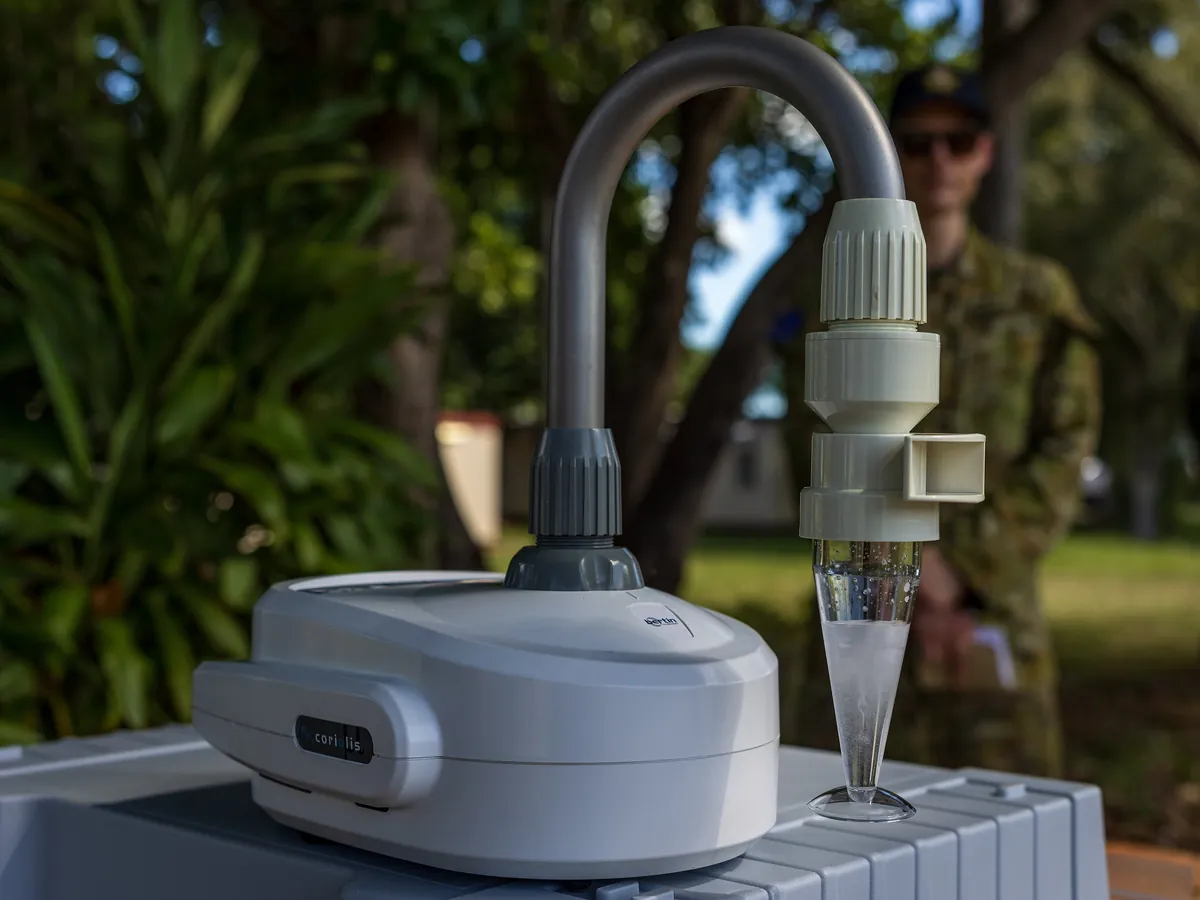
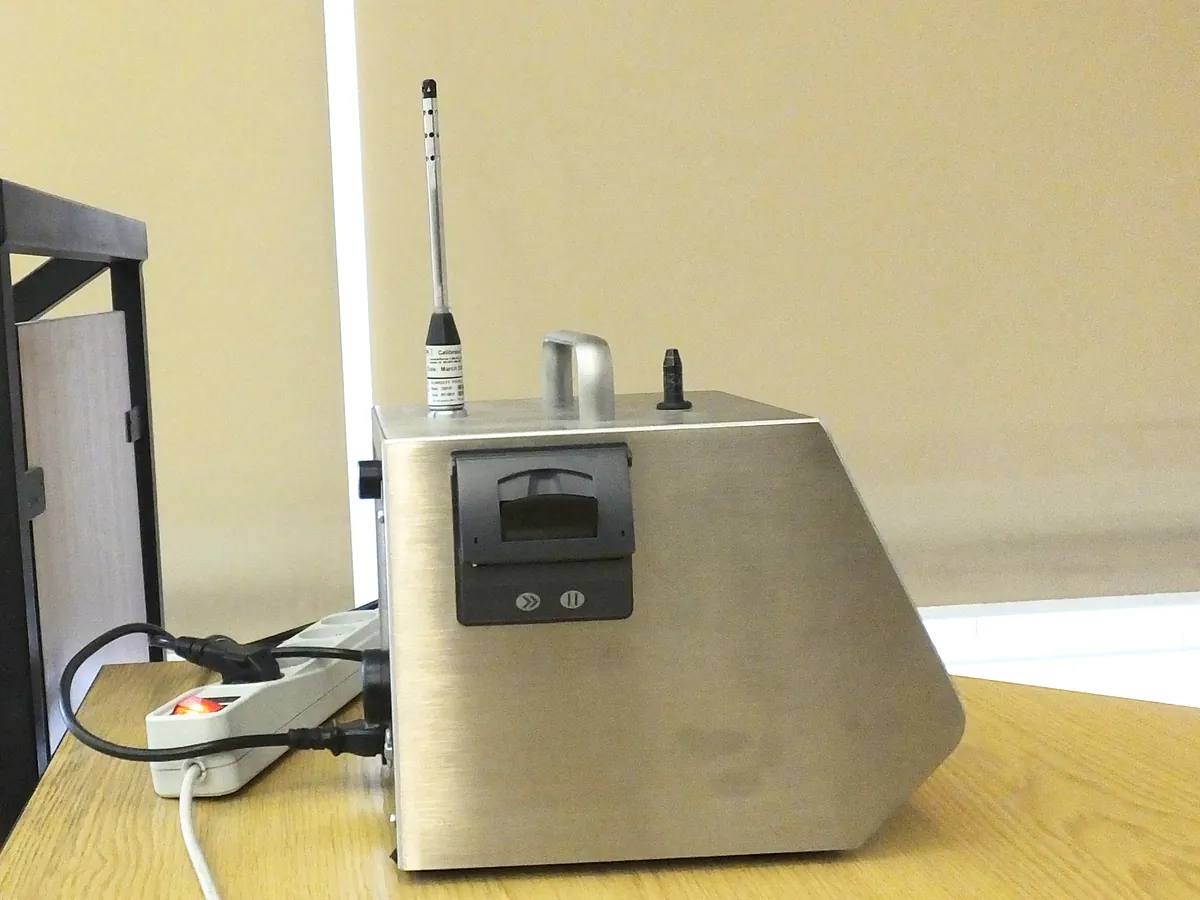
Reagents & standards
| Reagent | Grade / specification |
|---|---|
| Fluid Thioglycollate Medium (FTM) | Anaerobic and aerobic bacteria; 30–35 °C |
| Soybean-Casein Digest Medium (SCDM / TSB) | Aerobic bacteria and fungi; 20–25 °C |
| Rinse fluid (e.g. peptone 1 g/L) | To rinse antimicrobial residues off the membrane; with neutralisers if validated |
| Closed sterility test canisters (0.45 µm) | Membrane filtration in a closed system |
| Test organisms for growth promotion and method suitability | S. aureus, P. aeruginosa, B. subtilis, Clostridium sporogenes, C. albicans, A. brasiliensis (≤ 100 cfu) |
Preparing the sample
- 01
Environment
Test in an isolator or a Grade A zone with a Grade B background.
- 02
Decontaminate
Disinfect or sporicidally treat the outer surfaces of the containers.
- 03
Pool & filter
Membrane filtration: pool the containers and filter through closed canisters.
- 04
Rinse
Rinse the membranes with the validated volume of rinse fluid.
- 05
Add media
Fill one canister with FTM and one with SCDM (or inoculate media directly).
- 06
Incubate 14 days
FTM at 30–35 °C, SCDM at 20–25 °C; inspect for turbidity.
Procedure
- 1Carry out the test in an isolator or in a Grade A unidirectional airflow zone within a Grade B clean room, with environmental monitoring (air, surfaces, gloves) during the session.
- 2Take the number of containers required by the chapter for the batch size (e.g. for injections in batches of more than 500 containers, 2% or 20 containers, whichever is fewer) and the quantity per container in the chapter table.
- 3Disinfect the outer surfaces of the containers and transfer them into the isolator or LAF with the validated process.
- 4Membrane filtration: aseptically pool the contents and pump them through two closed 0.45 µm canisters; rinse each membrane with the validated volume of rinse fluid (typically 100 mL portions, not more than the number validated).
- 5Add FTM to one canister and SCDM to the other.
- 6Direct inoculation (for products that cannot be filtered): transfer the specified quantity of product directly into FTM and SCDM, so that the product volume is not more than about 10% of the medium volume.
- 7Incubate FTM at 30–35 °C and SCDM at 20–25 °C for not less than 14 days, examining the media regularly for turbidity.
- 8If the product makes the medium turbid, transfer portions to fresh medium as the chapter describes and incubate further.
Standard preparation
- 1Growth promotion: each batch of FTM and SCDM supports growth of ≤ 100 cfu of the specified organisms within the time set by the chapter.
- 2Method suitability: with the product present, inoculate ≤ 100 cfu of each organism into the final rinse or medium; growth must be clearly visible and comparable to a control without product.
- 3Negative controls: media and rinse fluid processed in the same way without product.
Notes for analysts
- A sterility test pass does not prove a batch is sterile: it has limited statistical power. Sterility assurance comes from validated processes.
- Isolators reduce false positives; investigations of any growth include identification of the organism and comparison with environmental isolates.
- Rapid microbiological methods may be used if validated as equivalent (see USP <1223>).
Method parameters (typical)
| Environment | Isolator, or Grade A zone in a Grade B background |
|---|---|
| Method | Membrane filtration (0.45 µm) where possible; direct inoculation otherwise |
| FTM incubation | 30–35 °C, not less than 14 days |
| SCDM incubation | 20–25 °C, not less than 14 days |
| Number of containers | As per the chapter table for the type of product and batch size |
| Direct inoculation volume | Product not more than about 10% of the medium volume |
System suitability & sequence
| Parameter | Limit |
|---|---|
| Negative controls | No growth after 14 days |
| Growth promotion | Each media batch passes |
| Method suitability | Visible growth of each test organism with the product present |
| Environmental monitoring | Within limits for the session |
Typical sequence
- 1Negative control (rinse fluid and media)
- 2Sample filtration or inoculation
- 3Environmental and personnel monitoring throughout the session
- 4Daily or regular inspection of media during 14 days of incubation
Calculation with a worked example
Where
- Batch size
- Number of containers in the batch
- 2% of batch size
- Batch size × 0.02
Given
- Product
- Injection, 10 mL vials
- Batch size
- 12,000 vials
Working
- Batch is more than 500 containers, so the rule is 2% or 20 containers, whichever is fewer
- 2% of 12,000 = 12,000 × 0.02 = 240 containers
- Smaller of 240 and 20 = 20 containers
Test 20 vials from the batch (in addition, the quantity taken from each vial follows the chapter table for the fill volume).
What result passes
- No evidence of microbial growth (no turbidity) in any medium after the full incubation: the product complies with the test for sterility.
- If growth is found, the product does not comply, unless the test is clearly shown to be invalid for reasons unrelated to the product.
- The test may be declared invalid only if one or more of these is shown: monitoring data of the test facility show a fault; a review of the test procedure shows a fault; growth is found in the negative controls; or, after identification, growth can be clearly attributed to the materials or technique used in the test. An invalid test is repeated with the same number of units.
Validation parameters (ICH Q2(R2))
| Parameter | Typical requirement |
|---|---|
| Method suitability | All six test organisms grow visibly in the presence of the product (≤ 100 cfu) |
| Rinse volume | Number and volume of rinses that remove antimicrobial activity |
| Revalidation | After a change in product, method or media |
Run this method in LimsPulse: specifications and STPs under version control, results calculated and checked against limits, and a signed Certificate of Analysis.