Microbiology & sterility
Autoclave (steam steriliser)
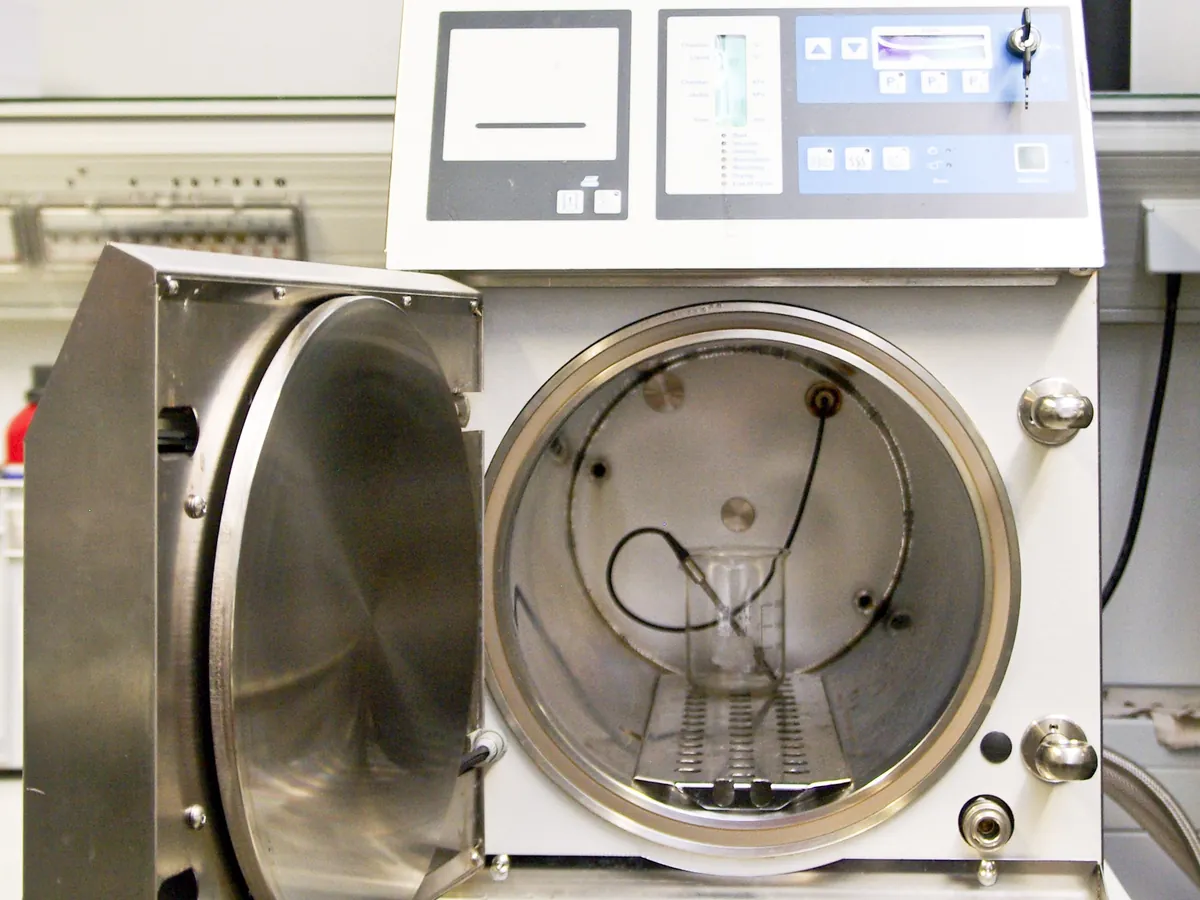
Kills microorganisms, including bacterial spores, with saturated steam under pressure. Used in the QC microbiology lab to sterilise culture media, glassware and equipment, and to decontaminate used media before disposal.
- Pharmaceutical
- Biotech
- Hospitals
- Food & beverage
- Research laboratories
- Medical devices
PREVENTIVE MAINTENANCE
Maintenance checklist
Daily / each use
- Clean the drain strainer and chamber floor
- Check the door gasket for damage or deposits
- Run the warm-up and Bowie-Dick test (pre-vacuum autoclaves)
- Check the water level and printer paper
Weekly
- Wipe the chamber walls and shelves
- Run a vacuum leak test (pre-vacuum autoclaves)
- Drain and flush the steam generator if the manufacturer recommends it
Monthly / quarterly
- Check and clean steam traps and valves
- Check the safety valve operates (by a trained person)
- Replace the vent air filter as per the manufacturer's schedule
Six-monthly / annual
- Calibration of temperature probes, pressure gauges and transducers
- Preventive maintenance by a trained engineer
- Periodic requalification: temperature mapping and biological indicator challenge of the main load patterns
- Statutory pressure vessel inspection as required locally
SAFETY
Safety precautions
Before you work on the Autoclave
- The autoclave is a pressure vessel: never open the door or override the interlock while it is under pressure.
- Steam, hot surfaces and superheated liquids cause severe burns. Wear heat-resistant gloves, a face shield and an apron when unloading.
- Used cultures are a biohazard: keep them in closed, autoclavable bags or containers and run them only on the decontamination cycle.
- Never autoclave flammable, corrosive, toxic or radioactive materials, or sealed containers.
- Stand behind the door when opening it to avoid the escaping steam.
- Only trained and authorised staff should operate the autoclave.
In LimsPulse · Calibration Management
Keep every Autoclave in control: usage logs, calibration and maintenance schedules, and automatic blocking of overdue instruments.