Titration & electrochemistry
pH meter
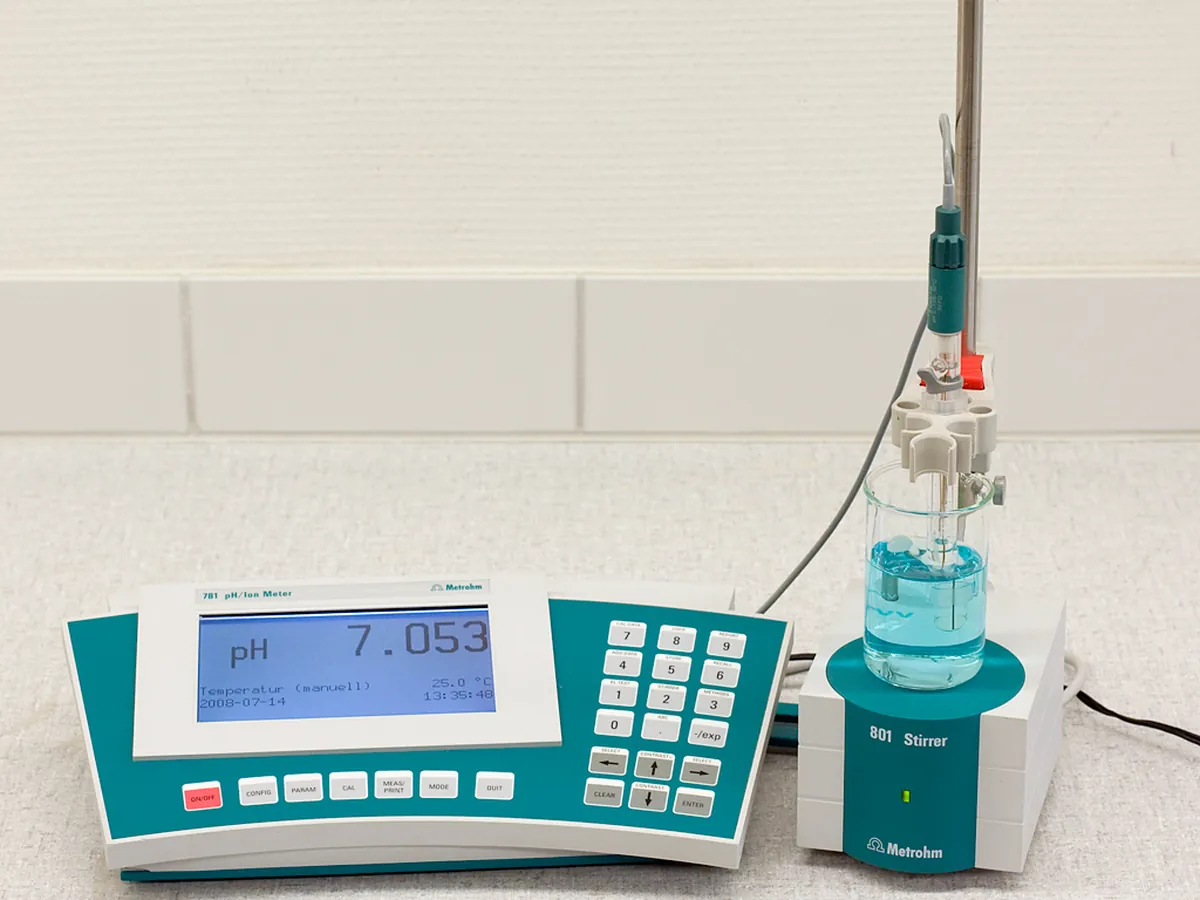
Measures how acidic or alkaline a solution is by measuring the small voltage produced by a glass electrode. Used for pH of products, buffers, mobile phases and water.
- Pharmaceutical
- Biotech
- Food & beverage
- Water treatment
- Chemicals
- Environmental
Follow your site SOP
This is a typical operating sequence for learning. Your instrument model and approved SOP take precedence.
STAGE 1
Before you start
- 1Check the meter's calibration status and the electrode's condition (no cracks, electrolyte filled to the mark, no crystals at the junction).
- 2Open the refill hole during measurement so electrolyte flows freely through the junction.
- 3Let buffers and samples reach the measuring temperature (commonly 25 ± 2 °C, or as defined in the method).
- Never let the glass bulb dry out. Store it in storage solution, not in purified water.
STAGE 2
Calibration
- 1Use at least two fresh buffers that bracket the expected sample pH (for example pH 4.01 and 7.00 for an acidic sample).
- 2Rinse the electrode with purified water and blot gently with a lint-free tissue; do not wipe the bulb.
- 3Immerse in the first buffer (usually pH 7.00), stir gently and accept the value when stable.
- 4Rinse and repeat with the second (and third) buffer.
- 5Check the slope and offset shown by the meter, then read a check buffer as described in your SOP.
- Never pour used buffer back into the bottle. Discard buffer after use and observe the buffer's expiry date.
STAGE 3
Measuring samples
- 1Rinse the electrode and immerse it in the sample so the bulb and junction are covered.
- 2Stir at the same gentle rate used for calibration.
- 3Record the pH and temperature when the reading is stable (for example a change of less than 0.02 pH in 30 seconds, or as your SOP defines).
- 4Rinse the electrode between samples.
- If the sample pH falls outside the calibrated range, recalibrate with buffers that bracket it.
STAGE 4
After use
- 1Rinse the electrode, close the refill hole and place it in storage solution.
- 2Record the use in the instrument log.
In LimsPulse · Calibration Management
Keep every pH meter in control: usage logs, calibration and maintenance schedules, and automatic blocking of overdue instruments.