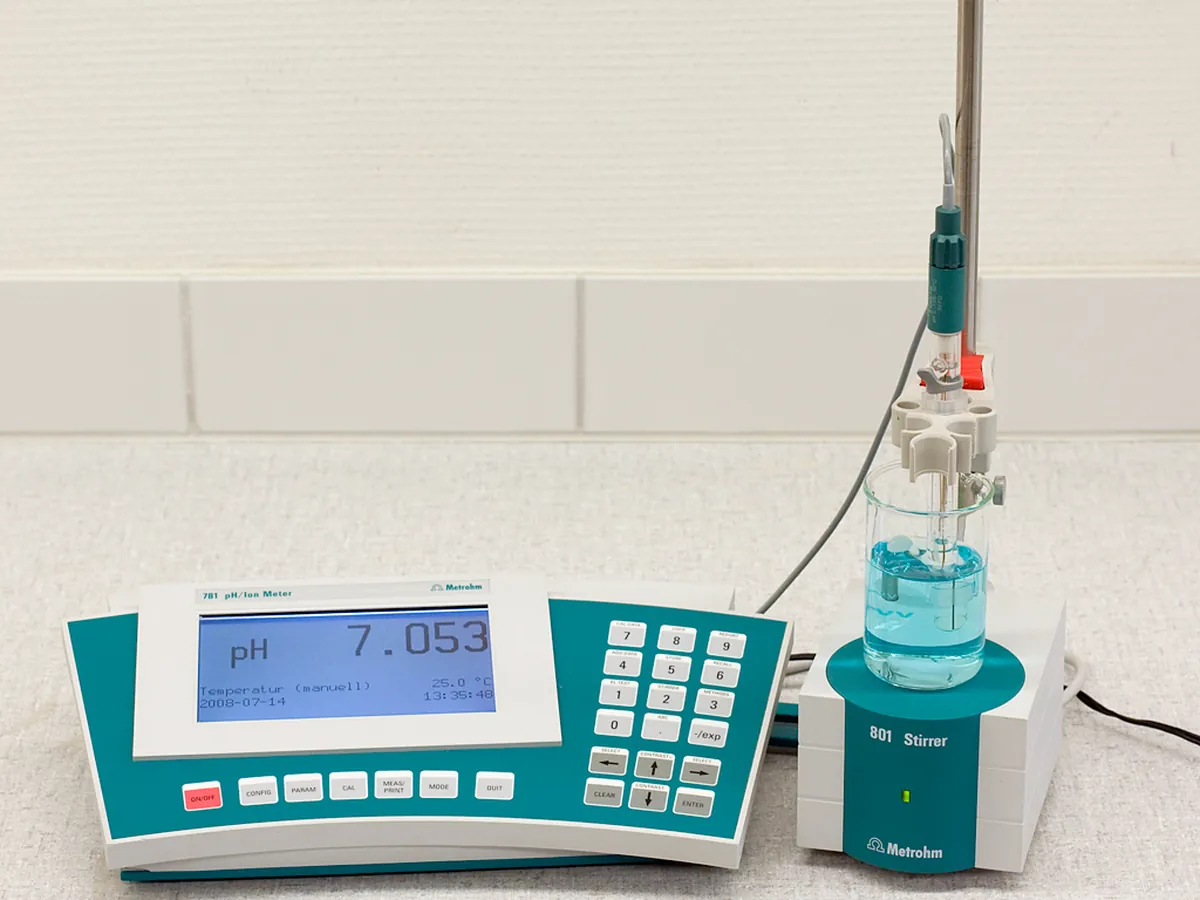
pH meter
Measures how acidic or alkaline a solution is by measuring the small voltage produced by a glass electrode. Used for pH of products, buffers, mobile phases and water.
- Pharmaceutical
- Biotech
- Food & beverage
- Water treatment
- Chemicals
- Environmental
pH meter calibration procedures
Buffer calibration & slope
Calibrates the meter with two or three certified buffers, then checks the electrode slope, offset and the reading of a check buffer.
Open procedureTemperature compensation
Checks that the temperature probe reads correctly and that the meter's automatic temperature compensation gives the right pH at a temperature other than 25 °C.
Open procedureInstrument qualification (DQ · IQ · OQ · PQ)
- 01
DQ — Design qualification
Defines resolution (0.01 pH or better), range, temperature compensation, data output and compliance features, and the electrode types needed for the lab's samples.
- 02
IQ — Installation qualification
Records model, serial numbers, firmware and electrode details, and confirms installation and documentation.
- 03
OQ — Operational qualification
Checks pH calibration with certified buffers (slope, offset, check buffer accuracy), temperature sensor accuracy and, if required, meter mV accuracy with a simulator.
- 04
PQ — Performance qualification
Shows consistent performance in routine use, through daily calibration records and check-buffer results trended over time.
Keep every pH meter in control: usage logs, calibration and maintenance schedules, and automatic blocking of overdue instruments.