Titration & electrochemistry
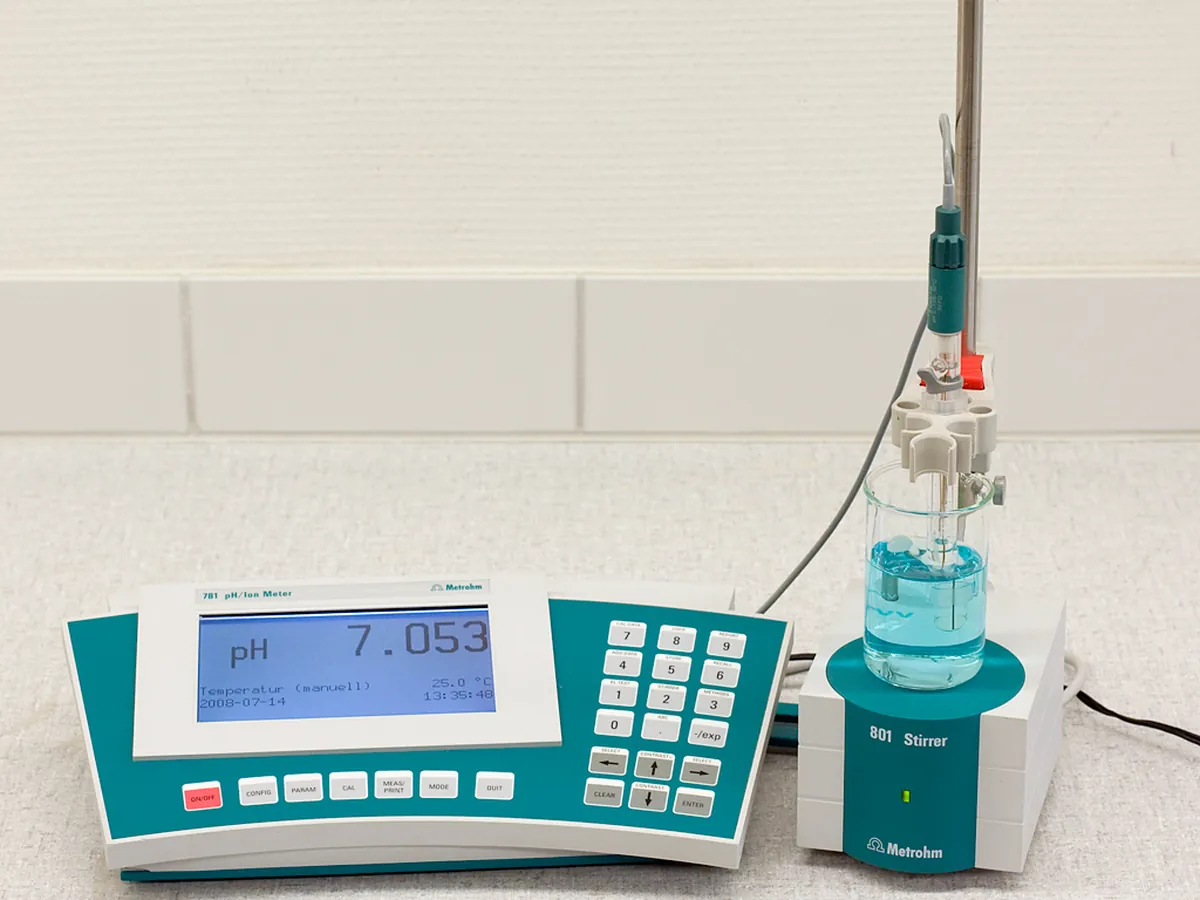
pH meter
Measures how acidic or alkaline a solution is by measuring the small voltage produced by a glass electrode. Used for pH of products, buffers, mobile phases and water.
- Pharmaceutical
- Biotech
- Food & beverage
- Water treatment
- Chemicals
- Environmental
TROUBLESHOOTING
Common problems, causes and fixes
Slow or drifting reading
Likely causes
- • Blocked or dirty junction
- • Low ionic strength sample (e.g. purified water)
- • Old electrode
- • Refill hole closed
What to do
- • Clean the junction; soak in warm KCl
- • Use a low-ionic-strength electrode or add KCl as the method allows
- • Replace the electrode
- • Open the refill hole during measurement
Slope below 95%
Likely causes
- • Aged or dehydrated glass membrane
- • Contaminated or expired buffers
- • Deposits on the bulb
What to do
- • Rehydrate in storage solution for some hours
- • Use fresh buffers from a new bottle
- • Clean the electrode; replace it if the slope stays low
Offset outside ±30 mV
Likely causes
- • Contaminated reference electrolyte
- • Poisoned reference (e.g. sulfide, proteins)
- • Wrong buffer used for the first point
What to do
- • Replace the reference electrolyte
- • Clean or replace the electrode
- • Check buffer identity and value
Unstable, jumping reading
Likely causes
- • Air bubble in the bulb
- • Electrolyte level too low
- • Damaged cable or connector
- • Static or earth loop with the stirrer
What to do
- • Shake the electrode downwards like a thermometer
- • Top up electrolyte
- • Check or replace the cable
- • Stop the stirrer briefly or earth the set-up
Check buffer reads outside limit after a passing calibration
Likely causes
- • Check buffer contaminated or at a different temperature
- • Electrode response not linear across the range
What to do
- • Use fresh check buffer at the same temperature
- • Recalibrate with buffers closer to the sample pH; replace the electrode if it persists
Reading changes with stirring speed
Likely causes
- • Junction potential problem
- • Low ionic strength sample
What to do
- • Clean the junction
- • Use a constant stirring rate for buffers and samples, or read without stirring as the method states
In LimsPulse · Calibration Management
Keep every pH meter in control: usage logs, calibration and maintenance schedules, and automatic blocking of overdue instruments.