Titration & electrochemistry
pH meter
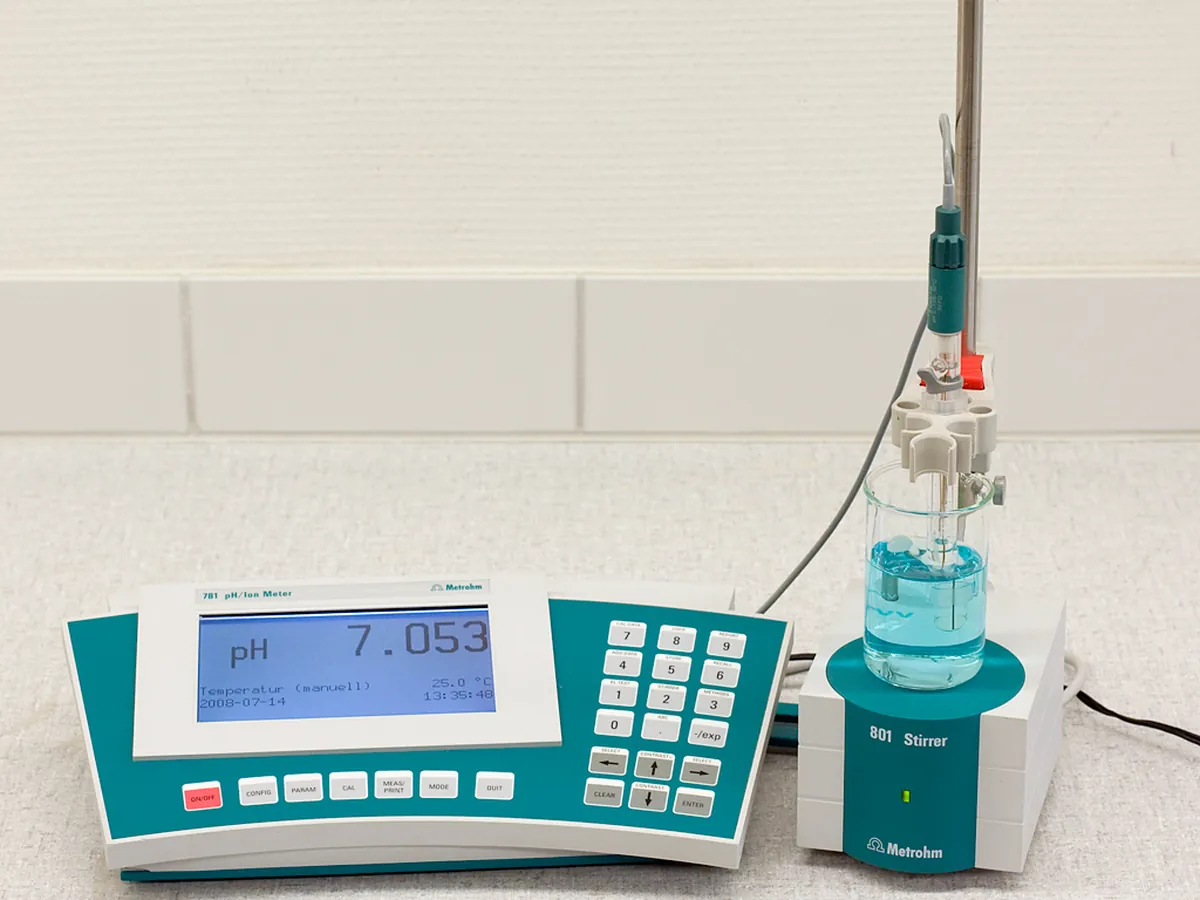
Measures how acidic or alkaline a solution is by measuring the small voltage produced by a glass electrode. Used for pH of products, buffers, mobile phases and water.
- Pharmaceutical
- Biotech
- Food & beverage
- Water treatment
- Chemicals
- Environmental
PREVENTIVE MAINTENANCE
Maintenance checklist
Daily / each use
- Calibrate with at least two buffers and check with a third
- Check electrolyte level and top up with the correct KCl solution
- Rinse electrode after each sample
Weekly
- Replace storage solution
- Inspect bulb and junction for deposits or cracks
- Check response time in buffer
Monthly
- Clean the electrode as the manufacturer recommends (e.g. dilute HCl for inorganic deposits, pepsin/HCl for proteins, a mild detergent for oils)
- Replace the reference electrolyte completely if it is contaminated
Six-monthly / annual
- Calibration of temperature sensor against a reference thermometer
- Meter electronic check with a mV simulator if your SOP requires
- Replace the electrode if slope or response time no longer meet limits (electrodes typically last 1–2 years)
SAFETY
Safety precautions
Before you work on the pH meter
- Wear safety glasses and gloves when handling acidic or alkaline samples and cleaning solutions.
- The glass bulb breaks easily; handle the electrode gently and dispose of broken glass safely.
- Rinse spilled KCl electrolyte and buffers from the bench to avoid corrosion.
- Follow the safety data sheet for cleaning solutions such as hydrochloric acid or pepsin/HCl.
In LimsPulse · Calibration Management
Keep every pH meter in control: usage logs, calibration and maintenance schedules, and automatic blocking of overdue instruments.