Potentiometric Titrator (Autotitrator)
Adds a titrant from a motorised burette while an electrode measures the potential of the solution, and finds the equivalence point from the change in potential. Used for assays, standardisation and many limit tests.
- Pharmaceutical
- Chemicals
- Food & beverage
- Environmental
- Metal finishing
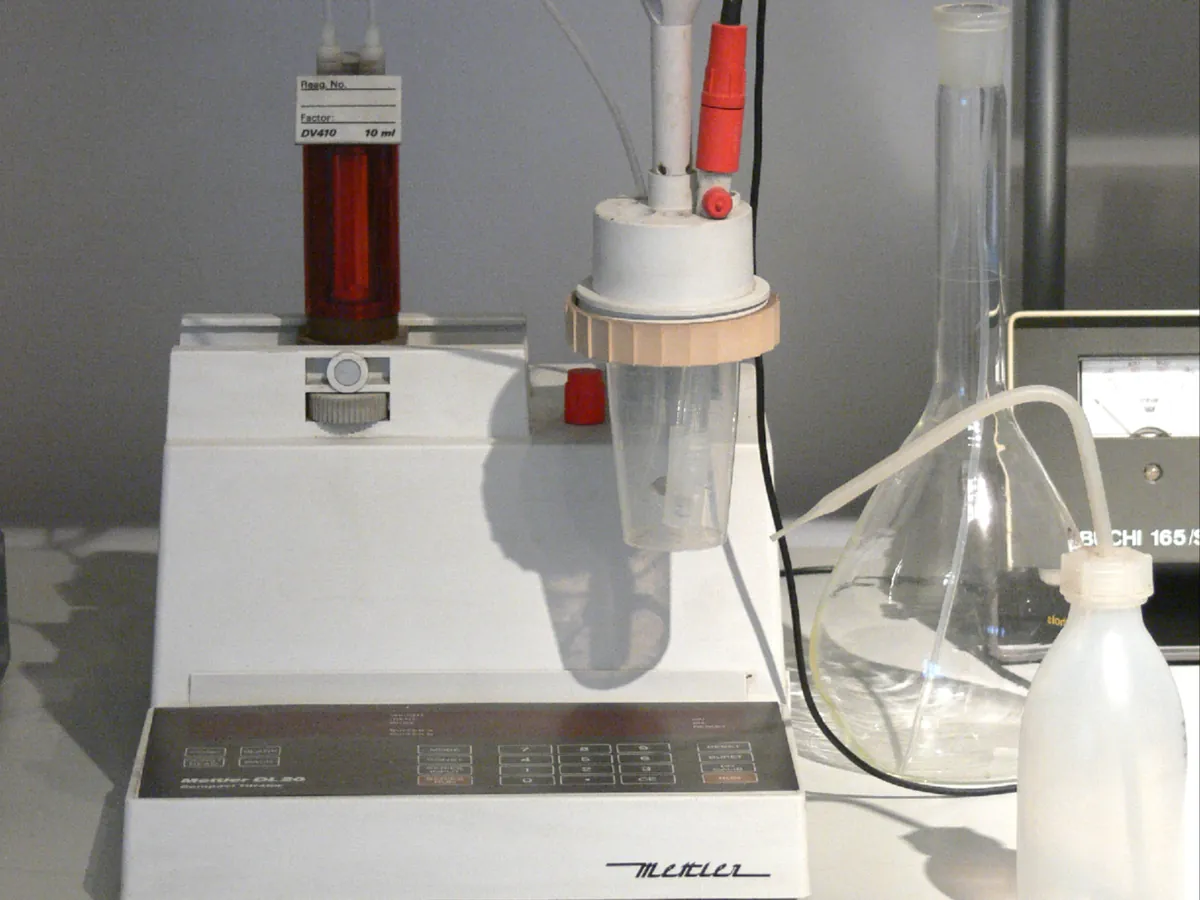
Potentiometric titrator calibration procedures
Burette accuracy
Checks the delivered volume of the titrator's burette gravimetrically with water, corrected for temperature using the Z factor.
Open procedureElectrode check
Checks a pH glass electrode's slope and zero point with standard buffers before it is used for acid–base titrations.
Open procedureTitre of volumetric solution
Standardises a volumetric solution, for example 0.1 M sodium hydroxide, against a primary standard such as potassium hydrogen phthalate.
Open procedureInstrument qualification (DQ · IQ · OQ · PQ)
- 01
DQ — Design qualification
Lists the needs, such as number of burettes, burette sizes, electrode types, sample changer and compliant software, and confirms the selected system meets them.
- 02
IQ — Installation qualification
Records components, serial numbers, firmware and software versions, and correct installation in the intended location.
- 03
OQ — Operational qualification
Tests burette volume accuracy and precision, mV measurement accuracy with a calibrated simulator, temperature measurement and stirrer function.
- 04
PQ — Performance qualification
Titrates a certified standard, for example potassium hydrogen phthalate, and confirms recovery and repeatability within limits over time.
Keep every Potentiometric titrator in control: usage logs, calibration and maintenance schedules, and automatic blocking of overdue instruments.