Titration & electrochemistry
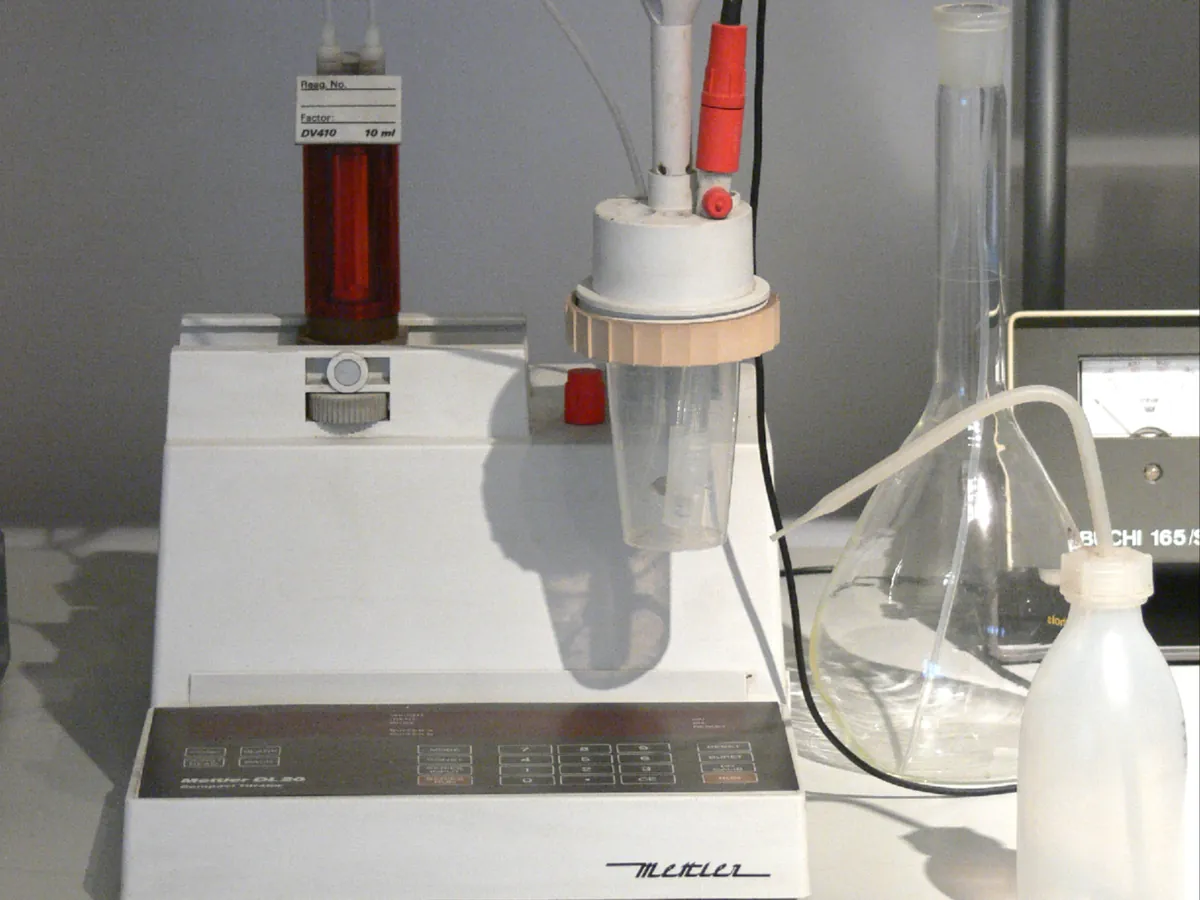
Potentiometric Titrator (Autotitrator)
Adds a titrant from a motorised burette while an electrode measures the potential of the solution, and finds the equivalence point from the change in potential. Used for assays, standardisation and many limit tests.
- Pharmaceutical
- Chemicals
- Food & beverage
- Environmental
- Metal finishing
PREVENTIVE MAINTENANCE
Maintenance checklist
Daily / each use
- Check electrolyte level and refill if low
- Check burette for bubbles and leaks
- Rinse electrode after use and store correctly
Weekly
- Replace the reference electrolyte if contaminated
- Clean the electrode diaphragm and glass membrane as advised by the supplier
Monthly / quarterly
- Check electrode slope and response time trend
- Inspect burette tubing, valve and piston seal
- Clean the titration stand and stirrer
Six-monthly / annual
- Gravimetric burette accuracy check
- Preventive maintenance by a trained engineer
- Replace electrodes that fail slope or response checks
SAFETY
Safety precautions
Before you work on the Potentiometric titrator
- Titrants such as perchloric acid in acetic acid, silver nitrate and strong acids or bases are corrosive or toxic: wear gloves and eye protection.
- Perchloric acid is a strong oxidiser; keep it away from organic waste and follow the site procedure for its disposal.
- Handle organic solvents for non-aqueous titrations in a fume hood.
- Do not touch electrical connections with wet hands.
In LimsPulse · Calibration Management
Keep every Potentiometric titrator in control: usage logs, calibration and maintenance schedules, and automatic blocking of overdue instruments.