Titration & electrochemistry
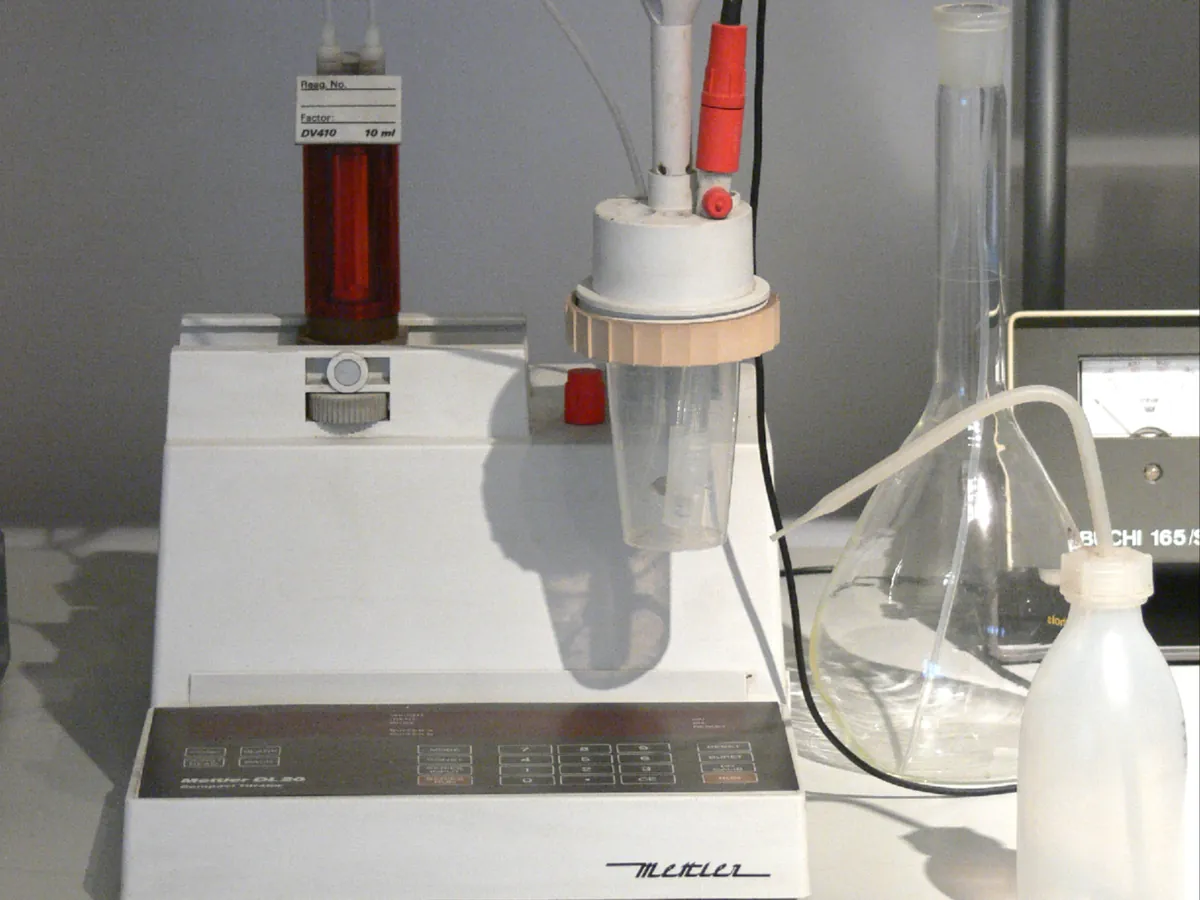
Potentiometric Titrator (Autotitrator)
Adds a titrant from a motorised burette while an electrode measures the potential of the solution, and finds the equivalence point from the change in potential. Used for assays, standardisation and many limit tests.
- Pharmaceutical
- Chemicals
- Food & beverage
- Environmental
- Metal finishing
Follow your site SOP
This is a typical operating sequence for learning. Your instrument model and approved SOP take precedence.
STAGE 1
Before you start
- 1Check the titrator and burette are within their calibration due dates.
- 2Check the titrant label for its standardised molarity and expiry date of the titre.
- 3Inspect the electrode: electrolyte level, diaphragm not blocked, glass membrane clean and not dry.
- 4Run the electrode check (for pH titrations) as per SOP.
- Never let a glass electrode dry out; store it in the recommended storage solution.
STAGE 2
Preparing the burette
- 1Rinse the burette with fresh titrant (prepare or flush cycles) to remove air bubbles and old titrant.
- 2Check there are no bubbles in the cylinder or tubing.
STAGE 3
Titration
- 1Accurately weigh the sample into a clean beaker and dissolve it in the solvent specified in the method.
- 2Immerse the electrode and burette tip below the liquid surface, without touching the stirrer bar.
- 3Enter the sample mass and start the method.
- 4Run a blank titration if the method requires one.
- 5Review the titration curve: there should be a single clear inflection at the expected volume.
- Check that the software found the correct equivalence point; a noisy or flat curve can give a false one.
STAGE 4
Shutdown
- 1Rinse the electrode with the appropriate solvent and water and place it in storage solution.
- 2Close the titrant bottle; protect NaOH from carbon dioxide with a soda-lime tube.
- 3Complete the usage log.
In LimsPulse · Calibration Management
Keep every Potentiometric titrator in control: usage logs, calibration and maintenance schedules, and automatic blocking of overdue instruments.