Titration & electrochemistry
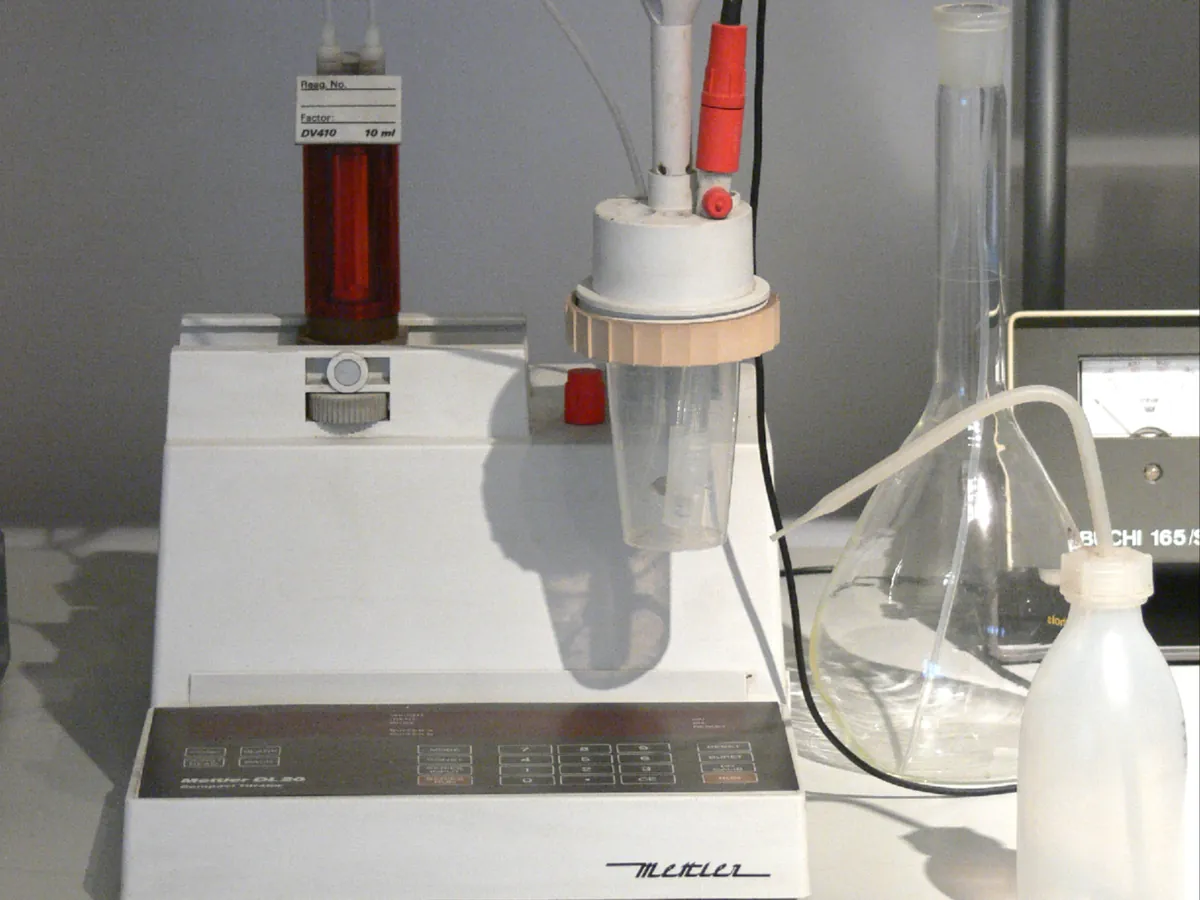
Potentiometric Titrator (Autotitrator)
Adds a titrant from a motorised burette while an electrode measures the potential of the solution, and finds the equivalence point from the change in potential. Used for assays, standardisation and many limit tests.
- Pharmaceutical
- Chemicals
- Food & beverage
- Environmental
- Metal finishing
TROUBLESHOOTING
Common problems, causes and fixes
No clear equivalence point
Likely causes
- • Wrong electrode for the titration type
- • Very weak acid or base in the chosen solvent
- • Sample mass too small
What to do
- • Use the electrode the method specifies
- • Use a non-aqueous solvent system if the method allows
- • Increase sample mass to consume more titrant
Noisy or drifting potential
Likely causes
- • Blocked or dirty diaphragm
- • Low reference electrolyte
- • Static or poor earthing in non-aqueous solvents
- • Air bubble under the glass membrane
What to do
- • Clean the diaphragm or replace the electrode
- • Refill electrolyte and open the refill port during titration
- • Use an electrode suited to non-aqueous media
- • Shake the electrode to remove the bubble
Results high or low compared with expected
Likely causes
- • Old or wrong titre of the titrant
- • Air bubbles in the burette
- • Blank not subtracted
- • Wrong sample mass entry
What to do
- • Restandardise the titrant
- • Flush the burette
- • Run and apply the blank
- • Check the mass transfer from the balance
Slow electrode response
Likely causes
- • Ageing glass membrane
- • Protein or fat film on the membrane
- • Electrode stored dry
What to do
- • Clean or recondition the membrane as per supplier
- • Replace the electrode if slope and response remain poor
Two or more equivalence points detected
Likely causes
- • Polyprotic analyte or impurity
- • Equivalence point recognition set too sensitive
What to do
- • Confirm which point the method uses
- • Adjust the recognition threshold or window within the validated range
Leaking burette tip or dripping
Likely causes
- • Worn piston seal or valve
- • Loose tubing connection
What to do
- • Tighten fittings
- • Replace the seal or service the burette unit
In LimsPulse · Calibration Management
Keep every Potentiometric titrator in control: usage logs, calibration and maintenance schedules, and automatic blocking of overdue instruments.