Potentiometric titrator · Calibration procedure
Electrode check
Checks a pH glass electrode's slope and zero point with standard buffers before it is used for acid–base titrations.
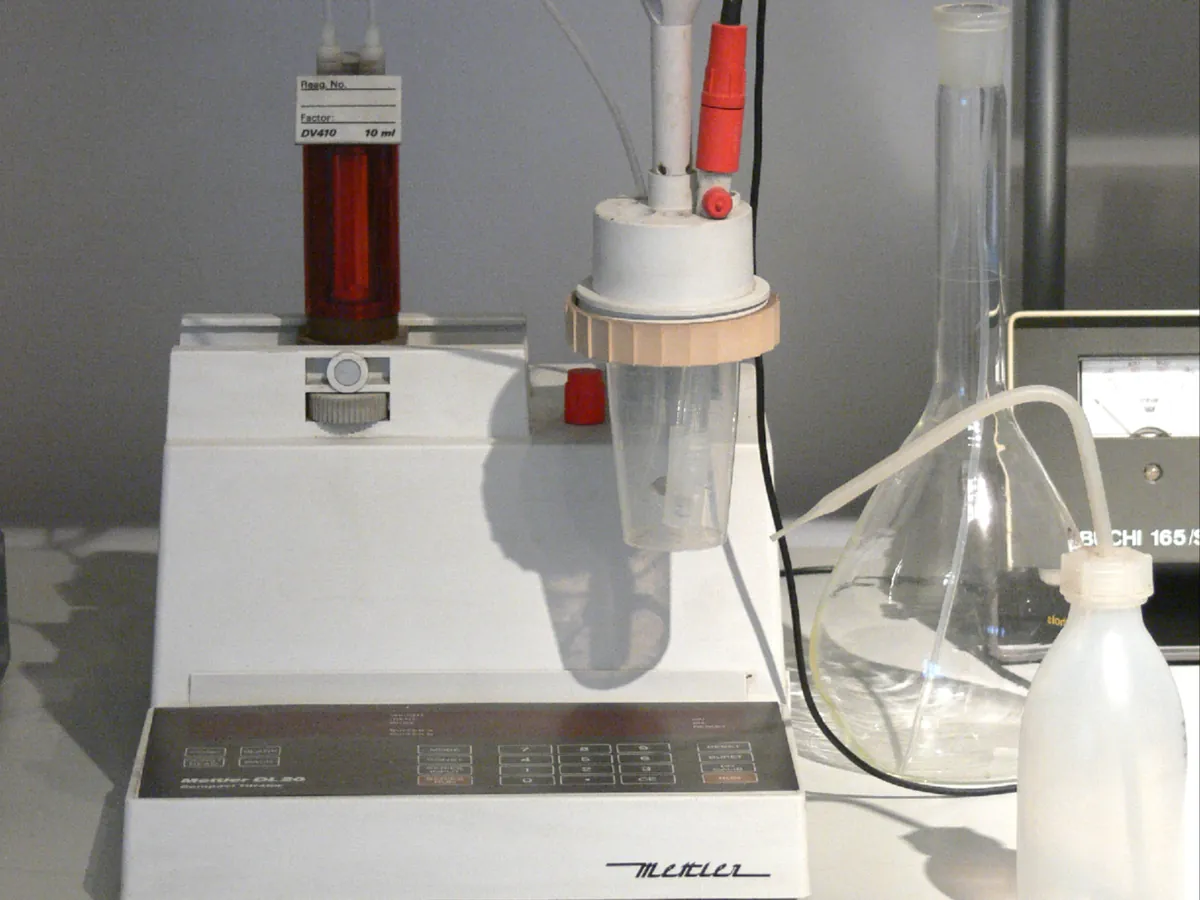
PURPOSE
Why this is checked
An ageing or dirty electrode responds slowly and with a reduced slope, which flattens the titration curve and makes the equivalence point less sharp. The check confirms the electrode responds as expected.
Frequency
Typically daily or before use for pH-based titrations, as defined in your SOP.
Learn how the Potentiometric titrator worksYOU WILL NEED
Standards & tools
- Certified pH buffers traceable to national standards, for example pH 4.01, 7.00 and 9.21 at 25 °C
- Calibrated temperature sensor
BEFORE YOU START
Prerequisites
- Electrolyte filled to the correct level and refill opening open
- Buffers at about 25 °C or temperature compensation active
- Electrode rinsed with water between buffers
PROCEDURE
Step by step
- 1Immerse the electrode in pH 7.00 buffer with gentle stirring and record the stable potential (mV).
- 2Rinse, then repeat with pH 4.01 and pH 9.21 buffers.
- 3Note the time each reading takes to stabilise (response time).
- 4Calculate the slope and express it as a percentage of the theoretical Nernst slope.
RECORD
Example observation table
| Buffer (pH at 25 °C) | Potential (mV) | Response time (s) |
|---|---|---|
| 4.01 | +172.5 | 18 |
| 7.00 | +0.6 | 15 |
| 9.21 | −126.4 | 22 |
CALCULATION
How to calculate the result
Slope (mV/pH) = (E₁ − E₂) ÷ (pH₂ − pH₁); Slope % = Slope ÷ 59.16 × 100 (at 25 °C)
- Slope = (172.5 − (−126.4)) ÷ (9.21 − 4.01) = 298.9 ÷ 5.20 = 57.48 mV/pH
- Slope % = 57.48 ÷ 59.16 × 100 = 97.2%
- Zero point: +0.6 mV at pH 7.00
ACCEPTANCE CRITERIA
Pass if
- Slope typically 95–105% of the theoretical value.
- Potential at pH 7.00 typically within ±15 mV (use the limit in your SOP).
- Stable reading within about 30–60 seconds in each buffer.
IF IT FAILS
What to do
- Refill or replace the reference electrolyte and clean the diaphragm.
- Clean or recondition the glass membrane as per the supplier's instructions.
- Repeat with fresh buffers; replace the electrode if it still fails.
MORE
Other Potentiometric titrator calibrations
In LimsPulse · Calibration Management
LimsPulse schedules this calibration, records the result against limits, and blocks the instrument everywhere if it fails or goes overdue.