Microplate reader
Measures absorbance, fluorescence or luminescence in the wells of 96- or 384-well plates. It is the read-out instrument for ELISA, protein assays, cell-based assays and enzyme kinetics.
- Biotechnology
- Biopharmaceutical
- Clinical research
- Academic research
- Food (allergen ELISA)
- Environmental (toxicity assays)
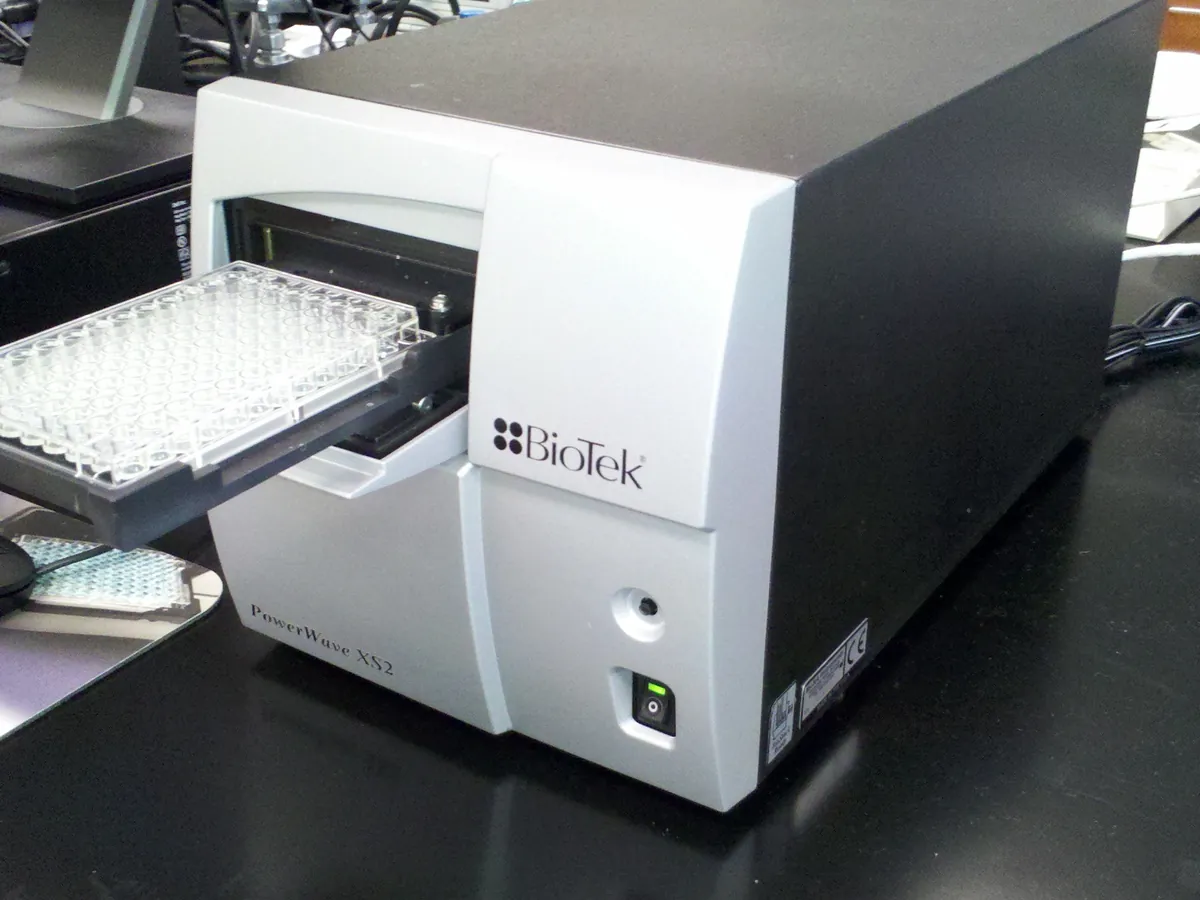
Plate reader calibration procedures
Absorbance accuracy and linearity
Reads certified neutral-density glass filters in a calibration plate and compares measured absorbance with certified values across the photometric range.
Open procedureWavelength accuracy
Scans a holmium or didymium glass filter in the calibration plate and checks that the measured absorption peak positions match the certified wavelengths.
Open procedureInstrument qualification (DQ · IQ · OQ · PQ)
- 01
DQ
Define read modes, wavelength range and selection (filter or monochromator), photometric range, plate formats, incubation and software compliance needs.
- 02
IQ
Install on a stable bench, connect the computer, install software, record serial numbers and the calibration plate certificate.
- 03
OQ
Verify absorbance accuracy and linearity, wavelength accuracy, photometric precision, and fluorescence/luminescence performance where used.
- 04
PQ
Run a representative assay (for example a protein standard curve or ELISA control set) and confirm results meet assay criteria.
Keep every Plate reader in control: usage logs, calibration and maintenance schedules, and automatic blocking of overdue instruments.