Bioanalytical
Microplate reader
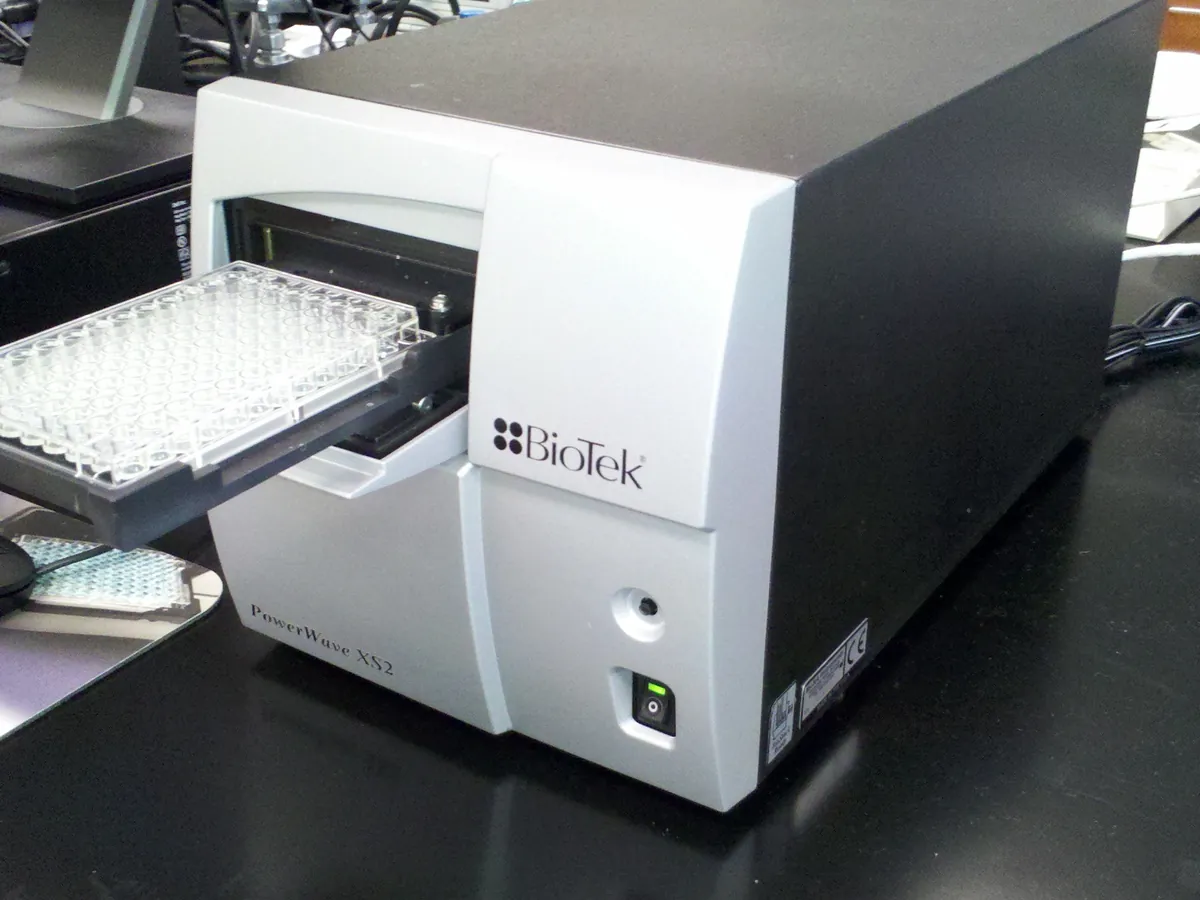
Measures absorbance, fluorescence or luminescence in the wells of 96- or 384-well plates. It is the read-out instrument for ELISA, protein assays, cell-based assays and enzyme kinetics.
- Biotechnology
- Biopharmaceutical
- Clinical research
- Academic research
- Food (allergen ELISA)
- Environmental (toxicity assays)
PREVENTIVE MAINTENANCE
Maintenance checklist
Daily / each use
- Keep the plate carrier clean and dry
- Check the self-test passes at start-up
Monthly
- Clean the carrier and external surfaces
- Run a quick check with the calibration plate if your SOP requires
Every 6–12 months
- Verify absorbance accuracy, linearity and wavelength accuracy with a certified calibration plate
- Verify fluorescence sensitivity and uniformity with a dye standard (multimode readers)
- Check incubator temperature if used for kinetic assays
As needed
- Replace the lamp when energy falls or the self-test fails
- Recertify the calibration plate as the supplier advises
SAFETY
Safety precautions
Before you work on the Plate reader
- Treat assay plates according to the biosafety level of the samples and reagents.
- Stop solutions in ELISA (such as sulphuric acid) are corrosive. Avoid spills in the reader.
- Do not open covers that expose the lamp; xenon flash lamps use high voltage.
In LimsPulse · Calibration Management
Keep every Plate reader in control: usage logs, calibration and maintenance schedules, and automatic blocking of overdue instruments.