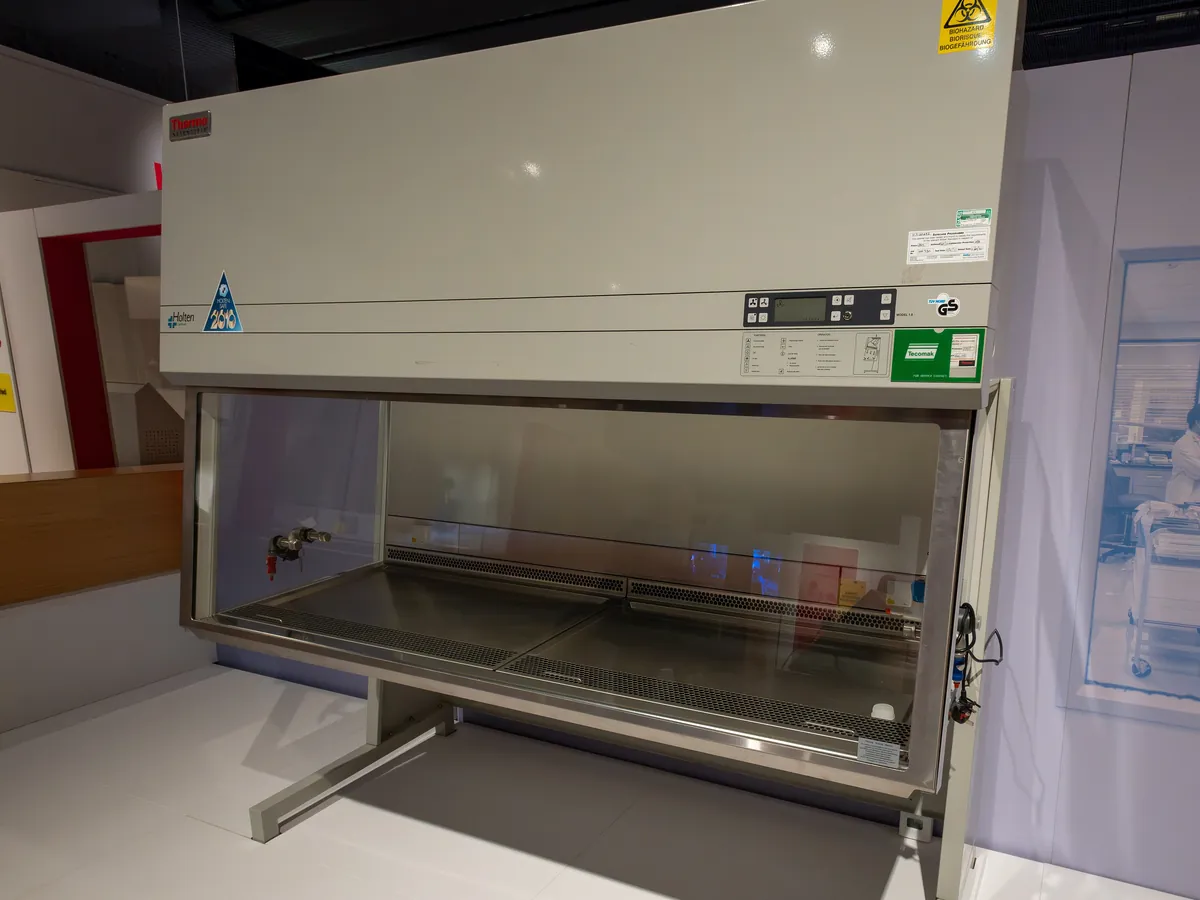
Biosafety cabinet (microbiological safety cabinet)
A ventilated enclosure that protects the operator, the product and the room when handling microorganisms. HEPA-filtered downflow keeps the work clean, an inflow of room air at the front stops aerosols escaping, and the exhaust is HEPA-filtered before it leaves the cabinet.
- Pharmaceutical
- Biotech
- Hospitals and clinical labs
- Vaccine manufacture
- Food & beverage
- Research laboratories
Test your BSC knowledge
Multiple-choice questions
Pick an answer to see whether you are right and why.
Q1. What is the main difference between a Class II biosafety cabinet and a laminar air flow unit?
basicQ2. Which airflow mainly protects the operator in a Class II cabinet?
basicQ3. Under NSF/ANSI 49, a typical minimum inflow velocity for a Class II type A2 cabinet is:
intermediateQ4. Why should a Bunsen burner not be used inside a biosafety cabinet?
basicQ5. A typical leak criterion when scanning a cabinet HEPA filter with a photometer is:
intermediateQ6. What should you do with the cabinet fan if a culture spills inside?
basicQ7. In a Class II type A2 cabinet, roughly what share of the air is exhausted through the exhaust HEPA filter?
advanced
Viva questions
Think of your answer first, then open it to compare.
1. Describe good working practice in a biosafety cabinet.
Run the fan to purge before use, set the sash to the marked height, disinfect surfaces, load only what is needed at least 10 cm from the front grille, keep grilles clear, work slowly in the centre to rear, avoid flames, keep waste inside in a closed container, disinfect after use and purge before switching off.
2. Which tests are done when a biosafety cabinet is certified?
Inflow and downflow velocity, HEPA filter integrity of supply and exhaust filters, smoke pattern tests at the front opening and work surface, alarm checks, and where required an operator protection (KI-discus) test, plus light, noise and electrical safety checks.
3. The inflow velocity is found below the limit at certification. What is the impact and what do you do?
Operator protection may have been lost, so stop using the cabinet for cultures. Check the sash height, grilles and exhaust, re-balance or replace filters, and re-certify. Assess with QA and safety whether work since the last certification exposed staff or affected results.
Keep every BSC in control: usage logs, calibration and maintenance schedules, and automatic blocking of overdue instruments.