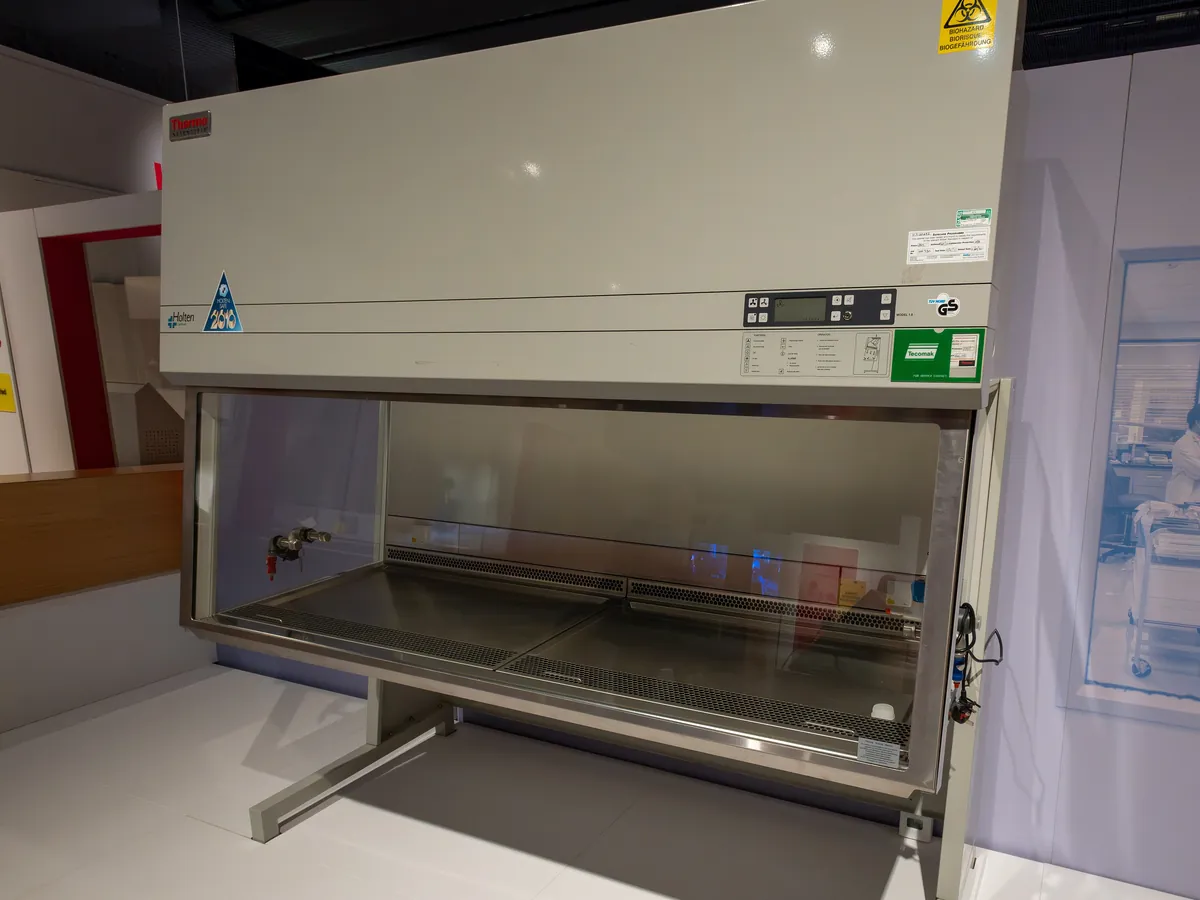
Biosafety cabinet (microbiological safety cabinet)
A ventilated enclosure that protects the operator, the product and the room when handling microorganisms. HEPA-filtered downflow keeps the work clean, an inflow of room air at the front stops aerosols escaping, and the exhaust is HEPA-filtered before it leaves the cabinet.
- Pharmaceutical
- Biotech
- Hospitals and clinical labs
- Vaccine manufacture
- Food & beverage
- Research laboratories
BSC calibration procedures
Inflow and downflow velocity
Measures the speed of room air entering the front opening (inflow, operator protection) and of filtered air moving down over the work surface (downflow, product protection), and checks both against the cabinet's certified values.
Open procedureHEPA filter integrity
Challenges the supply and exhaust HEPA filters of the cabinet with an aerosol (PAO/DOP) and scans the downstream side with a photometer to find leaks in the filter media or seals.
Open procedureInstrument qualification (DQ · IQ · OQ · PQ)
- 01
DQ — Design qualification
Defines the cabinet class and type (e.g. Class II A2), size, exhaust arrangement, compliance with EN 12469 or NSF/ANSI 49, alarms and materials.
- 02
IQ — Installation qualification
Confirms the location (away from doors and air vents), level installation, power, exhaust connection, documentation and filter certificates.
- 03
OQ — Operational qualification
Measures inflow and downflow velocity, HEPA filter integrity of supply and exhaust filters, smoke pattern, alarm function, noise, light and, where required, the operator protection factor.
- 04
PQ — Performance qualification
Shows the cabinet stays within limits in routine use: particle counts in the work zone, environmental monitoring during real work, and requalification at the defined interval.
Keep every BSC in control: usage logs, calibration and maintenance schedules, and automatic blocking of overdue instruments.