BSC · Calibration procedure
Inflow and downflow velocity
Measures the speed of room air entering the front opening (inflow, operator protection) and of filtered air moving down over the work surface (downflow, product protection), and checks both against the cabinet's certified values.
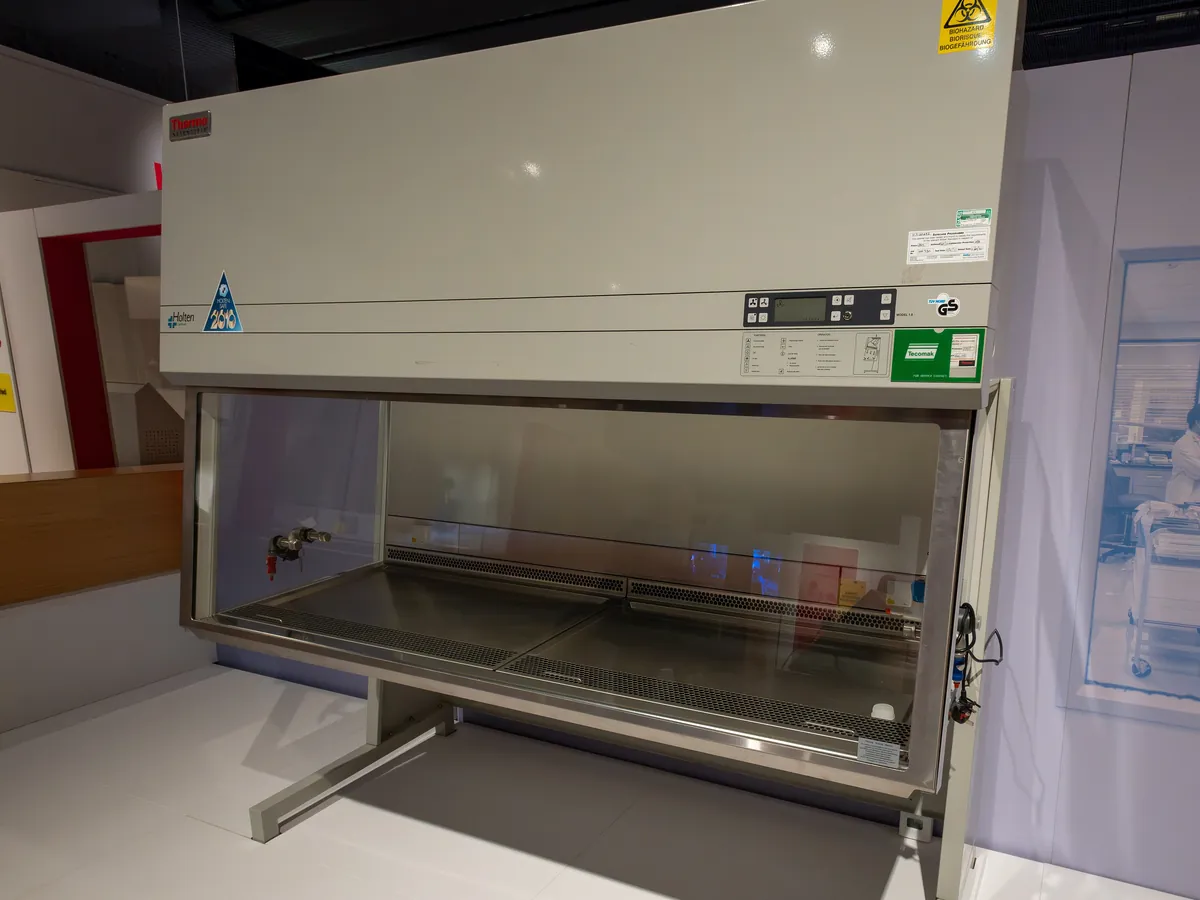
PURPOSE
Why this is checked
Frequency
At installation, then typically every 12 months (some sites every 6 months), and after filter change, relocation or major repair, as defined in your SOP.
Learn how the BSC worksYOU WILL NEED
Standards & tools
- Calibrated thermal anemometer with a fixed probe holder (downflow)
- Calibrated direct inflow measurement (DIM) flow hood, or an anemometer for the calculated or restricted-sash inflow method
- Smoke source for airflow pattern tests
BEFORE YOU START
Prerequisites
- Cabinet running for at least the manufacturer's warm-up time with the sash at the working height
- Work zone empty; room doors closed and normal HVAC running
- Manufacturer's nameplate inflow and downflow set points available
PROCEDURE
Step by step
- 1Downflow: set up a grid of points (typically about 15 cm apart) in a horizontal plane about 10 cm above the bottom edge of the sash opening, keeping a margin from the walls as the standard describes.
- 2Hold the anemometer probe still at each point and record the velocity after it stabilises.
- 3Calculate the average downflow and the deviation of each point from the average.
- 4Inflow: seal the DIM hood over the front opening and record the volume flow (repeat at least three times and average); alternatively use the method in the manufacturer's procedure.
- 5Inflow velocity = volume flow ÷ area of the front opening at working height.
- 6Run the smoke tests along the front opening, sash edges and work surface to confirm air moves into the cabinet and downflow does not escape.
- 7Check the airflow alarm activates when inflow is reduced (e.g. sash raised or exhaust restricted) as per the procedure.
RECORD
Example observation table
| Point | Downflow (m/s) | Deviation from average (%) |
|---|---|---|
| 1 | 0.34 | −0.5 |
| 2 | 0.33 | −3.4 |
| 3 | 0.36 | +5.4 |
| 4 | 0.35 | +2.4 |
| 5 | 0.32 | −6.3 |
| 6 | 0.34 | −0.5 |
| 7 | 0.35 | +2.4 |
| 8 | 0.37 | +8.3 |
| 9 | 0.33 | −3.4 |
| 10 | 0.31 | −9.3 |
| 11 | 0.34 | −0.5 |
| 12 | 0.36 | +5.4 |
| Inflow (DIM) | 465 m³/h over 1.20 m × 0.20 m opening | Inflow velocity 0.538 m/s |
CALCULATION
How to calculate the result
Average downflow = Σ readings ÷ n; Deviation (%) = (Reading − Average) ÷ Average × 100; Inflow velocity (m/s) = Volume flow (m³/s) ÷ Opening area (m²)
- Sum of 12 downflow readings = 4.10 m/s; average = 4.10 ÷ 12 = 0.3417 m/s
- Lowest point 0.31 m/s: (0.31 − 0.3417) ÷ 0.3417 × 100 = −9.3%; highest point 0.37 m/s: +8.3%
- Inflow: 465 m³/h ÷ 3600 = 0.1292 m³/s; opening area = 1.20 × 0.20 = 0.240 m²
- Inflow velocity = 0.1292 ÷ 0.240 = 0.538 m/s
- Downflow within 0.25–0.50 m/s with all points within ±20% of the average; inflow ≥ 0.51 m/s: Pass
ACCEPTANCE CRITERIA
Pass if
- Inflow: typically not less than 0.40 m/s for a Class II cabinet under EN 12469, or not less than 0.51 m/s (100 ft/min) for a Class II type A2 under NSF/ANSI 49, and within the manufacturer's tolerance of the nameplate value.
- Downflow: average typically between 0.25 and 0.50 m/s and within the manufacturer's tolerance of the nameplate value; individual readings typically within ±20% of the average (EN 12469 approach), as defined in your SOP.
- Smoke tests show no escape from the front opening and no reflux of downflow out of the cabinet.
- Airflow alarm operates at the set point.
IF IT FAILS
What to do
- Label the cabinet 'Not for use' and stop work with cultures.
- Check the sash height, grilles and exhaust connection, then have the engineer re-balance the fan speed.
- If velocities cannot be restored, decontaminate the cabinet and replace the HEPA filters, then repeat all certification tests.
- Assess work done since the last passing certification with QA.
MORE
Other BSC calibrations
In LimsPulse · Calibration Management
LimsPulse schedules this calibration, records the result against limits, and blocks the instrument everywhere if it fails or goes overdue.