Microbiology & sterility
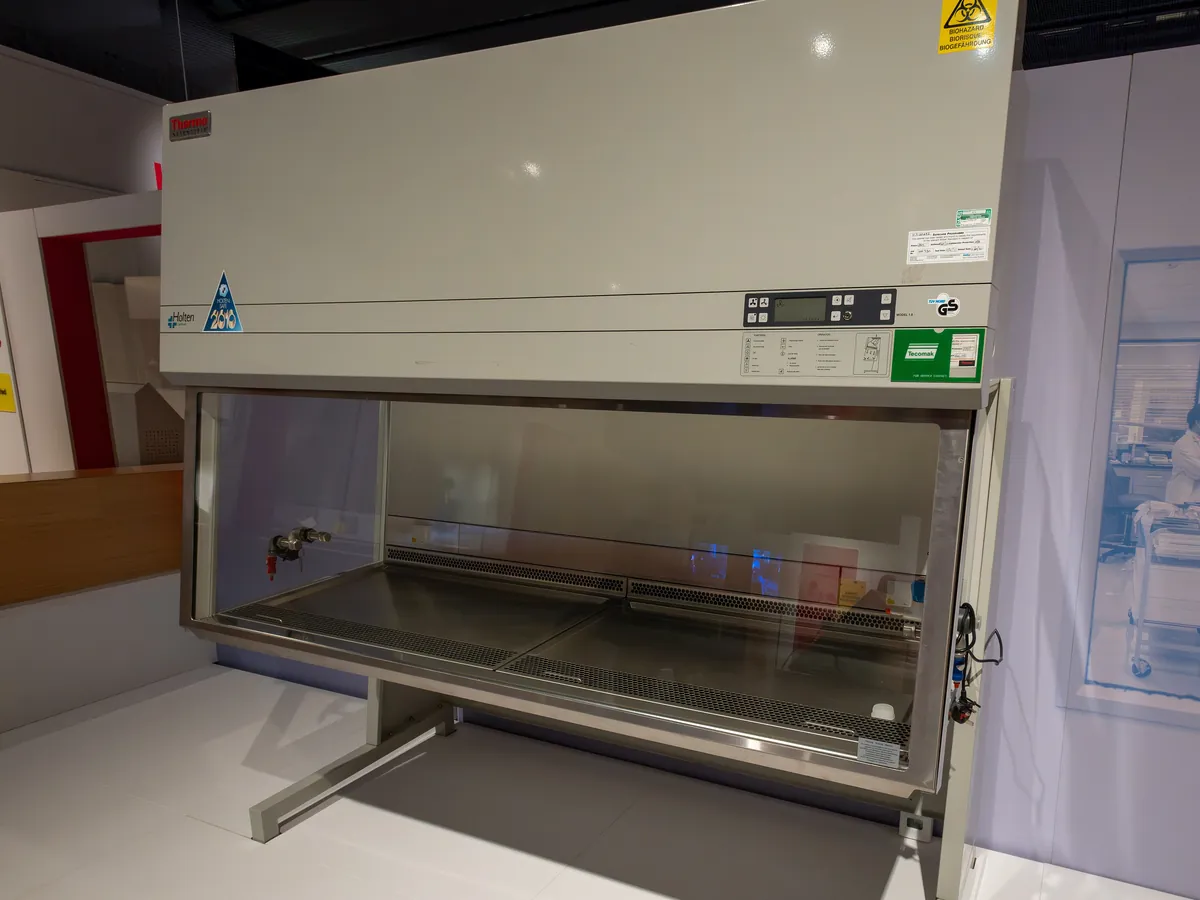
Biosafety cabinet (microbiological safety cabinet)
A ventilated enclosure that protects the operator, the product and the room when handling microorganisms. HEPA-filtered downflow keeps the work clean, an inflow of room air at the front stops aerosols escaping, and the exhaust is HEPA-filtered before it leaves the cabinet.
- Pharmaceutical
- Biotech
- Hospitals and clinical labs
- Vaccine manufacture
- Food & beverage
- Research laboratories
Follow your site SOP
This is a typical operating sequence for learning. Your instrument model and approved SOP take precedence.
STAGE 1
Before you start
- 1Check the certification label is in date and the airflow indicator shows a safe status.
- 2Switch on the fan and let it run for at least 5–15 minutes (as per the manufacturer) to purge the work zone.
- 3Set the sash to the marked working height; the alarm should be silent.
- 4Disinfect the work surface, side walls and inside of the sash with the approved disinfectant, then 70% IPA if required.
- 5Load only what you need, at least 10 cm in from the front grille, with clean items upstream of dirty ones.
- Do not use the cabinet if the airflow alarm is sounding or the certification has expired.
STAGE 2
Working
- 1Work in the centre to rear of the work surface, keeping arms parallel to the floor and moving slowly.
- 2Keep the front and rear grilles clear; do not rest arms, papers or equipment on the front grille.
- 3Use disposable loops or a micro-incinerator instead of an open flame.
- 4Keep a discard container inside the cabinet for used tips and loops; close it before removing.
- 5Avoid people walking behind you or opening doors nearby, as this disturbs the air curtain.
- Rapid arm movements and open flames break the air curtain and can let aerosols escape.
STAGE 3
Spills
- 1Leave the fan running.
- 2Cover the spill with absorbent material and flood with the approved disinfectant; leave for the validated contact time.
- 3Collect the material into a biohazard bag, then disinfect the surface and the area below the work tray if liquid has gone through the grille.
- 4Record the spill and inform the supervisor.
- Do not switch off the fan during a spill: the inflow is what protects you.
STAGE 4
After use
- 1Close all cultures and waste containers and disinfect their outer surfaces before removal.
- 2Disinfect the work surface and walls.
- 3Let the fan run for a few minutes to purge the cabinet before switching off or lowering the sash.
- 4Record use in the log book.
In LimsPulse · Calibration Management
Keep every BSC in control: usage logs, calibration and maintenance schedules, and automatic blocking of overdue instruments.