Microbiology & sterility
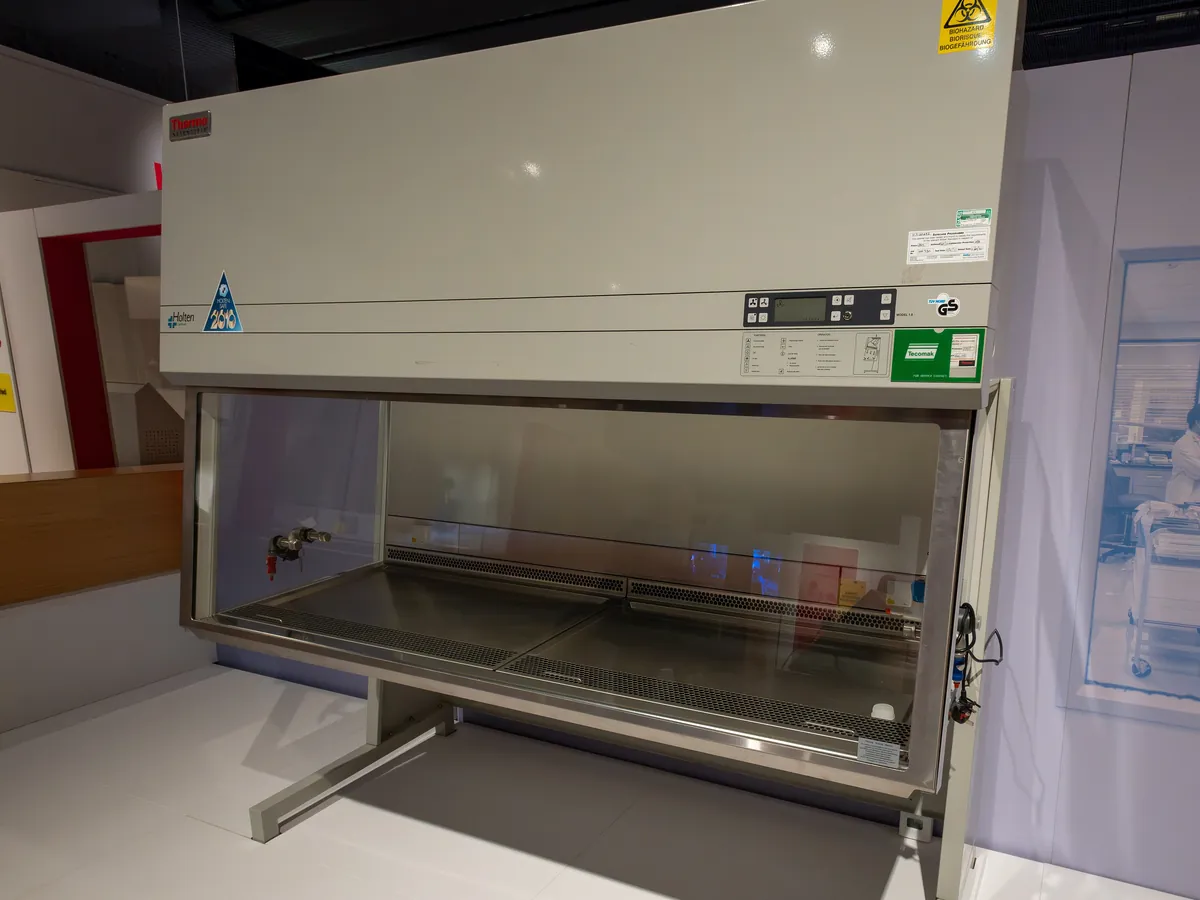
Biosafety cabinet (microbiological safety cabinet)
A ventilated enclosure that protects the operator, the product and the room when handling microorganisms. HEPA-filtered downflow keeps the work clean, an inflow of room air at the front stops aerosols escaping, and the exhaust is HEPA-filtered before it leaves the cabinet.
- Pharmaceutical
- Biotech
- Hospitals and clinical labs
- Vaccine manufacture
- Food & beverage
- Research laboratories
PREVENTIVE MAINTENANCE
Maintenance checklist
Each use
- Disinfect the work surface, walls and sash
- Check the airflow indicator
- Remove all materials from the cabinet after work
Weekly
- Lift the work tray and disinfect the sump below
- Clean the sash glass inside and out
- Check the alarm by raising the sash (if the SOP allows)
Monthly
- Check UV lamp hours and clean the lamp if fitted
- Inspect gaskets and the front grille for damage
Six-monthly / annual
- Certification: inflow and downflow velocity, HEPA filter integrity, smoke pattern and alarm checks
- Operator protection test (KI-discus) where required by EN 12469 or the SOP
- Replace filters when airflow can no longer be maintained
- Decontaminate (e.g. with hydrogen peroxide vapour) before filter change or relocation
SAFETY
Safety precautions
Before you work on the BSC
- Use the cabinet only for the risk group it is rated for; Class II is typical for risk group 1–2 organisms in QC labs.
- Never use an open flame inside the cabinet.
- Do not switch off the fan while cultures are open or during a spill.
- Avoid looking at UV lamps and switch them off before working; the sash should be closed when UV is on.
- Decontaminate the cabinet before any maintenance that opens the filter housing.
- Wear a lab coat, gloves and other PPE required by your biosafety risk assessment.
In LimsPulse · Calibration Management
Keep every BSC in control: usage logs, calibration and maintenance schedules, and automatic blocking of overdue instruments.