Soxhlet / fat extraction system
Extracts fat from a dried, ground food sample with a repeatedly recycled organic solvent. The solvent is then evaporated and the fat left behind is weighed.
- Food & beverage
- Animal feed
- Oilseeds and edible oils
- Agriculture
- Academic research
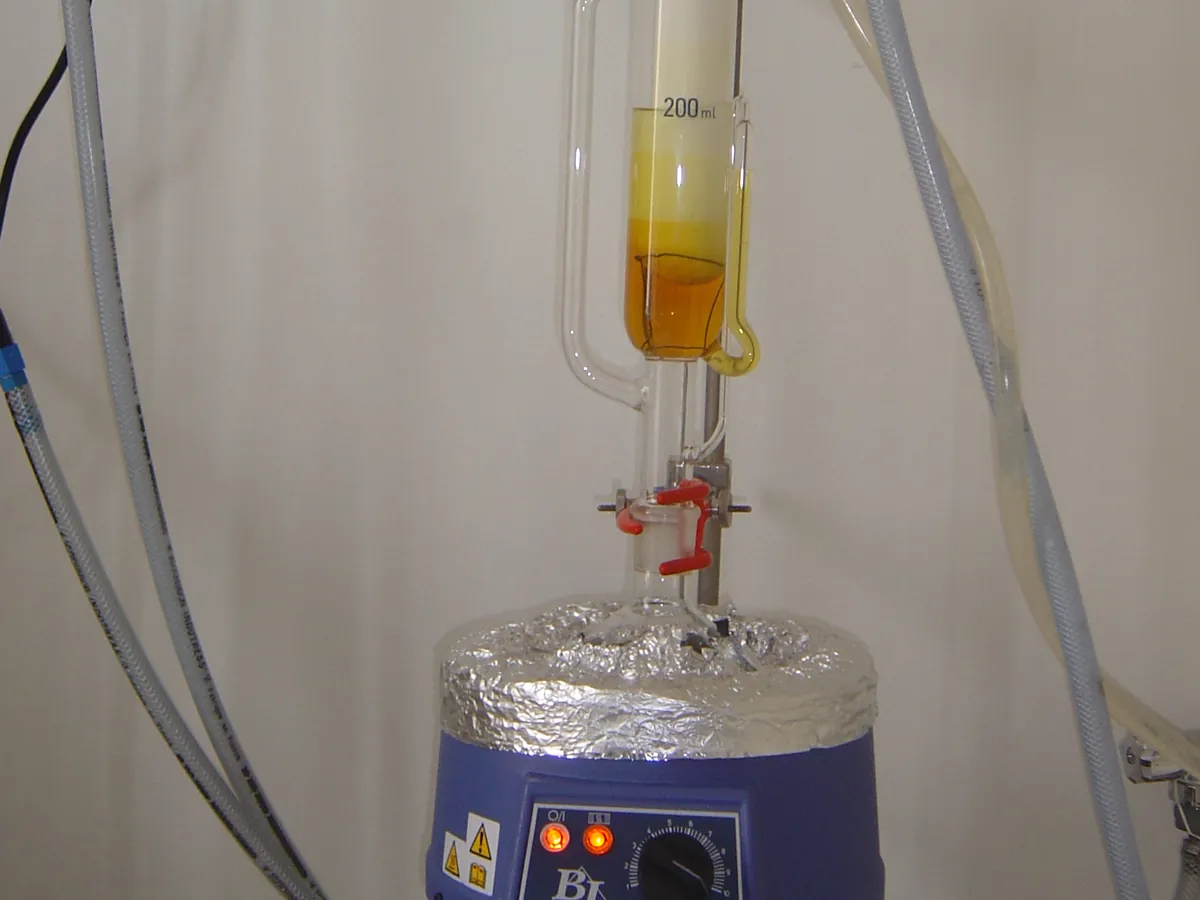
What is Soxhlet?
The Soxhlet extractor is the classic apparatus for crude fat (also called ether extract). The sample sits in a porous thimble. Solvent boils in a flask below, condenses above the thimble, soaks the sample and siphons back to the flask carrying dissolved fat. Each cycle uses fresh, clean solvent, so the fat is extracted very completely.
Traditional glass Soxhlets run for several hours. Automated systems (often called Soxtec or Randall-type extractors) first immerse the thimble in boiling solvent, then rinse it, then recover the solvent. This cuts the time to around 1–2 hours and recovers most of the solvent for reuse.
Soxhlet extraction only removes fat that is free and accessible. Fat bound to protein or carbohydrate, as in baked goods, dairy and meat products, needs acid hydrolysis first (the Weibull–Stoldt approach). The method used must match the food and the labelling rules.
Used for
- Crude fat in cereals, flour, snacks and bakery products
- Fat in oilseeds, nuts and oil cakes
- Fat in meat, fish and processed meat (after drying)
- Total fat after acid hydrolysis for nutrition labelling
- Ether extract in animal feed
- Extraction of lipids for further tests such as fatty acid profile
How it works
- 01
Prepare sample
Dry and grind the food; hydrolyse with hydrochloric acid first if total fat is needed.
- 02
Load thimble
Weigh the sample into a cellulose thimble and plug it with fat-free cotton.
- 03
Extract
Boiling solvent condenses onto the thimble, dissolves fat and siphons back to the flask, cycle after cycle.
- 04
Recover solvent
Most solvent is distilled off and collected for reuse or disposal.
- 05
Dry flask
Remove the last traces of solvent in an oven, cool in a desiccator.
- 06
Weigh
The mass gained by the flask is the extracted fat.
Advantages
- Simple, well understood, recognised reference technique
- Fresh solvent each cycle gives near-complete extraction
- Gravimetric result needs no calibration curve
- Automated units extract several samples at once and recover solvent
Limitations
- Long extraction time with classic glassware
- Uses flammable solvents (petroleum ether, hexane, diethyl ether)
- Bound fat is not extracted without prior hydrolysis
- Non-fat substances soluble in the solvent (pigments, some waxes) are counted as fat
- Sample must be dry and finely ground; water blocks solvent penetration
1 calibration procedure
Methods that use Soxhlet
Keep every Soxhlet in control: usage logs, calibration and maintenance schedules, and automatic blocking of overdue instruments.