Food & proximate analysis
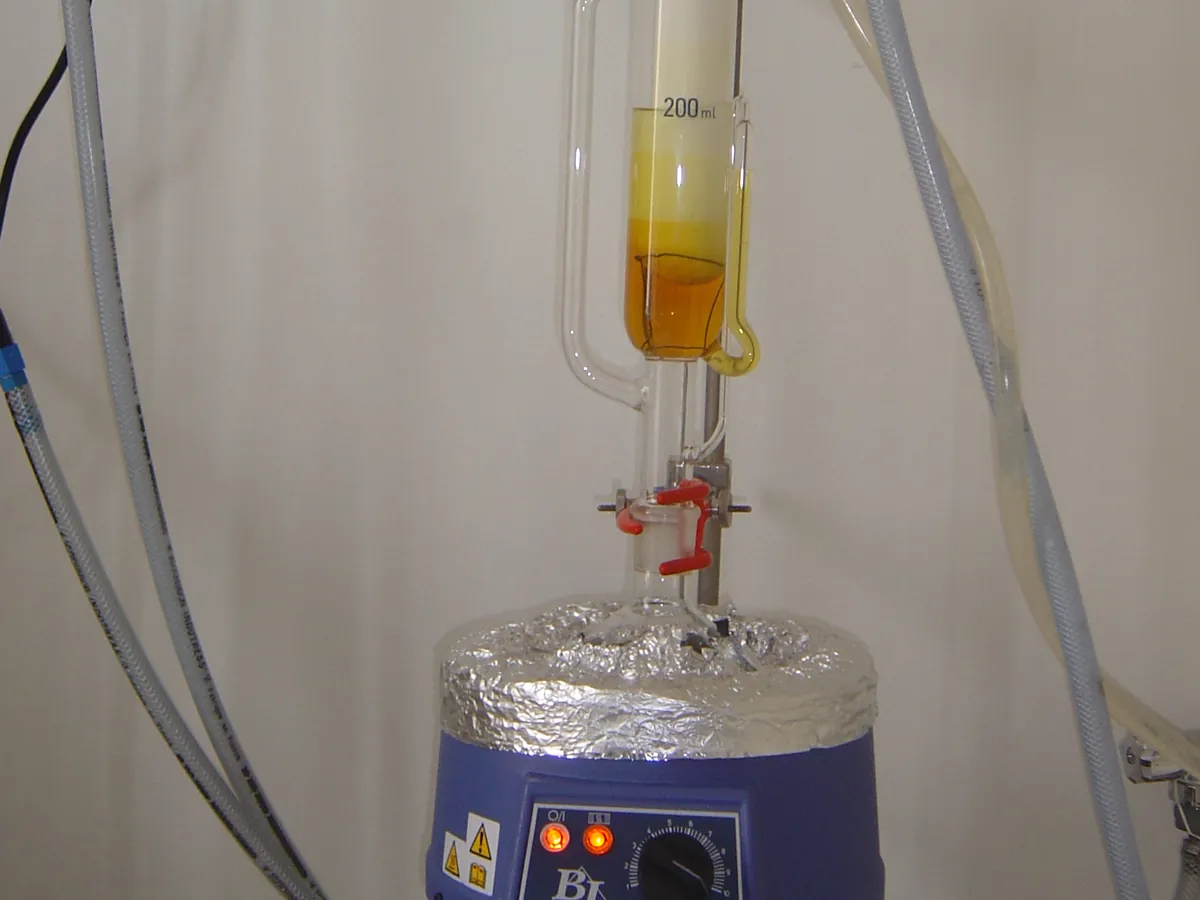
Soxhlet / fat extraction system
Extracts fat from a dried, ground food sample with a repeatedly recycled organic solvent. The solvent is then evaporated and the fat left behind is weighed.
- Food & beverage
- Animal feed
- Oilseeds and edible oils
- Agriculture
- Academic research
TROUBLESHOOTING
Common problems, causes and fixes
Low fat result or low recovery
Likely causes
- • Sample not dried or not ground finely
- • Extraction time too short
- • Bound fat not released
- • Solvent loss during extraction
What to do
- • Dry and grind the sample as the method says
- • Extend extraction time or cycles
- • Use acid hydrolysis before extraction where total fat is required
- • Check condenser cooling and seals
High fat result
Likely causes
- • Non-fat material extracted (sugars with wet solvent, pigments)
- • Solvent residue left in flask
- • Fine particles passing the thimble
What to do
- • Use dry solvent and a dry sample
- • Dry flask to constant mass
- • Plug the thimble properly; check for damage
Siphon does not empty
Likely causes
- • Thimble too tall or tilted
- • Blocked siphon tube
- • Heating too low
What to do
- • Use the correct thimble size and seat it upright
- • Clean the siphon tube
- • Increase heating to the method rate
Solvent smell in the lab
Likely causes
- • Poor condenser cooling
- • Worn seals
- • Recovery tank overfilled
What to do
- • Check water flow and temperature
- • Replace seals
- • Empty the recovery tank before each run
Poor agreement between duplicates
Likely causes
- • Non-uniform sample
- • Different extraction positions heating unequally
- • Weighing errors from warm flasks
What to do
- • Homogenise the sample well
- • Check heater uniformity across positions
- • Cool flasks fully in a desiccator before weighing
In LimsPulse · Calibration Management
Keep every Soxhlet in control: usage logs, calibration and maintenance schedules, and automatic blocking of overdue instruments.