Food & proximate analysis
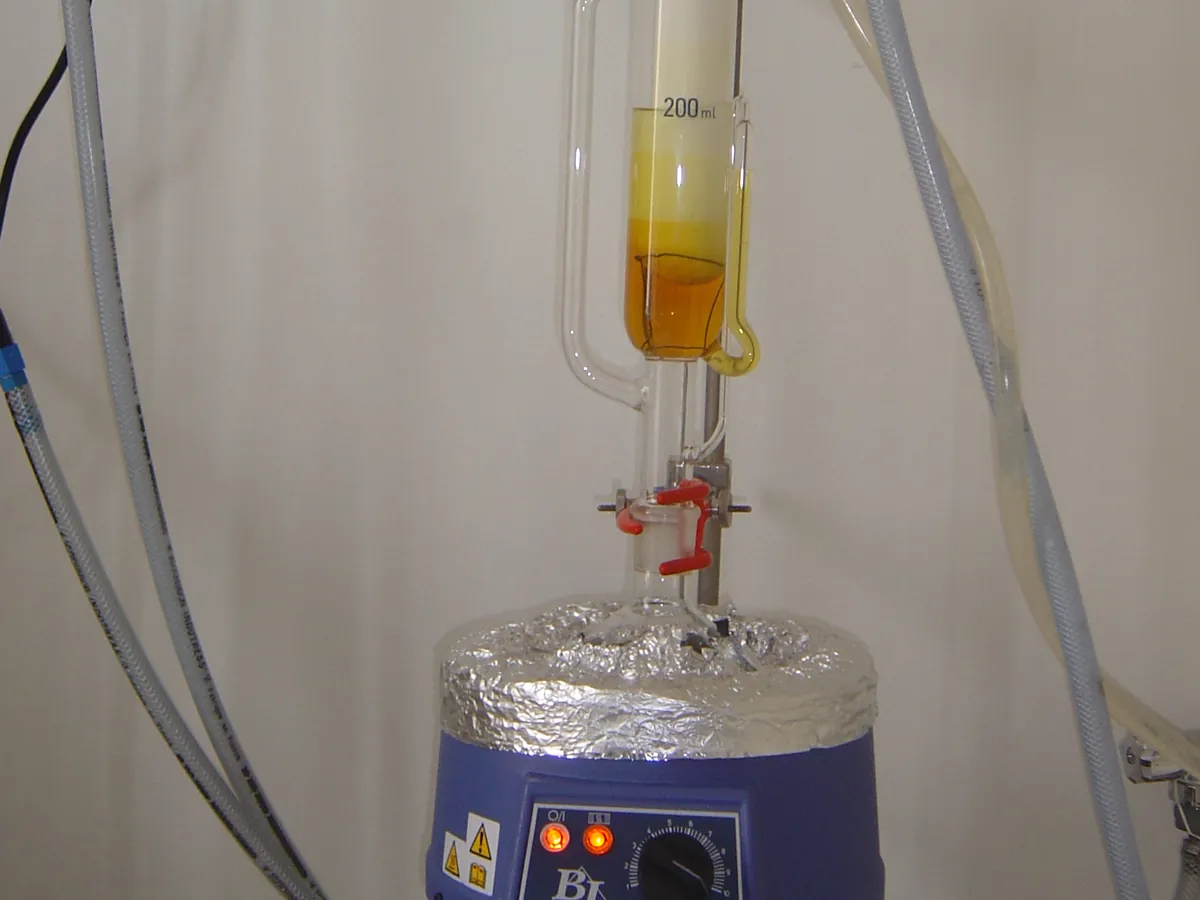
Soxhlet / fat extraction system
Extracts fat from a dried, ground food sample with a repeatedly recycled organic solvent. The solvent is then evaporated and the fat left behind is weighed.
- Food & beverage
- Animal feed
- Oilseeds and edible oils
- Agriculture
- Academic research
Follow your site SOP
This is a typical operating sequence for learning. Your instrument model and approved SOP take precedence.
STAGE 1
Before you start
- 1Dry the extraction flasks or cups with a few boiling chips at about 100–105 °C, cool in a desiccator and weigh.
- 2Check the cooling water flow and the condenser seals.
- 3Check the solvent is the grade the method requires and is free of residue (evaporate a portion and check).
- 4Confirm the unit is in a fume hood or ventilated area with no ignition sources nearby.
- Diethyl ether forms explosive peroxides on storage. Test old ether or use petroleum ether as the method allows.
STAGE 2
Extraction
- 1Weigh the dried, ground sample into the thimble and cover it with fat-free cotton wool.
- 2Place the thimble in the extractor and add the solvent volume set in the method.
- 3Switch on heating and adjust it to give the condensation or siphon rate in the method.
- 4Extract for the full time (for example several hours in classic glassware, or the boiling and rinsing times on an automated unit).
- 5Run a reagent blank (empty thimble) and a reference material in each batch.
- Never leave a classic Soxhlet running unattended without a cooling water flow alarm.
- Keep the heating rate moderate; violent boiling causes solvent loss and bumping.
STAGE 3
Solvent recovery and weighing
- 1Recover the solvent by distillation into the recovery tank or a separate flask.
- 2Dry the flask in an oven (commonly about 100–105 °C for 30–60 min) to remove the last solvent.
- 3Cool in a desiccator and weigh. Repeat drying until constant mass.
- 4Calculate fat % and record all weights.
- Do not put flasks with visible solvent into the oven. Evaporate solvent in the fume hood first.
STAGE 4
Shutdown
- 1Switch off heating and let the unit cool before stopping cooling water.
- 2Empty and label recovered solvent.
- 3Clean the extraction chambers and inspect glassware for cracks.
- 4Complete the instrument log.
In LimsPulse · Calibration Management
Keep every Soxhlet in control: usage logs, calibration and maintenance schedules, and automatic blocking of overdue instruments.