Soxhlet · Calibration procedure
Fat recovery with a reference material
Extracts a food reference material with a known fat content and checks that the result agrees with the assigned value.
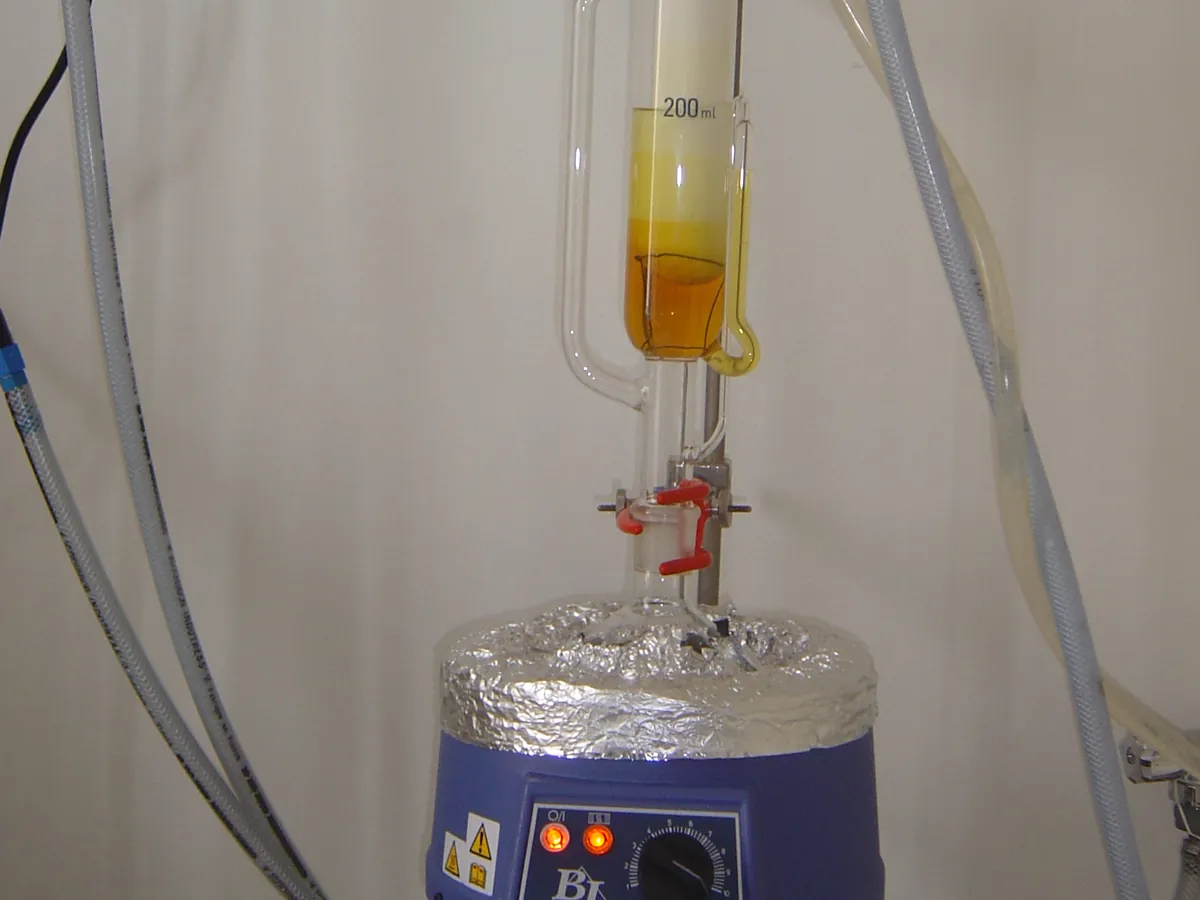
PURPOSE
Why this is checked
Fat extraction is gravimetric, so there is no calibration curve to check. The best test of the whole system (sample preparation, extraction time, solvent, drying and weighing) is to analyse a reference material of known fat content in the same way as a sample.
Frequency
Typically monthly and after maintenance or a change of solvent supplier, plus a reference material in each batch if your SOP requires.
Learn how the Soxhlet worksYOU WILL NEED
Standards & tools
- Certified or in-house food reference material with an assigned fat value (for example a cereal, feed or milk powder reference) matching the method used (with or without hydrolysis)
- Extraction solvent of the grade stated in the method
- Empty-thimble reagent blank
BEFORE YOU START
Prerequisites
- Analytical balance calibrated and verified
- Flasks or cups dried and weighed to constant mass
- Cooling water and solvent recovery checked
PROCEDURE
Step by step
- 1Prepare the reference material exactly as a sample (drying, grinding, hydrolysis if the method uses it).
- 2Weigh duplicate portions into thimbles.
- 3Extract, recover the solvent, dry and weigh the flasks as in the routine method.
- 4Run an empty thimble as a blank and correct if needed.
- 5Calculate fat % for each portion, the mean, and the recovery against the assigned value.
RECORD
Example observation table
| Replicate | Fat found (%) | Assigned value (%) | Recovery (%) |
|---|---|---|---|
| 1 | 25.08 | 25.30 | 99.1 |
| 2 | 25.21 | 25.30 | 99.6 |
| Mean | 25.15 | 25.30 | 99.4 |
CALCULATION
How to calculate the result
Formula
Recovery (%) = mean fat found ÷ assigned fat value × 100
Worked example
- 1Mean fat found = (25.08 + 25.21) ÷ 2 = 25.145 ≈ 25.15%
- 2Recovery = 25.145 ÷ 25.30 × 100 = 99.4%
ACCEPTANCE CRITERIA
Pass if
- Mean result within the certified range (value ± expanded uncertainty), or typically 97–103% recovery if your SOP uses recovery
- Duplicates agree within the repeatability limit of the method
- Blank residue negligible (for example below 1 mg)
IF IT FAILS
What to do
- Do not report fat results from the batch.
- Check extraction time, heating rate, solvent quality and flask drying.
- Check the sample preparation step (drying, grinding, hydrolysis).
- Repeat the check after correction; review previous results if needed.
In LimsPulse · Calibration Management
LimsPulse schedules this calibration, records the result against limits, and blocks the instrument everywhere if it fails or goes overdue.