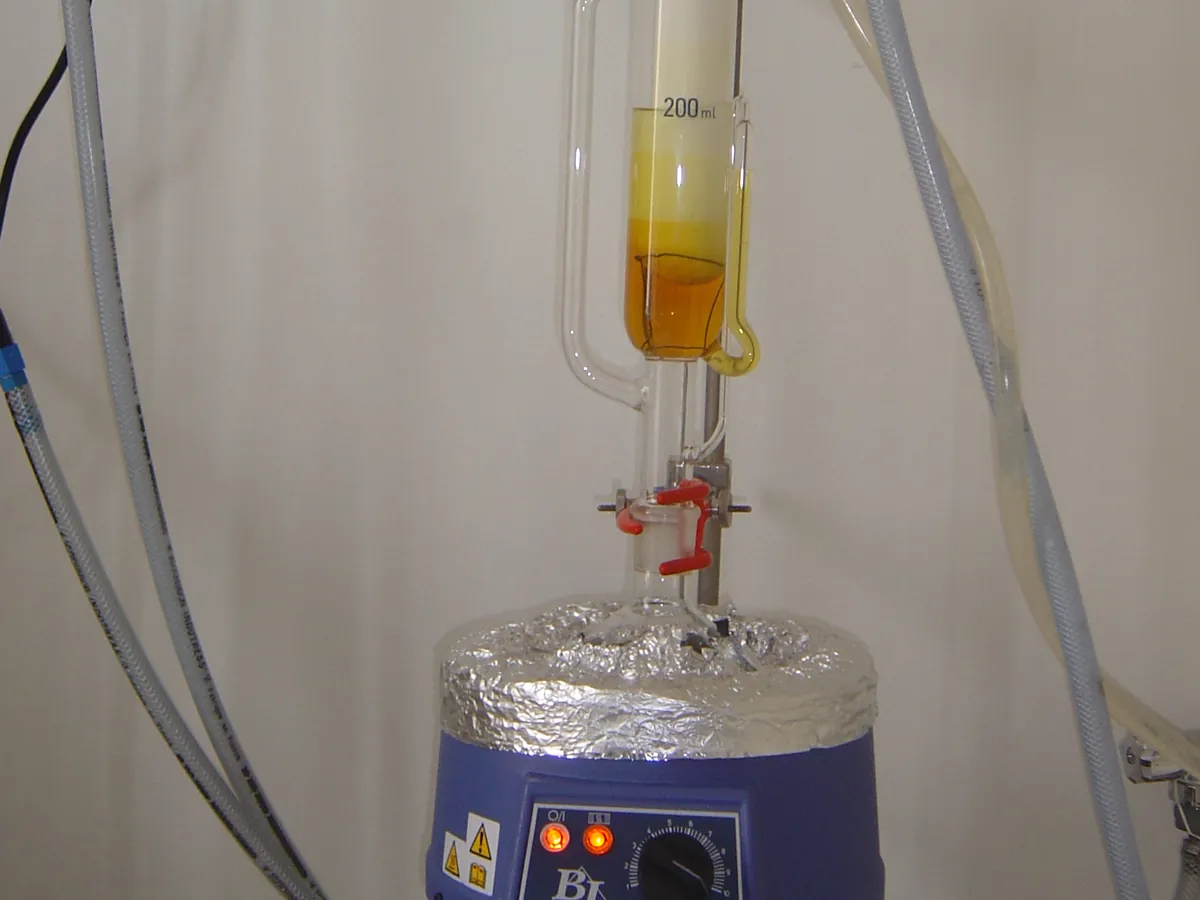
Soxhlet / fat extraction system
Extracts fat from a dried, ground food sample with a repeatedly recycled organic solvent. The solvent is then evaporated and the fat left behind is weighed.
- Food & beverage
- Animal feed
- Oilseeds and edible oils
- Agriculture
- Academic research
Test your Soxhlet knowledge
Multiple-choice questions
Pick an answer to see whether you are right and why.
Q1. What is the result of Soxhlet extraction usually called?
basicQ2. Why must samples be dried before Soxhlet extraction?
basicQ3. What is the main advantage of the Soxhlet design over a single soaking in solvent?
basicQ4. Which foods need acid hydrolysis before solvent extraction to measure total fat?
intermediateQ5. A 3.0126 g sample gives 0.5863 g of fat in the flask. What is the fat content?
intermediateQ6. Which hazard is particular to diethyl ether used as a fat solvent?
intermediateQ7. Fat results are consistently high and the flask smells of solvent after drying. What is the most likely cause?
advanced
Viva questions
Think of your answer first, then open it to compare.
1. Describe one siphon cycle in a Soxhlet extractor.
Solvent boils in the flask, its vapour rises and condenses above the thimble, and liquid solvent fills the extraction chamber, dissolving fat. When it reaches the top of the siphon tube, the whole chamber drains back into the flask, carrying the fat. The cycle then repeats.
2. How do automated (Soxtec or Randall-type) extractors shorten the extraction time?
They first immerse the thimble directly in boiling solvent, which extracts most of the fat quickly, then raise it for a rinsing stage like a Soxhlet, and finally distil off and recover the solvent. This cuts the time from several hours to about 1–2 hours.
3. How would you check that your fat extraction system is giving correct results?
Analyse a reference material of the same type (with an assigned fat value, and prepared the same way, including hydrolysis if used) and compare the mean with the certified range. Also check duplicates against the method repeatability and run an empty-thimble blank.
Keep every Soxhlet in control: usage logs, calibration and maintenance schedules, and automatic blocking of overdue instruments.