Particulate Matter (PM10 / PM2.5) Sampler
Draws a known volume of ambient air through a size-selective inlet and a filter so that the mass of PM10 or PM2.5 particles collected can be weighed and expressed as µg/m³.
- Environmental monitoring agencies and pollution control boards
- Environmental consultancies
- Mining, cement, power and steel
- Research institutions
- Construction and infrastructure projects
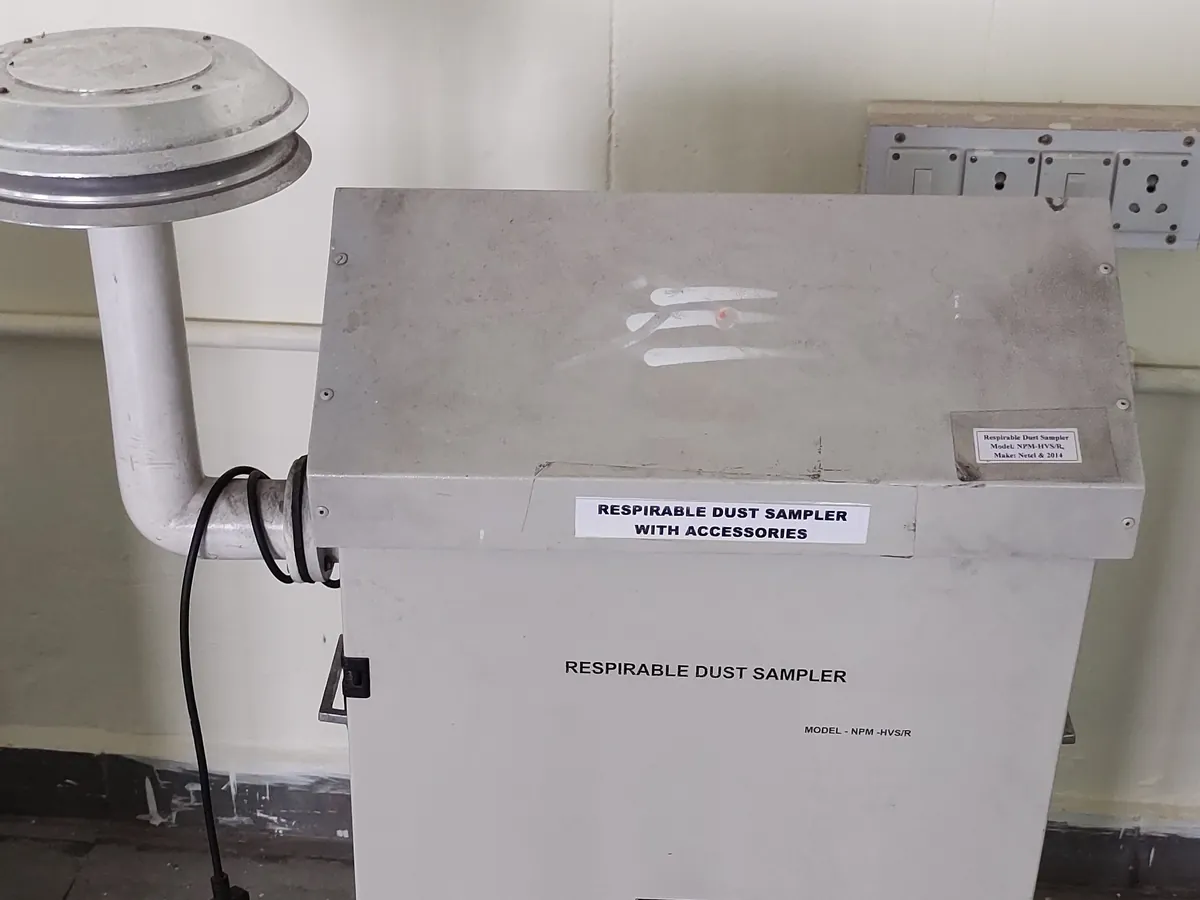
What is PM sampler?
Airborne particulate matter is classified by size. PM10 is the fraction with an aerodynamic diameter of about 10 µm or less, which can enter the lungs; PM2.5 is the fine fraction of about 2.5 µm or less, which reaches the deepest airways. Ambient air quality standards set limits for both, usually as 24-hour and annual averages.
A PM sampler pulls air at a controlled flow rate through an inlet that removes larger particles by impaction or a cyclone. The remaining particles are caught on a pre-weighed filter. After sampling (normally 24 hours), the filter is conditioned and weighed again. The mass gain divided by the volume of air sampled gives the concentration.
Two main designs are used. High-volume respirable dust samplers draw about 1.1 m³/min through a large glass fibre filter for PM10. Low-volume samplers draw about 16.7 L/min (1 m³/h) through a 47 mm PTFE filter for PM2.5 or PM10. Accurate flow control is essential, because any flow error passes directly into the result.
Used for
- Ambient air quality monitoring against national standards
- Monitoring around industrial sites, construction sites, mines and roads
- Source apportionment studies (filters analysed further for metals, ions or carbon)
- Indoor and workplace air surveys (with suitable samplers)
- Environmental impact assessment baseline studies
How it works
- 01
Inlet
Ambient air enters through a rain-proof inlet designed for a specific flow rate.
- 02
Size separation
An impactor or cyclone removes particles larger than the cut-point (10 µm or 2.5 µm).
- 03
Filtration
Remaining particles are collected on a pre-weighed filter.
- 04
Flow control
A pump with a mass flow controller or critical orifice holds a constant flow; total volume is logged.
- 05
Gravimetry
The filter is conditioned and re-weighed; mass gain ÷ air volume gives µg/m³.
Advantages
- Gravimetric result is a direct, reference-type measurement
- Filters can be kept and analysed for chemical composition
- Robust, well-established design accepted by regulators
- Relatively low cost per sample
Limitations
- Results are only available after the filter is conditioned and weighed, not in real time
- Needs a microbalance or semi-micro balance and a controlled weighing room
- Semi-volatile compounds (for example ammonium nitrate) can be lost from filters
- Flow, leaks and filter handling errors directly bias results
- Needs mains power and a secure site
1 calibration procedure
Methods that use PM sampler
Keep every PM sampler in control: usage logs, calibration and maintenance schedules, and automatic blocking of overdue instruments.