Melting point apparatus · Calibration procedure
Temperature accuracy with reference standards
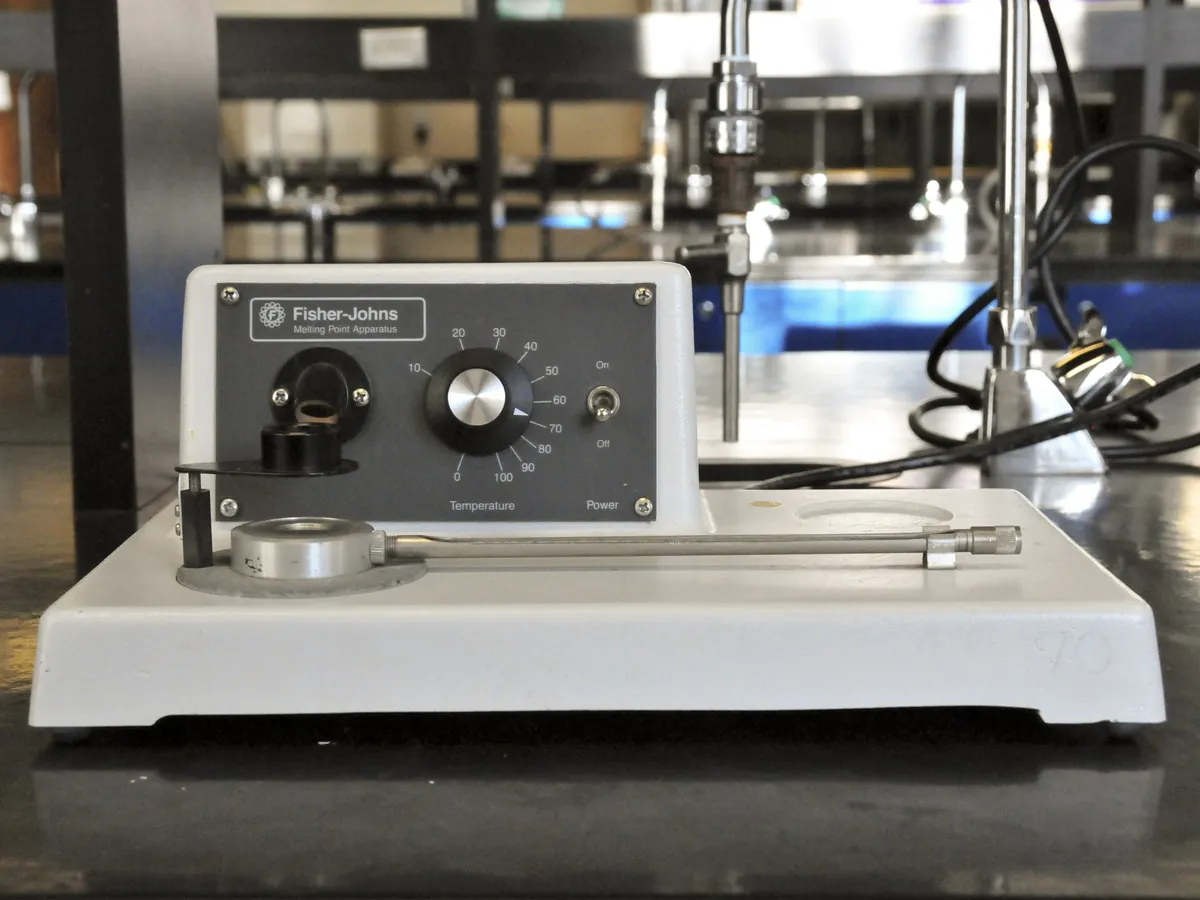
Checks that the apparatus reports correct melting points by measuring certified melting point reference standards across the working range.
PURPOSE
Why this is checked
The reported melting range depends on the block sensor and heating rate. Measuring standards of known melting point under the method conditions proves the reading is correct where samples are tested.
Frequency
Typically every 3–6 months, and after repair or relocation, as defined in your calibration SOP.
Learn how the Melting point apparatus worksYOU WILL NEED
Standards & tools
- Pharmacopoeial or certified melting point reference standards covering the range used, for example vanillin (about 82 °C), acetanilide (about 115 °C), phenacetin (about 135 °C), sulfanilamide (about 165 °C) and caffeine (about 236 °C)
- Use the certified value and range printed on each certificate, not the approximate values above
- Pharmacopoeial capillary tubes
BEFORE YOU START
Prerequisites
- Standards within expiry and stored as labelled (dry if required)
- Block clean; ramp rate set as in routine use (for example 1 °C/min)
PROCEDURE
Step by step
- 1Grind each standard finely if needed and pack capillaries to about 3 mm.
- 2Set the start temperature a few degrees below the certified value and let it stabilise.
- 3Insert the capillaries and heat at the same rate as the certificate states (usually 1 °C/min).
- 4Record the melting point as defined on the certificate (for example the clear point).
- 5Run each standard in triplicate and calculate the mean.
- 6Compare the mean with the certified value.
RECORD
Example observation table
| Standard | Certified value (°C) | Observed mean (°C) | Difference (°C) |
|---|---|---|---|
| Vanillin | 81.7 | 81.9 | +0.2 |
| Acetanilide | 114.5 | 114.6 | +0.1 |
| Phenacetin | 134.8 | 134.6 | −0.2 |
| Caffeine | 236.4 | 236.7 | +0.3 |
CALCULATION
How to calculate the result
Difference = Observed mean − Certified value
- Caffeine: certified 236.4 °C, observed mean 236.7 °C
- Difference = 236.7 − 236.4 = +0.3 °C
- Certified values in the table are illustrative; use your certificates.
ACCEPTANCE CRITERIA
Pass if
- Observed value within the tolerance on the certificate or in your SOP (typically about ±0.5 °C below 200 °C and about ±0.8 °C above; check your SOP).
IF IT FAILS
What to do
- Label the instrument 'Out of calibration' and stop using it.
- Investigate the cause and arrange adjustment or repair.
- Assess the impact on results generated since the last passing calibration.
- Repeat the full calibration before returning it to use.
In LimsPulse · Calibration Management
LimsPulse schedules this calibration, records the result against limits, and blocks the instrument everywhere if it fails or goes overdue.