Thermal analysis & ovens
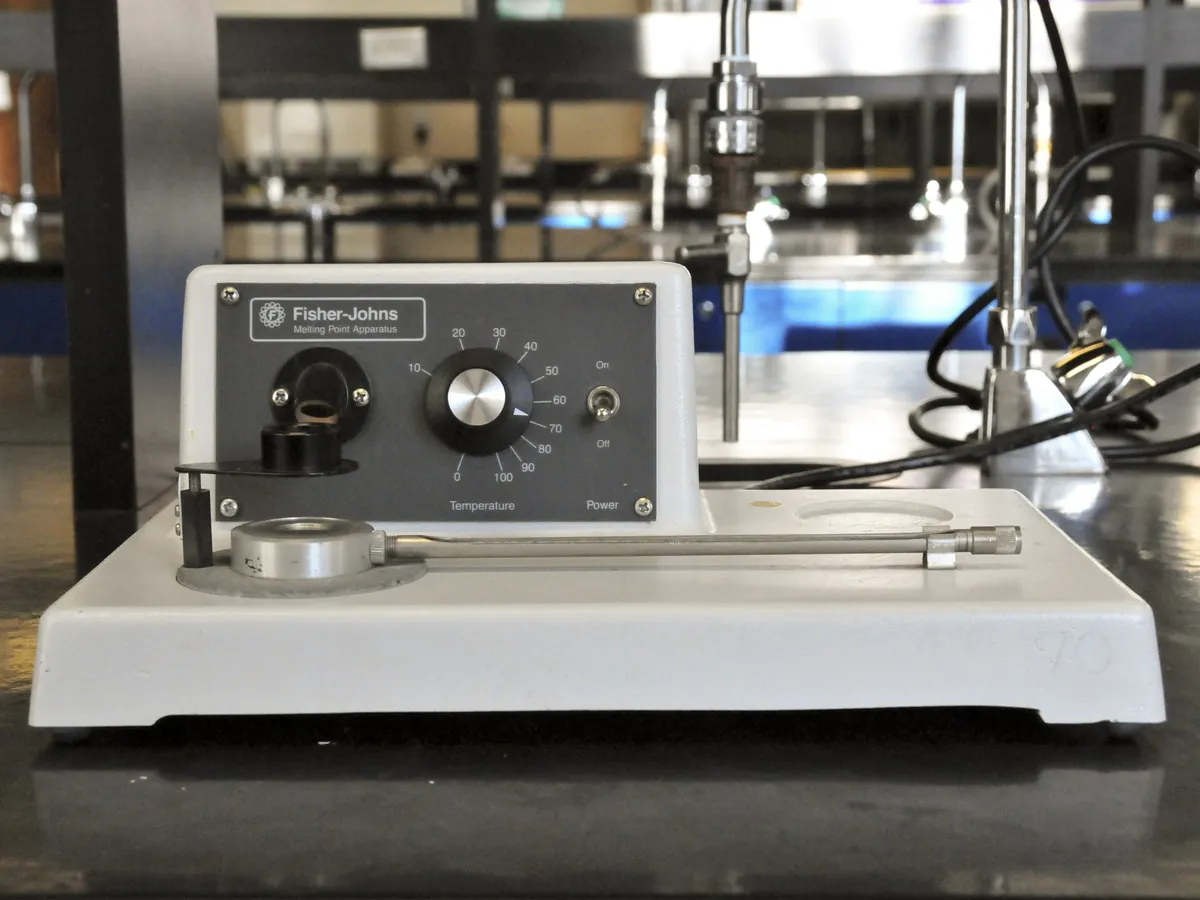
Melting Point Apparatus
Heats a sample packed in a thin glass capillary at a slow, controlled rate and records the temperatures at which it starts and finishes melting. Used for identity and purity checks of APIs and excipients.
- Pharmaceutical
- Fine chemicals
- Agrochemicals
- Dyes and pigments
- Academic labs
Follow your site SOP
This is a typical operating sequence for learning. Your instrument model and approved SOP take precedence.
STAGE 1
Before you start
- 1Check the instrument is within its calibration due date.
- 2Dry the sample as stated in the monograph (for example in a desiccator) unless the method says otherwise.
- 3Grind the sample to a fine powder on a clean, dry watch glass.
- Use only clean, dry capillaries of the specified size. Damp or dirty capillaries change the result.
STAGE 2
Filling the capillary
- 1Press the open end of the capillary into the powder.
- 2Tap the closed end on the bench, or drop the capillary down a long glass tube, to pack the powder tightly.
- 3Repeat until the packed column is about 3 mm high (as your method specifies).
- Loose or very tall columns give wide, high melting ranges.
STAGE 3
Measurement
- 1Set the start temperature a few degrees below the expected melting point (for example 5–10 °C below) and wait for it to stabilise.
- 2Set the ramp rate as required (typically 1 °C/min) and the stop temperature.
- 3Insert the capillary and start the ramp.
- 4Record the temperature at which the column collapses or first liquid appears, and the temperature at which the sample is completely clear.
- 5Run at least two capillaries and report the range.
- Never reuse a melted capillary.
- If the melting point is unknown, do a quick fast-ramp run first to find it, then repeat at the correct rate with fresh capillaries.
STAGE 4
After use
- 1Let the block cool and remove used capillaries into a sharps container.
- 2Clean the block holes and viewing window of any spilled powder.
- 3Complete the instrument usage log.
In LimsPulse · Calibration Management
Keep every Melting point apparatus in control: usage logs, calibration and maintenance schedules, and automatic blocking of overdue instruments.