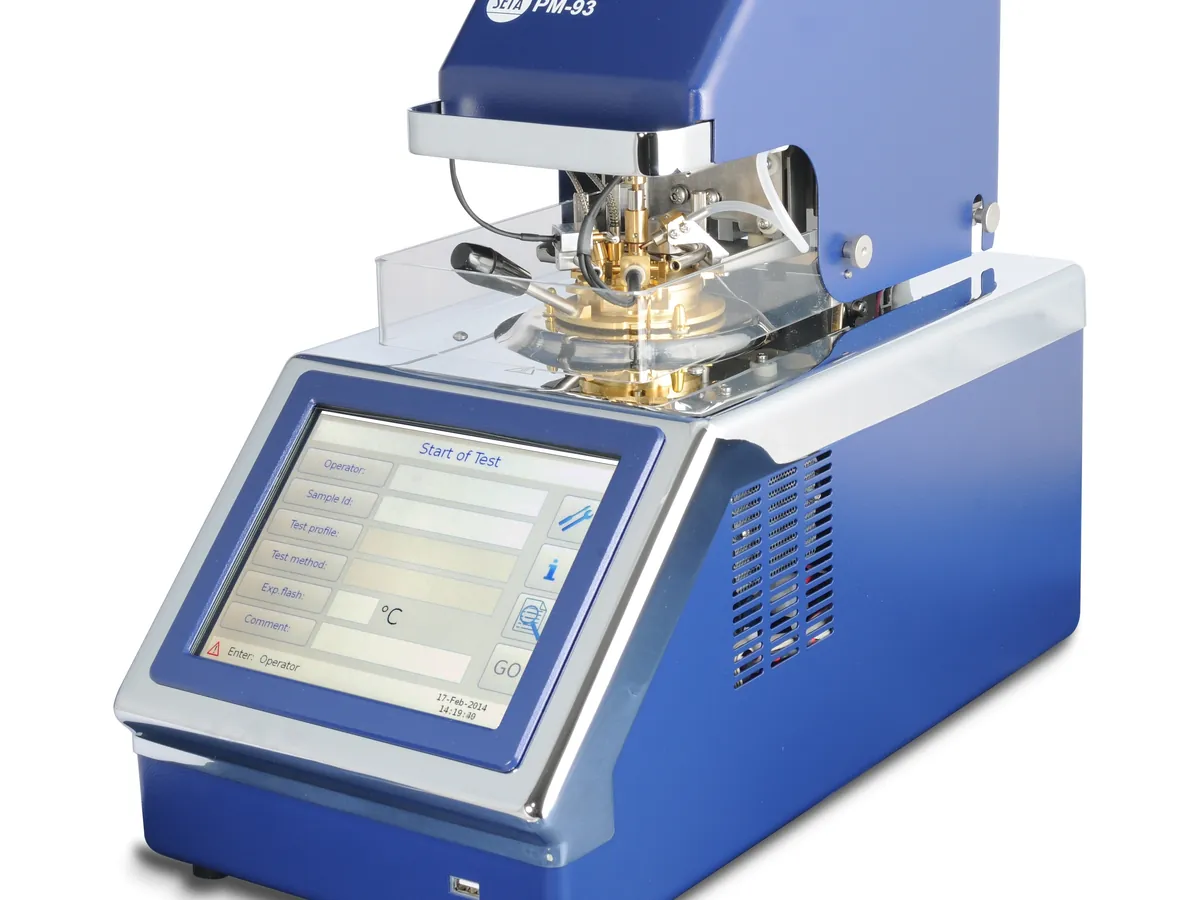
Flash Point Tester (Pensky-Martens Closed Cup)
Heats a fuel or oil in a closed brass cup while stirring and dips a small flame or electric igniter into the vapour space at set intervals. The lowest temperature at which the vapour flashes is the flash point, a key safety and quality property.
- Petroleum refining
- Fuel terminals and depots
- Lubricant blending
- Marine fuel testing
- Biodiesel production
- Power utilities (transformer oil)
- Independent testing laboratories
PMCC tester calibration procedures
Instrument qualification (DQ · IQ · OQ · PQ)
- 01
DQ — Design qualification
Defines the methods needed (ASTM D93 Procedures A/B/C, ISO 2719, IS 1448 Part 21), temperature range, ignition type (gas or electric), flash detection, fire suppression, barometric correction and data integrity features.
- 02
IQ — Installation qualification
Confirms installation in a suitable draught-free location, gas and power connections leak-tested, fire suppression connected, documents, serial numbers and software version recorded.
- 03
OQ — Operational qualification
Checks heating rate, stirrer speed, ignition source application interval and timing, temperature sensor accuracy, barometer accuracy, flash detection and fire detection response.
- 04
PQ — Performance qualification
Tests certified reference materials at two or more flash points and shows results within tolerance, then tracks a check sample on a control chart in routine use.
Keep every PMCC tester in control: usage logs, calibration and maintenance schedules, and automatic blocking of overdue instruments.